Air purifiers help with pet odor, but only with the part floating in the air. A purifier with a substantial activated-carbon filter lowers the general "lives with a dog" smell in a room, and its HEPA filter handles the hair and dander that come with it. It does nothing for the sources: urine soaked into carpet, a litter box that needs scooping, a dog bed that needs washing, or a dog whose skin or ears are infected.
If the smell is strongest when your nose is near one spot, deal with that spot first. The purifier is for what's left.
Where pet smell actually comes from
Pet odor isn't one smell. It comes from a handful of sources, and each one behaves differently.
Urine and feces. Cat urine is the worst offender, and it gets worse with age. In a 2021 Iowa State University analysis of cat waste, fresh urine gave off 21 detectable compounds and stale urine 34. Felinine, a sulfur-containing amino acid in cat urine, has no smell of its own, but it breaks down into potent odorants over time. That's why an old, missed accident on a rug can smell stronger than a fresh one.
The animal itself. A healthy dog has a mild smell. A strong one usually means something is wrong. Veterinary dermatologist Paul Bloom lists the common causes as skin infections (bacterial or yeast), ears, anal glands, skin folds around the lips, dental disease and gas, often driven by an underlying allergy or hormonal condition. No filter fixes an ear infection.
Bedding, furniture and floors. Skin oils, saliva and dander build up in dog beds, sofa cushions and rugs, which then release the smell back into the room. This is the stale, lingering smell most people mean when they say "the house smells like dog."
What a purifier does with each kind of odor
A purifier has two tools, and they do different jobs.
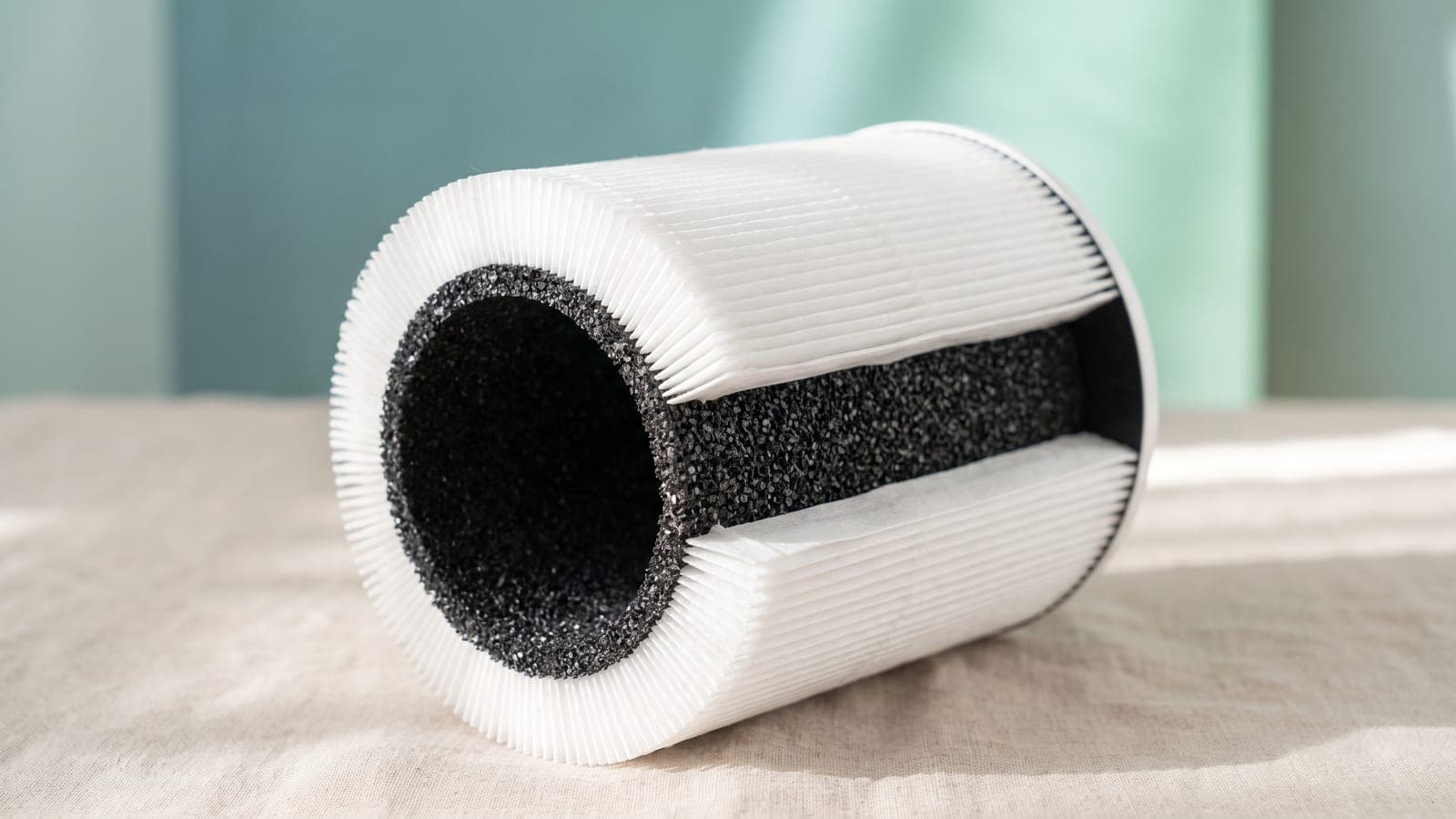
The HEPA filter catches particles: hair (mostly on the pre-filter), dander and litter dust. Some odor clings to those particles, so a HEPA-only machine can make a room smell slightly fresher, but it's a side effect.
The activated-carbon filter handles the gases that make up most of the smell. The EPA's guide to home air cleaners notes that carbon can be effective "provided that there is a large amount of material used in the filter," and that CADR ratings measure particles only, so no number on the box tells you how well a unit handles odor.
Ammonia, the sharp note in old urine, is a weak spot. Research on carbon adsorbents finds that ammonia binds so weakly to untreated activated carbon that its capacity barely tracks the carbon's surface area; researchers raise it by acid-treating the carbon. Few home purifier makers say whether their carbon is treated, so expect a purifier to dull a urine smell rather than erase it, and expect the carbon to wear out faster near a litter box.
Find the source before you buy anything
A quick check saves money:
- Sniff low. Get your nose near the carpet, the pet bed, the sofa where the dog sleeps, and the corners of the room. If one spot is clearly worse, it's a cleaning job.
- Use a black light. Animal welfare groups recommend a UV black light in a dark room to find old urine stains you can't see. Mark them with chalk so you can find them again with the lights on.
- Smell the animal. If your dog smells strongly a few days after a bath, or one area (ears, mouth, rear end) smells worse than the rest, book a vet visit.
Fixing the common sources
Urine in carpet or upholstery. A cleaning handout from the Dumb Friends League, distributed by the Kentucky Humane Society, sets out the order: blot up as much as you can, rinse the spot with cool water, pull the water back out with a wet-vac or rented extractor, then apply an enzymatic cleaner made for pet urine. Two things to avoid: steam cleaners, because the heat can permanently set the stain and smell, and ammonia or vinegar cleaners, which can draw the pet back to the same spot. If the urine has reached the carpet pad, that section of carpet and pad may need replacing.
The litter box. Scoop at least daily and replace the litter completely on a regular schedule. A box that's falling behind will out-produce any purifier's carbon. Our best air purifiers for cat litter smell page covers the units with enough carbon to handle what's left.
Bedding and soft furnishings. Wash dog beds, blankets and throw covers every week or two. A bed with a removable, machine-washable cover is worth paying a little more for.
The pet. Regular baths help a healthy dog, but a smell that comes back fast points to a medical cause, and treating it fixes the odor at the source.
Setting up a purifier for pet odor
Choose by the carbon, then the CADR. A separate panel of granular carbon lasts longer than a thin carbon-coated sheet. The activated carbon explainer shows what to look for on a spec sheet.
Put it where the animals spend their time. Place it in the living room the dog sleeps in, or a few feet from the litter box, not across the house. Our guide on where to place an air purifier covers clearances.
Size it for the room. On the site's rule (smoke CADR × 1.55), a 14×16 ft family room of 224 sq ft needs at least 145 CFM. The Levoit Vital 200S-P, with 250 CFM, covers about 388 sq ft and adds a Pet Mode that cycles the fan up and down on its own. The Winix 5530 pairs 253 CFM with a granular carbon panel, and the Coway Airmega AP-1512HH Mighty is the quiet, app-free choice at 233 CFM. For an open-plan space where several animals roam, the AirDoctor AD5500i's 556 CFM covers about 862 sq ft.
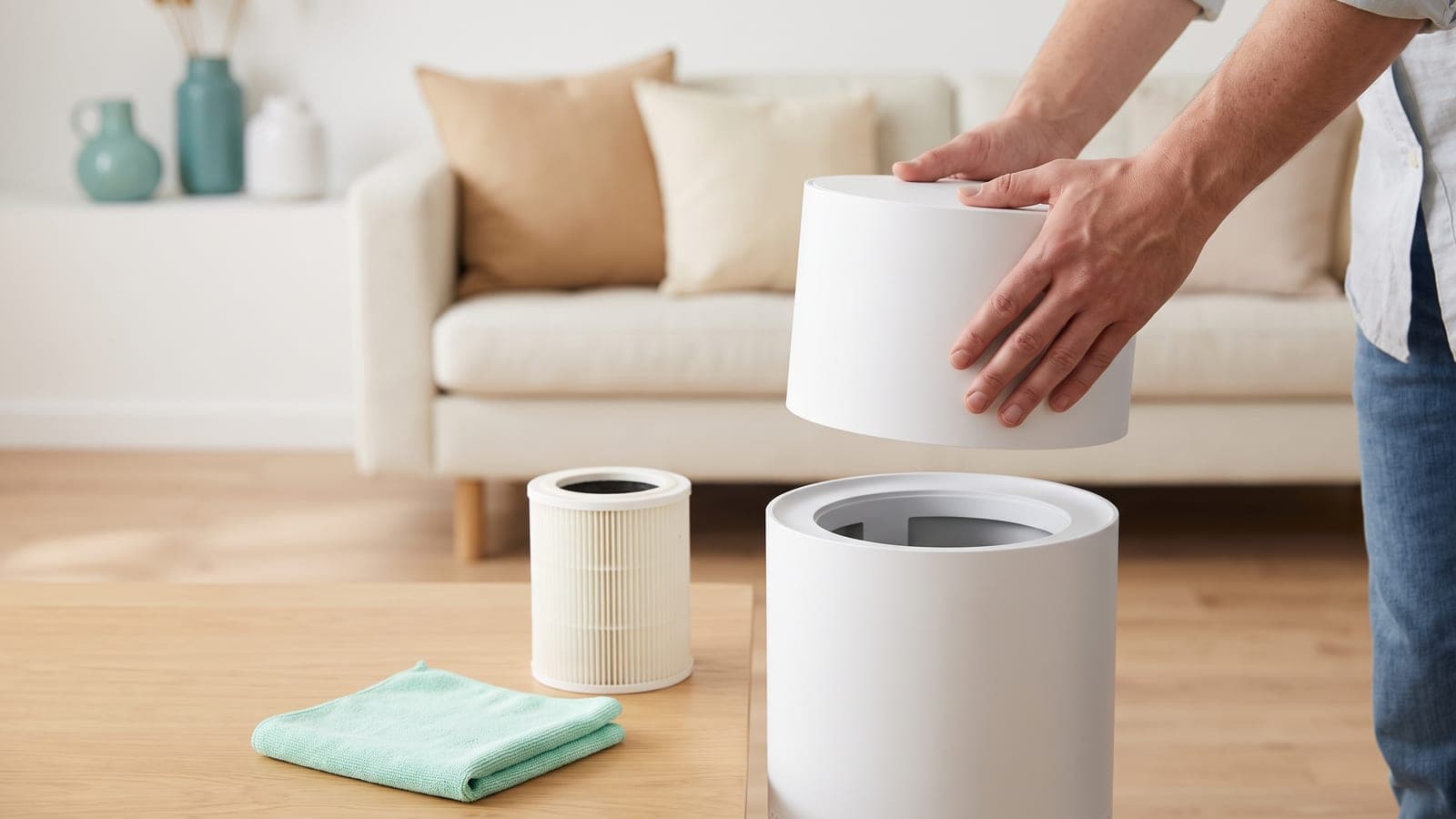
Swap the carbon when the smell returns, not when the timer says so. In a home with a busy litter box or several dogs, that is often sooner than the rated life.
What to buy
For the full ranking by room size and filter cost, see best air purifiers for pets; dog owners with shedding breeds should also look at best air purifiers for dogs. Buy one with real carbon, clean the sources first, and the purifier will take care of the faint smell that's left.
Frequently asked questions
Does a HEPA filter remove pet smell?
Only a little. HEPA traps hair, dander and the dusty particles that carry some odor, so a room can smell slightly better with a HEPA-only unit. The smell itself is mostly gas, though, and gas passes through HEPA. The part of a purifier that handles pet odor is the activated-carbon stage.
Why does my house still smell like dog after cleaning?
Usually because the odor has a source the cleaning missed: the dog bed, a couch the dog naps on, rugs, or the dog itself. A dog with a strong smell even after a bath often has a skin, ear, dental or anal gland problem, which veterinary dermatologists list as common causes. Wash the bedding and throws, then have a vet check the dog if the smell comes back within days.
Will an air purifier get rid of cat urine smell in carpet?
No. The urine is in the fibers and often the pad underneath, and it keeps releasing odor as it ages. Humane society guidance is to blot, rinse with cool water, extract the water, then treat with an enzymatic cleaner, and to replace the pad if urine has soaked through. A purifier only helps with the faint smell left once that's done.
How quickly does an air purifier reduce pet odor?
A correctly sized unit with a real carbon filter usually takes the edge off a room's background smell within a few hours of running on a medium or high speed. If the smell is no better after a day, the source is producing odor faster than the carbon can adsorb it, or the carbon is too thin or already spent.
Should an air purifier for pet odor go next to the pet bed or litter box?
Close, but not on top of it. A few feet away, in the room where the animal spends most of its time, with clear space around the intake, works best. Directly beside a litter box it will pull litter dust into the filter, and some cats avoid a box with a humming machine next to it.