Dust is the most straightforward job you can hand an air purifier: it's a particle, and capturing airborne particles is precisely what a HEPA filter does. For most rooms the Coway Airmega AP-1512HH Mighty is still the best value; for a large open space, the new Blueair Blue Pure 211i Max posts the highest dust CADR of any mainstream pick here at 452 CFM. The list is chosen on the numbers that matter for dust — real filtration, a dust CADR high enough to knock it down fast, and a washable pre-filter where it helps with the coarse stuff.
Quick answer
| Model | CADR (dust) | CADR (smoke) | Coverage | Filters/yr | Best for |
|---|---|---|---|---|---|
| Coway Airmega AP-1512HH Mighty | 246 CFM | 233 CFM | 361 sq ft | ~$60 | Best overall |
| Levoit Core 300S | — | 141 CFM | 219 sq ft | ~$45–$60 | Budget / small rooms |
| Winix 5500-2 | 243 CFM | 232 CFM | 360 sq ft | ~$60 | Pet hair & coarse dust |
| Winix 5530 | 252 CFM | 253 CFM | 392 sq ft | ~$80 (less on sale) | App control |
| Blueair Blue Pure 211i Max | 452 CFM | 435 CFM | 674 sq ft | ~$93–$140 | Large rooms |
| Coway Airmega 400 | 328 CFM | 328 CFM | ~508 sq ft | ~$129 | Large room, no ionizer |
Coverage uses this site's rule of smoke CADR × 1.55 (about 4.8 air changes an hour at 8 ft ceilings). The Core 300S's dust CADR isn't in our product data, so only its smoke figure is shown.
Key takeaways
- Dust is a particle problem, and HEPA handles it well — a genuine HEPA filter captures 99.97% of particles at 0.3 microns, which covers household dust, dust mite debris, and pollen.
- A washable pre-filter earns its keep by catching hair and coarse dust before it reaches the main filter — that keeps airflow strong and saves you money on replacements.
- Higher CADR means faster dust knock-down, so a stronger machine lets you run on a lower, quieter speed most of the time instead of maxing it out.
Best overall for dust: Coway Airmega AP-1512HH Mighty
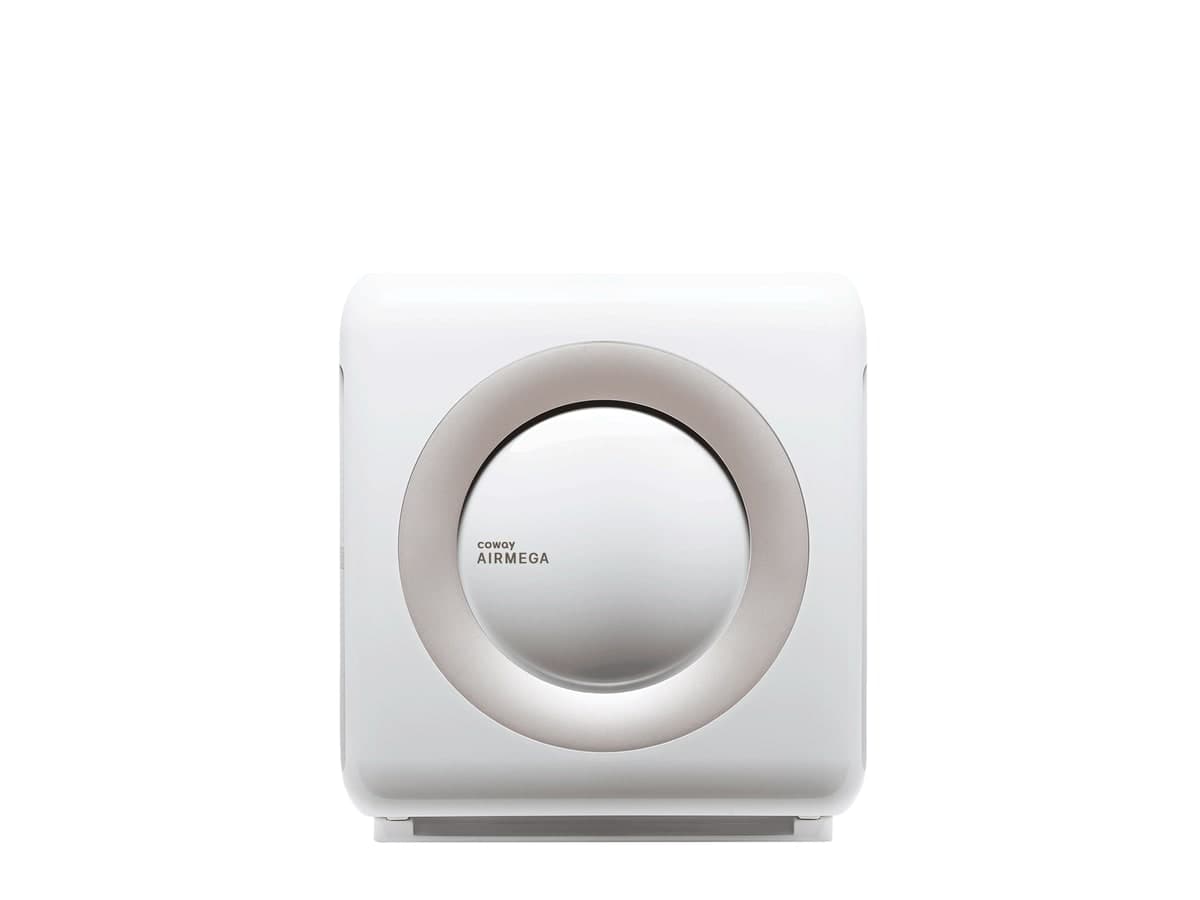
Mid-range · 233 CFM CADR · 361 sq ft
Paid links: we may earn a commission at no cost to you. Disclosure
The Coway Airmega AP-1512HH Mighty is the purifier we'd hand most people fighting dust. It pairs a real True HEPA and activated-carbon filter with a dust CADR of 246 CFM — enough to clear a bedroom or mid-size living room several times an hour — and its sensor-driven auto mode ramps up the moment dust gets stirred into the air, then settles back down. It runs genuinely quietly on its lower speeds, and its filters are among the cheapest to replace, so you won't put off changing a dust-clogged one.
Coway's newer Coway Airmega Mighty2 cleans the same size room (242 CFM dust) and adds a pre-filter that slides out of the side plus a laser sensor that tracks PM10 alongside PM1 and PM2.5. It is a nicer machine, but it lists about $30 higher with a $69.99 yearly cartridge, so for dust alone the original keeps the spot on value. The Mighty vs Mighty2 comparison covers the trade in detail.
Best budget for dust: Levoit Core 300S
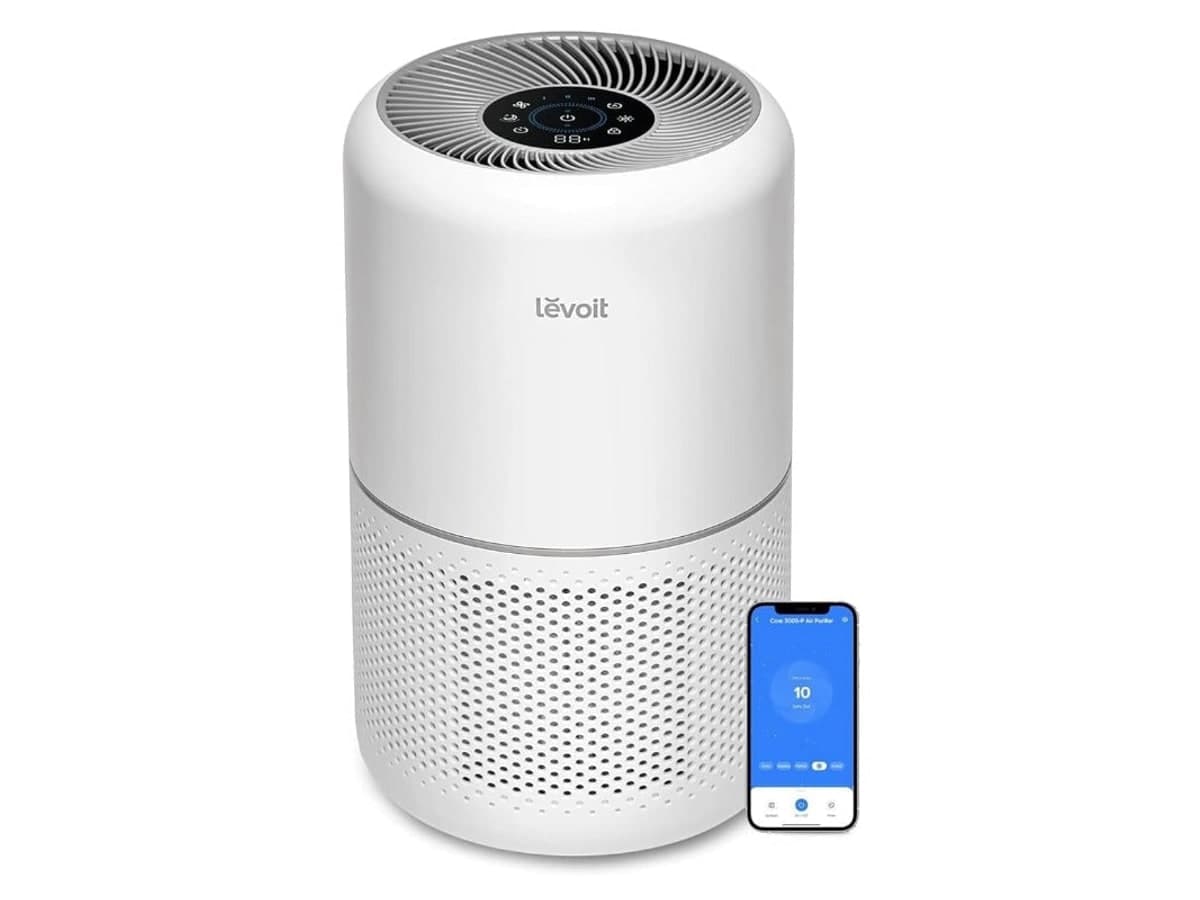
For around $100, the Levoit Core 300S delivers real HEPA dust control in a small room. It uses a genuine H13 True HEPA filter plus carbon, has an air-quality sensor and auto mode, and drops to a near-silent sleep setting for overnight running. Its CADR of about 141 CFM suits spaces up to roughly 219 sq ft, so keep it in a bedroom or office rather than a great room — within that footprint, it's the best dust value going, and the app is a nice bonus at the price.
Best for pet hair and coarse dust: Winix 5500-2
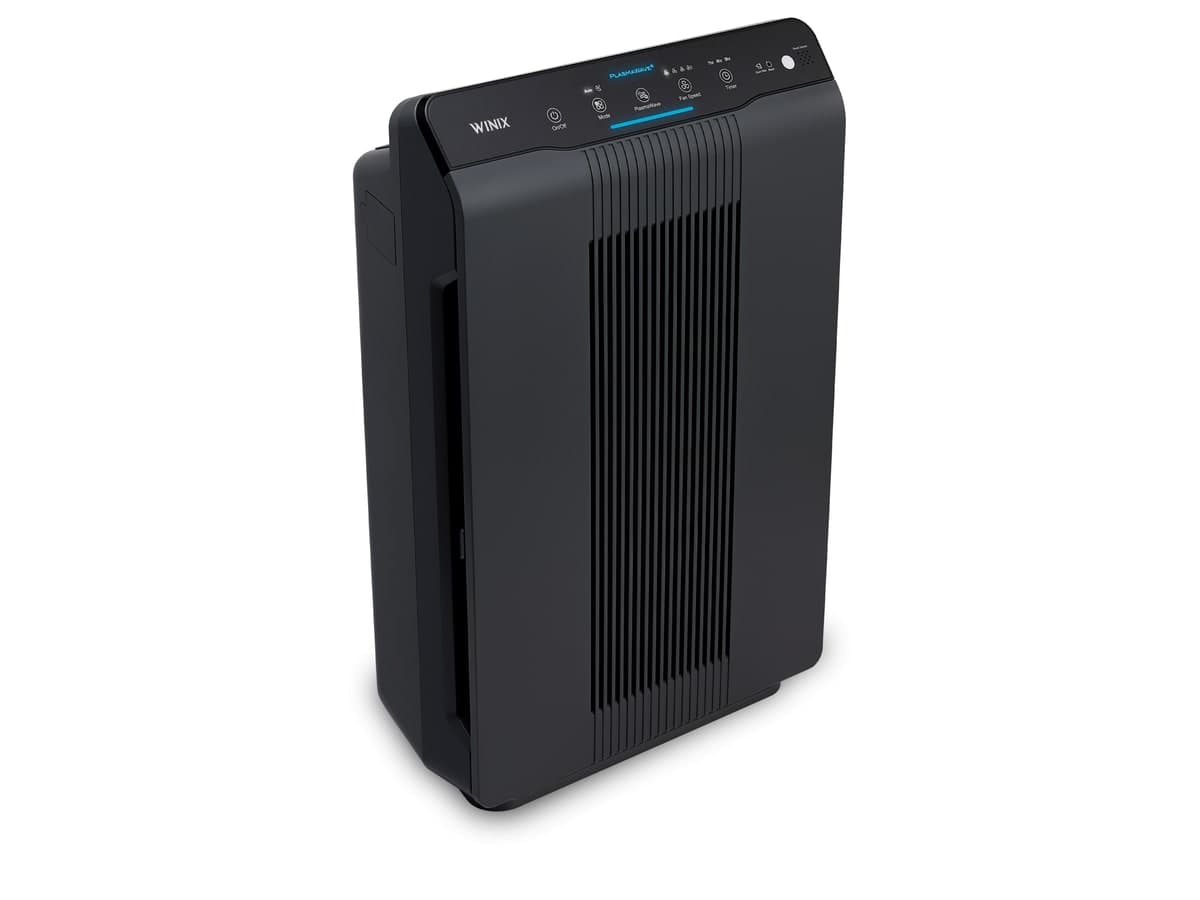
If your dust comes with pet hair and lint, the Winix 5500-2 is the smart buy. Its standout is a washable carbon pre-filter that grabs the coarse stuff — hair, larger dust, fluff — so you rinse it instead of buying a new one, and the True HEPA filter behind it stays cleaner and lasts longer. With a dust CADR of 243 CFM it covers roughly 360 sq ft, and it has a sensor and auto mode. Its PlasmaWave feature can be switched off if you'd rather stick to plain filtration.
Best with app control: Winix 5530
Winix
5530
Mid-range · 253 CFM CADR · 392 sq ft
Paid links: we may earn a commission at no cost to you. Disclosure
The Winix 5530 is the same idea as the 5500-2 with Wi-Fi added and a slightly higher 252 CFM dust CADR, good for about 392 sq ft. The practical use for the app in a dusty house is timing: set it to run high while you vacuum and for an hour after, when the dust you've kicked up is still airborne, then let it drop back to auto. A light sensor also puts it into Sleep mode when the room goes dark.
Its fine-mesh pre-filter is washable, and Winix's manual says to rinse it every 14 days, which is the habit that keeps a dusty home's HEPA layer from loading early. The difference from the 5500-2 is in the main filter. Filter Q combines a granular carbon bed with the HEPA layer and gets replaced whole once a year at $79.99 list (often $50–$65 on sale), where the 5500-2's carbon stage is the part you wash. Air quality shows as a colored light, not a number, and PlasmaWave is switchable as on the other Winix models.
Best for large rooms: Blueair Blue Pure 211i Max
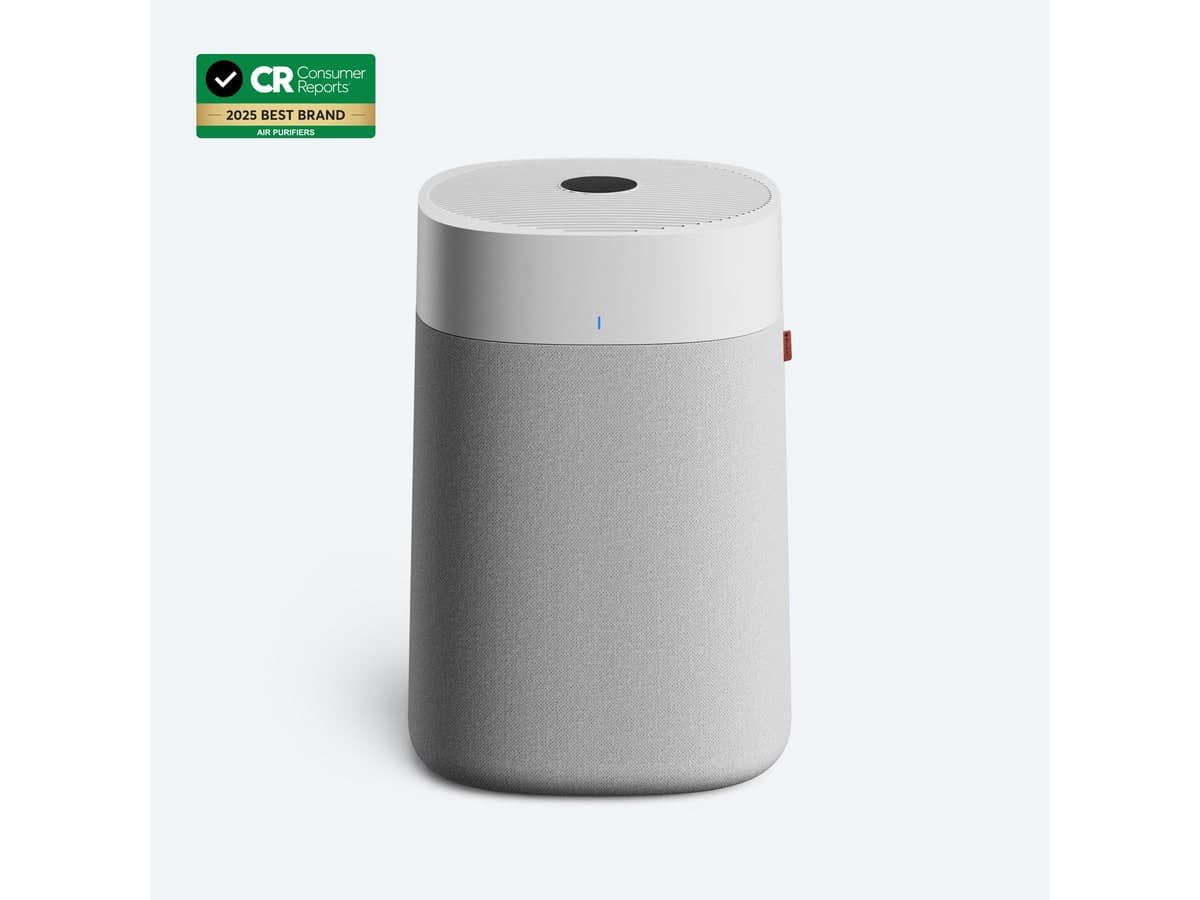
Mid-range · 435 CFM CADR · 674 sq ft
Paid links: we may earn a commission at no cost to you. Disclosure
For a big living room or open space, the Blueair Blue Pure 211i Max replaces the 211+ that held this spot, and it is better on every number that matters for dust. Its 452 CFM dust CADR beats the 211+'s 350, it covers about 674 sq ft by this site's sizing rule, and it draws 46 W at top speed against 61 W. The washable fabric pre-filter carries over to catch lint and coarse dust before the main filter, and a replacement costs $12.99 if the original wears out.
The bigger change is that it now reacts on its own. The 211+ had no sensor; the 211i Max reads PM1, PM2.5 and PM10 and runs a proper auto mode, with app schedules on top. Running costs are higher than the Coways: a $69.99 filter every six to nine months, or about $93–$140 a year. Its HEPASilent stage ionizes particles to help the filter catch them and can't be turned off, and the filters don't fit the older 211+.
Best large room with no ionizer: Coway Airmega 400
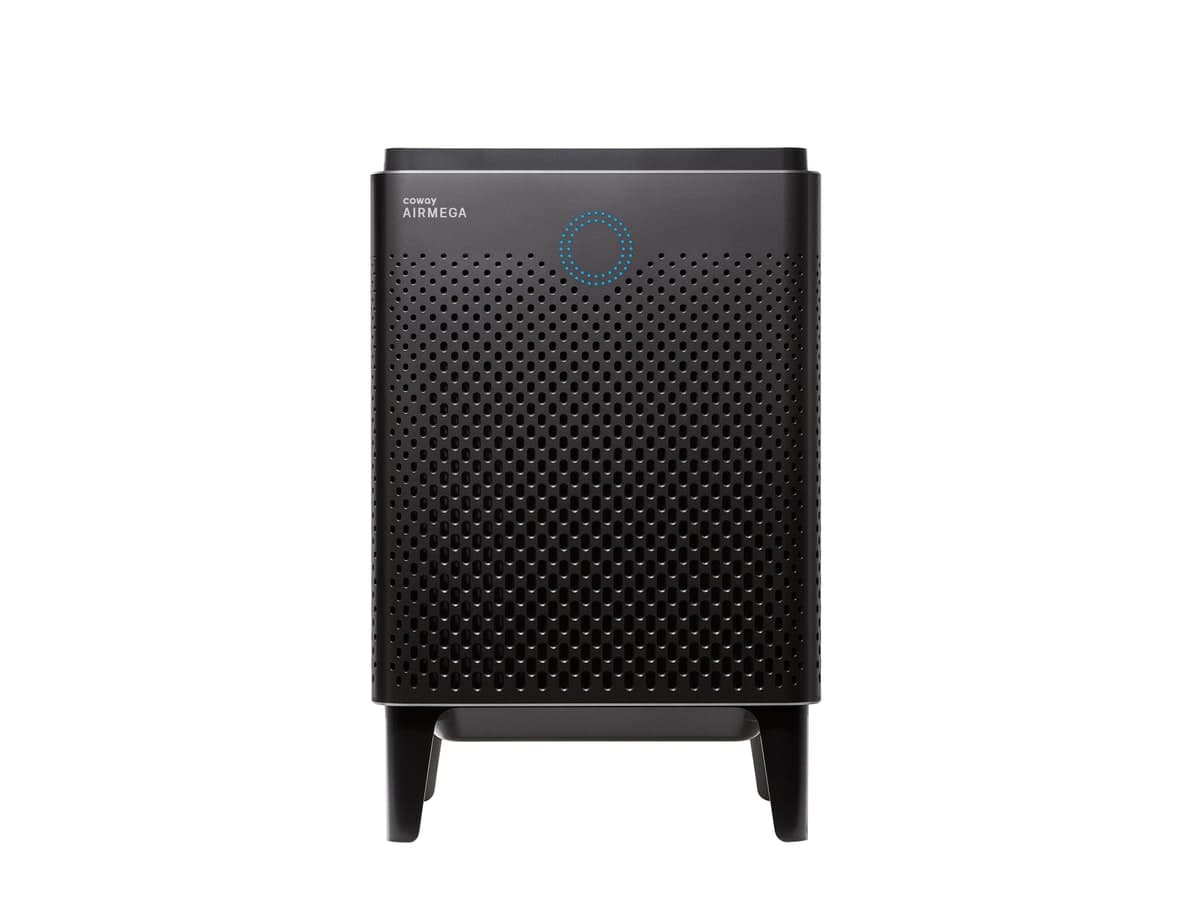
Premium · 328 CFM CADR · 508 sq ft
Paid links: we may earn a commission at no cost to you. Disclosure
The Coway Airmega 400 is the large-room choice for anyone who wants plain mechanical filtration. It feeds two full True HEPA and carbon filters behind two washable pre-filters and pushes a 328 CFM dust CADR, enough for roughly 508 sq ft, with the same trustworthy auto mode as the Mighty. On paper the Blueair moves more air for less money, so the reason to pay $400–$450 here is the absence of any ionizer and a filter pair that lasts a full year, at about $129.
How to choose the right one for you
Start with the room. Measure it, then use the room-size to CADR calculator to get your target — you want a dust CADR of at least two-thirds of the square footage, more if you can swing it, because extra CADR is what lets you run quietly. If pet hair and coarse dust are your real headache, prioritize a washable pre-filter to keep airflow up and replacement costs down. If dust mites are behind the problem, read whether air purifiers help with dust mites first, since the mites themselves live in bedding and carpet where no purifier reaches. And if you're not sure a filter is genuine HEPA, read what a HEPA filter really is before you buy. Many of the same picks also top our best air purifiers for allergies list, since dust and allergens are the same particle fight.
Frequently asked questions
Do air purifiers actually help with dust?
Yes. Dust is a particle problem, and airborne particles are exactly what a True HEPA filter is built to capture — down to 0.3 microns at 99.97% efficiency. A well-sized purifier measurably lowers the dust floating in your air, though it can't grab what's already settled on shelves and floors, so keep dusting and vacuuming too.
What size air purifier do I need for dust?
Size by CADR, not by a coverage claim. Aim for a smoke or dust CADR of at least two-thirds of your room's square footage — a 300 sq ft room wants roughly 200 CADR or more. Higher CADR clears dust faster, which means you can run it on a lower, quieter speed the rest of the time.
Does a washable pre-filter matter for dust?
It helps a lot. A washable pre-filter catches the coarse stuff — pet hair, lint, larger dust — before it clogs the expensive HEPA filter. That keeps airflow strong and stretches the life of your main filter, which saves real money over a year. Winix's manual for the 5530 says to rinse its pre-filter every 14 days.
Is the Blueair 211i Max better than the 211+ for dust?
Yes. Its dust CADR is 452 CFM against the 211+'s 350, it adds PM1/PM2.5/PM10 sensors and an auto mode the 211+ never had, and it draws 46 W at top speed instead of 61 W. The two don't share filters, so 211+ owners can't use up spare filters on the new one.
Where should I put an air purifier to fight dust?
In the room where you spend the most time and where dust is worst — usually the bedroom or main living area. Give it a few feet of clearance so air can circulate freely, and keep it running; steady operation beats occasional blasting on high.
Will an air purifier stop me from having to dust?
No, but it can slow how fast dust resettles. A purifier captures airborne particles before they land, so surfaces stay cleaner a little longer, but it can't touch dust that's already settled or that gets stirred up from carpet and bedding. Think of it as reducing the dusting, not replacing it.