Keeping an air purifier working well is mostly routine air purifier maintenance you can do in a few minutes a month, plus a filter change once or twice a year. There's a simple split to remember: some parts get cleaned (the pre-filter, the vents, the sensor lens) and some parts get replaced (the HEPA and carbon filters). The one rule that overrides everything is that you never wash a True HEPA filter — water destroys it. Here's the full checklist, what to do, and how often to do it.
Key takeaways
- Rinse the washable pre-filter monthly so it keeps catching the big stuff before it clogs the HEPA.
- Wipe the exterior and vents every couple of weeks so dust isn't pulled back into the airflow.
- Clean the sensor lens every month or two — a dusty sensor is the top cause of a purifier stuck on a loud fan speed.
- Replace HEPA and carbon on schedule, and never wash a True HEPA filter.
- Reset the filter indicator after every replacement, or the light keeps counting from the old timer.
How do you clean the washable pre-filter?
The pre-filter is the outermost, coarsest layer, and its whole job is to catch hair, lint, and large dust before they reach the finer filter — which makes it the part that gets dirty fastest and the one actually designed to be cleaned. If yours is labeled washable, rinse it under lukewarm water until the water runs clear, shake off the excess, and let it dry completely before reinstalling. A damp pre-filter breeds mildew and can make the whole unit smell musty.
If your pre-filter is vacuum-only, just run a brush attachment over both sides instead. Do this about once a month, and more often in a home with pets or heavy dust. Keeping the pre-filter clean is the single cheapest thing you can do to make the pricey HEPA filter last its full life.
How do you wipe the exterior and vents?
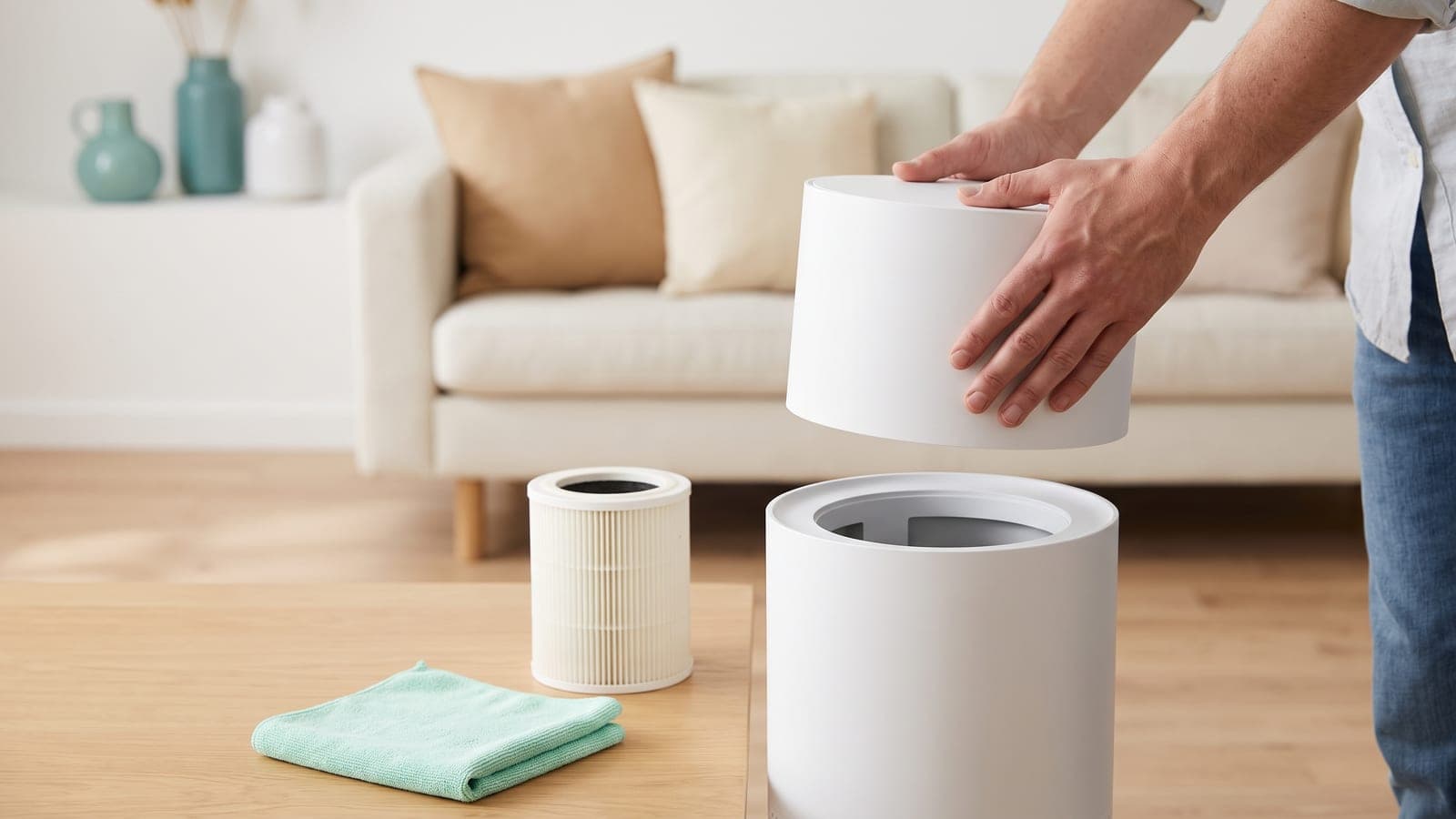
Dust settles on the housing and, more importantly, around the intake and outlet vents, where the airflow can pull it right back into circulation. Wipe the outside with a dry or lightly damp microfiber cloth, then run a dry brush or a vacuum's brush attachment across the vent slots to clear the dust that collects between them.
Keep moisture away from the electronics and control panel — damp cloth on the plastic shell only, never dripping. A clean intake means the pre-filter and HEPA get the full airflow they're rated for, so this small step directly protects performance. Every week or two is plenty for most homes.
How do you clean the air-quality sensor lens?
If your purifier has an auto mode with a sensor, it reads the air through a tiny optical lens behind a small vented panel, usually on the side. Dust on that lens scatters the light and makes the sensor read dirtier than the room actually is — so the fan roars on high and the light stays red no matter what. This is the maintenance step people most often skip, and it's the usual fix for a unit that seems stuck on a loud speed.
Open the little sensor cover, and gently clean the lens and the surrounding opening with a dry cotton swab — or one barely dampened, followed by a dry one. Don't use cleaning fluids or soak it. Doing this every month or two keeps auto mode honest.
When do you replace the HEPA and carbon filters?
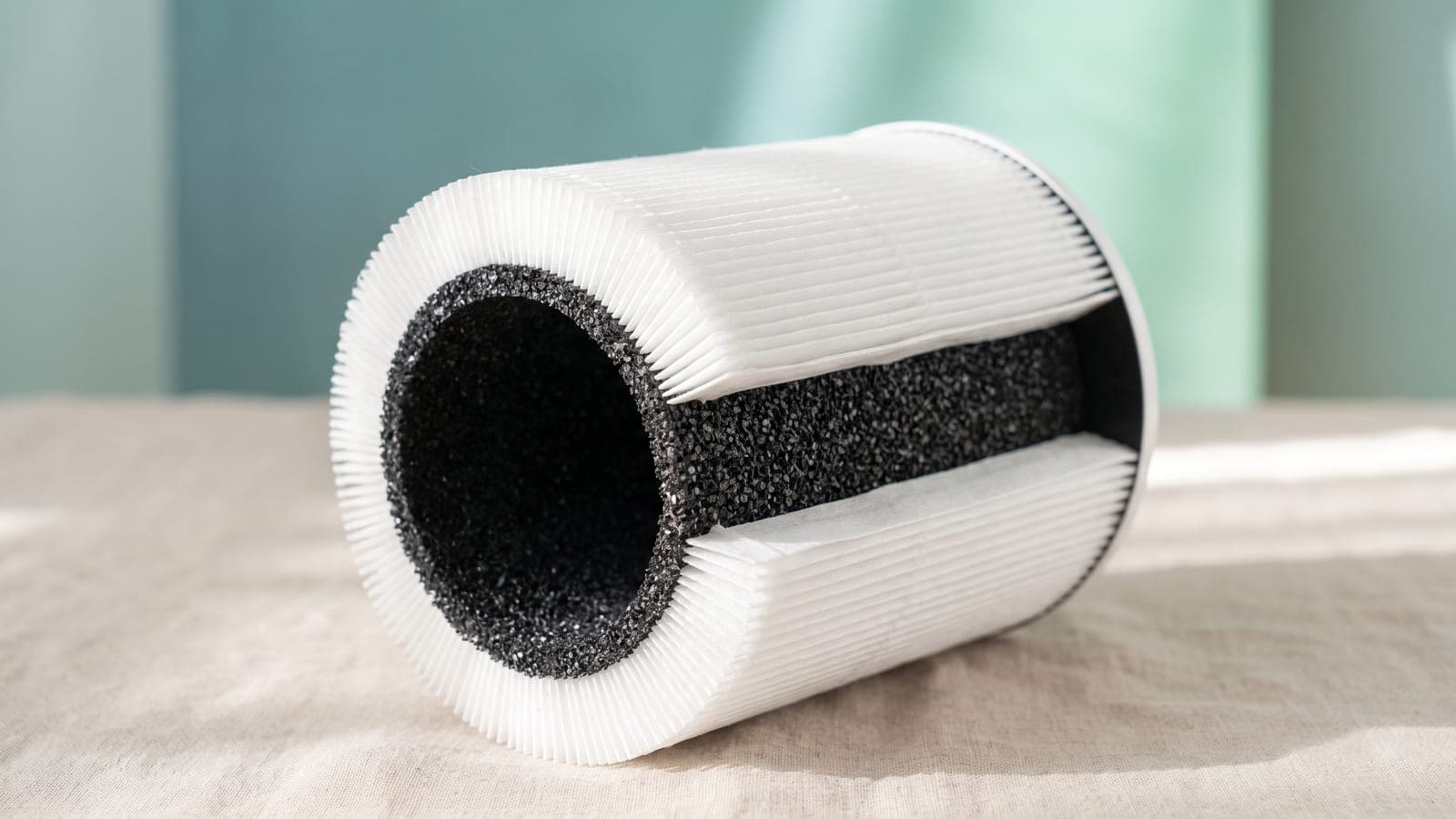
The pre-filter and sensor get cleaned; the HEPA and carbon filters get replaced on their own timeline, and this is where the real cost of ownership lives. As a rough guide, a True HEPA filter runs about 6 to 12 months and a carbon filter about 3 to 6, but pets, smoke, and heavy dust shorten both. Watch the airflow and, for carbon, the return of odors — when either drops off, it's time regardless of the calendar.
The critical rule: never wash a True HEPA filter unless the manufacturer explicitly labels it washable. Water soaks and collapses the pleated media that traps fine particles, and it never recovers. You can gently vacuum loose surface dust off the HEPA's face to buy a little time, but that's the limit. Our guide on how often to replace your air purifier filter covers the timing in detail.
How do you reset the filter indicator?
Most purifiers track filter life on a timer, not by sensing the actual filter, so after you install a new one you have to reset the indicator by hand — otherwise the light keeps counting down from the old schedule and stays on even with a brand-new filter in place. The reset is usually a button or touch pad you hold for a few seconds; check your manual for the exact step, since it varies by model.
Resetting isn't just about turning off an annoying light. Once you've reset it, the timer starts fresh, so the indicator stays a useful reminder for the next change instead of crying wolf. Make it the last step of every filter replacement so the two always stay in sync.
What's the full maintenance schedule?
Here's the whole checklist in one place. Treat these intervals as a baseline and tighten them up if you have pets, smoke, or a dusty home — and remember the split between parts you clean and parts you replace.
| Task | Frequency |
|---|---|
| Wipe exterior housing | Every 1–2 weeks |
| Vacuum or brush intake & outlet vents | Every 2–4 weeks |
| Rinse or vacuum washable pre-filter | Monthly |
| Clean air-quality sensor lens (dry swab) | Every 1–2 months |
| Replace carbon/VOC filter | Every ~3–6 months |
| Replace True HEPA filter (never wash) | Every ~6–12 months |
| Reset filter indicator | After every filter replacement |
| Brush dust off fan blades | Every few months, as needed |
Keeping it simple
None of this takes long — a few minutes of cleaning each month, plus a filter swap once or twice a year — but together it's the difference between a purifier that quietly performs for years and one that fades without you noticing why. For the step-by-step on the cleaning side, including how to handle the sensor and vents safely, see how to clean an air purifier. And since the filters are the part you replace rather than clean, it's worth knowing what they'll cost before it sneaks up on you — run your model through the air purifier filter cost calculator to see the real annual figure.
Frequently asked questions
What maintenance does an air purifier need?
A little routine care and a filter schedule. Rinse or vacuum the washable pre-filter monthly, wipe the exterior and vents every couple of weeks, clean the air-quality sensor lens every month or two, and replace the HEPA and carbon filters on their own timeline. The one thing you never do is wash a True HEPA filter — that ruins it. Stay on top of these and the purifier keeps performing as rated.
Can you wash the filter in an air purifier?
Only the parts labeled washable — usually the pre-filter and some carbon layers. A True HEPA filter must never be washed, because water collapses and tears the pleated media that traps fine particles, and it never recovers. Rinse the washable pre-filter, let it dry completely, and replace the HEPA and carbon filters rather than trying to clean them.
How often should I clean my air purifier's sensor?
Every month or two, more often in dusty or pet-heavy homes. The air-quality sensor reads through a tiny optical lens, and dust on that lens makes it read high and hold the fan on a loud speed. A gentle wipe with a dry cotton swab keeps auto mode accurate. It's the single most-missed maintenance step and the usual fix for a purifier that seems stuck on high.
Why won't my air purifier's filter light turn off after I changed the filter?
Most purifiers track filter life on a timer, not by sensing the actual filter, so you have to reset the indicator manually after a replacement. Check the manual for the reset — it's usually a button or touch pad held for a few seconds. If you skip the reset, the light keeps counting from the old schedule and stays on even with a brand-new filter installed.
Does regular maintenance make an air purifier last longer?
Yes. A clean pre-filter protects the expensive HEPA from clogging early, wiping the vents keeps airflow at its rated level, and a clean sensor keeps auto mode from overworking the fan. None of it is difficult — it's a few minutes a month plus a filter change once or twice a year — but it's the difference between a purifier that quietly does its job for years and one that fades without you noticing why.