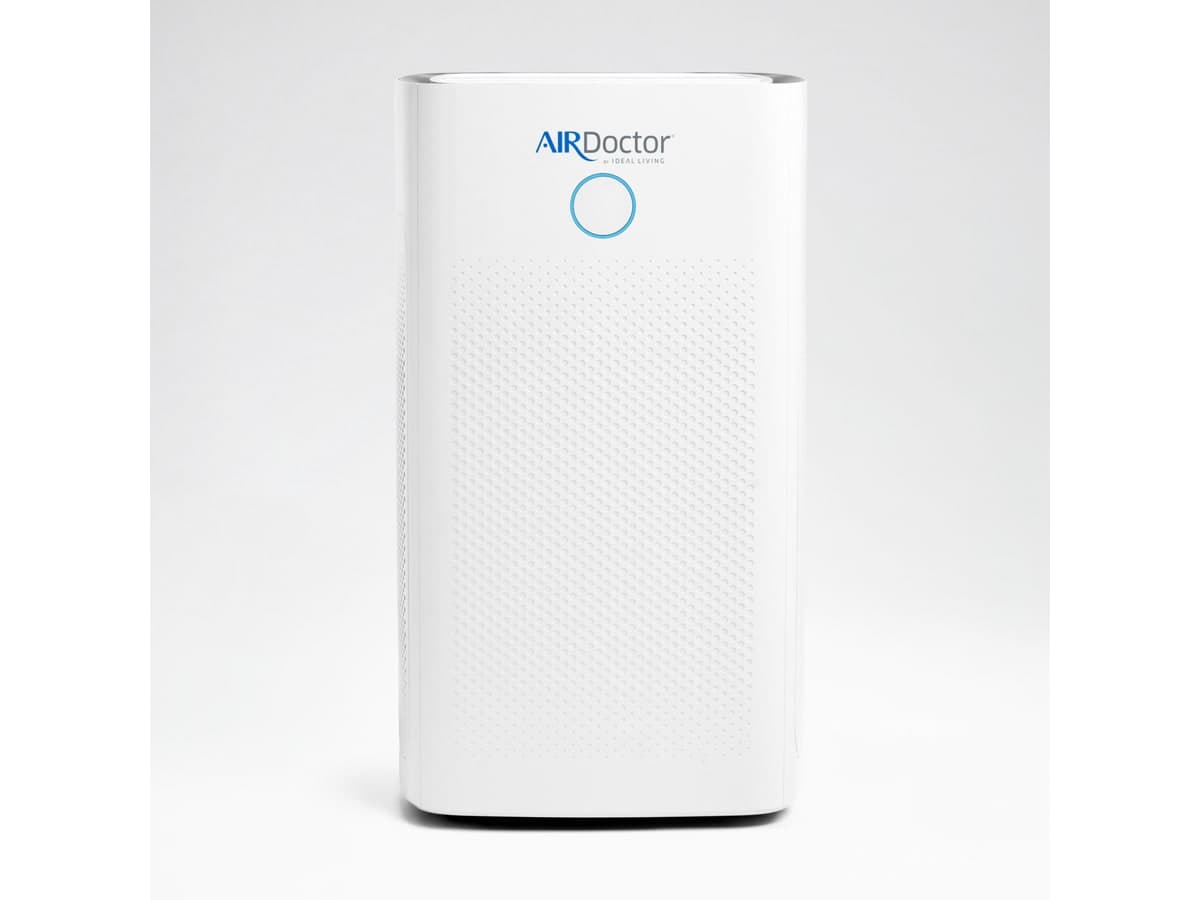
Quick verdict
The AD5500i is the consumer-friendly big-room powerhouse: a CADR around 556 CFM covering rooms up to about 862 sq ft at 4.8 air changes an hour, an UltraHEPA filter AirDoctor rates beyond standard HEPA, a real dual gas/VOC carbon stage, plus Wi-Fi, an app, and an auto sensor. It's easy to understand and strong on both particles and gases — the sweet spot between mainstream units and the specialist IQAir/Airpura machines.
Ideal for
- Large rooms up to ~862 sq ft
- Buyers who want strong particle AND gas removal
- People who want smart features on a serious unit
Not ideal for
- Tight budgets
- Small rooms (overkill)
The full picture
The AD5500i is the consumer-friendly big-room powerhouse: a CADR around 556 CFM covering rooms up to about 862 sq ft at 4.8 air changes an hour, an UltraHEPA filter AirDoctor rates beyond standard HEPA, a real dual gas/VOC carbon stage, plus Wi-Fi, an app, and an auto sensor. It's easy to understand and strong on both particles and gases — the sweet spot between mainstream units and the specialist IQAir/Airpura machines.
AirDoctor AD5500i at a glance
- CADR — smoke (CFM)
- 556
- Coverage (sq ft)
- 862
- Coverage detail
- ~862 sq ft at 4.8 ACH (556 CFM × 1.55); AirDoctor's own figures: 1,043 sq ft at 4 ACH, 2,086 at 2 ACH, 4,172 at 1 ACH
- Filtration
- Pre-filter + UltraHEPA + Dual-Action Carbon/Gas (VOC) filter, plus a built-in ionizer (own button, off by default)
- HEPA filter
- UltraHEPA (99.99% to 0.003 microns, per AirDoctor)
- Filter life (months)
- 12
- Filter cost
- ~$355/yr (1-year combo pack, $354.99: 2 UltraHEPA + 4 Carbon/VOC; ~$395 bought singly). UltraHEPA every 12 mo, Carbon/VOC every 6 mo
- Noise — low (dBA)
- 30
- Noise — high (dBA)
- 50
- Power draw (W)
- 110
- Auto mode
- Yes
- Air quality sensor
- Yes
- Smart app / Wi-Fi
- Yes
- Room size
- Extra-large
- Ozone-free
- Yes
- Energy Star
- No
- Notable feature
- Strong on both particles and gases; app + auto sensor
Source: The 556 CFM smoke CADR is AirDoctor's published figure (consistent with its 4,172 sq ft at 1 ACH claim); no AHAM Verifide listing was found to confirm it, so room size is recalculated with the site's 4.8 ACH rule (CADR × 1.55). Other specs from AirDoctor and major-retailer listings. Research-based; not hands-on tested.
This is a research-based review — our analysis draws on manufacturer specifications, manuals, warranty terms, and verified owner feedback rather than our own hands-on testing, and we note where a detail couldn't be confirmed. How we review
The in-depth review
The AirDoctor AD5500i is a large-room purifier built for people who need to tackle both fine particles and gases — smoke, VOCs, chemical odors, off-gassing — not just dust and pollen. Sold direct at around $999, it combines high airflow with a genuinely capable gas filter, an app, and auto mode. It's the pick when odor and chemical control matter as much as particle removal.
How it performs
On particles, the AD5500i is strong: a CADR of 556 works out to about 862 square feet at 4.8 air changes an hour (AirDoctor's own 1,043 sq ft figure assumes four), putting it firmly in whole-living-space territory. That's enough clean-air output to cycle a large room quickly, which is what you want during wildfire season or with persistent indoor sources. Because CADR should roughly track your room size when you need fast, frequent air changes, the 556 figure gives you real room to work with in spaces up to a few hundred square feet at high turnover.
Filtration is where it separates itself. It uses an UltraHEPA filter for particles plus a dual-layer carbon/VOC filter carrying a meaningful amount of gas-adsorbing media — far more than the thin carbon wraps in typical HEPA purifiers. That larger gas bed is what lets it actually reduce odors and volatile organic compounds instead of just masking them briefly. The trade-off is honesty about limits: no purifier removes carbon monoxide or fixes the source of a smell, so pair it with ventilation and address root causes.
Filters and running cost
This capability isn't free. Filters run about $355 a year — the highest ongoing cost in this comparison — because you're feeding both a dense particle filter and a substantial gas filter. AirDoctor's one-year combo pack ($354.99) holds two UltraHEPA filters, replaced every 12 months, and four Carbon/VOC filters, replaced every six; buying them singly runs closer to $395. Over three years that's about $1,065 in replacements, more than the purifier itself, so factor it into the true cost of ownership before buying. The upside is that the money buys real gas capacity; a cheaper purifier with a token carbon layer simply can't do the same job, so this is a case where the higher spend maps to a genuine capability rather than markup.
At 110 watts on high it draws more power than most rivals here, reflecting the bigger fan needed to push air through two serious filters — still a modest electricity cost, but not the featherweight some competitors are.
Noise and living with it
Noise ranges from about 30 dBA on low to 50 dBA on high, which is well-mannered for a machine moving this much air through dense filtration — quiet enough for a bedroom on lower speeds. A built-in air-quality sensor feeds an auto mode that ramps the fan to match detected pollution, and the app adds remote control, scheduling, and air-quality monitoring from your phone. That makes it a true set-and-forget unit despite its heavy-duty filtration. It's a substantial box, so plan for a unit that sits out in the open with clear airflow rather than tucked away.
Performance breakdown
Research-based editorial judgments from specs, warranty terms, and verified owner feedback — not lab measurements. How we score
Pros and cons
What works
- Very high CADR for large rooms
- Serious dual gas/VOC carbon stage, not just particles
- Wi-Fi, app, and a real auto mode
- Sold direct — price can be shown honestly
What doesn't
- Expensive
- Filters run about $355 a year, several times what mainstream units cost
- Overkill for a small bedroom
More on the AirDoctor AD5500i
Best alternatives to AirDoctor AD5500i
Coway
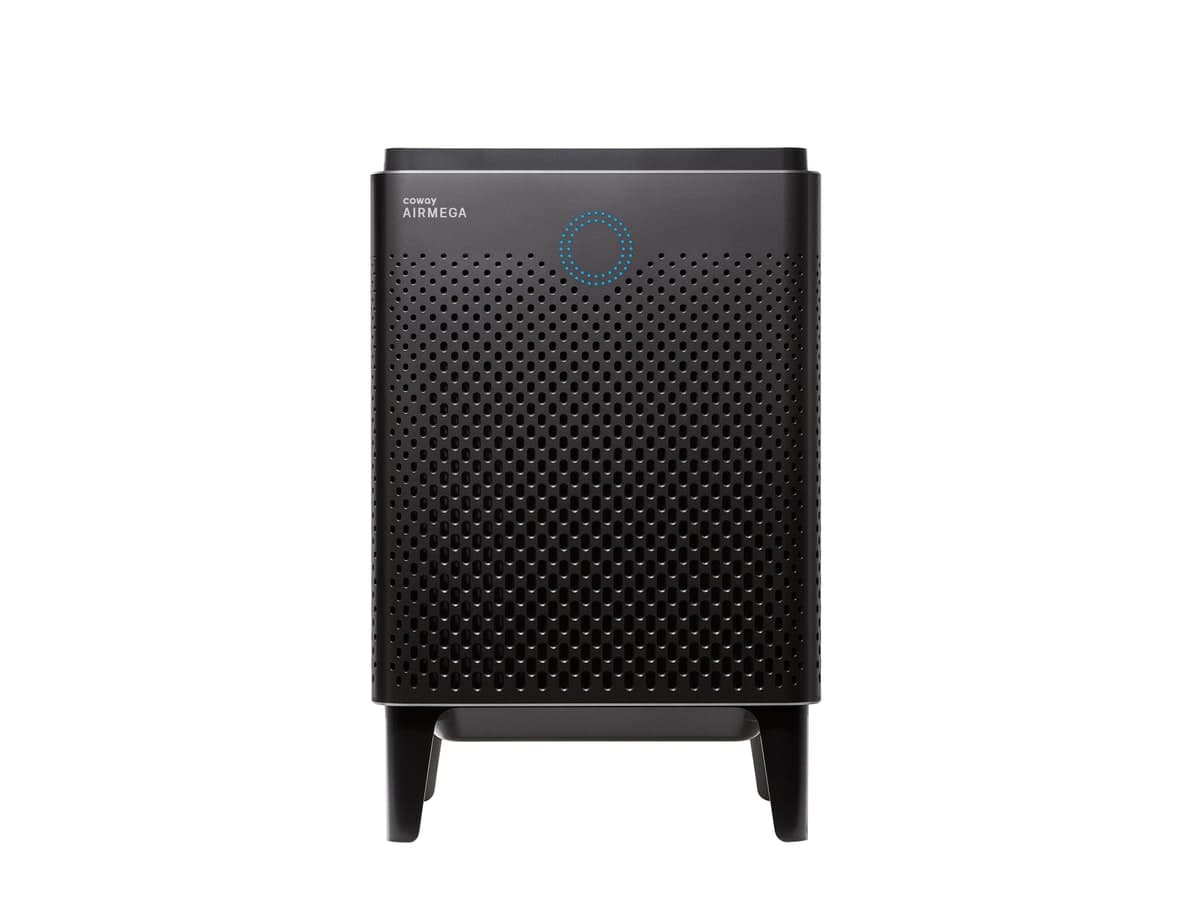
Coway Airmega 400
Best premium large-room
A refined, high-CADR large-room purifier with a genuine dual True HEPA + carbon system and a trustworthy auto mode.
- 328 CFM CADR
- 508 sq ft
- $400–$450 typical street ($649 list at Coway; Wi-Fi 400S $749 list)
Coway
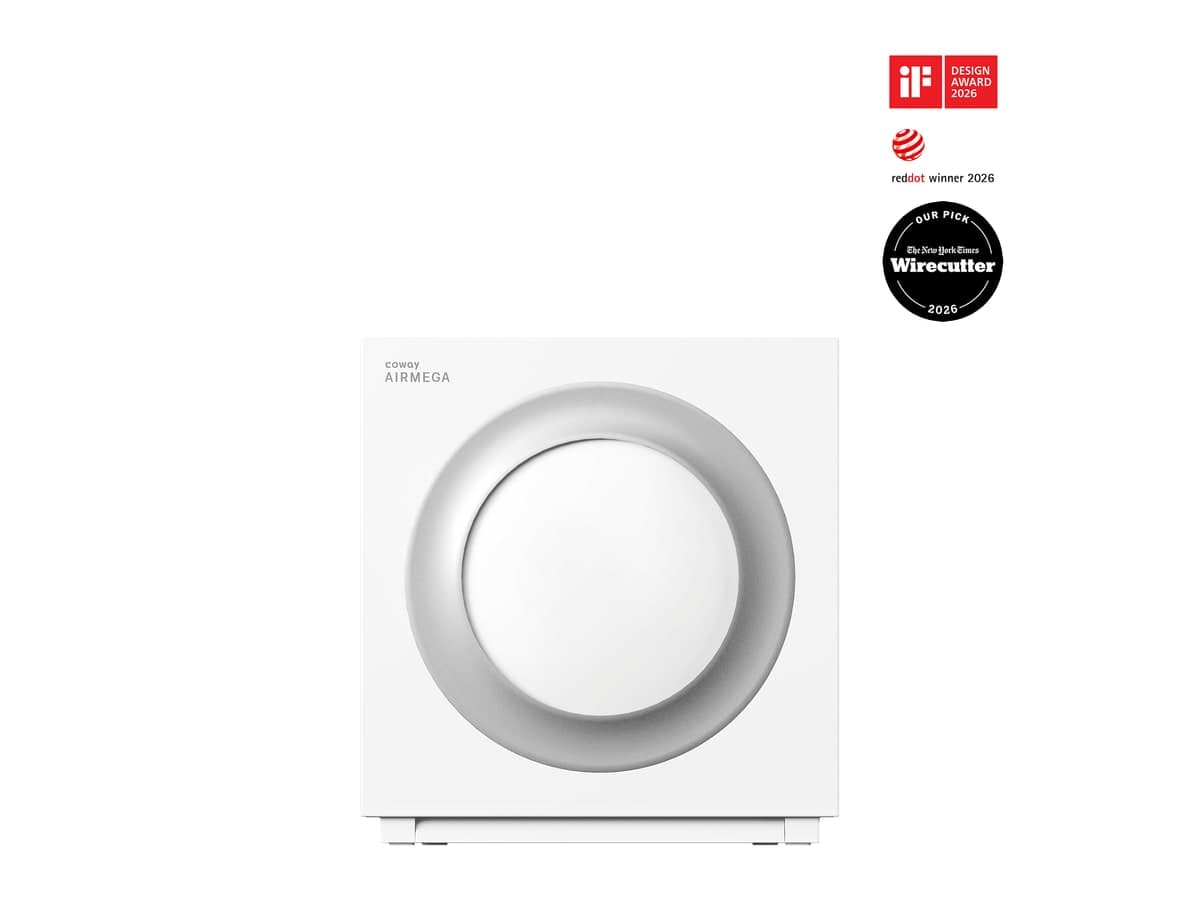
Coway Airmega Mighty2
Best quiet mid-size pick
Coway's 2026 Mighty successor: same 240 CFM class, but quieter, no ionizer, a laser PM sensor and a one-piece $70 filter. Fits rooms to ~370 sq ft.
- 240 CFM CADR
- 372 sq ft
- $230–$270
IQAir
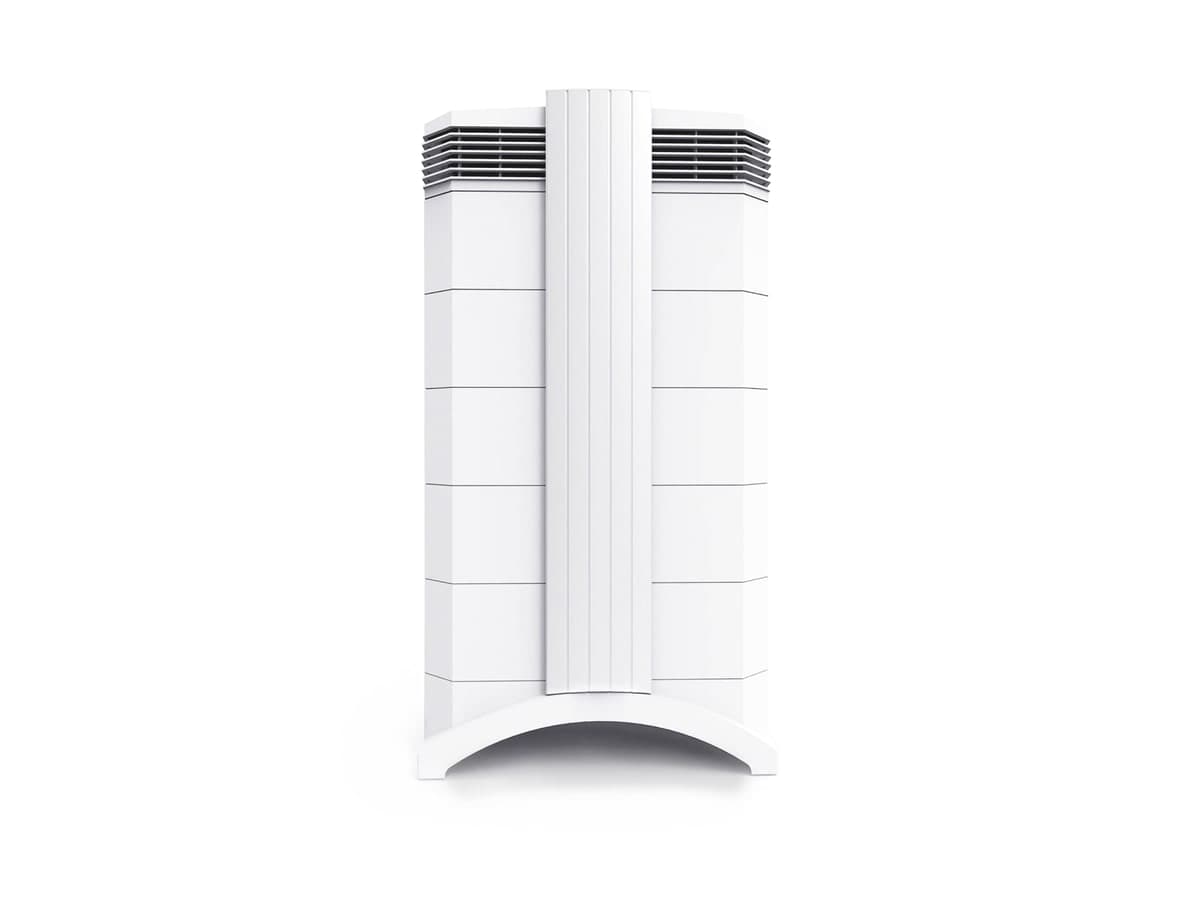
IQAir HealthPro Plus
Best over $1,000
IQAir's HealthPro Plus XE pairs HyperHEPA with a 5 lb V5-Cell gas cartridge and adds Wi-Fi, a PM2.5 sensor and Smart Mode. No CADR is published.
- 1125 sq ft
- $1,199.99 at IQAir (HealthPro Plus XE)
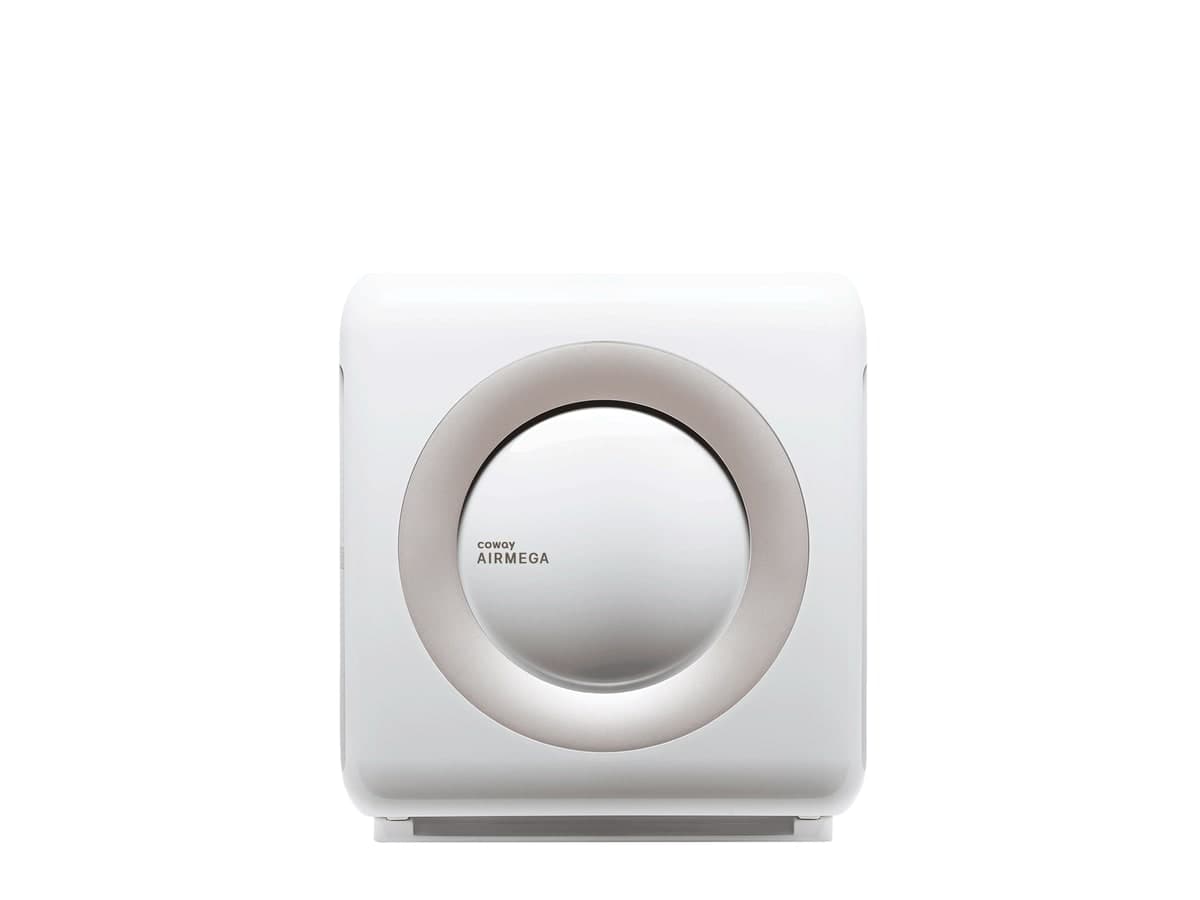
Coway
Coway Airmega AP-1512HH Mighty
Best overall
The value benchmark: strong CADR for a mid-size room, a genuine True HEPA + carbon stack, quiet auto mode, and cheap filters.
- 233 CFM CADR
- 361 sq ft
- $220–$250
Frequently asked questions
Is the AirDoctor AD5500i better than a Coway or Levoit?
For large rooms and for gas/VOC removal, yes — it moves far more air (CADR ~556 CFM) and has a much more serious carbon stage. For a small bedroom, a Coway Mighty or Levoit does the job for a fraction of the price. Match the machine to the room.
What does 'UltraHEPA' mean?
It's AirDoctor's name for a filter it rates as capturing even finer particles than the standard True HEPA 0.3-micron benchmark. Independent verification of the exact figure varies, but in practice it's a high-quality sealed particle filter paired with a strong gas filter.
How big a room does the AD5500i cover?
About 862 sq ft at the 4.8 air-changes-per-hour standard this site uses (AirDoctor's own figure is 1,043 sq ft at 4 air changes per hour), making it a genuine large-room / open-plan machine.
Does the AirDoctor AD5500i have an ionizer?
Yes. It has a built-in ionizer with its own button, and AirDoctor ships it switched off. The particle and carbon filters do the cleaning on their own, so you can leave it off; independent testing (Modern Castle) measured 0.0 ppm ozone with it running.