The best air purifier for smoke has two jobs: enough clean-air output to clear the haze from your room, and enough activated carbon to pull out the smell. The AirDoctor AD5500i still does both best, the new Blueair Blue Pure 211i Max delivers the most smoke CADR per dollar, and the Winix 5530 is the cheapest way to get a proper granular carbon bed. Smoke is fine particles that make the air look hazy plus gases and odor that make it smell, and only the carbon stage touches the second half. Each pick below links to our full research-based review.
Quick answer
| Model | CADR (smoke) | Coverage | Filters/yr | Best for |
|---|---|---|---|---|
| AirDoctor AD5500i | 556 CFM | ~862 sq ft | ~$355 | Best overall (gases) |
| IQAir HealthPro Plus | — | 1,125 sq ft | ~$200 | Premium smoke & VOCs |
| Blueair Blue Pure 211i Max | 435 CFM | ~674 sq ft | ~$93–$140 | Most CADR per dollar |
| Coway Airmega 400 | 328 CFM | ~508 sq ft | ~$129 | Large rooms, no ionizer |
| Winix 5530 | 253 CFM | ~392 sq ft | ~$80 list | Best value for the smell |
| Winix 5500-2 | 232 CFM | ~360 sq ft | ~$60 | Budget |
Coverage is smoke CADR × 1.55, which works out to about 4.8 air changes an hour under an 8 ft ceiling. IQAir rates its HyperHEPA media rather than publishing an AHAM CADR, so its 1,125 sq ft figure is IQAir's own and no smoke CADR is listed. The 211i Max figure is for Blueair's standard filter; the SmokeBlock version runs about $113–$170 a year.
Key takeaways
- Smoke is particles AND gases. True HEPA clears the haze; only a genuine activated-carbon stage removes the smell — and thin carbon layers are where cheaper units disappoint.
- CADR per dollar has jumped. The 211i Max puts 435 CFM of smoke CADR on the floor for $230–$350, more than the Coway Airmega 400 manages at a higher street price. Its carbon is the trade-off.
- For wildfire smoke, size up. Aim for a CADR close to the room's square footage (not the usual two-thirds) so the air turns over fast enough to keep up.
- A purifier does not remove carbon monoxide. It's no substitute for a CO detector or for leaving a space with active combustion.
Best overall for smoke: AirDoctor AD5500i
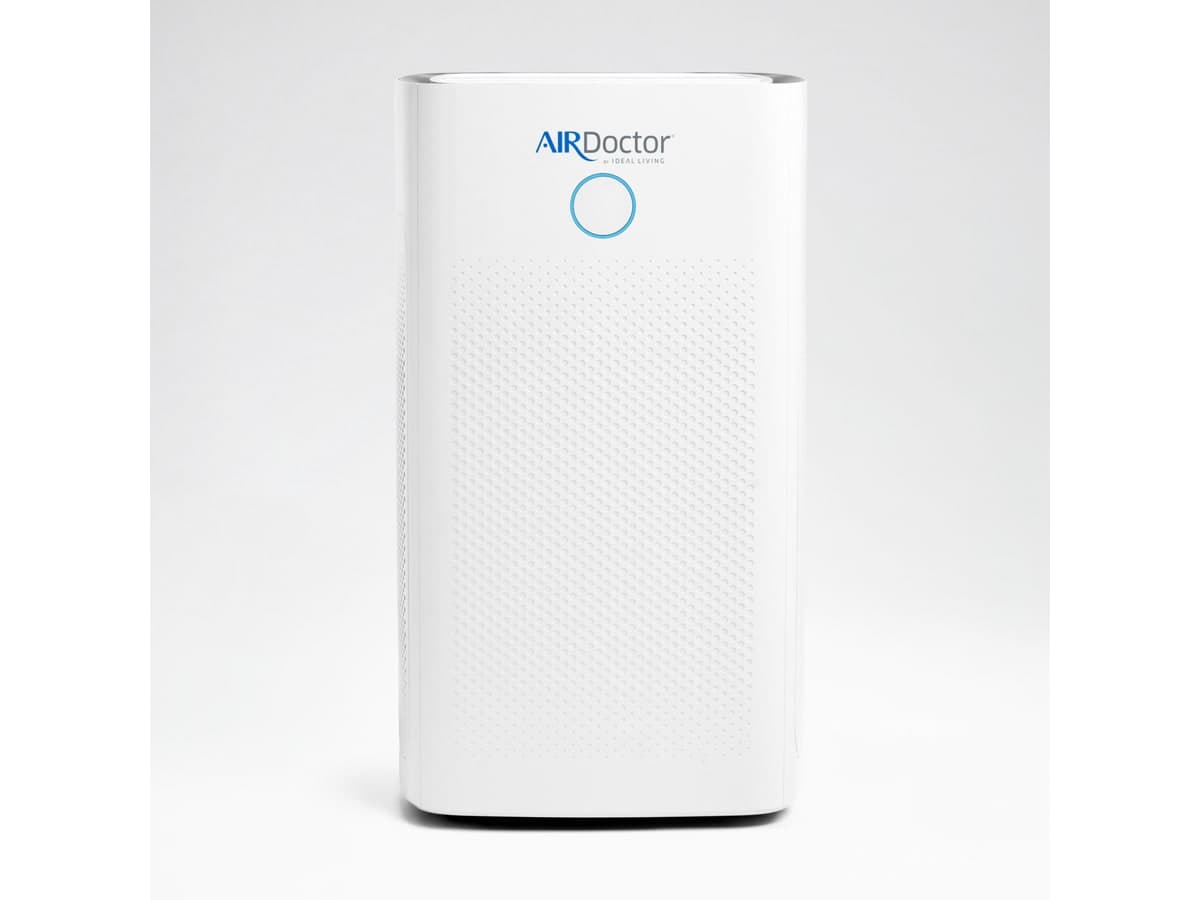
Premium · 556 CFM CADR · 862 sq ft
Paid links: we may earn a commission at no cost to you. Disclosure
The AD5500i stays our top smoke pick because it takes the gas half of the problem seriously. On top of an UltraHEPA filter for the particles, it runs a serious dual carbon and VOC gas stage — far more odor and gas capacity than the thin carbon in most units — which is what actually clears the smell of smoke rather than just the haze. Its 556 CFM smoke CADR is the highest here and works out to about 862 sq ft by our sizing rule (AirDoctor's own 1,043 sq ft figure assumes four air changes rather than 4.8), and its Wi-Fi app and auto sensor let it ramp up on its own when the air turns. Filters run about $355 a year, since the carbon/VOC filters are changed every six months, which is the trade for that gas capacity, but for smoke specifically it's money well spent.
Best premium for smoke and VOCs: IQAir HealthPro Plus
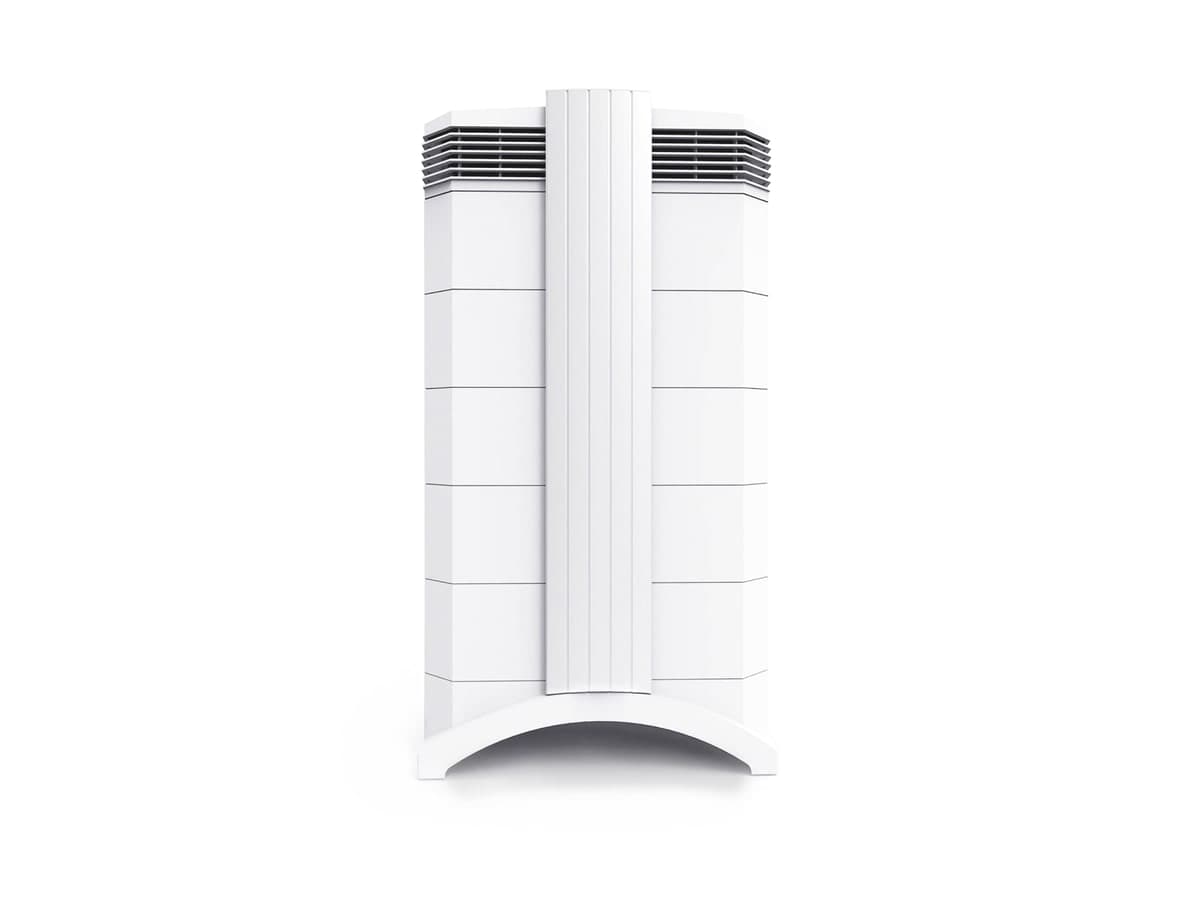
When you want the strongest possible answer to smoke and the VOCs that ride along with it, the HealthPro Plus is the benchmark. Its HyperHEPA filter is rated to capture particles well below the standard HEPA threshold, and its large V5-Cell gas-and-odor stage is a substantial bed of carbon built specifically for gases and smells — the reason it's the premium reference for particles and gases alike. It covers up to about 1125 sq ft, so it suits a large room, but it's a real investment at around $1,199 and the filters are costly to replace. The current XE version adds an app and a PM2.5 sensor that ramps the fan up when smoke particles rise. For sheer smoke-and-gas filtration quality, though, nothing here beats it.
Most smoke CADR per dollar: Blueair Blue Pure 211i Max
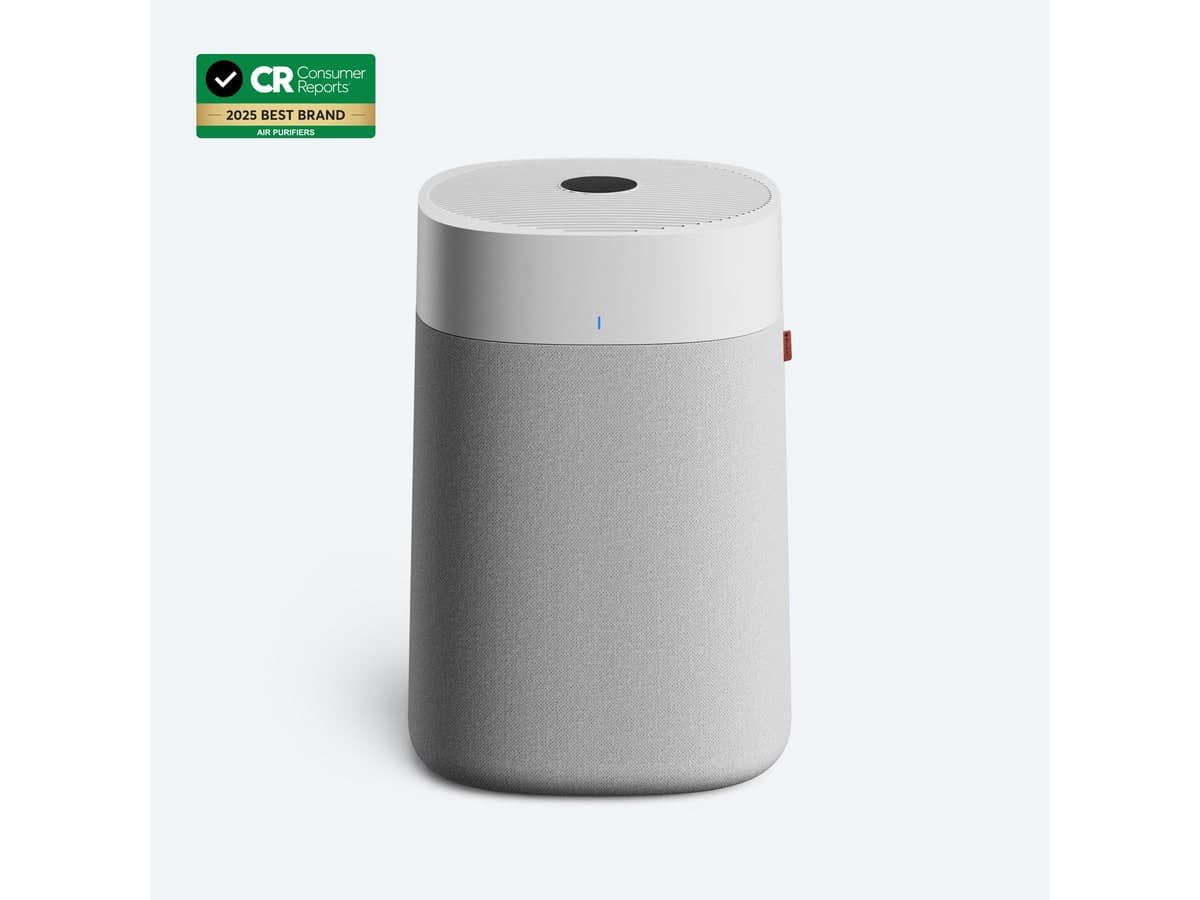
Mid-range · 435 CFM CADR · 674 sq ft
Paid links: we may earn a commission at no cost to you. Disclosure
The Blueair Blue Pure 211i Max replaces the 211+ in Blueair's lineup and is the strongest new reason to rethink a smoke shortlist. It's rated at 435 CFM for smoke, good for about 674 sq ft at the standard air-change rate or a roughly 18×24 living room at the higher wildfire target, and it lists at $349.99 while selling for as little as about $230. That is about four-fifths of the AirDoctor's particle throughput for a third of its price or less, and it draws only 46 W at full speed.
The smart features finally match the airflow. PM1, PM2.5 and PM10 sensors drive an auto mode that climbs when a pan scorches or smoke seeps in, and the app adds schedules and Alexa or Google control, none of which the old 211+ had.
Carbon is where it gives ground. Blueair pitches the standard $69.99 Particle + Carbon filter at light household odors, and it lasts six to nine months, so a heavy smell problem calls for the SmokeBlock filter, which Blueair says doubles the carbon for $84.99. Doubled is still a layer, not the deep bed in the AirDoctor or IQAir. The HEPASilent design also adds an electrostatic charging stage you can't switch off, so anyone who wants purely mechanical filtration should look at the Coway below.
Best large-room pick without an ionizer: Coway Airmega 400
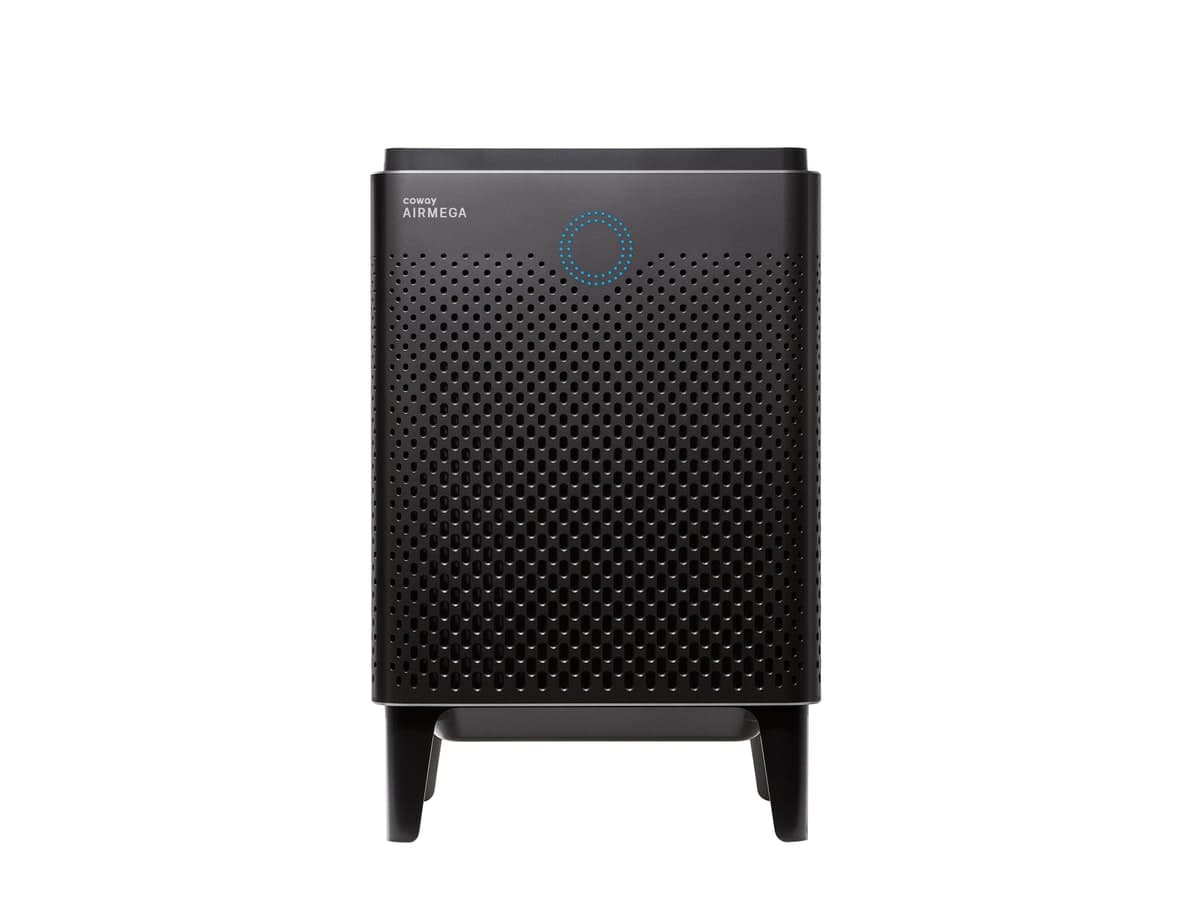
Premium · 328 CFM CADR · 508 sq ft
Paid links: we may earn a commission at no cost to you. Disclosure
The Airmega 400 used to own the big-room smoke slot on output alone; now that the 211i Max out-flows it for less, its case rests on how it filters. Two full True HEPA and carbon sets feed a 328 CFM smoke CADR, enough for about 508 sq ft at our sizing standard, and there is no ionizing stage anywhere in the airflow path. It idles at a quiet 22 dBA while its auto mode and sensor handle speed changes, and its filter pair costs about $129 and lasts a year, roughly what either 211i Max filter costs over the same stretch. Street prices sit around $400–$450 and the base model has no app, but if smoke drifts across a big open room and you want strictly mechanical filtration, this is the one.
Best value for smoke smell: Winix 5530
Winix
5530
Mid-range · 253 CFM CADR · 392 sq ft
Paid links: we may earn a commission at no cost to you. Disclosure
The Winix 5530 is the most affordable unit here with a carbon stage built from granular pellets rather than a dusted sheet. Its Filter Q (part 1712-0123-00) pairs True HEPA with an AOC carbon panel holding about 226 g of carbon by CleanAirAdviser's count, which gives cooking smoke and a neighbor's cigarette far more to stick to than a typical combination wrap. On particles it's AHAM-rated at 253 CFM for smoke, a fit for a 392 sq ft room such as a 16×24 living space, and it usually sells for $180–$220.
It takes this slot from the Coway Airmega AP-1512HH Mighty because it beats that model on smoke CADR (253 vs 233 CFM) and usually on price, while adding Wi-Fi, the Winix Smart app and a light sensor that drops it into Sleep in a dark room. The costs to know: Filter Q lists at $79.99 a year (closer to $50–$65 on sale), and its carbon is replaced rather than rinsed. PlasmaWave, Winix's ionizer, can be switched off if you'd rather not run it.
Best budget for smoke: Winix 5500-2
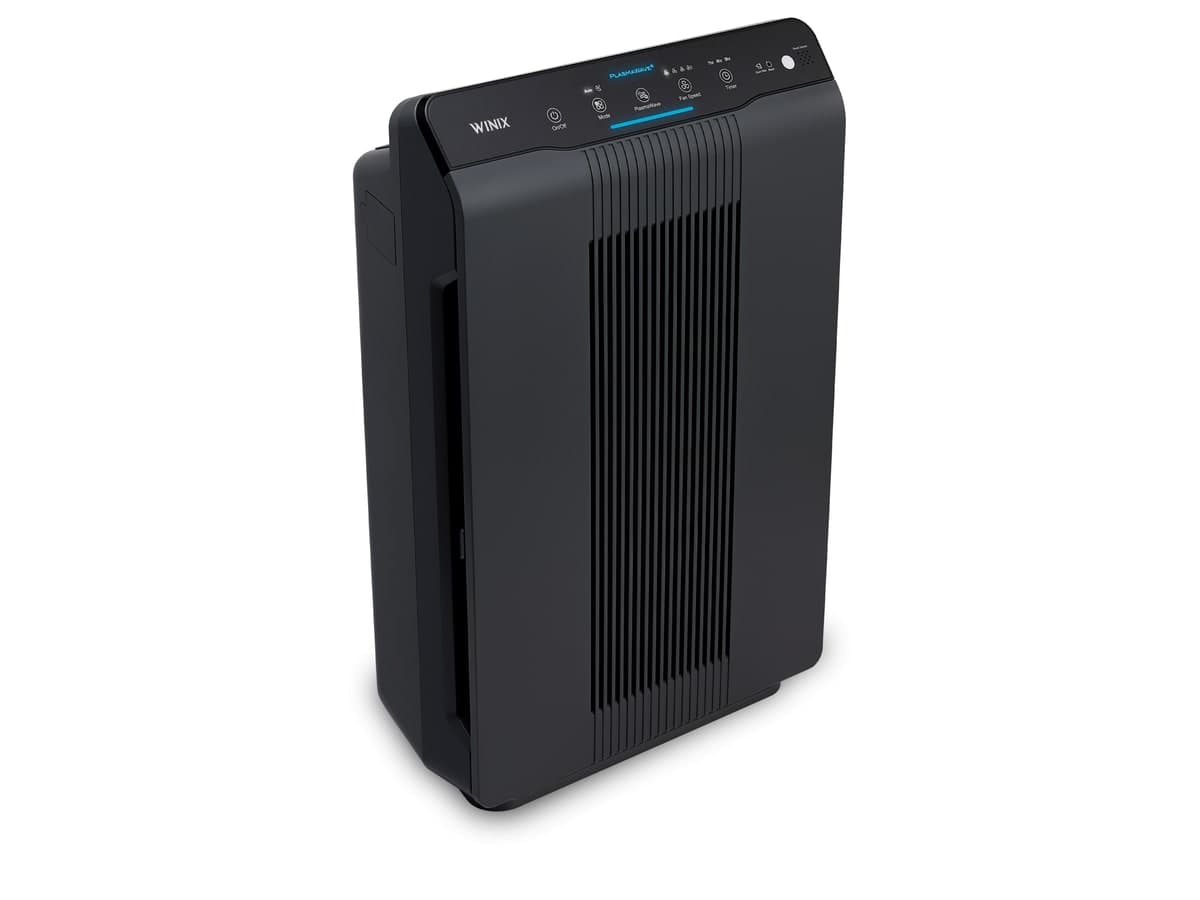
For smoke on a tight budget, the 5500-2 still punches above its roughly $160 price. It covers about 360 sq ft on a 232 CFM smoke CADR, and its washable carbon pre-filter is the money-saver: you rinse it instead of buying a new one, which keeps filters near $60 a year. Its auto mode and sensor respond to haze without babysitting, and PlasmaWave can be switched off. The carbon is lighter than the 5530's granular panel and the two units take different filters (Filter H here, Filter Q on the 5530), so pick the 5500-2 for occasional smoke on the lowest running cost and the 5530 when the smell is the bigger problem.
How to choose the right one for you
Start with the room and the kind of smoke. Measure the space and use the room-size to CADR calculator to set a target — two-thirds of the square footage for everyday smoke, but bump it up toward the full square footage if you're sizing for wildfire season, when the CADR and CFM numbers matter most. Then decide how much carbon the smell needs. A constant heavy source calls for the deep beds in the AirDoctor or IQAir; regular cooking or a smoker next door is a good match for the Winix 5530's granular panel; and if the haze in a big room bothers you more than the odor, the 211i Max gives you the most airflow for the money. Our explainer on activated carbon filters shows why carbon weight decides how long a unit keeps the smell down. If the space itself is the challenge, the best air purifiers for large rooms roundup goes deeper. And remember what no purifier does: it won't remove carbon monoxide, so it's a complement to a CO detector, never a replacement — the EPA's guidance on wildfire smoke and indoor air is worth reading before smoke season.
Frequently asked questions
Do air purifiers actually remove smoke?
Yes, the two parts of it. Smoke is fine particles plus gases and odor, so a purifier with True HEPA (for the particles) and a real activated-carbon stage (for the gases and smell) removes both. The catch is the carbon — thin carbon layers clear the haze but leave the smell, which is why a serious carbon stage matters for smoke.
Do air purifiers help with wildfire smoke?
Yes, and they're one of the best tools for it, but size up. For wildfire smoke you want a much higher air-change rate than everyday use, so aim for a CADR roughly equal to the room's square footage rather than the usual two-thirds. Close windows, run it on a higher speed, and it can keep an indoor space markedly cleaner than outside.
Does an air purifier remove the smell of cigarette or cigar smoke?
Only with enough activated carbon. The smell is a gas that HEPA can't touch, so odor removal depends entirely on the carbon stage — its amount and how fresh it is. Heavier carbon beds hold up longer against heavy smoke; thin ones saturate fast and stop deodorizing.
Is the Blueair 211i Max good for smoke?
For smoke particles, yes: its 435 CFM smoke CADR is the second highest on this list and it costs a fraction of the AirDoctor. For the smell, the standard filter carries only a light carbon layer, so buy Blueair's SmokeBlock version ($84.99, about twice the carbon) if odor is the main complaint.
Can an air purifier protect me from carbon monoxide in smoke?
No — and this is important. Neither HEPA nor activated carbon removes carbon monoxide, which is a small, dangerous gas molecule a purifier does not capture. An air purifier is not a substitute for a carbon monoxide detector or for getting out of a space with an active fire or combustion source.
Where should I place an air purifier during a smoke event?
In the room where you spend the most time, with the windows and doors closed to keep outside smoke out. Give it a few feet of clearance so air circulates, run it on a higher speed while the smoke is heavy, and create a single 'clean room' rather than trying to treat the whole house at once.