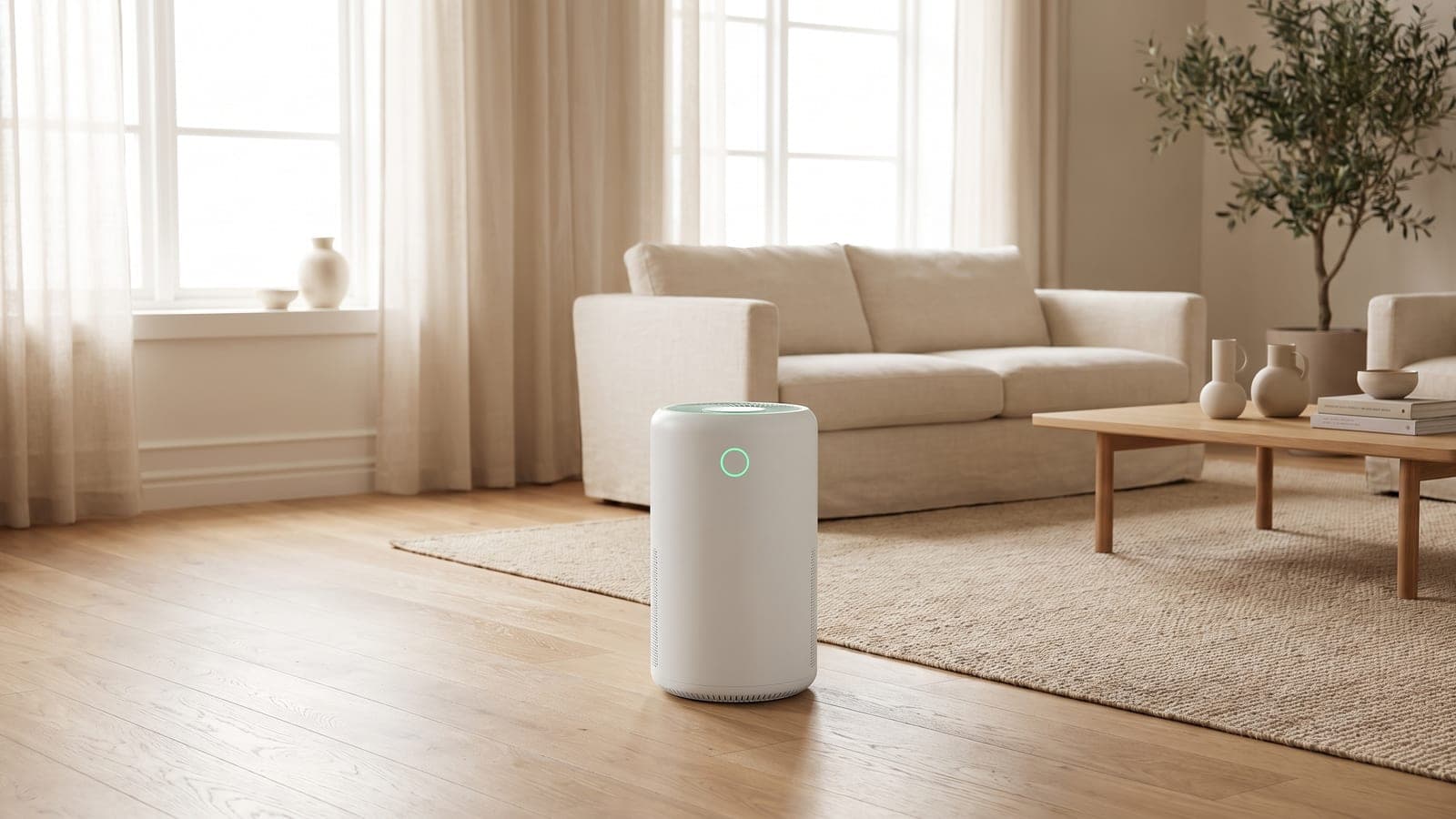
The best place for an air purifier, for most people, is the bedroom — you spend roughly a third of your day there, and clean air while you sleep is where a purifier earns its keep. Within a room, the rule is simple: put it somewhere open, with clearance around its vents, ideally near the source of the pollution or where you actually sit. Where you place an air purifier matters almost as much as which one you buy, because a good unit crammed into a bad spot cleans a fraction of what it could.
Key takeaways
- Pick the right room first — the bedroom for most people, where you spend hours breathing.
- Give it clearance — a few inches to a foot around the intake and outlet, never jammed behind furniture.
- Place it near the pollutant source when there is one — litter box, kitchen doorway, workshop corner.
- One unit per room beats one unit for the house; walls and doors block airflow.
- Keep it where you'll leave it running — the perfect spot is the one you won't unplug.
Which room should the air purifier go in?
Start by choosing the room, not the corner. A purifier only cleans the air it can reach, so put it where you spend the most time breathing. For nearly everyone that's the bedroom — eight hours a night of continuous clean air, during the stretch when allergy and asthma symptoms often flare. If you can only afford one unit, that's where it goes.
After the bedroom, weigh the rooms by hours spent and pollution present: a home office you sit in all day, a living room where the family gathers, or the room nearest a specific problem like a wood stove or a litter box. Matching the unit's clean-air output to that room is step one — the room size calculator tells you the CADR the space needs, and the air purifier finder narrows the models that fit it.
Why does an air purifier need clearance around it?
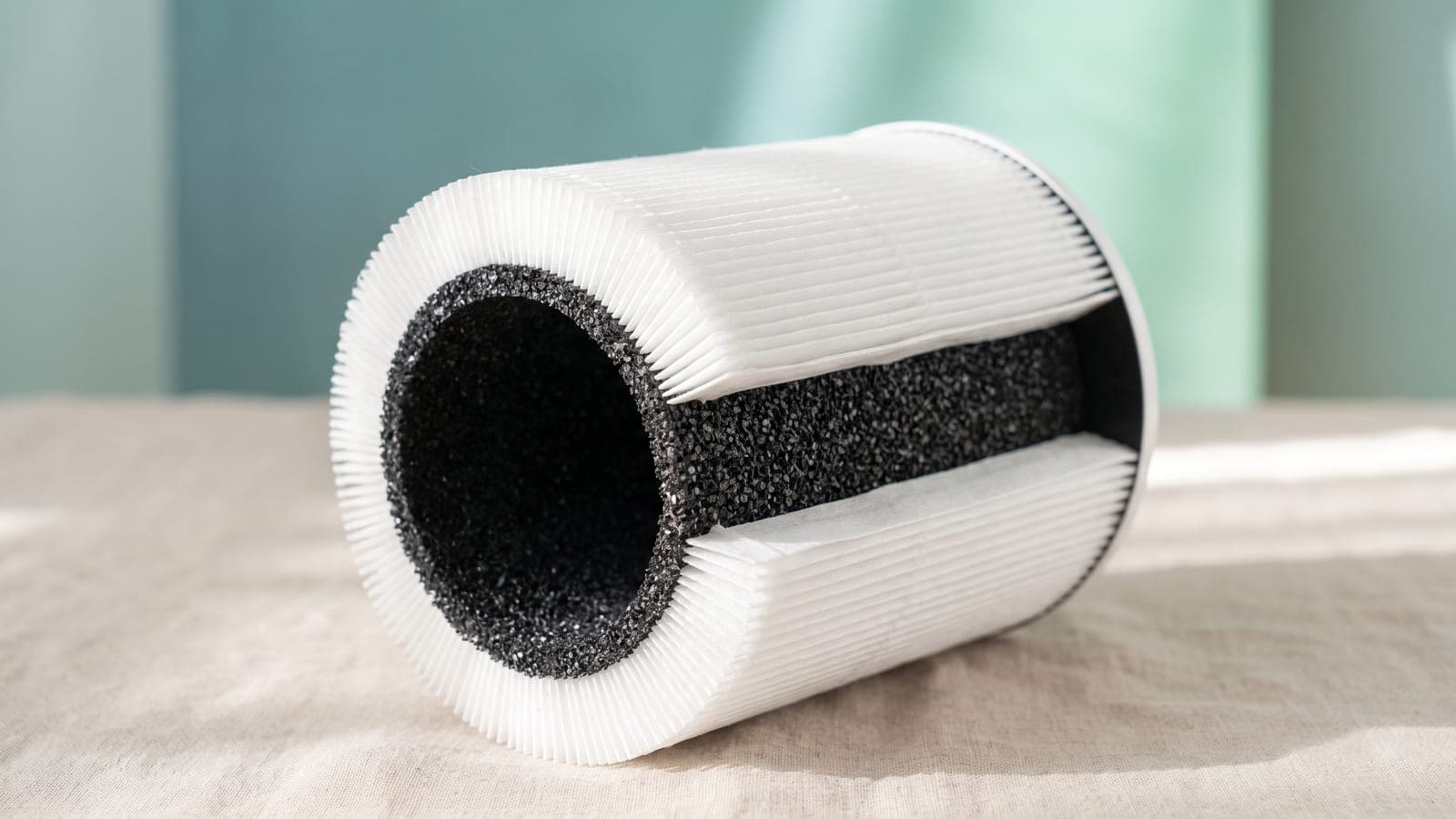
A purifier breathes: it pulls air in through an intake and pushes clean air out through an outlet, often on different sides. Block either one and you choke the airflow — the fan works but moves far less air, so the real-world cleaning falls well short of the rated clean air delivery rate.
That's why the corner behind the couch is the worst common spot. Aim for a few inches to about a foot of open space around the intake and outlet vents. Keep it away from walls it exhausts straight into, out from behind curtains, and clear of furniture that caps its top or hugs its sides. An open placement lets the unit draw from and return to the whole room, which is exactly the circulation you're paying for.
Should it go near the pollutant source?
When there's an obvious source, yes — intercepting pollution before it spreads is more effective than chasing it across the room. A few good matches:
| If your concern is… | Try placing the purifier… |
|---|---|
| Pet dander and odor | Near the litter box or the pet's favorite spot |
| Cooking smoke and smells | Near the kitchen doorway (not directly over the stove) |
| Tracked-in pollen | Near the entry you use most |
| Hobby or workshop dust | In the corner where the activity happens |
The idea is to catch particles at their origin, so fewer of them disperse through the room in the first place. Just don't put the unit directly on top of a heat or grease source like a stovetop — position it to catch the drift, a step or two away.
Floor or elevated — does height matter?
It can help. Many particles and finer pollutants circulate at breathing height rather than settling instantly, so raising the purifier a foot or two off the floor — on a sturdy stool, low shelf, or table — can improve how well it picks up and redistributes air. It also gets the intake out of the dust and pet hair that collects at floor level.
This isn't a strict rule, and plenty of units are designed to sit on the floor and draw from the sides or bottom. The priority order is: keep the vents unobstructed first, get it near the source second, and elevate it slightly if that's easy third. A well-placed floor unit beats a poorly placed elevated one.
Can one air purifier cover the whole house?
Not effectively, and this is the placement mistake that disappoints the most people. Walls and closed doors block airflow, so a single purifier mostly cleans the room it's standing in. Air doesn't flow freely from a living room, down a hall, and into a bedroom the way clean-air marketing implies — it stalls at every doorway.
The realistic approach is one unit per room you actually care about, each sized for that space, rather than one oversized machine trying to serve the house through open doors. If budget forces a single unit, keep it in one room with the door closed to concentrate its effect, and move it to whichever room you're using — a purifier cleaning one closed room well beats one spread thin across several.
What's the single most important placement rule?
Put it where you'll leave it running. A purifier only works while it's on, so the ideal location is also the practical one — somewhere it isn't in the way, isn't tripping anyone, and won't get unplugged to free the outlet. If the "perfect" airflow spot is one you'll resent and disable, it isn't the perfect spot.
So balance the ideals — right room, good clearance, near the source, slightly elevated — against real life. A well-sized unit, in the room you sleep in, with a bit of breathing room around it, left running around the clock, gives you nearly all the benefit that placement can offer. Get those basics right and you've done far more for your air than agonizing over the exact inch ever would.
Frequently asked questions
Where is the best place to put an air purifier?
For most people, the bedroom — you spend about a third of your day there, and clean air while you sleep does the most good. Within the room, put it in an open spot with clearance around the intake and outlet, ideally near the source of the pollution or where you sit.
Should an air purifier go on the floor or up higher?
Either works, but slightly elevated often helps — many pollutants and finer particles circulate at breathing height, and raising the unit a foot or two off the floor can improve air pickup and distribution. Just keep the intake and outlet unblocked wherever you place it.
How much space should be around an air purifier?
Give it room to breathe — a few inches to about a foot of clearance around the intake and outlet vents. Jammed in a corner, behind a couch, or under a shelf, the unit starves for air and cleans far less than its rating suggests.
Can one air purifier clean the whole house?
Not really. Walls and closed doors block airflow, so a single unit mostly cleans the room it's in. One purifier per room you care about beats one large unit trying to cover the house through doorways.
Should I put the air purifier near a window or door?
Near a doorway can help if that's where pollutants enter — like a kitchen entrance for cooking smoke. But avoid placing it right in a strong draft from an open window, which can pull unfiltered outdoor air past it faster than it can clean.