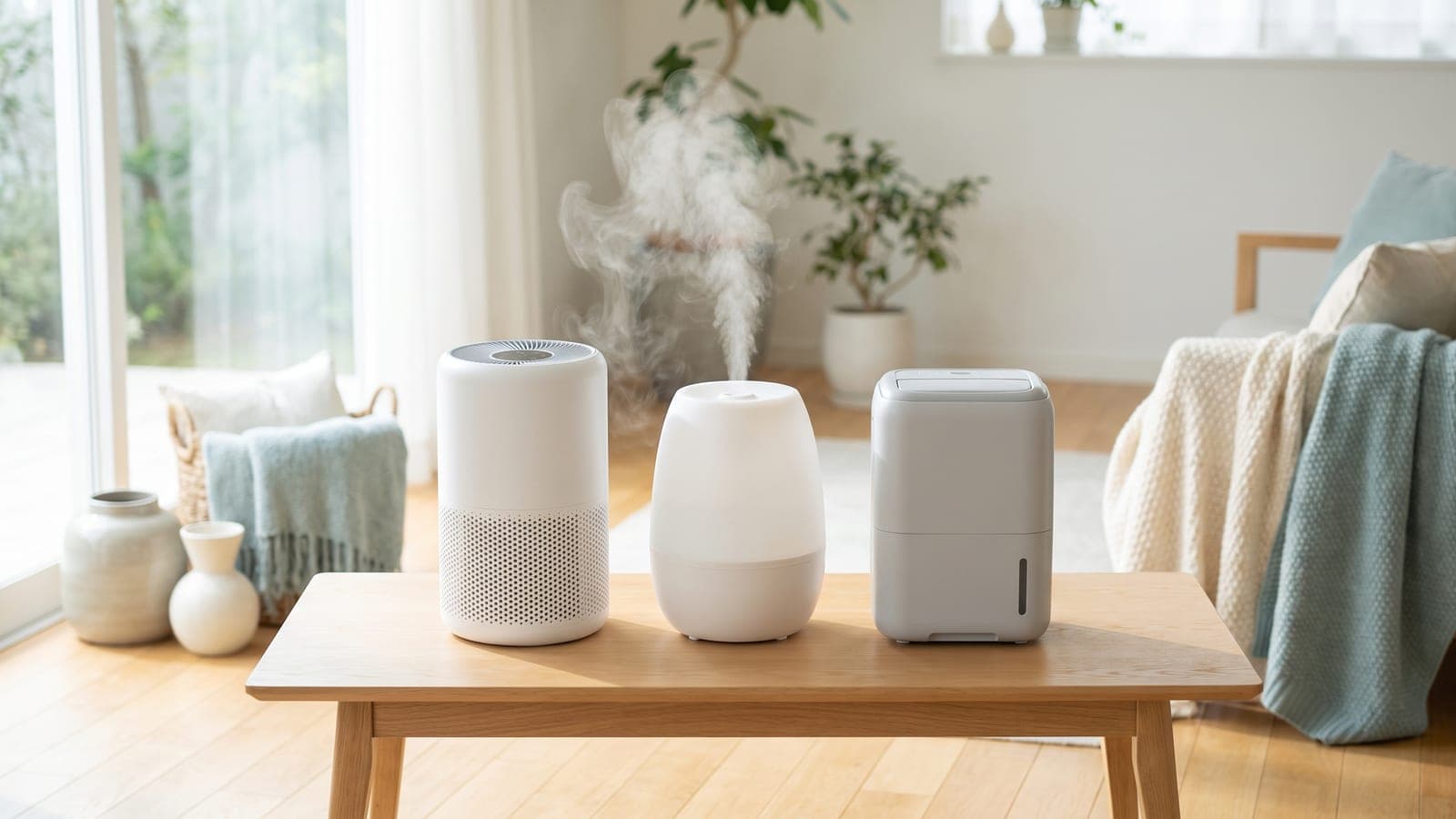
If you're weighing an air purifier vs humidifier — or trying to figure out where a dehumidifier fits — the short answer is that they solve three different problems and don't overlap. An air purifier removes airborne particles (and, with carbon, some gases and odors). A humidifier adds moisture to air that's too dry. A dehumidifier removes moisture from air that's too damp. A purifier does not change your humidity at all, and a humidifier or dehumidifier does nothing to filter particles. Pick based on the symptom you're trying to fix.
Key takeaways
- An air purifier cleans air; it does not change humidity. It traps particles like dust, pollen, dander, and smoke — and with activated carbon, some odors and gases.
- A humidifier adds moisture to dry air, easing dry skin, static, and scratchy sinuses. It does not clean the air.
- A dehumidifier removes moisture from damp air, discouraging mold and dust mites. It also does not clean the air.
- They're complementary, not interchangeable — many homes run a purifier plus a humidifier in winter, or a purifier plus a dehumidifier in a damp basement.
- Match the device to the symptom: particles → purifier; dry air → humidifier; damp air → dehumidifier.
What does an air purifier actually do?
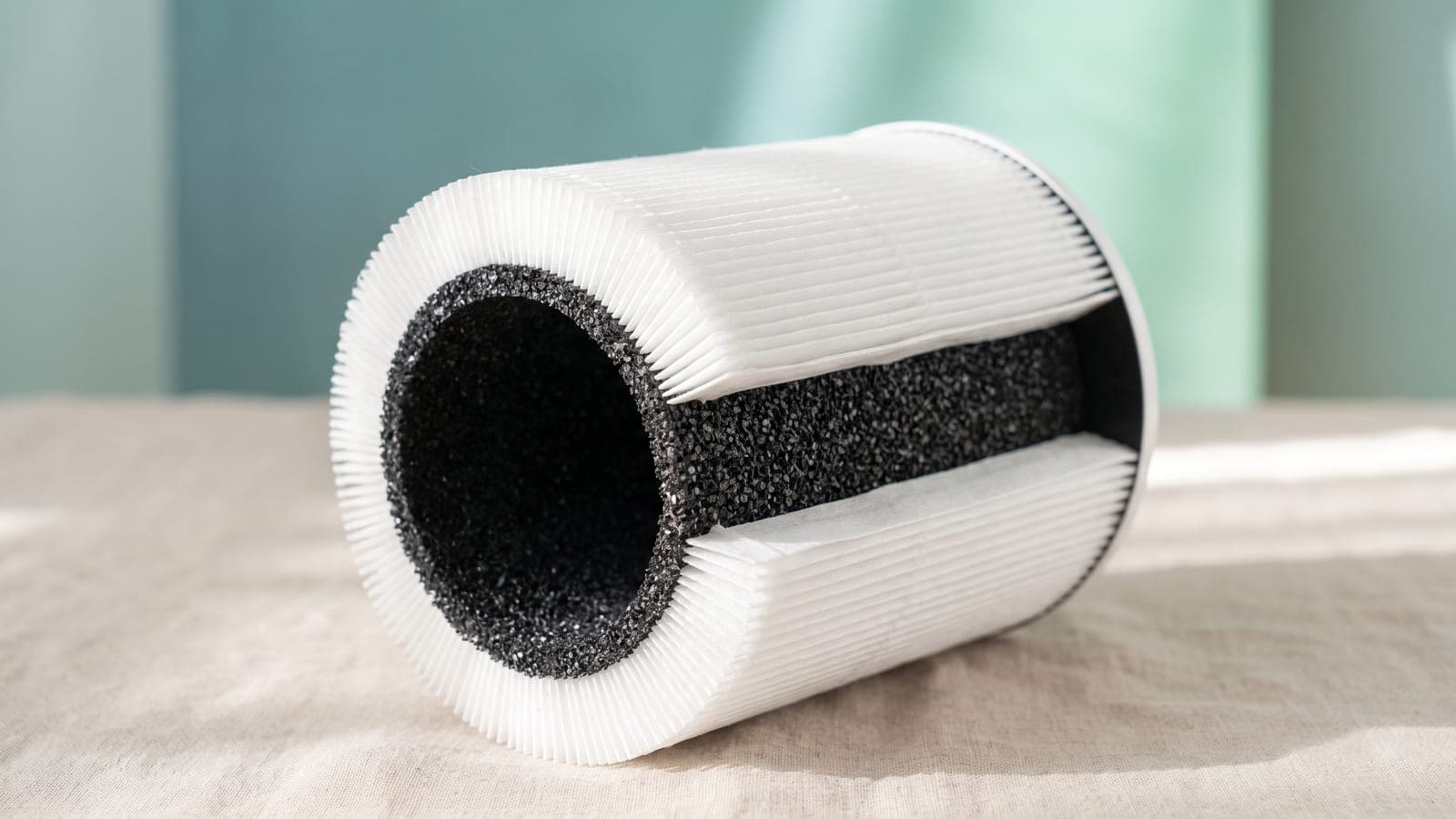
An air purifier pulls room air through a filter and pushes cleaner air back out. A genuine True HEPA filter captures 99.97% of particles at 0.3 microns — which covers most of what floats around a home: pollen, fine dust, pet dander, mold spores, and the particulate in wildfire or cooking smoke. Add an activated carbon stage and it also reduces odors, cooking smells, and VOCs.
What it does not do is touch the water content of the air. There's a persistent myth that a purifier "freshens" a room by changing its moisture, but the physics don't support it — it only moves air across a filter. If your problem is dryness or dampness, a purifier is the wrong tool no matter how good it is at particles.
What does a humidifier do, and when do you need one?
A humidifier adds water vapor to the air, raising relative humidity. You reach for one when air is too dry — most often in winter, when cold outdoor air and forced-air heating drop indoor humidity well below comfortable levels. The telltale signs are dry skin and lips, static shocks, cracking wood furniture, bloody noses, and a scratchy throat that's worse in the morning.
The EPA and other health sources generally suggest keeping indoor relative humidity in roughly the 30–50% range. A humidifier nudges dry air up toward that band. It's worth noting a humidifier needs regular cleaning — a neglected tank can grow mold and bacteria and spray them into the room, which is exactly the opposite of what you want. For any respiratory condition, talk to a doctor about what humidity level is right for you.
What does a dehumidifier do, and when do you need one?
A dehumidifier is the humidifier's mirror image: it pulls moisture out of air that's too damp. You need one when humidity runs high — damp basements, humid climates, laundry rooms, and muggy summer months. The warning signs are condensation on windows, a musty smell, clammy air, warping, and visible mold or mildew in corners and on grout.
High humidity is more than uncomfortable; it's what mold and dust mites need to thrive. Keeping humidity below about 50% removes the condition they depend on. That's why a dehumidifier is the front-line tool for mold prevention — it addresses the moisture source in a way a purifier never can. A purifier can capture some spores already airborne, but it won't dry out a damp basement.
Air purifier vs humidifier vs dehumidifier: the quick comparison
Here's the three-way split in one view:
| Device | What it does | When to use it | What it won't do |
|---|---|---|---|
| Air purifier | Filters particles from the air (and gases/odors with carbon) | Dust, pollen, dander, smoke, or odor problems year-round | Add or remove moisture; fix a mold or moisture source; remove carbon monoxide |
| Humidifier | Adds moisture to the air | Dry air — winter, forced-air heat, dry skin, static, scratchy sinuses | Clean the air or remove particles; help with dampness |
| Dehumidifier | Removes moisture from the air | Damp air — basements, humid climates, summer, mold/mildew prevention | Clean the air or remove particles; capture pollen or smoke |
The pattern is simple: one device handles particles, the other two handle moisture in opposite directions. None of them substitutes for another.
Can they work together?
Yes — and in many homes they should. These devices don't conflict; they cover different gaps, so pairing them is normal.
In winter, a common combo is an air purifier plus a humidifier: the purifier keeps particle levels down while the humidifier keeps dry air comfortable. Keep them a few feet apart so the purifier isn't constantly ingesting the humidifier's damp output, which can dampen the filter over time. In a damp basement or humid climate, the natural pairing is a purifier plus a dehumidifier: the dehumidifier holds humidity below 50% to discourage mold, while the purifier captures airborne dust and spores. The two moisture devices are seasonal opposites, so you'd rarely run a humidifier and dehumidifier at the same time in the same room.
Which one should you buy first?
Start with the symptom that's actually bothering you. Sneezing, visible dust, pet smells, or smoke haze point to an air purifier. Dry skin, static, and cracked lips point to a humidifier. A musty basement, condensation, or mildew points to a dehumidifier — and if you're chasing mold, fix the moisture before you buy any filter.
If particles are your issue, sizing is what separates a purifier that works from one that just hums in the corner, so match its clean-air output to the room. The fastest way to land on a unit that fits your space and problem is to run through the air purifier finder. And if mold is in the picture, our best air purifiers for mold roundup explains where a purifier helps and where you genuinely need a dehumidifier instead — because no filter fixes a moisture problem on its own.
Frequently asked questions
Does an air purifier add or remove humidity?
Neither. An air purifier moves air through a filter to trap particles and, with carbon, gases. It does not add or remove any meaningful amount of moisture, so it won't change the humidity reading in your room. If dry or damp air is your problem, you need a humidifier or dehumidifier instead.
Can an air purifier replace a humidifier?
No. They solve completely different problems. A humidifier adds water vapor to dry air to ease dry skin, static, and irritated sinuses. An air purifier removes airborne particles. Running a purifier will do nothing for dry-air symptoms, and running a humidifier won't clean the air.
Do I need a dehumidifier or an air purifier for mold?
Usually both, in that order. Mold grows where it's damp, so a dehumidifier that keeps humidity below about 50% removes the condition mold needs. An air purifier with True HEPA can capture some airborne mold spores, but it can't fix the moisture source or remove mold on surfaces. Address the dampness first.
Can I run an air purifier and a humidifier at the same time?
Yes, and it's a common pairing in winter. Keep them a few feet apart so the purifier isn't constantly pulling in the humidifier's damp air, which can dampen the filter over time. Aim to keep indoor humidity in the 30–50% range and the purifier will handle particles independently.
Which one helps with allergies?
Mainly the air purifier, since it removes airborne pollen, dust, and dander. Humidity control helps indirectly: very dry air irritates airways, and very damp air feeds dust mites and mold. Keeping humidity moderate plus running a True HEPA purifier covers both angles. For persistent symptoms, talk to a doctor.
What's the difference between a humidifier and a dehumidifier?
They're opposites. A humidifier adds moisture to air that's too dry, common in winter or with forced-air heat. A dehumidifier removes moisture from air that's too damp, common in basements, humid climates, and summer. You use them in different seasons and different rooms depending on which way your humidity drifts.