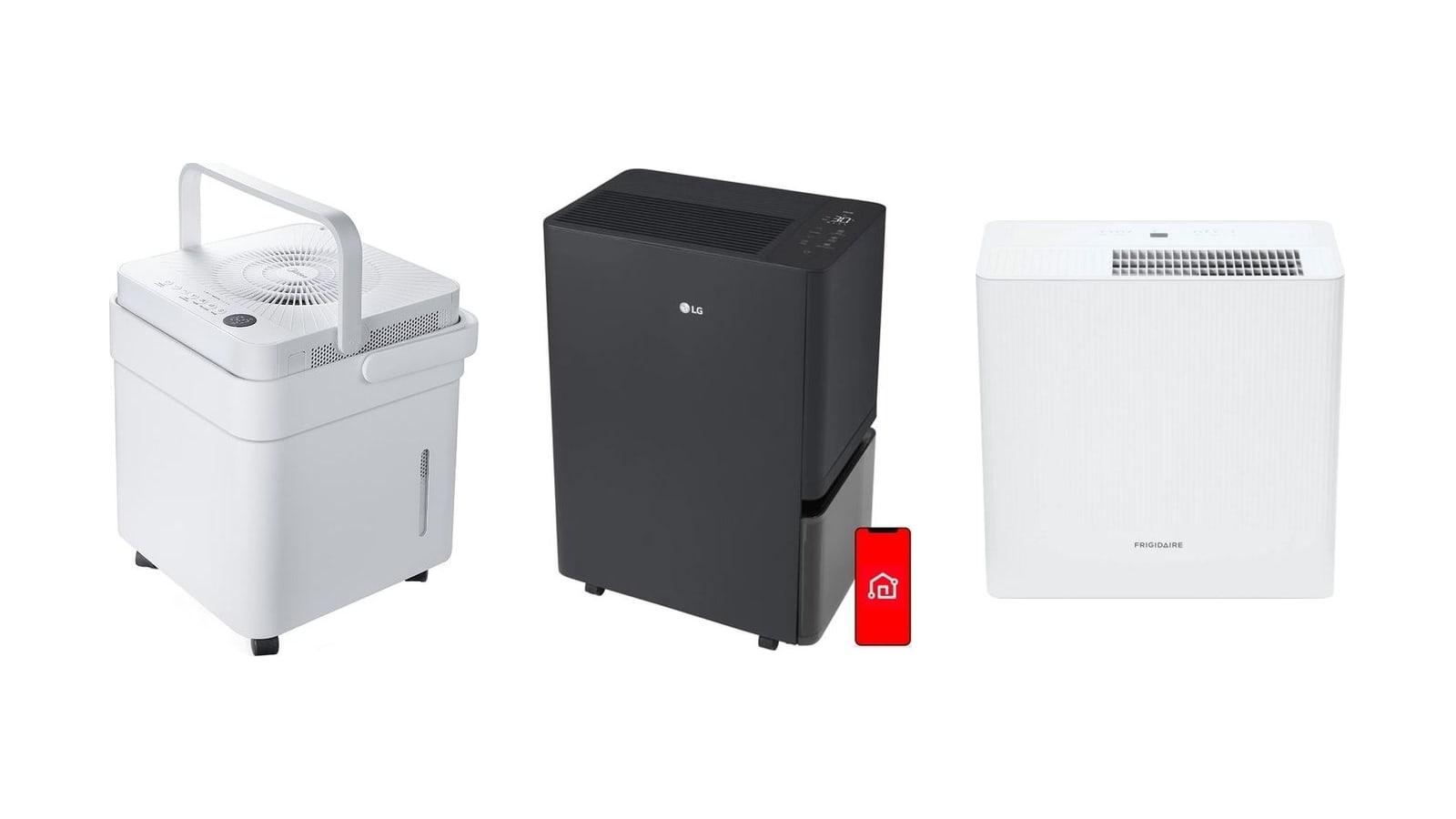
If you're hunting for the best dehumidifier for basement dampness, start with the Midea Cube 50-Pint Dehumidifier with Pump. It's ENERGY STAR certified at 50 pints a day under the 2019 DOE test, its built-in pump pushes water roughly 16 feet up to a sink or window, and its extended bucket holds about 4.2 gallons if you skip the hose. Got a floor drain? Then the LG PuriCare Sonoran 50-Pint Smart Dehumidifier (DT501BKR0) earns the spot, since RTINGS rated its moisture removal 8.7 out of 10. The other four picks cover chilly basements, front-bucket designs and tighter budgets.
Key takeaways
- Drainage decides the shortlist. With a floor drain, any 50-pint unit with a gravity outlet works. Without one, you need a built-in pump or a strong back.
- Aim for 30–50% relative humidity. That's ENERGY STAR's ideal range, narrowing to 30–40% in cold climates during the heating season.
- Size up, not down. ENERGY STAR says it's better to oversize than undersize, and a wet basement over 2,000 sq ft calls for 50 pints or more.
- Cold basements frost the coils. Below 65°F, frost can form on the coils, so check each model's lowest operating temperature. The Hisense goes down to 38°F.
Quick answer
| Model | Drainage | Bucket | Lowest rated temp | Warranty | Price | Best for |
|---|---|---|---|---|---|---|
| Midea Cube 50-Pint with Pump | Pump (about 16 ft lift), gravity hose or bucket | About 4.2 gal extended | Not published | 1 year | $230–$300 | Best overall |
| LG PuriCare Sonoran DT501BKR0 | Gravity hose or tank; no pump | 14.3 pints | Not published | 1 year parts and labor | Check price | Floor-drain basements |
| Frigidaire FHDP5033Y1 | Pump, gravity hose or front bucket | Not published | 41°F with auto defrost | 1 year | $320–$350 | Front-bucket pump design |
| Hisense DH5026KP1G | Pump (hose included), gravity outlet or bucket | Not published | 38°F | 2 years parts and labor | Check price | Cool basements |
| Whirlpool WHHD501PAW | Pump (about 16.4 ft lift, hose included), gravity or bucket | 14 pints | 41°F | 1 year, from XLS Products | Check price | Value pump |
| Insignia NS-DH50WH7 | Gravity (hose not included) or bucket | 12.7 pints | 41°F | 1 year | Check price at Best Buy | Budget |
These picks are research-based. We haven't tested them hands-on; capacities come from ENERGY STAR's certification records, other specs from maker documentation, and performance results from the reviewers named in each section.
Best overall for basements: Midea Cube 50-Pint Dehumidifier with Pump
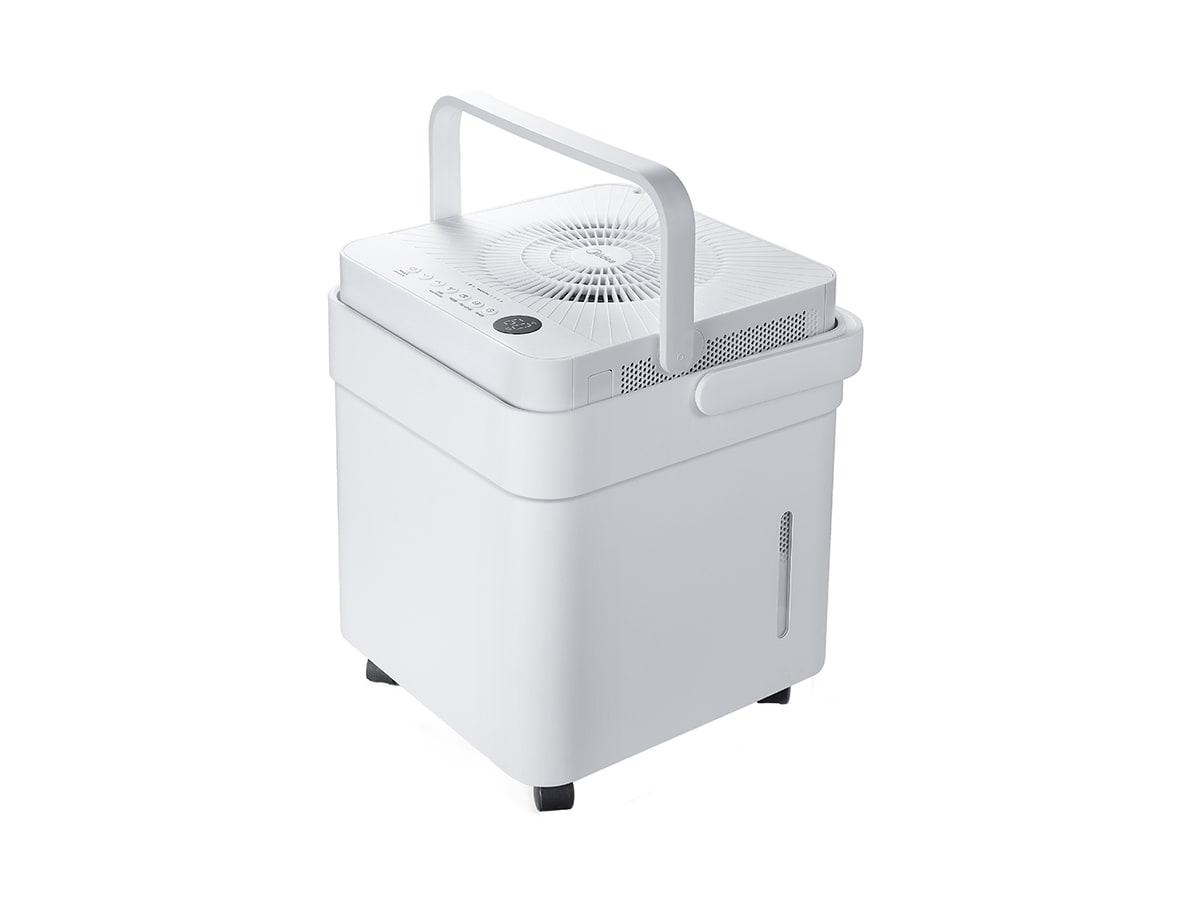
The Midea takes the top spot because it copes with every drainage situation a basement can throw at it. Midea says the pump lifts condensate roughly 16 feet, enough for most utility sinks and high basement windows. A garden hose connects for gravity drainage too, and with nothing connected, the extended bucket holds about 4.2 gallons, roughly three times a conventional bin. The MSmartHome app warns you before it fills.
The cube shape has an off-season trick: the compressor body nests inside the bucket, halving its storage height. That design is also the main gripe, because emptying by hand means lifting a 41.5 lb top section off the tank. Plan on the hose. Midea's 4,500 sq ft rating assumes light dampness; in a genuinely wet basement, expect it to top out around 1,500 to 2,000 sq ft. It runs about $230 to $300, uses a washable mesh screen and carries a 1-year warranty.
Best for basements with a floor drain: LG PuriCare Sonoran 50-Pint Smart Dehumidifier (DT501BKR0)
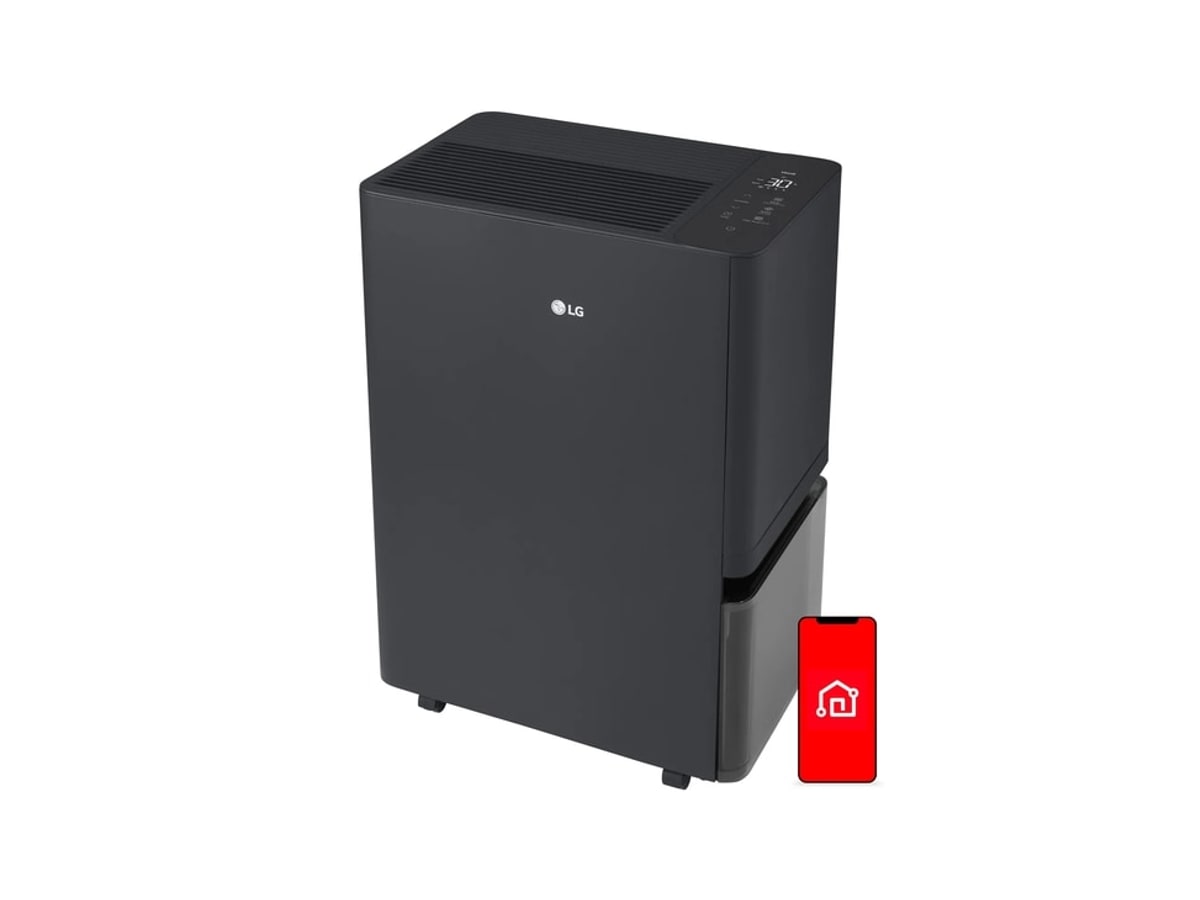
If a floor drain sits within hose reach, there's no reason to pay for a pump, and the Sonoran has the strongest independent results in this group. ENERGY STAR lists it at 49.81 pints a day under the 2019 DOE test. RTINGS, which reviewed it in October 2026, scored its moisture removal 8.7 out of 10 and found it quieter than GE's 50-pint model. The LG ThinQ app shows humidity and sends alerts.
What it lacks is a pump. Its predecessor, the UD501KOJ5, had one; this model drains only into a 14.3-pint tank or through a gravity hose, so the water has to run downhill. RTINGS also called it bulky, and at 23.9 inches tall and 43.4 lb, it isn't shy. The top fan speed is noticeable, which matters less next to a furnace than next to a pillow. LG covers parts and labor for a year. Check price at retailers.
Best traditional pump model: Frigidaire 50-Pint Dehumidifier with Built-in Pump (FHDP5033Y1)
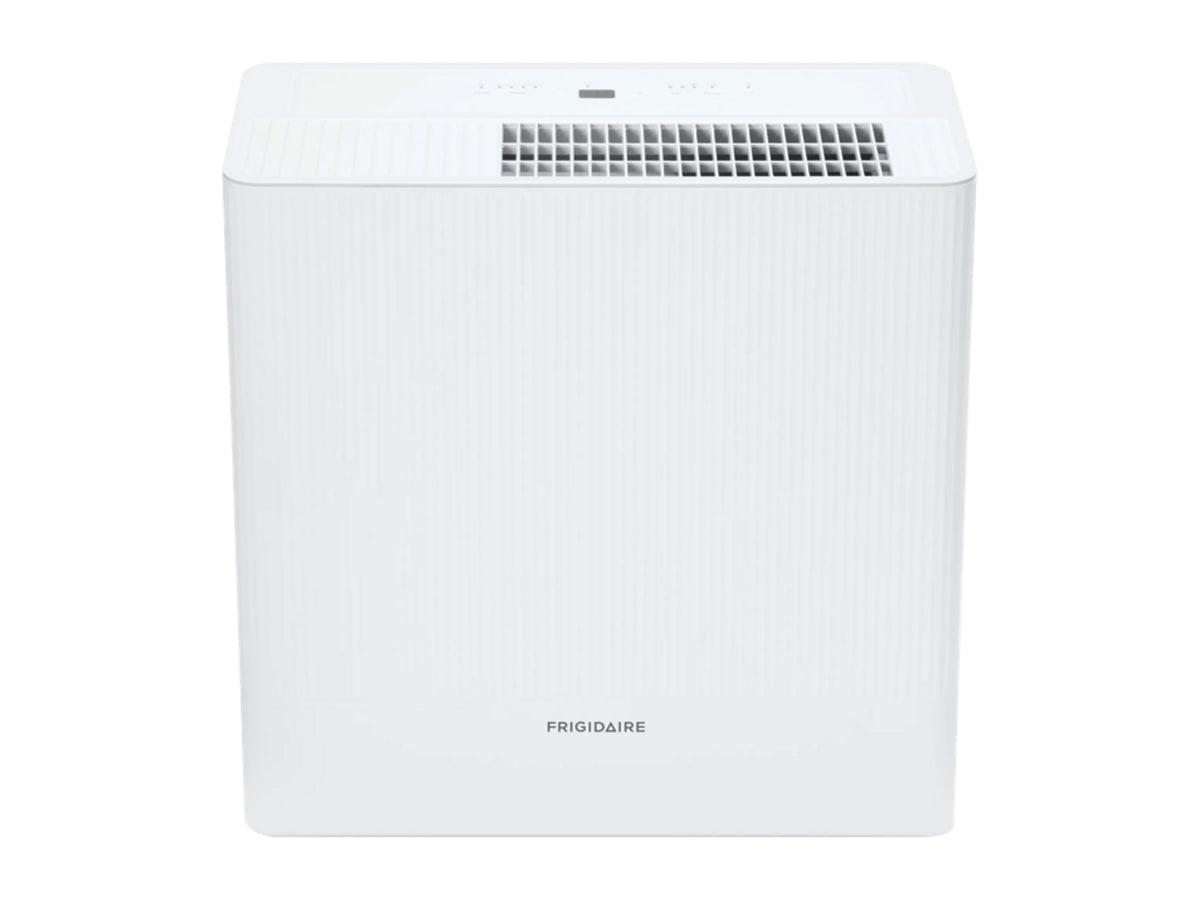
This is the pick for anyone who wants a pump plus a bucket that slides out like a drawer. The front-loading bucket has a splash guard and a carry handle, so a manual empty doesn't mean hoisting the whole machine. The internal pump sends water upward to a sink or window, a gravity outlet backs it up, and casters with side handles make the 41.9 lb chassis easy to roll.
Frigidaire rates it to 41°F with automatic defrost, and it's ENERGY STAR certified on R-32 refrigerant, with a washable filter and clean-filter alert. The catches: at about $320 to $350 it costs more than the Midea, its bucket is smaller than the Midea's extended tank, and Wi-Fi varies between regional versions, so confirm it on the listing. The warranty is 1 year.
Best for cool basements: Hisense 50-Pint Dehumidifier with Built-in Pump (DH5026KP1G)
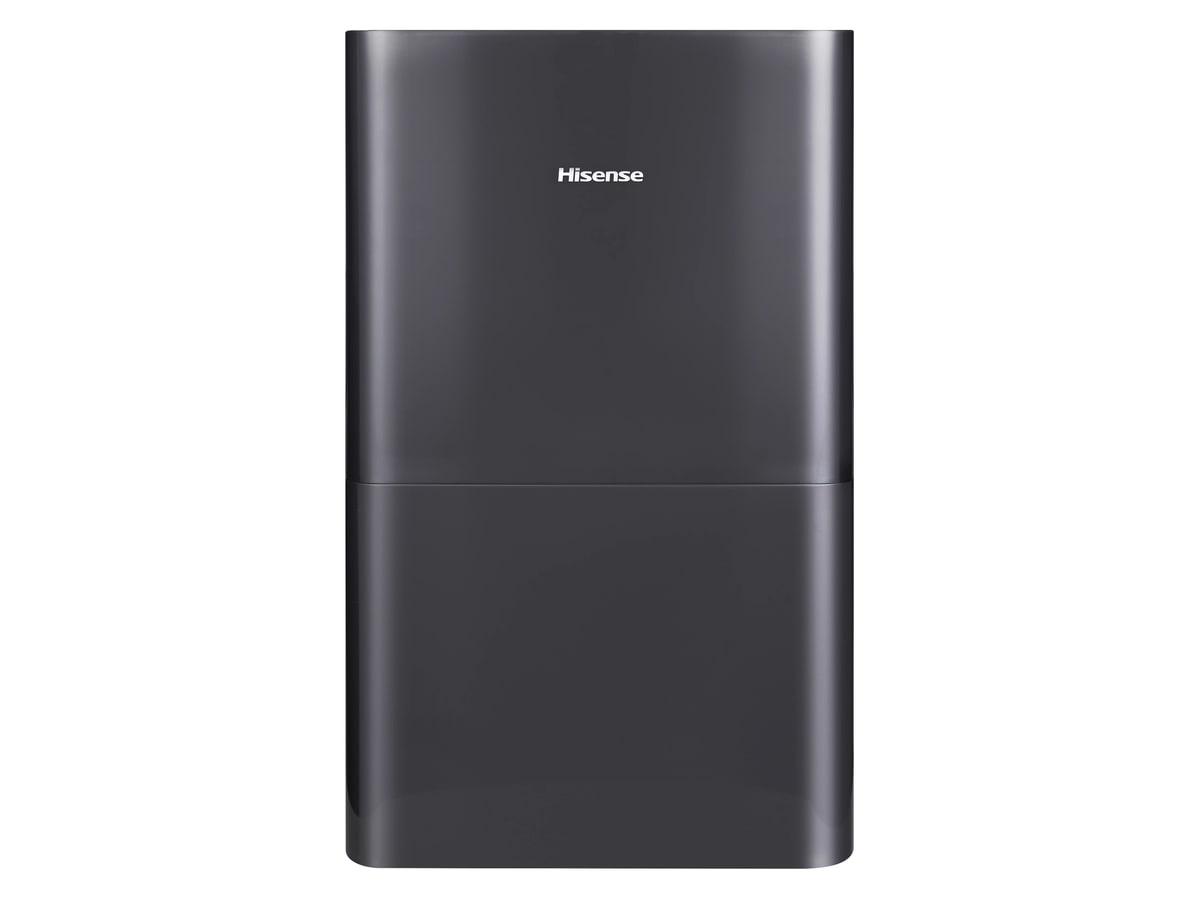
Unheated basements are where the Hisense earns its place. It's rated to run down to 38°F, a few degrees below the 41°F floor of the other picks that publish one, and Hisense backs it with 2 years of parts and labor, double what every other pick here offers. ENERGY STAR certifies it at 49.95 pints a day, and the pump ships with a quick-connect hose, plus a rear gravity outlet.
The trade-off shows up in independent testing. DehumidifierBuyersGuide's hands-on review measured low power draw but found moisture removal worse than average and build quality middling, with a compressor that stays audible even on high fan. Lowe's owners are kinder, at about 4.7 from 258 ratings, praising quiet running and the end of bucket duty. At 46.9 lb it's the heaviest pick, and app control isn't confirmed. Check price.
Best value pump: Whirlpool 50-Pint Dehumidifier with Built-in Pump (WHHD501PAW)
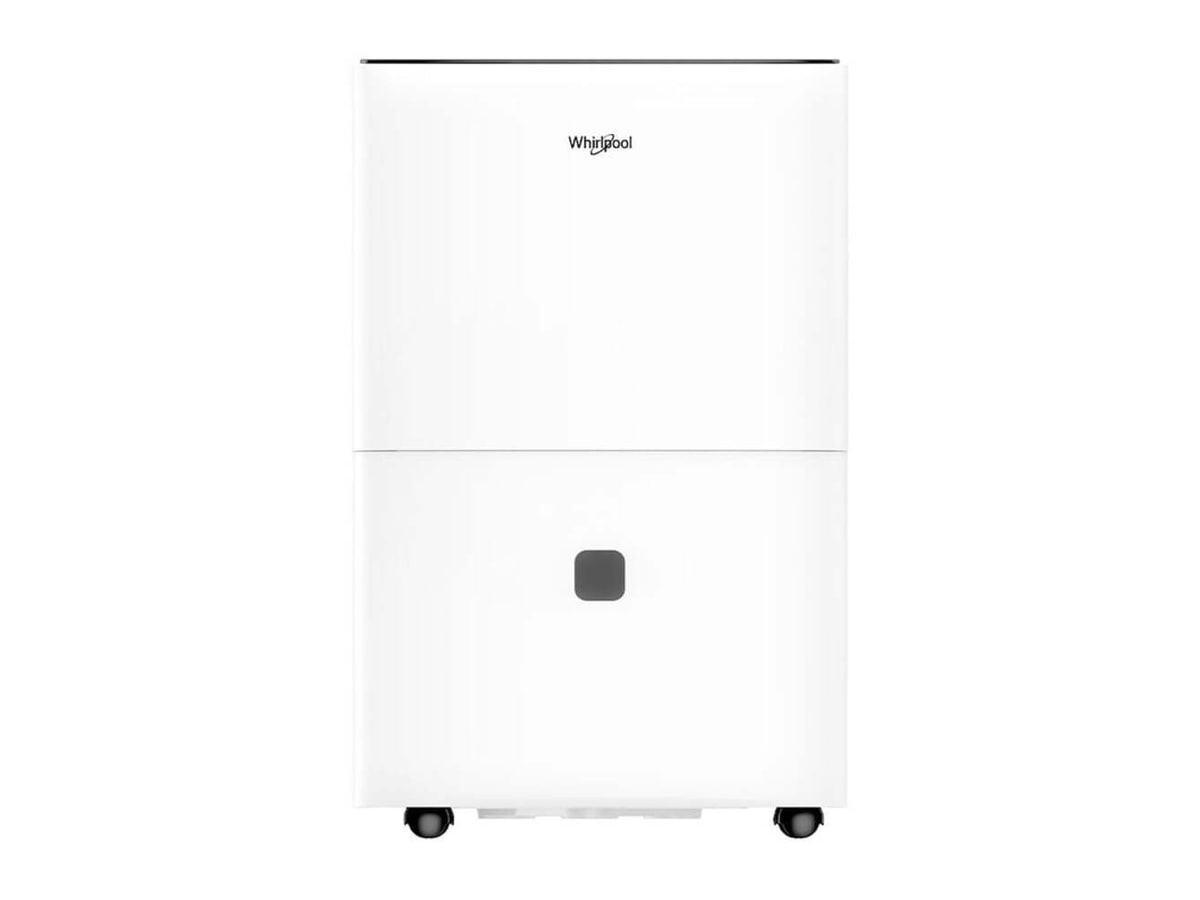
The Whirlpool has the most thoroughly documented pump in this lineup. Its manual gives a lift of about 16.4 feet and includes a pump hose of the same length, so you can tell before buying whether it reaches the laundry tub. ENERGY STAR certifies it at a full 50.00 pints a day, a garden hose works for gravity drainage, and it runs from 41 to 90°F. No Wi-Fi, so you aren't paying for an app you'd never open.
Read the label closely, though. XLS Products of Pennsylvania makes it under license and handles the 1-year parts-and-labor warranty, so service runs through the licensee rather than Whirlpool. Owner reviews are mostly positive but few, and a handful report the pump weakening within the first year. One appliance retailer listed it in the low $300s in late November 2026; check current pricing.
Best budget: Insignia 50-Pint Portable Dehumidifier (NS-DH50WH7)
Insignia
NS-DH50WH7
Budget · 3000 sq ft
Paid links: we may earn a commission at no cost to you. Disclosure
Best Buy's house brand makes a no-frills 50-pint unit for a basement with a floor drain. ENERGY STAR certifies it at 49.95 pints a day, casters move the 41.8 lb body, and the washable filter has a 250-hour reminder so you don't forget it exists. It runs from 41 to 90°F, and Best Buy owners rate it about 4.7, mostly for reliability.
Budget means compromises: no pump, no Wi-Fi, a 12.7-pint bucket that fills fast, and a gravity outlet that ships without a hose, so add one to the order. Without a drain, the Midea or Whirlpool will save you a lot of stair climbing. The warranty is 1 year, repair or replace. Check price at Best Buy.
What humidity should a basement be?
Keep a basement between 30% and 50% relative humidity, the ideal range ENERGY STAR gives, or 30–40% in cold climates during the heating season. The EPA's mold guide lands in the same place: below 60%, ideally 30 to 50%.
In practice, set the humidistat to 45% or 50% and watch for a week. If the musty smell hangs on or the walls feel clammy, nudge it down five points. Going far below 30% just spends electricity drying air that was already fine, and a cheap hygrometer across the room is a good check on the machine's own sensor.
Should you drain it into a bucket, a floor drain or a pump?
Use a floor drain if you have one, a pump if you don't, and the bucket only as a fallback. The arithmetic is unkind to buckets: at a rated 50 pints a day, a dehumidifier would fill the Insignia's 12.7-pint bucket nearly four times between one breakfast and the next. Even the Midea's 4.2-gallon tank, about 34 pints, could need emptying daily in a wet season.
| Drainage method | How it works | Good for | Watch out for |
|---|---|---|---|
| Bucket | Water collects in the tank until you empty it | Occasional damp or short spells | A full bucket means the drying stops |
| Gravity hose to a floor drain | A garden hose runs downhill from the outlet to the drain | Basements with a drain lower than the unit's outlet | The hose has to slope down the whole way |
| Built-in pump | A small pump pushes water up a hose to a sink or window | No drain, or a drain on the wrong side of the room | One more moving part that can wear out |
If a pump is the answer, our dehumidifiers with a pump roundup compares published lift heights, hose lengths and warranty terms model by model.
What size dehumidifier does a basement need?
Most basements are best served by a 50-pint unit, which is why all six picks are that size. ENERGY STAR's chart, in 2019 DOE pints, calls for 20–30 pints in a moderately damp space under 2,000 sq ft, 25–40 if very damp and 30–50 if wet. Over 2,000 sq ft, those become 30+, 40+ and 50+.
Worked example: a 1,200 sq ft basement that smells musty and shows damp patches on the slab fits the very damp band, so 25–40 pints. A 35-pint machine would technically qualify, but ENERGY STAR says it's better to oversize than undersize, and 50 pints leaves headroom for a wet spring. Plug your own numbers into the dehumidifier size calculator, and if an older listing quotes a bigger pint figure for a similar-looking machine, our explainer on dehumidifier pint ratings covers why the test changed.
Will a dehumidifier work in a cold basement?
It will, but it struggles below about 65°F, the point where ENERGY STAR notes frost can form on the coils. An iced-up coil can't pull much water from the air, so a cold basement needs a model rated for low temperatures, ideally with automatic defrost.
The Hisense lists the lowest floor here at 38°F. The Frigidaire is rated to 41°F with automatic defrost, and the Whirlpool and Insignia both bottom out at 41°F. Midea and LG don't publish a minimum in the specs we found, so ask before buying either for an unheated space. Crawl spaces often run colder and wetter still; our crawl space dehumidifier picks cover units built for them.
Where should you put a dehumidifier in a basement?
Put it near the dampest spot, with clear space around the grilles and the doors and windows shut. ENERGY STAR advises keeping them closed while it runs; otherwise you're drying out the backyard.
- Near the source. The laundry corner, the wall that smells worst, or the area around the sump.
- Away from walls and boxes. Your manual gives the exact clearance for the intake and exhaust.
- Close to where the water goes. A short, straight hose beats one snaking around the furnace.
- Central in an open-plan space. One unit in the middle reaches more air than one tucked in a corner.
When does a basement need more than a dehumidifier?
When liquid water gets in, a dehumidifier is only mopping the air. The EPA puts it simply: the key to mold control is moisture control, and after a leak or flood it advises drying wet materials within 24 to 48 hours. ENERGY STAR's list of fixes starts outside:
- Extend downspouts so roof water lands well away from the foundation.
- Keep gutters clear so they don't overflow beside the walls.
- Slope the soil away from the foundation.
- Vent clothes dryers outdoors.
- Fix leaking outdoor faucets.
If water still pools on the floor after that, call a waterproofing contractor rather than buying a bigger dehumidifier. Once the water stops, the dehumidifier handles what's left in the air, and a purifier can deal with lingering odor and airborne spores; our air purifiers for basements guide explains how the two split the job. Full specs for every model above are in our dehumidifier reviews.
Frequently asked questions
How many hours a day should a basement dehumidifier run?
As many as it takes to hold your setpoint. With the humidistat at 45 to 50%, the compressor switches on and off by itself, running almost constantly in a sticky July and only now and then in a dry month. If it never shuts off, the unit may be too small for the space or water may be getting in from outside.
Will a dehumidifier get rid of a musty basement smell?
Usually, if the smell comes from damp air. Holding humidity under 50% takes away the moisture mold and mildew need, and the EPA calls moisture control the key to mold control. Mold already growing on walls or stored boxes still has to be cleaned, and an air purifier with activated carbon can help with odor that lingers.
Is a 50-pint dehumidifier too big for a small basement?
Rarely. ENERGY STAR says it's better to oversize than undersize, and a bigger unit just reaches the target humidity sooner and then idles. The real costs of going big are a higher price and a heavier machine to carry down the stairs.
Can I run a basement dehumidifier with a window open?
Better not. ENERGY STAR advises keeping doors and windows closed while a dehumidifier runs, since outdoor air keeps carrying in new moisture. A window opened only far enough to pass a pump hose through is a reasonable exception.
How often should I clean a dehumidifier filter?
Look at it every few weeks during the humid season. All six picks use washable filters you rinse rather than replace. The Insignia reminds you every 250 hours and the Frigidaire has a clean-filter alert; on the others, set a phone reminder, because a clogged filter cuts airflow.
Do I need to run a basement dehumidifier in winter?
Often not in cold climates, where heated indoor air tends to be dry, and ENERGY STAR's ideal range drops to 30 to 40% during the heating season. Keep a hygrometer downstairs and switch the unit on only if readings climb above that range.