Dehumidifier size calculator
Top 35+ pint dehumidifiers
DOE-rated capacity meets your estimate
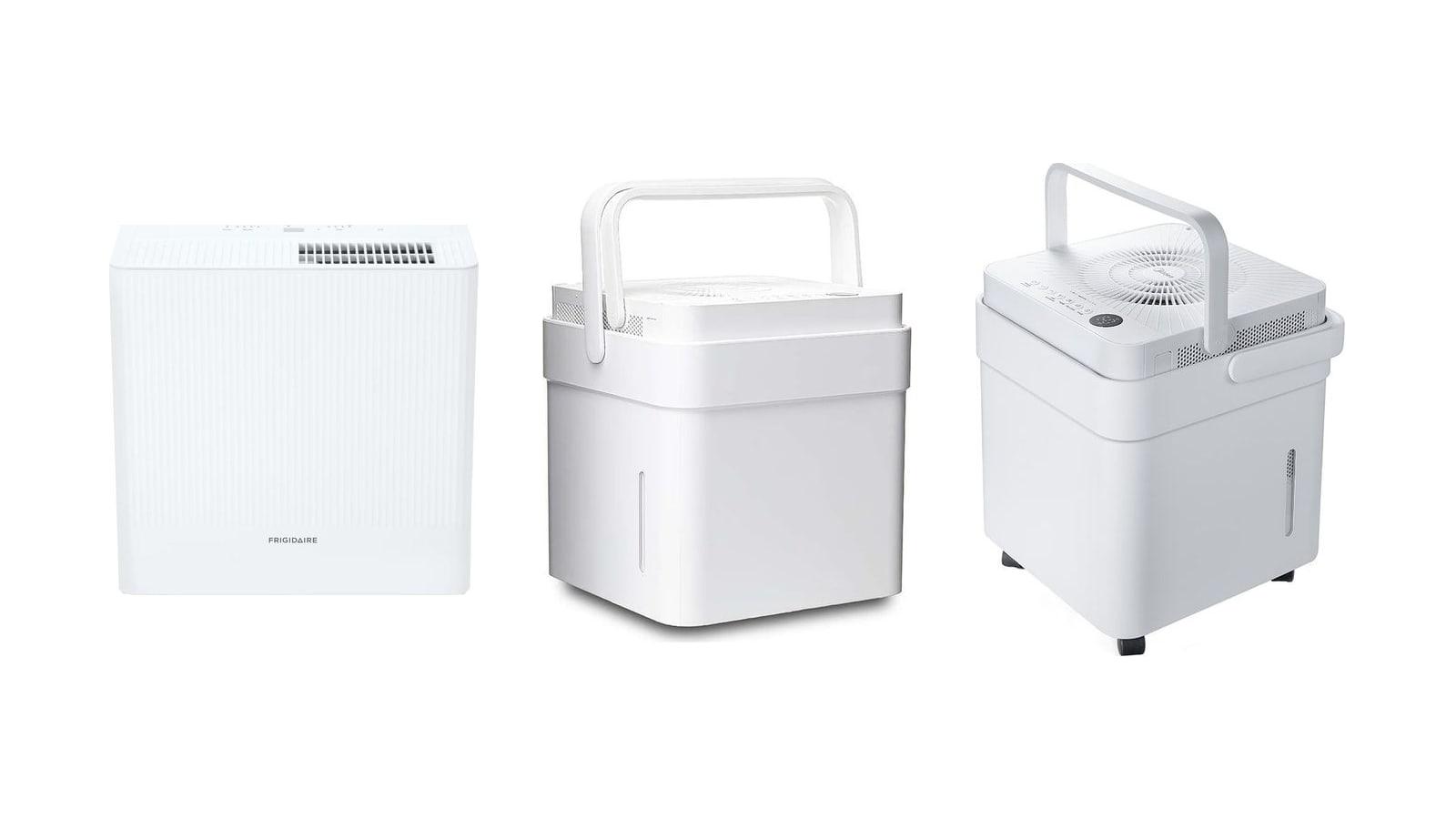
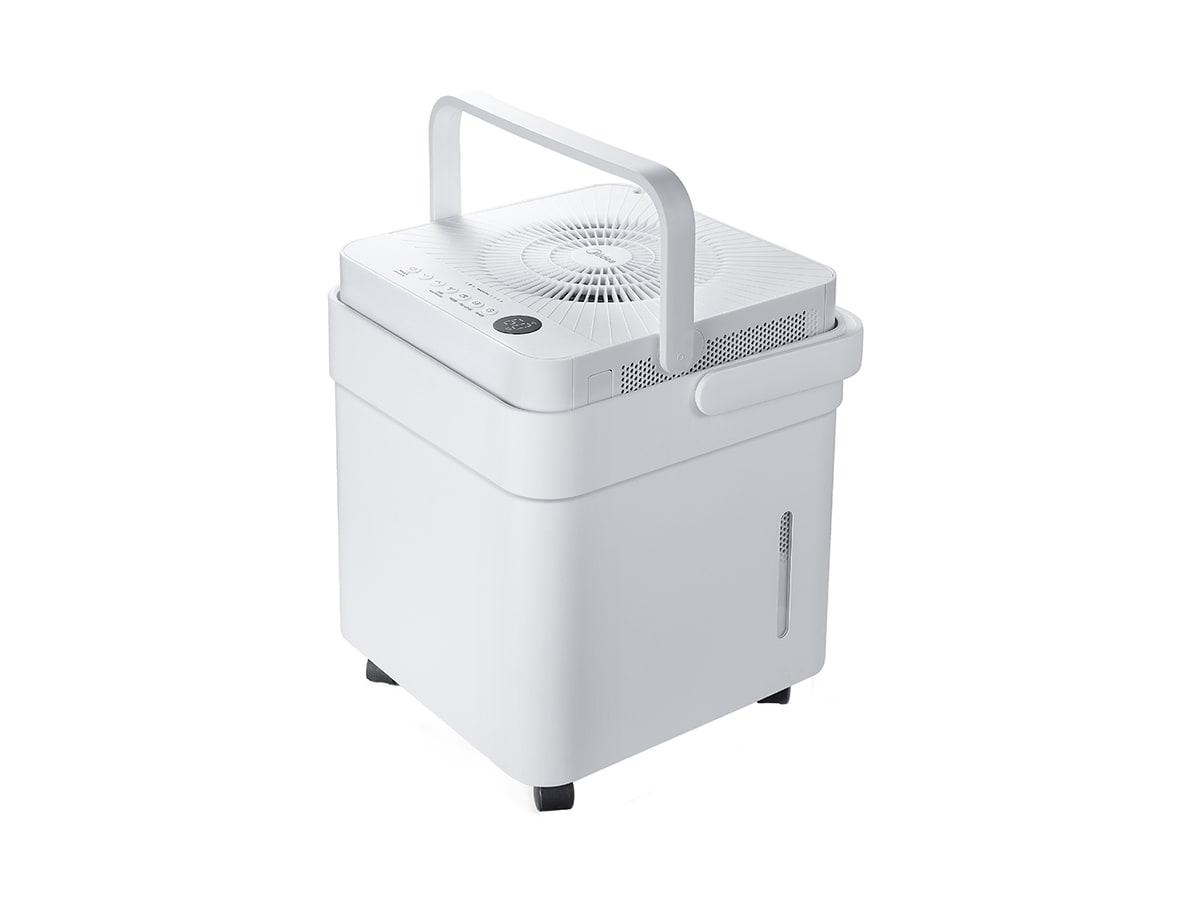 Midea Cube 50-Pint Dehumidifier with Pump
50 pints/day (DOE test) · built-in pump
Rating: 8.9/10
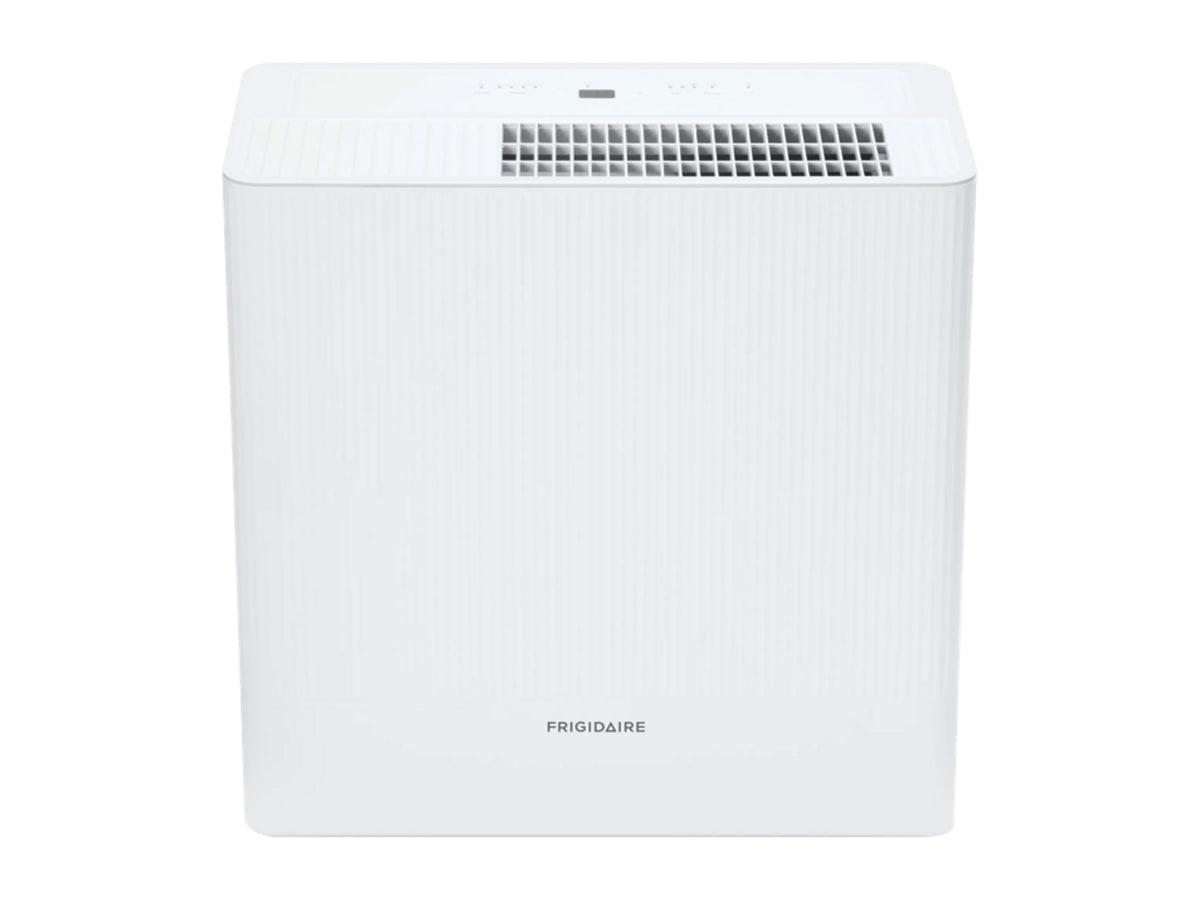 Frigidaire 50-Pint Dehumidifier with Built-in Pump (FHDP5033Y1)
50 pints/day (DOE test) · built-in pump · runs down to 41°F
Rating: 8.6/10
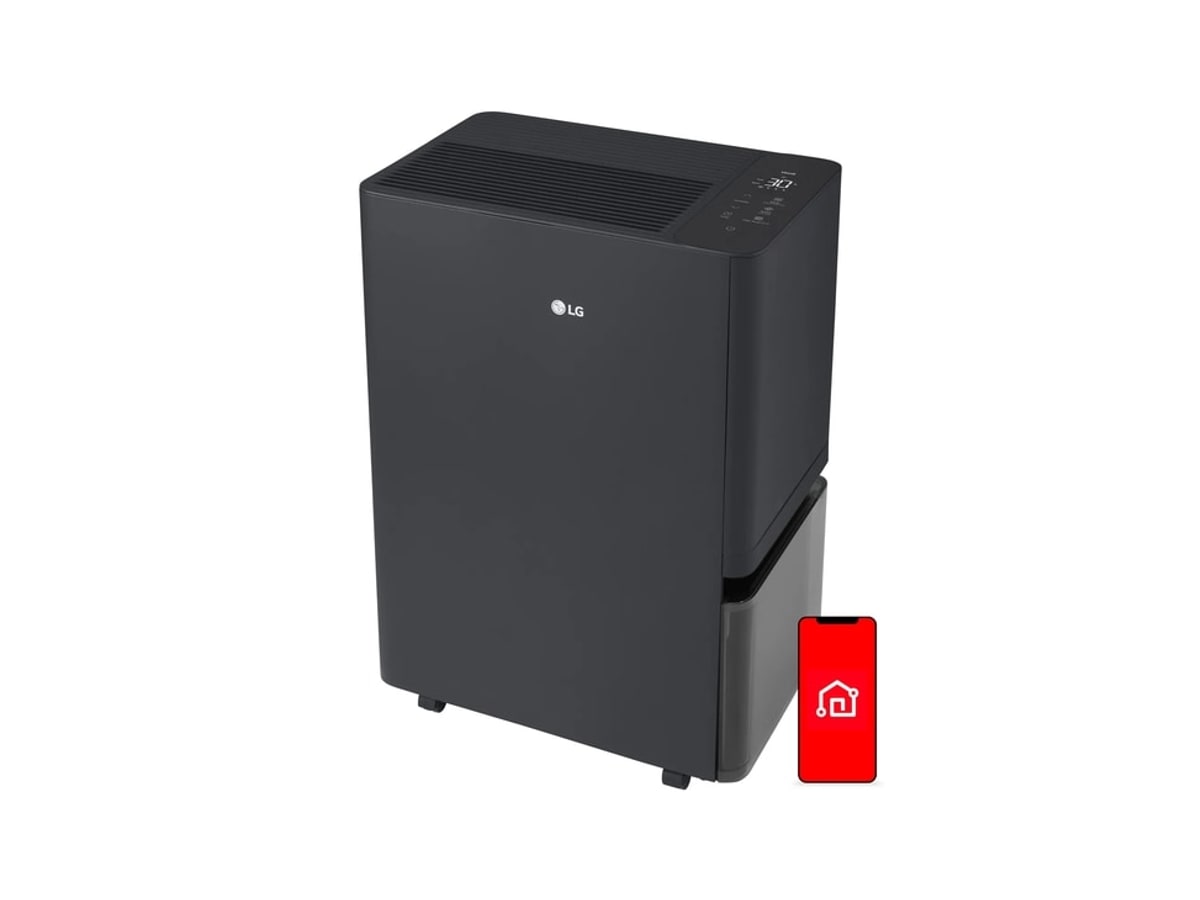 LG PuriCare Sonoran 50-Pint Smart Dehumidifier (DT501BKR0)
50 pints/day (DOE test)
Rating: 8.6/10
Paid links: we may earn a commission at no cost to you. As an Amazon Associate I earn from qualifying purchases. Disclosure
Based on ENERGY STAR's sizing chart, which uses the 2019 DOE pint ratings printed on dehumidifiers sold since 2019. Ratings from before 2019 were measured in warmer air and run higher: ENERGY STAR puts an old 70-pint rating at about 40–45 pints today. Enter the area the dehumidifier's air can reach, and keep doors and windows to the space closed while it runs.
To size a dehumidifier, match your floor area and how damp the space feels to ENERGY STAR's capacity chart, then round up. A dehumidifier size calculator does that in one step: a 1,000 sq ft basement that always smells damp works out to about 33 pints a day, so you'd shop for a 35-pint unit. Enter your space above and it returns the 22, 35 or 50-pint class to buy, rated the way labels have been printed since 2019.
Key takeaways
- The math is ENERGY STAR's. Its chart gives 20 to 50 pints a day for spaces under 2,000 sq ft, depending on dampness, and 30+ to 50+ for larger ones.
- Round up, never down. ENERGY STAR says it's better to oversize than undersize, so the calculator picks the next size class above your estimate.
- Old pint ratings were bigger numbers. The test changed in 2019; by ENERGY STAR's approximate conversion, an old 70-pint rating is about 40 to 45 pints today.
- Below 65°F, coils can frost. A cool basement or crawl space needs a model rated for low temperatures.
- Target 30 to 50% humidity, or 30 to 40% in a cold climate during heating season.
How does the dehumidifier size calculator work?
It takes ENERGY STAR's recommended range for your dampness level and places your space inside it according to floor area. A tiny room sits near the bottom of the range, a 2,000 sq ft basement sits at the top, and anything larger is scaled up from the top figure.
Here's the exact method, step by step:
- Pick the range. Your dampness answer selects ENERGY STAR's range for spaces under 2,000 sq ft: 20 to 30 pints for moderately damp, 25 to 40 for very damp, 30 to 50 for wet.
- Interpolate by area, up to 2,000 sq ft. Estimate = low end + (high end − low end) × (your sq ft ÷ 2,000).
- Scale above 2,000 sq ft. Estimate = high end × (your sq ft ÷ 2,000). A 3,000 sq ft space gets 1.5 times the top of the range.
- Round up to a whole pint.
- Round up again to a size class. Portable dehumidifiers are mostly sold as 22, 35 or 50 pints, so the calculator names the smallest class that covers your estimate. If the estimate tops 50, it says so instead of inventing a class that doesn't exist on store shelves.
All figures are 2019 DOE pints, the rating printed on dehumidifiers sold since 2019, even when a bigger number shares the box.
What does ENERGY STAR's sizing chart recommend?
ENERGY STAR sorts spaces by how damp they are before a dehumidifier runs, then gives a pints-per-day range for small-to-medium spaces and a minimum for large ones.
| Condition | What it looks and smells like | Relative humidity | Under 2,000 sq ft | Over 2,000 sq ft |
|---|---|---|---|---|
| Moderately damp | Feels damp, musty smell that comes and goes | 50–75% | 20–30 pints/day | 30+ |
| Very damp | Always feels and smells damp; damp spots on walls or floor | 75–90% | 25–40 pints/day | 40+ |
| Wet | Walls or floor sweat, seepage, or laundry drying indoors | 90–100% | 30–50 pints/day | 50+ |
If you're between two rows, pick the wetter one. You'll own the dehumidifier through the muggiest August on record, not an average Tuesday.
Worked examples: what size for a bathroom, basement or big wet space?
Every row below uses the calculator's formula exactly, so you can check your own result by hand.
| Space | Area | Dampness | Math | Estimate | Shop for |
|---|---|---|---|---|---|
| Small bathroom | 100 sq ft | Moderately damp | 20 + 10 × 0.05 = 20.5 | 21 pints | 22-pint |
| Bedroom | 400 sq ft | Moderately damp | 20 + 10 × 0.2 = 22 | 22 pints | 22-pint |
| Laundry room | 300 sq ft | Very damp | 25 + 15 × 0.15 = 27.25 | 28 pints | 35-pint |
| Basement | 1,000 sq ft | Very damp | 25 + 15 × 0.5 = 32.5 | 33 pints | 35-pint |
| Basement | 1,500 sq ft | Wet | 30 + 20 × 0.75 = 45 | 45 pints | 50-pint |
| Large basement | 2,500 sq ft | Moderately damp | 30 × 1.25 = 37.5 | 38 pints | 50-pint |
| Large basement | 3,000 sq ft | Very damp | 40 × 1.5 = 60 | 60 pints | Two 50-pints or a whole-home unit |
Take the 1,000 sq ft basement that always smells damp. "Very damp" means a range of 25 to 40 pints, a spread of 15. The basement is half of 2,000 sq ft, so it gets half that spread: 25 + 15 × 0.5 = 32.5. That rounds up to 33 pints, and the smallest class covering 33 is 35.
Now the 300 sq ft laundry room. It's small, but "very damp" starts at 25 pints, and 25 + 15 × 0.15 comes to 27.25, which rounds to 28. That's past the 22-pint class, so the answer is a 35-pint. Damp beats small: a soggy laundry room needs more machine than a big but merely stuffy bedroom.
The last row is where portables run out. At 3,000 sq ft and very damp, the estimate is 40 × 1.5 = 60 pints, more than any single portable class. The calculator suggests two 50-pint units, or a whole-home or crawl-space unit installed by a pro.
Why round up instead of buying the exact number?
Because a slightly bigger dehumidifier costs you very little and a slightly smaller one costs you a damp basement. ENERGY STAR says outright that it's better to oversize than undersize. A larger unit simply reaches your target sooner and cycles off. An undersized one runs flat out all summer and still loses.
The rounding also reflects what you can buy. Today's portables cluster at 22, 35 and 50 pints, and a "33-pint" model isn't a thing. If you land right on a class boundary, take the class, and if your space is borderline between dampness levels, size for the wetter one. Our best dehumidifiers list is grouped by those same classes.
Why are old 70-pint dehumidifiers rated lower today?
The Department of Energy changed how capacity is measured in 2019, and every rating shrank overnight. The older test ran in 80°F air at 60% humidity; the 2019 test uses 65°F at 60%, closer to a real basement. Cooler air gives up less water, so the same machine posts a smaller number.
ENERGY STAR's approximate conversion, which it says varies by model, puts an old 70-pint rating at about 40 to 45 pints under the new test and an old 50-pint at about 30. So a current 50-pint unit is at least as much machine as the 70-pinters it replaced. Waykar's manual shows the effect on one machine: about 35 pints a day at the old 80°F condition and about 25 at the new 65°F one, with the "80 pints" on the box measured at 95°F and 90% humidity. Our guide to dehumidifier pint ratings covers how to spot labels like that. ENERGY STAR's chart, and this calculator, use the 2019 numbers throughout, so compare against the DOE figure, not the biggest number on the box.
What happens if the space is colder than 65°F?
Below about 65°F, frost can form on a dehumidifier's coils, ENERGY STAR warns, and an iced coil pulls little water. Its advice is to switch the unit off and let it defrost before restarting; some models have an anti-frost sensor that shuts them off automatically at a set low temperature.
Choosing "Often below 65°F" in the calculator adds that warning to your result and narrows the suggested models to ones with a published low-temperature rating: 41°F or lower for portables, 50°F or lower for crawl-space units. Models that don't publish a minimum operating temperature are left out of that list rather than assumed to cope.
What do the pump, crawl-space and whole-house options change?
They don't change the pints estimate. They change what kind of dehumidifier the calculator points you toward.
- Where the water goes. "Up to a sink or out a window" limits portable suggestions to models with a built-in pump. A floor drain and "I'll empty the bucket" are treated the same, since neither needs a pump.
- A crawl space. Instead of a size class, the result recommends a low-profile crawl-space unit rated to run in the cold, and suggests those models. Our crawl space dehumidifier picks go into hatch sizes and pumps.
- The whole house. The result points you to a ducted whole-home unit sized by an HVAC contractor, which usually beats a fleet of portables.
- A room or a basement. Both get portable models. For a below-grade space, see our basement dehumidifier picks.
If no model matches every condition, the calculator says so and falls back to the two-unit or professional-install advice.
What humidity level should you aim for?
ENERGY STAR calls 30 to 50% relative humidity the optimum for most buildings, and suggests 30 to 40% in cold climates during heating season so windows don't sweat. The EPA's ceiling is 60%: above that, mold has an easier time getting started.
A dehumidifier's own humidity reading is a guide, not gospel, so check it against a cheap hygrometer for the first week. If the reading won't drop below 60% after several days of steady running, the unit is too small or something is feeding the room water.
How can you shrink the moisture problem before you buy?
The cheapest pint is the one that never gets into the house. ENERGY STAR's suggestions:
- Improve drainage around the foundation, which can lower basement humidity on its own.
- Vent the clothes dryer outdoors.
- Run exhaust fans in bathrooms and kitchens to catch humidity at the source.
- Repair leaking outdoor faucets.
The EPA adds that the key to mold control is moisture control: fix leaks and dry anything water-damaged within 24 to 48 hours. If the musty smell lingers after the air is dry, a dehumidifier alone won't clear it; our air purifier vs humidifier vs dehumidifier guide explains which machine handles which job.
What to do with your result
Write down the class, then filter by drainage and temperature. A 22-pint suits one room, a 35-pint a finished basement or a damp medium space, and a 50-pint covers most full basements. From there, our dehumidifier reviews list each model's DOE pints, pump and low-temperature rating side by side, so you can match the number directly.
Frequently asked questions
What size dehumidifier do I need for a 1,500 sq ft basement?
It depends on how damp it is. Using ENERGY STAR's chart, the calculator gives about 28 pints a day if it's moderately damp (a 35-pint unit), about 37 if it's very damp and 45 if it's wet (a 50-pint unit for both).
How do I tell whether my basement is very damp or wet?
ENERGY STAR describes a very damp space as one that always feels and smells damp, with damp spots on the walls or floor. A wet space has walls or floors that sweat, or water seeping in. Drying laundry indoors also pushes a room into the wet category.
What does pints per day mean on a dehumidifier?
It's how much water the unit pulls from the air in 24 hours under a standard test. Models sold since 2019 are rated on the DOE test at 65°F and 60% humidity. Some labels quote much hotter, wetter conditions, which produce bigger numbers for the same machine.
Is one big dehumidifier better than two small ones?
For one open space, a single unit of the right class is simpler and drains to one place. Two units make sense when the calculator's estimate passes 50 pints a day, or when the damp areas are separate rooms with doors that stay shut.
Does a crawl space need a special dehumidifier?
Usually, yes. Crawl spaces are cool and cramped, so a home portable may not fit through the hatch and its coils can frost below about 65°F. Crawl-space units are low-profile, rated to run in the cold, and some include a pump.
Where should I put the dehumidifier?
In the dampest part of the space, with the doors and windows to that space kept closed while it runs. Enter only the area its air can actually reach into the calculator.
Embed this calculator (free)
Run a home, health, or air-quality site? Drop this tool into any page — it stays free and links back here. Paste this HTML where you want it.
<iframe src="https://www.pureairscout.com/embed/dehumidifier-size-calculator" title="Dehumidifier Size Calculator: What Size Do I Need?" width="100%" height="560" style="border:1px solid #e5e7eb;border-radius:12px;max-width:680px" loading="lazy"></iframe>