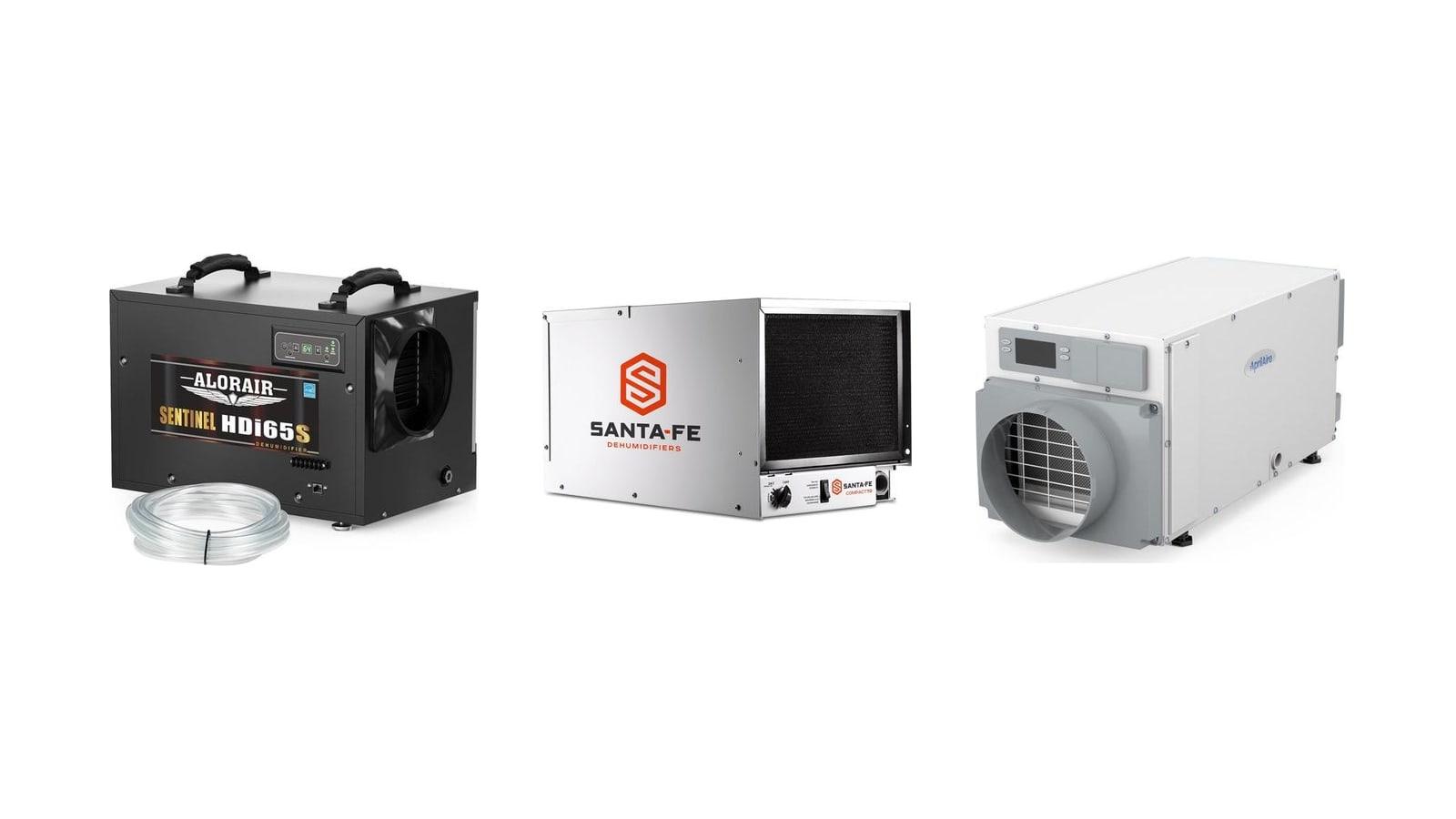
The best crawl space dehumidifier for most homes is the AlorAir Sentinel HDi65S. It slips through a hatch about 13 inches across, keeps running down to 33.8°F, and pumps its own water out through a 19.6-foot hose, at roughly a third of the price of the other two picks. For a large sealed crawl space and a finer filter, the Santa Fe Compact70 is the heavier-duty step up. If a contractor is already encapsulating the space, the AprilAire E070 is the unit to have them install.
Key takeaways
- A crawl space needs a specialist machine. It's cold, cramped and nobody visits, so the unit has to run below 65°F, fit through the hatch and get rid of its own water.
- Seal the space before you size the machine. All three picks are designed for sealed or encapsulated crawl spaces, not ones with open vents and bare dirt.
- Crawl-space pint figures use warmer test air. A "70-pint" crawl space unit and a "50-pint" basement unit aren't measured the same way.
- Only the AlorAir has a pump built in. The other two drain by gravity unless you add an optional pump.
- Expect 5 to 6 years of warranty, against 1 to 2 on most portable home units in our catalog.
Quick answer
| Model | Headline rating (80°F, 60% RH) | Cooler-test figure | Lowest operating temp | Drainage | Warranty | Price |
|---|---|---|---|---|---|---|
| AlorAir Sentinel HDi65S | 55 pints/day | 36.33 at 65°F (ENERGY STAR) | 33.8°F | Built-in pump | 6 years limited | About $570–$760 |
| Santa Fe Compact70 | 70 pints/day | 43.7 at 65°F (Santa Fe) | 49°F | Gravity; pump kit extra | 6 years | About $1,475–$1,690 |
| AprilAire E070 | 70 pints/day | 53 at 73°F (AprilAire) | 50°F inlet air | Gravity; optional pump | 5 years, no labor | Check price |
RH is relative humidity. The cooler-test column is the closest match to a home unit's DOE rating; AprilAire's is at 73°F, not 65°F.
Why won't a regular home dehumidifier work in a crawl space?
Home portables are designed for rooms people live in, and a crawl space is colder, harder to reach and unattended. ENERGY STAR warns that frost can form on the condensing coils once the air drops below 65°F, and suggests a model specified for lower temperatures if your space typically runs colder.
Some home units handle frost with an anti-frost sensor that simply switches them off. That's fine in a laundry room. Under the floor in January, a machine that keeps shutting itself off is a very quiet way to not dehumidify anything.
Then there's the hatch. The 50-pint portables in our catalog stand roughly 19 to 24 inches tall, a lot to wrestle through an opening sized for a person on their elbows. And nobody is emptying a 12- to 14-pint bucket daily from a crawl space, so the unit has to drain itself.
Do you need a vapor barrier or encapsulation first?
Usually, yes. A dehumidifier only pulls water out of the air, so if open vents keep letting in humid outdoor air and bare soil keeps giving off moisture, the machine is bailing a boat with the drain plug out.
The common fix is a vapor barrier, a heavy plastic sheet over the ground, often taken further into encapsulation: sealing vents and walls so the crawl space behaves like a small conditioned room. The dehumidifier then handles what's left, and all three picks are pitched at spaces sealed this way. Fix leaks and standing water first, too. The EPA's mold and moisture guide says moisture control is the key to mold control, and that wet materials should be dried within 24 to 48 hours.
Best overall: AlorAir Sentinel HDi65S Crawl Space Dehumidifier with Pump
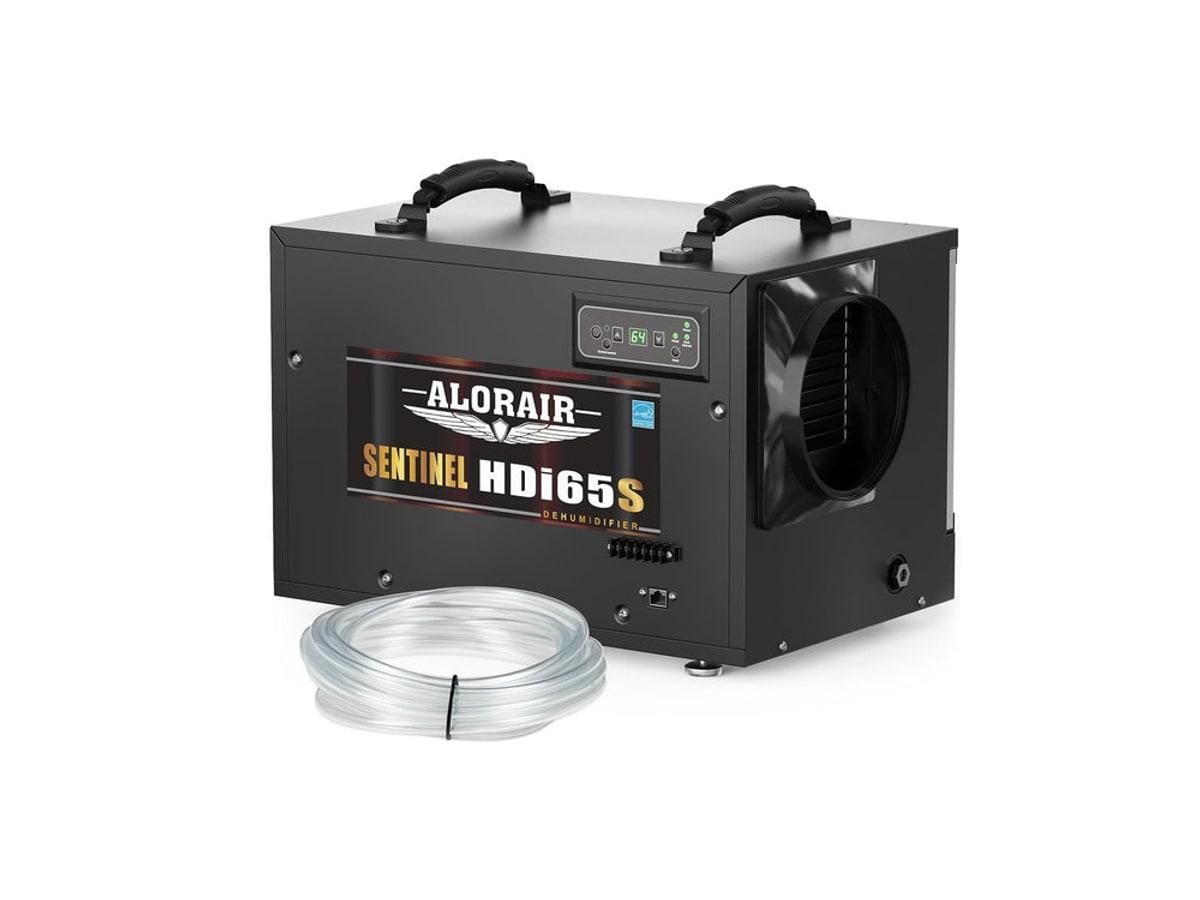
The HDi65S is built around the two things that defeat ordinary units under a house: tight access and cold. At 19.2 by 12.2 by 13.3 inches it fits through openings about 13 inches across, and AlorAir rates it to run from 33.8°F to 104°F, the widest range of the three.
It handles its own water, too. A built-in pump pushes condensate through a 19.6-foot hose to a sink, sump or exterior line, and a 6.56-foot gravity hose covers setups with a lower drain. It's also the only pick that's ENERGY STAR certified.
Read the capacity carefully. AlorAir quotes 55 pints a day at 80°F and 60% humidity, and 120 pints at a saturated 90°F and 90%. ENERGY STAR lists it at 36.33 pints a day under the cooler DOE test, and that's the number to compare with a home 50-pint unit. AlorAir rates it for up to 1,300 sq ft, so bigger crawl spaces belong with the Santa Fe.
The trade-offs: about $570 to $760 depending on AlorAir's sale pricing, more weight than its size suggests, a basic MERV-1 stock filter (a MERV-8 is sold separately), and Wi-Fi only on a separate, pricier version.
Best contractor-grade: Santa Fe Compact70 Crawl Space Dehumidifier
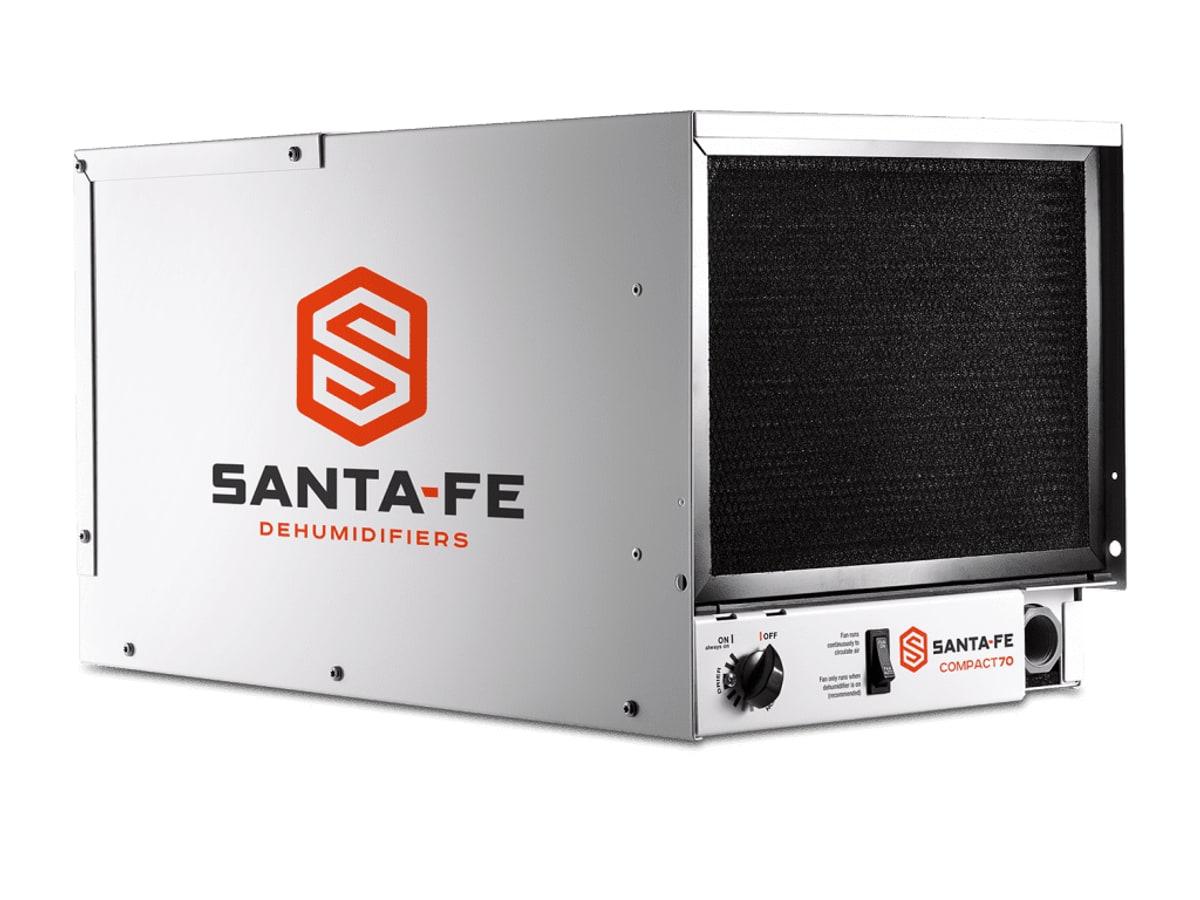
Santa Fe is a brand many crawl-space contractors install, and the Compact70 is the smallest in its line. The current version, part 4044110, uses R-454B refrigerant and replaces an older R-410A model. It has the finest filtration here, a MERV-13 filter behind a washable pre-filter, and covers the most ground, with Santa Fe quoting 1,800 to 2,600 sq ft of crawl space. Santa Fe gives 70 pints a day at 80°F and 60% humidity and 43.7 pints at 65°F and 60%. That second figure is the maker's own, since the Compact70 isn't on ENERGY STAR's list. Owners report crawl spaces dropping from around 85% humidity to under 50% within days.
The limits: its operating range starts at 49°F, so if your crawl space gets colder than that in winter, the AlorAir is the safer bet. It drains by gravity through an included 8-foot hose, with the pump kit extra, and it weighs 55 lb with no wheels or handle, so plan on a helper. Budget about $1,475 to $1,690.
Best for a professional install: AprilAire E070 70-Pint Crawl Space and Basement Dehumidifier
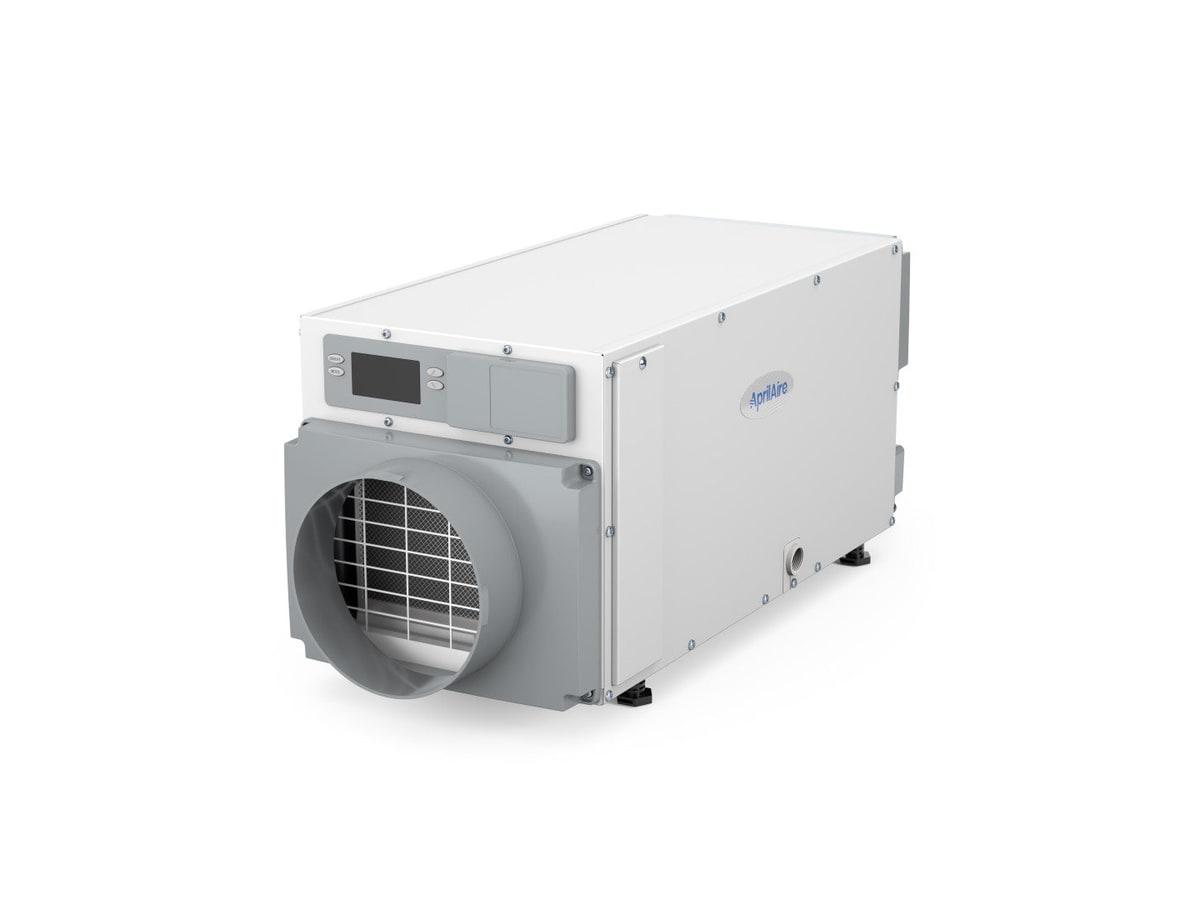
The E070 suits a crawl space or basement that a contractor is sealing anyway. It's the only pick that can be ducted, so one unit can treat more than one area, and AprilAire rates it for up to 2,200 sq ft. A Wi-Fi version, the E070W, is sold separately.
AprilAire quotes 70 pints a day at 80°F and 60% humidity and 53 pints at 73°F and 60%, the condition DOE uses for whole-home units. It isn't on ENERGY STAR's list. It uses a washable MERV-8 filter, works with inlet air down to 50°F, and drains by gravity through 10 feet of included tubing; AprilAire's optional Model 4856 pump lifts water up to 22 feet. At 56 lb and 12.5 by 12.5 by 25 inches, a tight hatch is a tape-measure job before it's a buying decision.
Owners say it reliably pulls crawl spaces down from 70% to 80% humidity, but one measured about 70 dB, fine under a floor and less fine in a finished room. One specialty retailer listed it at around $1,770 in late November 2026.
How should you compare crawl space pint ratings?
Compare figures measured under the same conditions; crawl-space makers lead with warmer-air numbers than home brands.
- 80°F and 60% humidity (AHAM): the older industry test and the headline number for all three picks.
- 65°F and 60% humidity (DOE, since 2019): the test behind the label on portable home units sold today. AlorAir's 36.33 and Santa Fe's 43.7 sit here.
- 73°F and 60% humidity (DOE whole-home): where AprilAire's 53 pints comes from.
- Saturation: hot, near-soaked air, like AlorAir's 120 pints at 90°F and 90%. Not useful for comparing models.
ENERGY STAR's capacity explainer gives an approximate conversion in which an old 70-pint rating works out to about 40 to 45 pints under the new test, and Santa Fe's own pair of figures lands right in that range. Our guide to dehumidifier pint ratings explains the change in more depth.
Is a built-in pump better than gravity drainage?
A pump is better when there's no drain lower than the unit; otherwise gravity is simpler and has nothing to wear out. Gravity needs the hose to run downhill all the way to a floor drain, sump pit or exterior line.
The AlorAir is the only pick with a pump built in. Santa Fe sells a pump kit for the Compact70, and AprilAire's Model 4856 adds 22 feet of lift to the E070. ENERGY STAR's rule applies either way: never route drainage near electrical circuits or devices. For basements, our list of dehumidifiers with a pump covers the home units.
Does the filter's MERV rating matter?
It matters for the machine more than for your lungs. MERV, short for Minimum Efficiency Reporting Value, rates how small a particle a filter can catch, and on a dehumidifier the filter's main job is keeping dust off the coils.
The Santa Fe's MERV-13 is the finest here, the AprilAire's washable MERV-8 sits in the middle, and the AlorAir ships with MERV-1, with a MERV-8 upgrade sold separately. If you want cleaner air upstairs, look at the best air purifiers for mold as a partner to the dehumidifier, not a replacement.
Who should install it, and what does the warranty cover?
The AlorAir and Santa Fe are realistic DIY installs; the AprilAire is meant for a pro, and its warranty depends on it. The Compact70 plugs into a normal outlet and drains by gravity, so a handy homeowner can set it up. The AlorAir is the smallest of the three and pumps its own water, so the job is mostly getting it into place; read its manual first.
Then read the warranty terms. The AlorAir's 6-year limited warranty gives full coverage for the first 2 years. The Santa Fe's 6 years split into 5 of full replacement and 1 on parts. The AprilAire's 5 years exclude labor, AprilAire recommends a professional install with a licensed electrician for wiring, and coverage requires installation to its instructions. If a crew is already encapsulating the space, let them do it.
What if the whole house is humid, not just the crawl space?
Then a ducted whole-home unit is the other route. ENERGY STAR suggests one for homes reading above 55% humidity consistently throughout, and says they suit relatively well-sealed homes with central air.
The Honeywell Home A65D is the example in our catalog. ENERGY STAR certifies it at 52.09 pints a day under the DOE whole-home test, at 2.23 liters per kWh, the most efficient unit we cover. Expect a contractor install, at around $1,495 before labor.
Which crawl space dehumidifier should you buy?
Buy the AlorAir if the space gets cold, the hatch is small, or you want a pump without extras. Buy the Santa Fe for a large sealed space that stays above 49°F, and the AprilAire if a pro is already on the job. Either way, size first: the dehumidifier size calculator works in DOE pints, so compare its answer with each pick's cooler-test figure, not the headline. If the damp room is really a basement, start with our best dehumidifiers for basements instead.
Frequently asked questions
What humidity level should a crawl space be kept at?
The EPA advises keeping indoor humidity below 60%, ideally between 30% and 50%, and ENERGY STAR calls 30% to 50% the generally accepted optimum. A crawl space isn't living space, but those targets are a sensible goal. A basic humidity meter costs about $10 to $50, per the EPA.
How quickly does a crawl space dehumidifier dry the space out?
It depends on how wet the space is and whether it's sealed. Owners of the Santa Fe Compact70 report crawl spaces falling from about 85% to under 50% humidity within days, and AprilAire E070 owners say it reliably pulls spaces down from 70% to 80%. Those are owner reports, not lab results.
Does a crawl space dehumidifier plug into a regular outlet?
Some do. The Santa Fe Compact70 plugs into a normal outlet. AprilAire's guidance for the E070 says wiring calls for a licensed electrician. Check the manual for any unit before you buy, especially if the nearest outlet is on the far side of the house.
Will a dehumidifier get rid of mold in a crawl space?
Not on its own. The EPA's position is that the key to mold control is moisture control, so a dehumidifier helps prevent new growth by keeping the air dry. Existing mold, leaks and standing water still need fixing, and the EPA says wet materials should be dried within 24 to 48 hours.
Are any crawl space dehumidifiers ENERGY STAR certified?
Some are. The AlorAir Sentinel HDi65S is certified, at 36.33 pints a day under the DOE test. The Santa Fe Compact70 and AprilAire E070 aren't on ENERGY STAR's list. ENERGY STAR says certified dehumidifiers use about 20% less energy than comparable conventional models.
Can I control a crawl space dehumidifier from my phone?
Not with the standard versions of these three. AlorAir sells a separate, pricier Wi-Fi version of the HDi65S, and AprilAire sells the E070W, which adds app control. The Santa Fe Compact70 has no app.