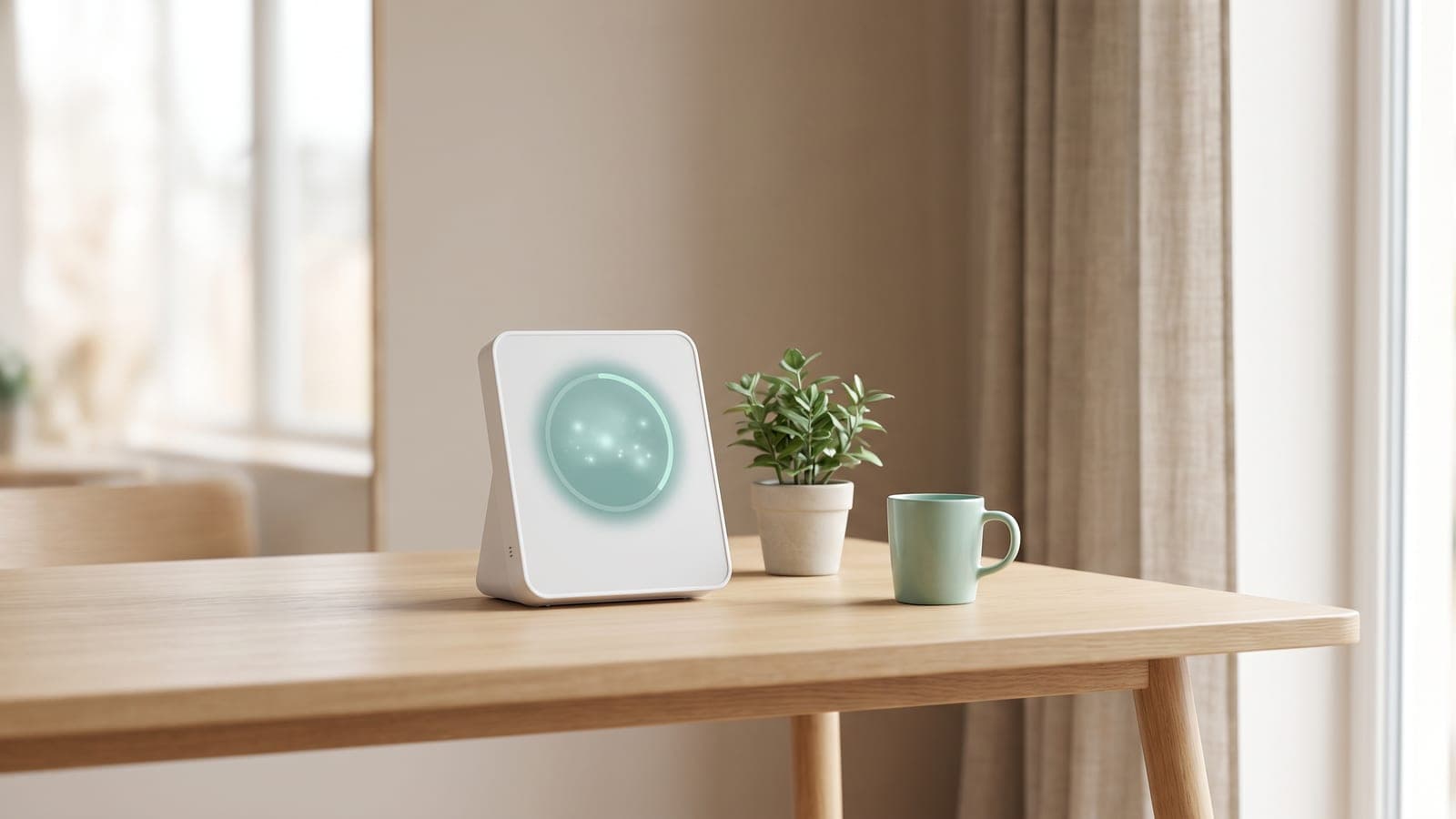
What an air quality monitor measures depends on the model, but the useful ones track some combination of fine particles (PM2.5 and sometimes PM10), gases like VOCs, CO2, formaldehyde, and carbon monoxide, plus humidity and temperature — and, in rare cases, radon. Each of those numbers tells you something different about your air: whether it's dusty, stuffy, off-gassing, or unsafe. This guide walks through what each metric means, where it comes from, and why it's worth watching.
Key takeaways
- PM2.5 is the headline metric — fine particles that reach deep into your lungs, and the number that decides when to run a purifier.
- Gas readings tell a different story: CO2 flags poor ventilation and stuffiness, while VOCs and formaldehyde flag off-gassing, cleaning, and cooking.
- CO2 and CO are not the same thing — one means stuffy, the other means danger — and a monitor is not a replacement for a dedicated CO safety alarm.
- Radon needs a special sensor, and only a handful of monitors include it.
- Cheap sensors track changes well even when they aren't lab-precise, which is enough for most home decisions.
What is PM2.5, and why is it the key number?
PM2.5 is fine particulate matter — airborne particles 2.5 microns across or smaller, roughly 30 times thinner than a human hair. It comes from combustion above all: wildfire and cigarette smoke, cooking, wood stoves, and traffic, plus fine household dust. It's the metric that matters most because its tiny size lets it slip past your body's defenses and settle deep in the lungs, and because it's the reading that tells you whether to run your air purifier. When PM2.5 spikes — a smoky pan, outdoor smoke leaking in — that's your cue to seal up and turn the purifier up. Our full guide to PM2.5 goes deeper on the health side.
Many monitors also report PM10 — coarser particles up to 10 microns, like pollen, mold spores, and larger dust. PM10 mostly irritates the nose and throat rather than reaching deep into the lungs, so it's a secondary reading, but it's useful during allergy season.
What do VOCs and TVOC readings tell you?
VOCs are volatile organic compounds — gases released by everyday products as they off-gas. Most monitors report them as TVOC (total VOCs), a single figure that bundles many gases together. The sources are all around you: fresh paint, new furniture and carpet, cleaning sprays, air fresheners, cooking, and adhesives. A rising TVOC reading is your sign that something in the room is releasing gas — which is why the number jumps right after you clean, unbox new furniture, or move into a freshly painted space. It's less about a precise threshold and more about spotting a change and ventilating in response.
What is formaldehyde, and why is it broken out separately?
Formaldehyde is one specific VOC, but it gets its own reading on some monitors because it's a common and notable indoor pollutant. It off-gasses from pressed-wood furniture, plywood, cabinetry, laminate flooring, and some fabrics and adhesives, the sort of thing that makes a new-furniture or newly renovated room smell "chemical." Monitors with a dedicated formaldehyde sensor show it alongside a general TVOC figure so you can see this particular offender on its own. Plenty of monitors skip it, though: the Temtop M10+, for example, reports TVOC but not formaldehyde, so check the sensor list if this is the reading you want. If a reading stays elevated in a room full of new pressed-wood pieces, off-gassing is the likely cause, and ventilation plus time is the fix.
What does the CO2 reading mean?
Carbon dioxide is the gas you exhale, and indoors it's the best proxy for ventilation. CO2 itself isn't dangerous at normal indoor levels — but when it climbs, it means fresh air isn't getting in and the room is getting stuffy. That stale, drowsy, "this meeting room needs a window open" feeling tracks closely with rising CO2. It's especially worth watching in bedrooms overnight, closed offices, and crowded rooms. A high CO2 reading is a simple, honest signal to open a window or improve airflow — and importantly, a purifier won't fix it, because filtering air doesn't add fresh air.
Isn't CO2 the same as carbon monoxide? (No.)
This trips people up constantly, so it's worth stating plainly: CO2 (carbon dioxide) and CO (carbon monoxide) are completely different. CO2 is the harmless-but-stuffy gas you breathe out. Carbon monoxide (CO) is a dangerous, colorless combustion gas from gas appliances, furnaces, cars, and anything burning fuel incompletely. Some monitors, like the Amazon Smart Air Quality Monitor, include a CO reading — but a consumer air-quality monitor is not a substitute for a dedicated, code-approved carbon monoxide safety alarm. Keep a real CO alarm regardless of what your air-quality monitor shows.
What about radon, humidity, and temperature?
Radon is a colorless, odorless radioactive gas that seeps up from soil and can accumulate in basements and lower floors. It needs a specialized sensor, so almost no consumer monitor measures it — the Airthings View Plus is the notable exception. If radon is a known issue in your area, that specialty is worth seeking out or testing for separately.
Humidity and temperature round out most monitors, and they're more useful than they look. Humidity that's too high encourages mold and dust mites; too low dries out your airways. Seeing both alongside your particle and gas readings helps you understand the whole room — for example, whether a musty problem is a moisture issue rather than a particle one.
What each metric means at a glance
| Metric | Where it comes from | Why it matters |
|---|---|---|
| PM2.5 | Smoke, cooking, traffic, fine dust | Reaches deep into lungs; the key "run the purifier?" number |
| PM10 | Pollen, mold spores, coarse dust | Irritates nose and throat; useful in allergy season |
| VOCs / TVOC | Paint, furniture, cleaners, cooking, adhesives | Flags off-gassing and chemical fumes; ventilate when it rises |
| Formaldehyde | Pressed wood, cabinetry, laminate, some fabrics | A common, notable VOC; lingers in new or renovated rooms |
| CO2 | People breathing in an enclosed space | Gauge of ventilation and stuffiness; open a window when high |
| CO (carbon monoxide) | Gas appliances, furnaces, cars, combustion | A safety hazard — but use a dedicated CO alarm, not just this |
| Radon | Soil gas seeping into basements/lower floors | Colorless, odorless; needs a special sensor (rare on monitors) |
| Humidity / temperature | The room's climate | Affects mold, dust mites, and comfort |
Which of these do you actually need to watch?
For most homes, PM2.5 is the one metric to insist on, followed by CO2 if stuffiness and ventilation are your concern and VOCs if it's off-gassing or cooking smells. Radon and CO are situational — valuable if they apply to you, skippable if they don't. Match the monitor to the questions you're actually asking about your air, rather than buying the one with the longest spec list.
Once you know which metrics you care about, our roundup of the best air quality monitors matches real devices to each priority, from a pocket-size CO2 and PM2.5 checker to a do-everything unit that even tracks radon. And if you're not sure a monitor is worth it in the first place, our honest take on whether you need one is the place to start.
Frequently asked questions
What is the single most important thing a monitor measures?
PM2.5 — fine particulate matter. It's the metric most closely tied to health effects, and it's the one that tells you whether to run your air purifier and how hard. If you can only afford a monitor that tracks one thing, make it PM2.5. Nearly every consumer monitor worth buying includes it.
What's the difference between VOCs and formaldehyde?
Formaldehyde is a specific volatile organic compound, and VOCs (or TVOC, meaning total VOCs) is the broader category it belongs to. A TVOC reading lumps together many gases (from paint, cleaners, and furniture off-gassing) into one figure. Some monitors break out formaldehyde separately because it's a common and notable indoor pollutant, but many popular models, including the Temtop M10+, report only TVOC. If formaldehyde is your main worry, check the sensor list before you buy.
Do air quality monitors measure carbon monoxide?
Some do, but not all — and it's important not to confuse it with CO2. Carbon monoxide (CO) is a dangerous combustion gas from things like gas appliances and cars, while carbon dioxide (CO2) is the harmless-but-stuffy gas you exhale. A monitor like the Amazon Smart Air Quality Monitor tracks CO, but a consumer air-quality monitor is not a substitute for a dedicated CO safety alarm.
Can an air quality monitor detect radon?
Most can't. Radon is a colorless, odorless radioactive gas that requires a specialized sensor, and among mainstream consumer monitors the Airthings View Plus is the notable one that includes it. If radon is a concern in your region, you either need a monitor with a dedicated radon sensor or a separate radon test.
Are the numbers on a cheap monitor accurate?
Cheap PM2.5 sensors are good at showing relative changes even if they aren't lab-exact — you'll clearly see the reading rise when you cook and fall after the purifier runs. Treat the exact figure as a guide rather than a precise laboratory measurement. For most home uses, seeing the direction and size of a change is exactly what you need.