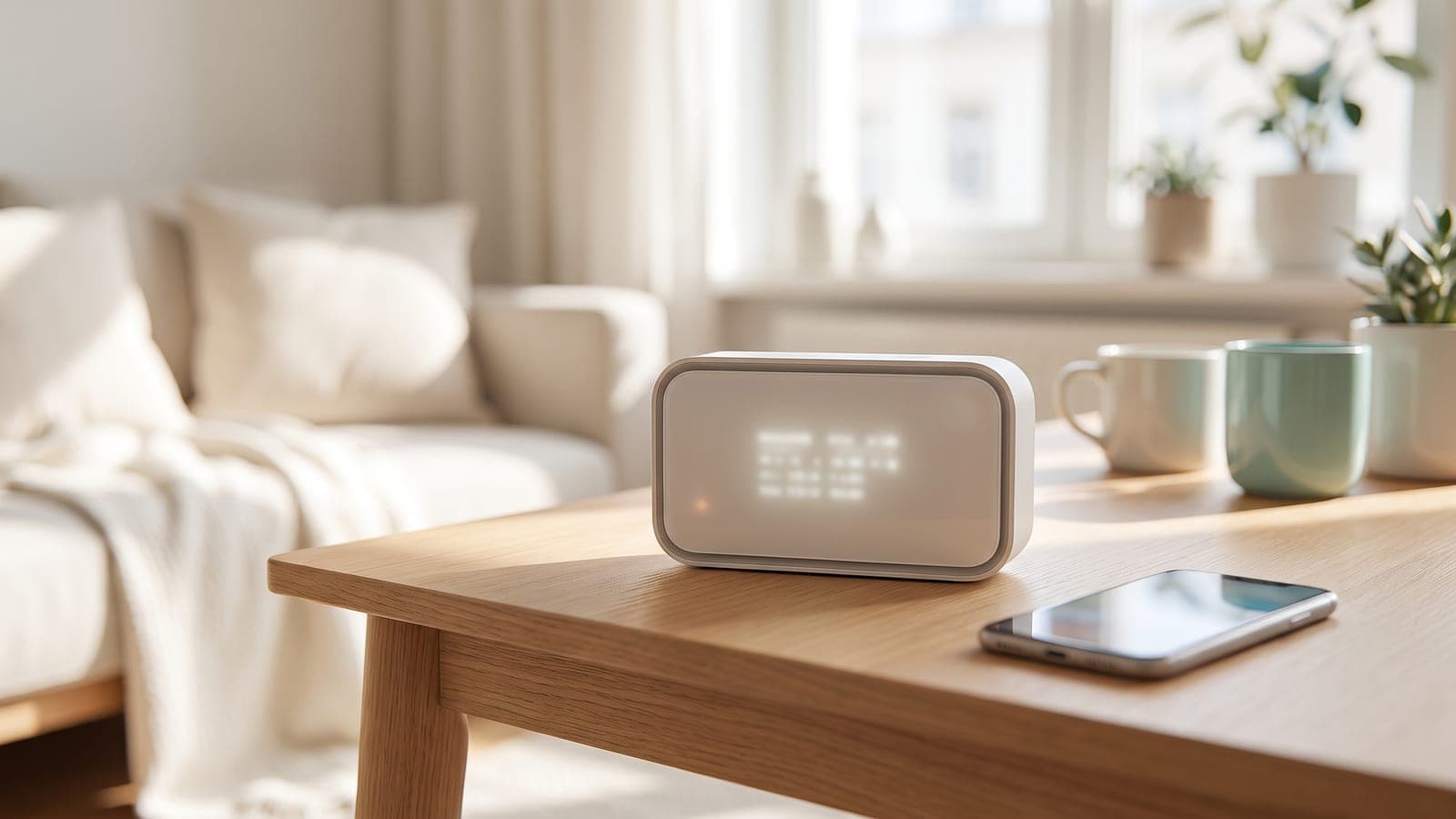
An air-quality monitor answers a simple question your nose can't: is the air in this room actually clean right now? The best air quality monitors give you that reading in real time (usually PM2.5, often CO2 and VOCs, and in one case even radon), so you know when to open a window, when to run the purifier harder, and whether your setup is working. The picks below span a pocket-size battery monitor to a do-everything smart monitor, and each is chosen for the metrics and use it actually nails.
Quick answer
| Monitor | Measures | Connectivity | Price | Best for |
|---|---|---|---|---|
| Awair Element | PM2.5, CO2, VOCs, humidity, temp | Wi-Fi + app | ~$100–150 | Best overall |
| Temtop M10+ | CO2, PM2.5, AQI, TVOC, humidity, temp | Bluetooth + app, rechargeable battery | ~$95–120 | Portable / CO2 checks |
| Airthings View Plus | Radon, PM2.5, CO2, VOCs, humidity, temp, pressure | Wi-Fi + app, 6 AA | ~$250–300 | Radon + whole-home tracking |
| IQAir AirVisual Pro | PM2.5, CO2, temp, humidity | Wi-Fi + app | ~$300–330 | Indoor + outdoor AQI |
| Amazon Smart Air Quality Monitor | PM2.5, VOCs, CO, humidity, temp | Wi-Fi + Alexa app | ~$60–70 | Alexa smart homes |
Key takeaways
- PM2.5 is the metric that matters most — it's the number that tells you whether to run the purifier — so make sure any monitor you buy measures it.
- Decide between remote alerts and an on-device screen. Wi-Fi monitors log history and alert you from anywhere; a battery unit with its own screen, like the Temtop M10+, shows the number right where you are without opening an app.
- Only one monitor here measures radon. If that's a concern in your area, the Airthings View Plus effectively makes the decision for you.
Best overall: Awair Element
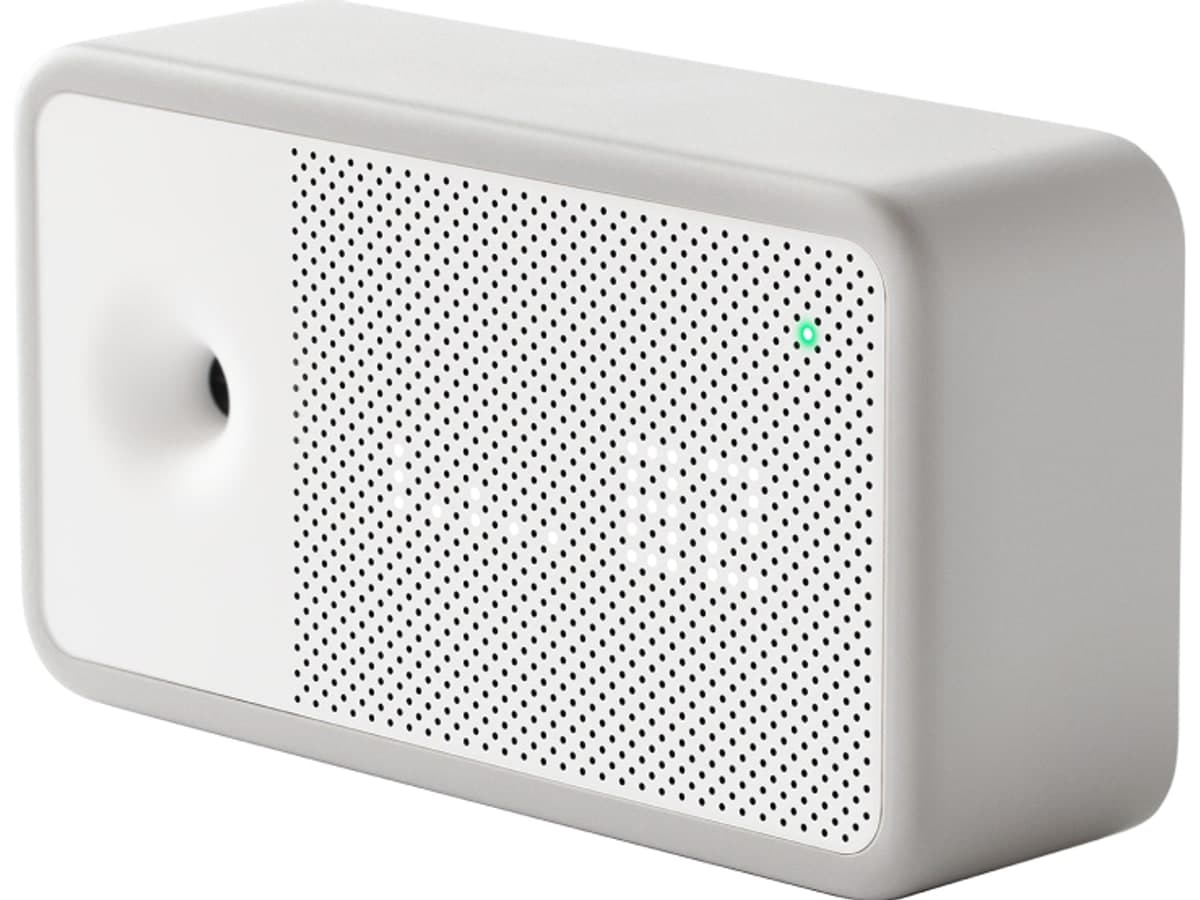
The Awair Element is the monitor we'd hand most people, because it balances the metrics that matter with the friendliest software going. It tracks PM2.5, CO2, VOCs, humidity, and temperature, then rolls them into a single 0–100 air-quality score that's genuinely easy to read at a glance — no decoding micrograms. The app is the best here for spotting patterns over time and understanding what's driving a bad reading. At roughly $100 to $150 it isn't the cheapest, but it hits the sweet spot of coverage, clarity, and price, and it pairs naturally with a purifier so you can watch your air improve.
Best portable: Temtop M10+
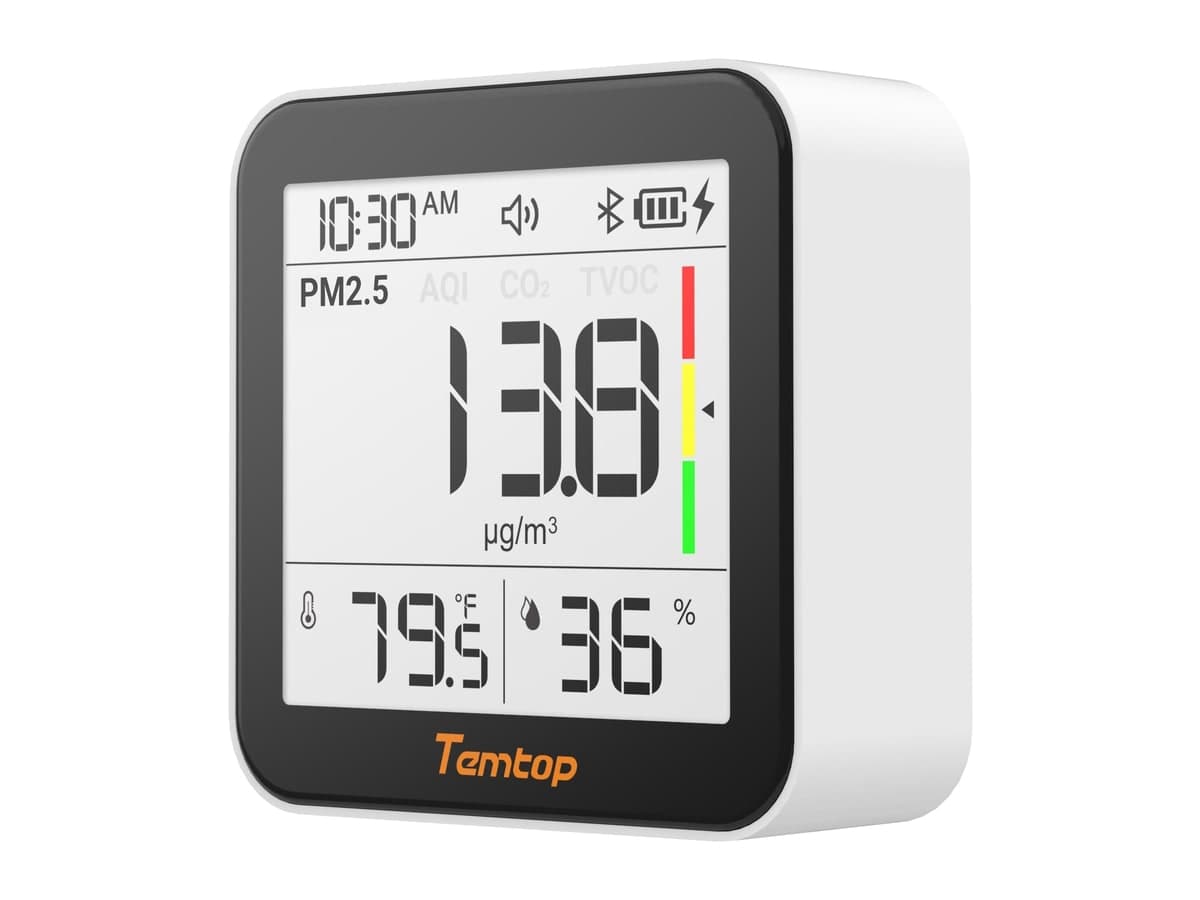
The Temtop M10+ is the monitor to carry from room to room, and one of the most affordable ways to get a CO2 reading. For around $95 to $120 it measures CO2, PM2.5, an AQI figure, TVOC, temperature, and humidity, all on a small e-ink screen you can read without touching your phone. The screen has no backlight and the alarm can be muted, so it suits a bedroom, and the rechargeable battery runs up to 60 days per charge. The Bluetooth app adds history, hourly logging, and data export when you're nearby. The tradeoffs: it doesn't measure formaldehyde (the older M10 did), and the base model can't alert you once you're out of Bluetooth range; Temtop sells a separate Wi-Fi version for that. As a grab-and-go checker that also tells you when a room needs fresh air, it's a lot of monitor for the money.
Best for radon and whole-home tracking: Airthings View Plus
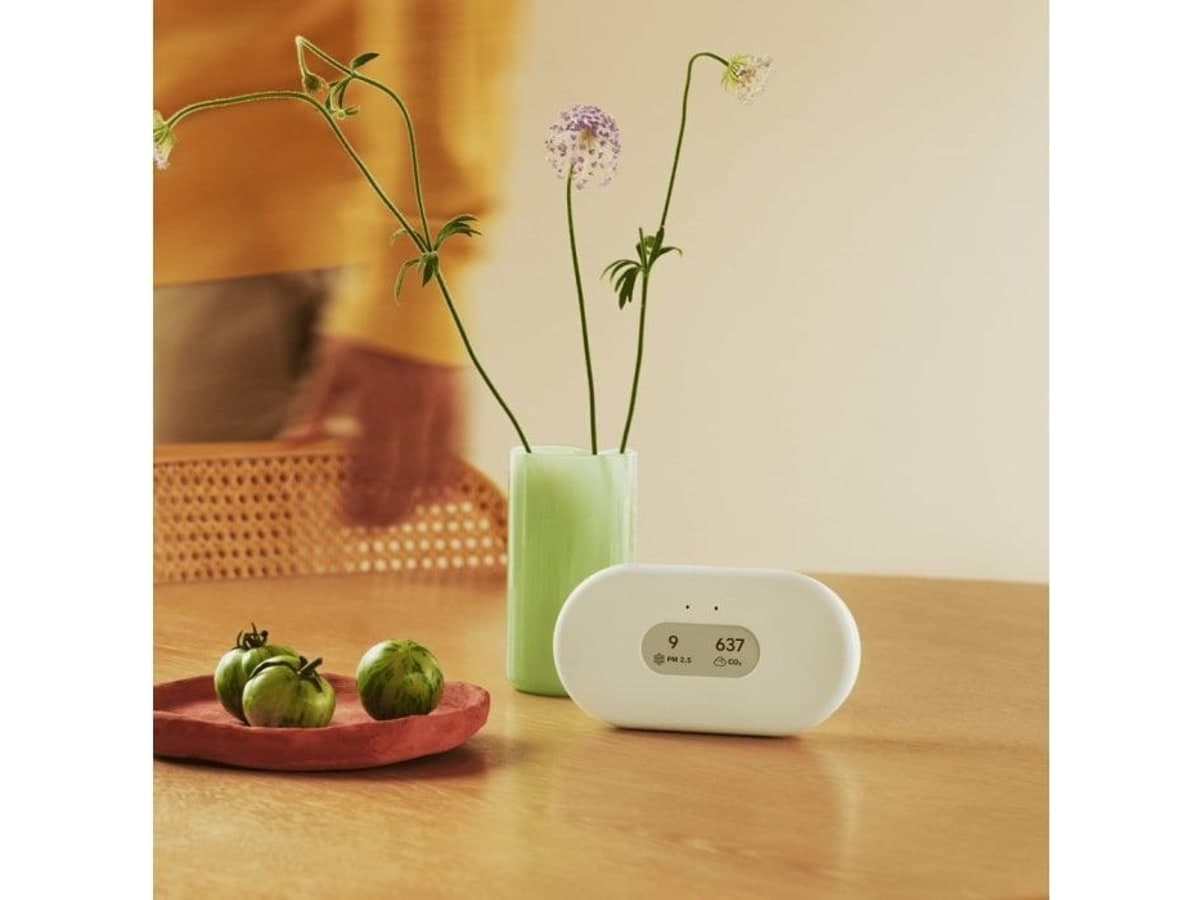
The View Plus is the most complete monitor here, and it's the only mainstream unit that measures radon — a colorless, odorless gas that no other pick tracks at all. On top of that it covers PM2.5, CO2, VOCs, humidity, temperature, and even air pressure, all logged to a clean app. It runs on six AA batteries that last roughly two years, so you can place it anywhere without hunting for an outlet. At about $250 to $300 it's a premium buy, but if radon is on your radar or you want one device watching everything, nothing else here matches its breadth.
Best for indoor plus outdoor AQI: IQAir AirVisual Pro
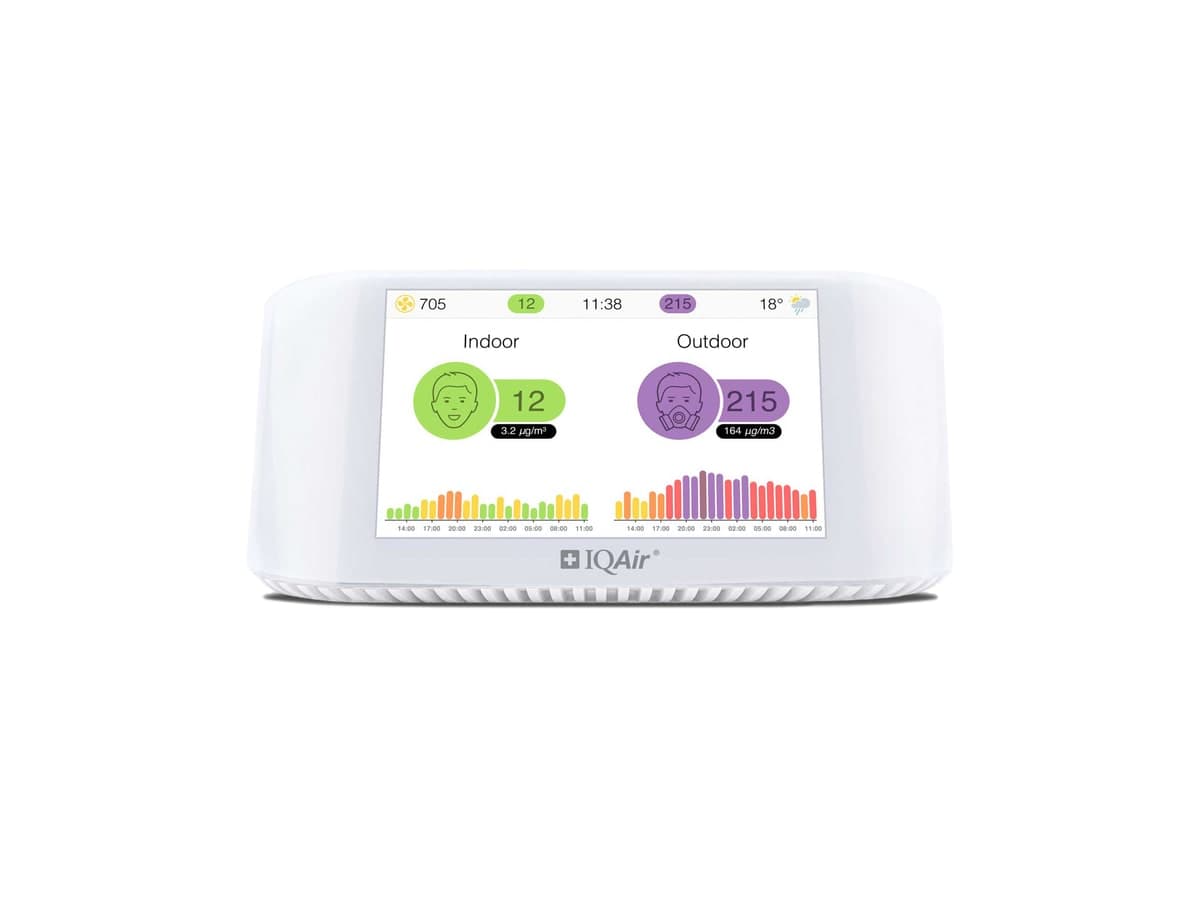
The AirVisual Pro's trick is context: alongside your indoor PM2.5, CO2, temperature, and humidity, it pulls in your local outdoor AQI and even a forecast. That makes it the pick for anyone in a wildfire-smoke or high-pollution region, because you can see the outdoor threat and your indoor reality on one screen and decide whether to seal up and run the purifier. It's a premium device at roughly $300 to $330 and its measured spread is narrower than the Airthings, but the outdoor-plus-indoor picture is something no other monitor here gives you.
Best for Alexa smart homes: Amazon Smart Air Quality Monitor
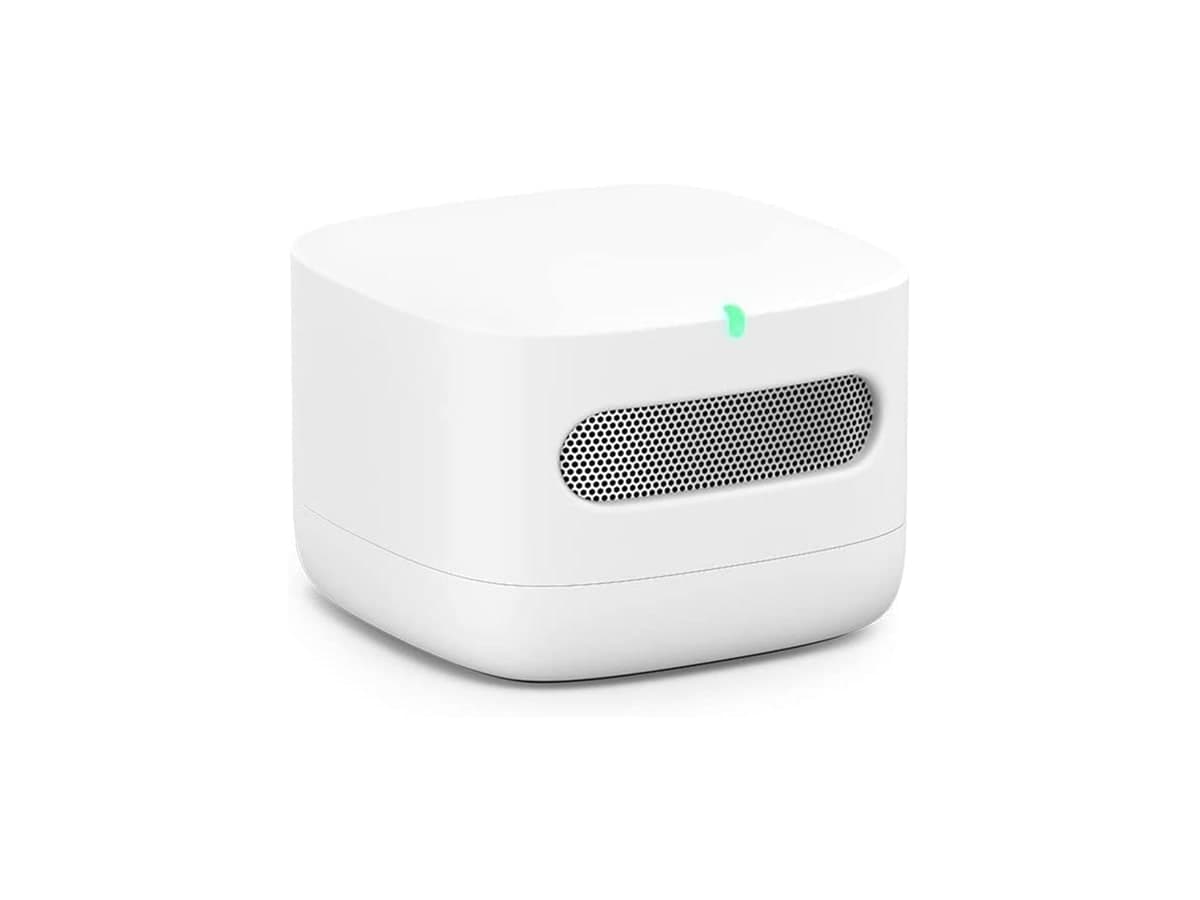
If your home already runs on Alexa, Amazon's monitor is the cheap, tidy way in. For about $60 to $70 it measures PM2.5, VOCs, CO, humidity, and temperature, and reports through the Alexa app with routines and voice readouts. The honest caveats: it needs Alexa to do anything useful, and the device itself is just an LED status light rather than a real display, so you're leaning on your phone or a smart speaker for the actual numbers. Inside an Amazon smart home, though, it slots in painlessly and covers the essentials.
How to choose the right one for you
Start with the metrics you actually care about. Almost everyone should insist on PM2.5, since that's the key number for deciding when to run a purifier; add CO2 if stuffiness and ventilation are your concern, VOCs if it's off-gassing or cooking, and radon only if the Airthings' specialty applies to you. Our guide to what an air quality monitor measures breaks down each metric in plain English. Then decide whether you want an app for long-term trends or just an instant display. And if you're still on the fence about whether you need one at all, our honest take on whether you need an air quality monitor will help you decide before you spend.
Frequently asked questions
Which air quality metric matters most?
PM2.5 — fine particulate — is the one to prioritize, because it's the number that tells you whether to run your purifier and it's the pollutant most tied to health effects. After that, CO2 is the best gauge of ventilation and stuffiness, and VOCs flag off-gassing and cooking. If a monitor only measures one thing, PM2.5 is the one you want.
Do cheap air quality monitors actually work?
For tracking relative changes, yes. A budget PM2.5 sensor may not match a laboratory reference to the microgram, but it reliably shows the direction and size of a change — the reading jumping when you sear a steak, or falling after the purifier runs. That's what most people actually need. Treat the exact number as a guide, not a lab result.
Do I need a monitor with an app?
It depends on how you'll use it. An app gives you history, trends, and alerts, which is how you learn your home's patterns and catch slow problems. If you mostly want an on-the-spot answer to whether the air is bad right now, pick a monitor with its own screen, like the Temtop M10+, which shows every reading on the device and keeps its Bluetooth app optional. For alerts when you're away from home, pick one with Wi-Fi and an app.
Which monitor should I get if I'm worried about radon?
The Airthings View Plus is the pick, because it's the only mainstream consumer monitor here that measures radon alongside PM2.5, CO2, and VOCs. Radon is a colorless, odorless gas that no other monitor in this roundup tracks, so if that's a concern in your area it effectively makes the choice for you.
Does an air quality monitor replace an air purifier?
No — they do opposite jobs. A monitor measures your air; a purifier cleans it. A monitor won't remove a single particle, but it tells you when and how hard to run the purifier, and shows you whether the purifier is actually working. They're a natural pair: see the number, act on it, watch it fall.