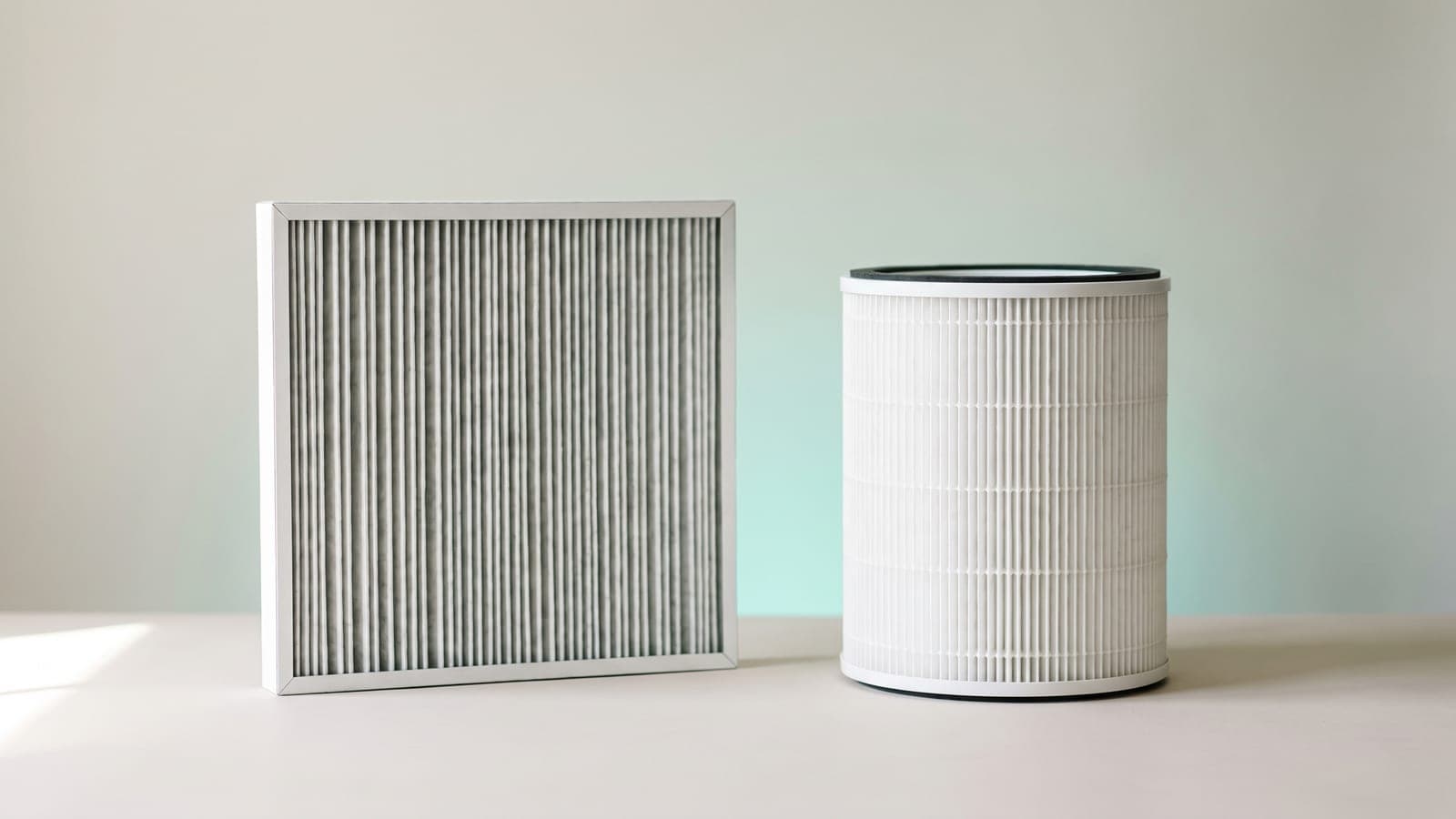
MERV vs HEPA comes down to two different ratings for two different jobs. MERV (Minimum Efficiency Reporting Value) is a 1–20 scale that rates HVAC furnace filters for whole-house cleaning; HEPA is a single high-efficiency standard — 99.97% of particles at 0.3 microns — used in portable room purifiers. A high-MERV furnace filter treats every room your system serves at moderate efficiency; a HEPA purifier treats one room at higher efficiency. They aren't rivals — they're complementary, and the best setups use both.
Key takeaways
- MERV rates furnace filters on a 1–20 scale; higher catches more, but home HVAC usually tops out around MERV 13–16.
- HEPA is one fixed standard — 99.97% at 0.3 microns — built into room purifiers with their own fans.
- Whole house vs one room: MERV cleans everywhere the HVAC reaches at lower efficiency; HEPA cleans a single room at higher efficiency.
- You can't just swap them. True HEPA media is too dense for a normal furnace and would choke airflow.
- They work together. MERV for whole-house baseline, HEPA where you spend the most time.
What is MERV?
MERV stands for Minimum Efficiency Reporting Value, an industry scale from 1 to 20 that rates how effectively an HVAC filter captures particles across a range of sizes. It's the number printed on the flat furnace filters you slide into your heating and cooling system. The higher the MERV, the smaller the particles the filter reliably catches — MERV 1–4 stops only large lint and dust, MERV 8–11 handles finer dust and pollen, and MERV 13–16 captures a high share of the fine particulate that matters most for health.
The key thing about MERV is where it works: the filter sits in your ducted HVAC system, so it cleans air for every room the system serves whenever the furnace or AC is running. That's whole-house coverage. The trade-off is that denser high-MERV media restricts airflow, and most residential systems can only handle up to around MERV 13–16 before the blower strains and heating/cooling performance suffers — which is the practical ceiling for home furnace filters.
What is HEPA?
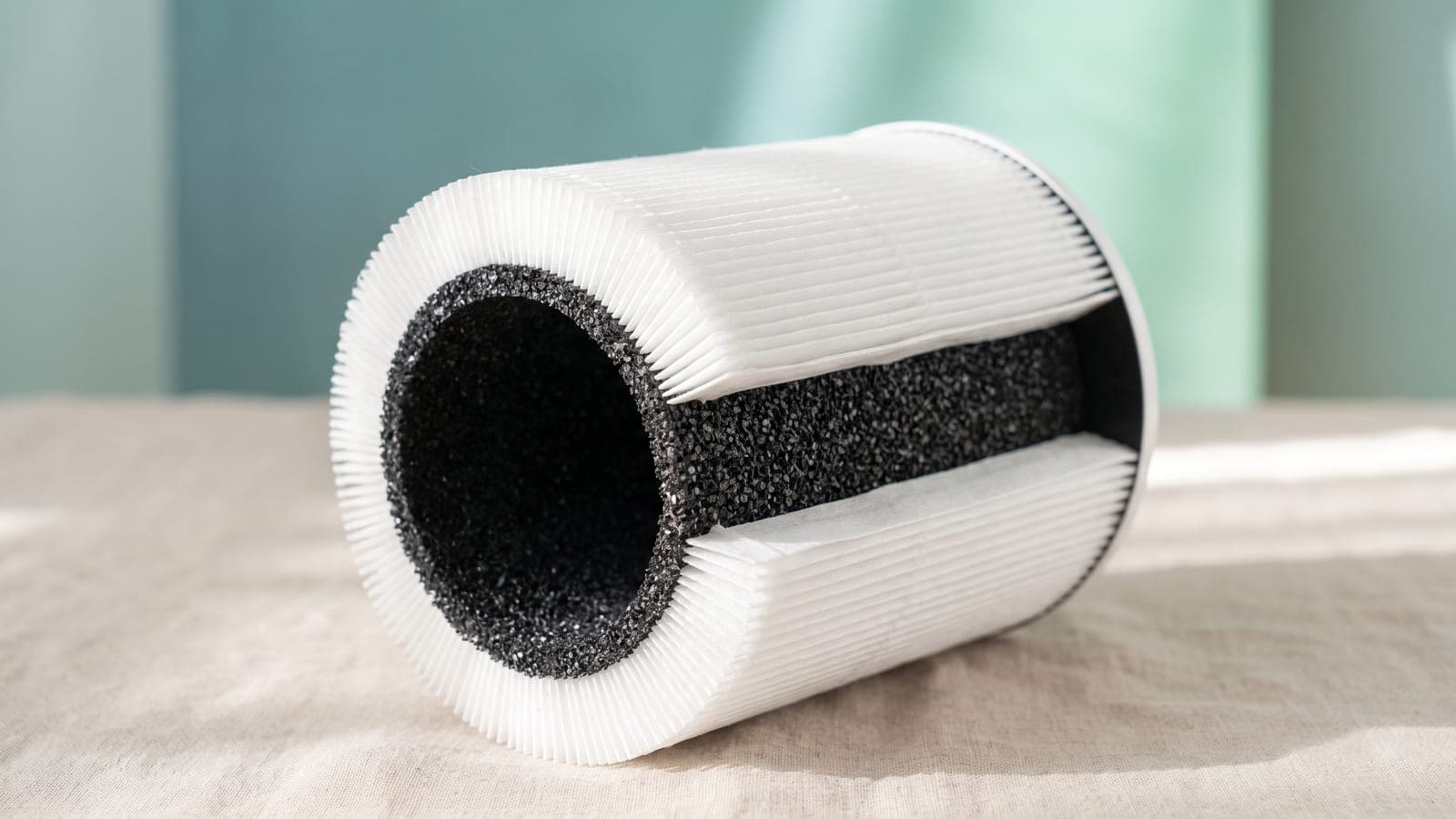
HEPA (High Efficiency Particulate Air) isn't a scale — it's a single pass/fail standard: a True HEPA filter must capture 99.97% of particles at 0.3 microns, the hardest particle size to catch. That covers pollen, dust, dander, mold spores, and smoke particulate. Because it's one defined bar, "True HEPA" means the same efficiency everywhere, unlike the graduated MERV range. Watch for the term "HEPA-type", though — that's a marketing label that does not meet the True HEPA standard and cleans noticeably less.
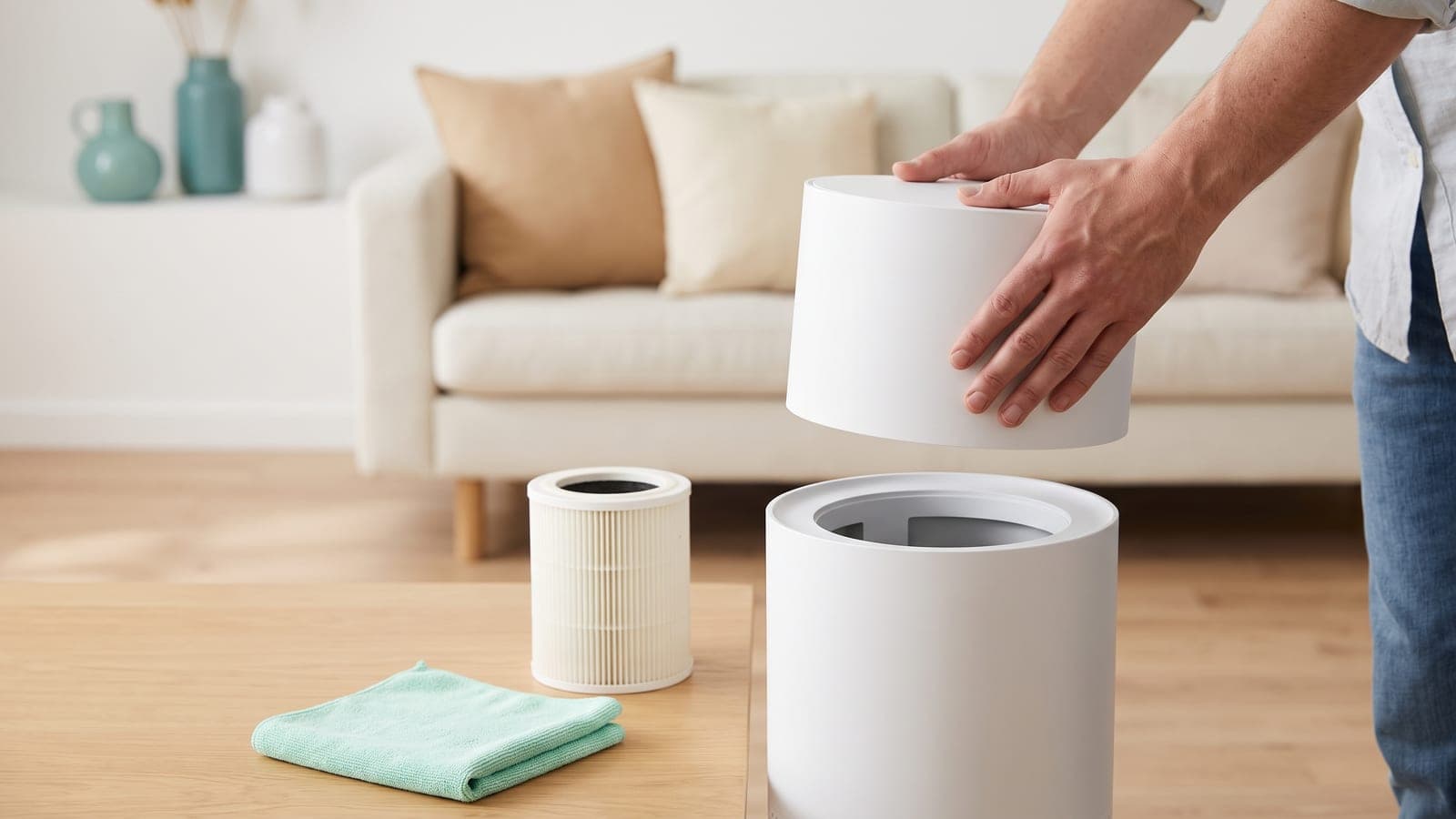
HEPA lives in portable room purifiers, each with its own fan sized to push air through the dense media. That's the other half of the contrast with MERV: a HEPA purifier cleans one room at a time, but at higher efficiency than a home furnace filter reaches. Within HEPA there are grades too — our HEPA filter grades explained, H11 to H14 guide covers those — and our what is a HEPA filter guide unpacks the True-HEPA-vs-HEPA-type distinction in full.
Why can't you just put a HEPA filter in your furnace?
Because the physics fight you. True HEPA media is dense enough to catch 99.97% at 0.3 microns, and that same density makes it very hard to push air through. A typical home HVAC blower isn't built for that resistance — drop a HEPA filter into a standard furnace slot and you choke the airflow, strain the blower motor, and hurt heating and cooling performance. That's precisely why furnaces use the more airflow-friendly MERV-rated filters and HEPA lives in purifiers with fans engineered for the job.
If you genuinely want HEPA-level cleaning across a whole house, the answer isn't a HEPA filter in the furnace — it's a professionally installed whole-house HEPA bypass system with its own fan, or one or more room purifiers. Our best whole-house air purifiers roundup covers the whole-house route. For most people, a high-MERV furnace filter plus a room purifier is simpler and cheaper than trying to force HEPA into ductwork that can't handle it.
How do MERV and HEPA compare on particle capture?
Here's the practical mapping. Note that HEPA sits above the range home HVAC systems can realistically run, which is exactly why it needs a dedicated purifier:
| MERV rating | What it catches | Where it's used | vs HEPA |
|---|---|---|---|
| MERV 1–4 | Large lint, carpet fibers, big dust | Basic/cheap furnace filters | Far below HEPA |
| MERV 5–8 | Fine-to-medium dust, mold spores, some pollen | Common home furnace filters | Well below HEPA |
| MERV 9–12 | Fine dust, pollen, some fine particulate | Better home furnace filters | Below HEPA |
| MERV 13–16 | A high share of fine particulate & smoke | Highest most home HVAC handles | Approaching, still below HEPA |
| MERV 17–20 | Very fine particulate at high efficiency | Cleanrooms, hospitals (specialized) | Roughly HEPA territory |
| True HEPA | 99.97% at 0.3 microns | Portable room purifiers | The high-efficiency standard |
The takeaway: even a strong home furnace filter at MERV 13–16 is generally below True HEPA efficiency, and the MERV levels that match HEPA (17–20) aren't practical for a normal furnace. So HEPA wins on raw efficiency — but only for the one room it serves.
Which one should you use — whole house or one room?
This is the wrong question, because they solve different problems. A high-MERV furnace filter gives you a whole-house baseline: every room the HVAC serves gets cleaner air at moderate efficiency, automatically, whenever the system runs. A HEPA room purifier gives you a high-efficiency zone: one room — usually a bedroom or wherever you spend the most time — cleaned to the 99.97% standard, independent of whether the furnace is running.
The genuinely best setup combines them. Run the highest MERV your HVAC can handle without airflow problems (often 13, sometimes up to 16 — check your system's rating first) for whole-house coverage, and add a True HEPA purifier in the room that matters most. That layered approach covers the whole home at moderate efficiency and gives you a high-efficiency pocket where you sleep or work, which neither filter delivers alone.
Do they actually work together?
Yes, and thinking of them as complementary is the whole point. The furnace filter and the room purifier operate on different systems, different areas, and different efficiencies, so they don't compete for the same air — they cover each other's gaps. The MERV filter handles the large, whole-house load and keeps the ductwork and coils cleaner; the HEPA purifier handles the high-efficiency finishing in the room you care about most.
Running both also eases the burden on each. The whole-house MERV filter reduces the overall particle load, so the room HEPA has less to do and its filter lasts a bit longer; the room HEPA covers the fine-particle efficiency the furnace filter can't reach. That's a layered defense — whole-house baseline plus a high-efficiency zone — rather than an either/or choice.
What's the bottom line on MERV vs HEPA?
MERV rates furnace filters on a 1–20 scale for whole-house cleaning at moderate efficiency; HEPA is a fixed 99.97% standard for a room purifier cleaning one space at higher efficiency. You can't drop HEPA into a normal furnace (it chokes the airflow), and you don't have to choose between them — the strongest home setup runs a high-MERV furnace filter for the whole house and a True HEPA purifier where you spend the most time.
If you're deciding which HEPA purifier belongs in that key room, get the True-HEPA-versus-"HEPA-type" distinction straight first — a "HEPA-type" filter undercuts the whole point. Start with our what is a HEPA filter guide, then check the HEPA filter grades explained breakdown so you know exactly what standard you're buying.
Frequently asked questions
What's the difference between MERV and HEPA?
MERV (Minimum Efficiency Reporting Value) is a 1–20 scale that rates HVAC furnace filters by how well they catch a range of particle sizes. HEPA is a single high-efficiency standard — 99.97% of particles at 0.3 microns — used in portable room purifiers. MERV rates whole-house furnace filters at generally lower efficiency; HEPA is a higher-efficiency standard for cleaning one room at a time. They're complementary, not competing.
Is HEPA better than MERV?
For raw particle capture in one room, HEPA is higher efficiency — it exceeds even the top common furnace MERV ratings. But 'better' depends on the job. A high-MERV furnace filter treats every room the HVAC serves at moderate efficiency whenever the system runs; a HEPA purifier treats a single room at very high efficiency. The strongest setup uses both: MERV for the whole house, HEPA where you spend the most time.
What MERV rating is equivalent to HEPA?
There's no exact furnace equivalent, because HEPA sits above the practical MERV range for home HVAC. MERV 13–16 filters capture a high share of fine particles and are often the highest most residential systems can handle without airflow problems. True HEPA is more efficient still, roughly comparable to MERV 17–20 territory, which is why it's used in dedicated purifiers with their own fans rather than dropped into a furnace.
Can I put a HEPA filter in my furnace?
Usually not directly. True HEPA media is so dense it chokes airflow in a typical home HVAC system, which can strain the blower and reduce heating and cooling performance. That's why furnaces use MERV-rated filters and HEPA lives in standalone purifiers with fans built to push air through it. If you want HEPA-level cleaning, use a room purifier or a professionally installed whole-house HEPA bypass system, not a HEPA filter jammed into a standard furnace slot.
Should I use a high-MERV furnace filter or a HEPA air purifier?
Ideally both, because they do different jobs. A high-MERV furnace filter (13–16, if your system supports it) cleans air throughout the house whenever the HVAC runs, catching a lot at moderate efficiency. A HEPA room purifier delivers higher-efficiency cleaning in the specific room you care about most, like a bedroom. Using them together gives you whole-house coverage plus a high-efficiency zone where you spend the most time.