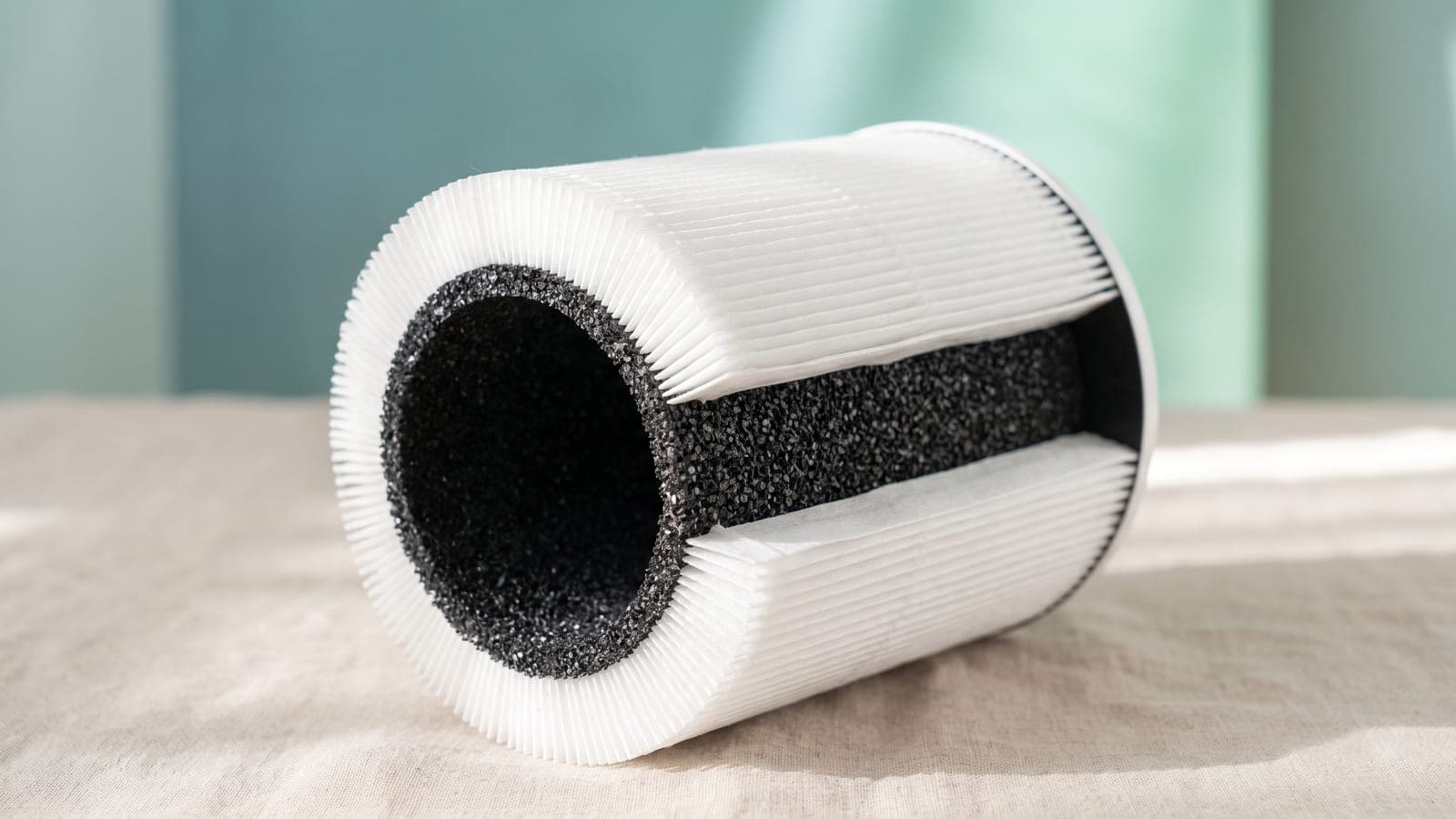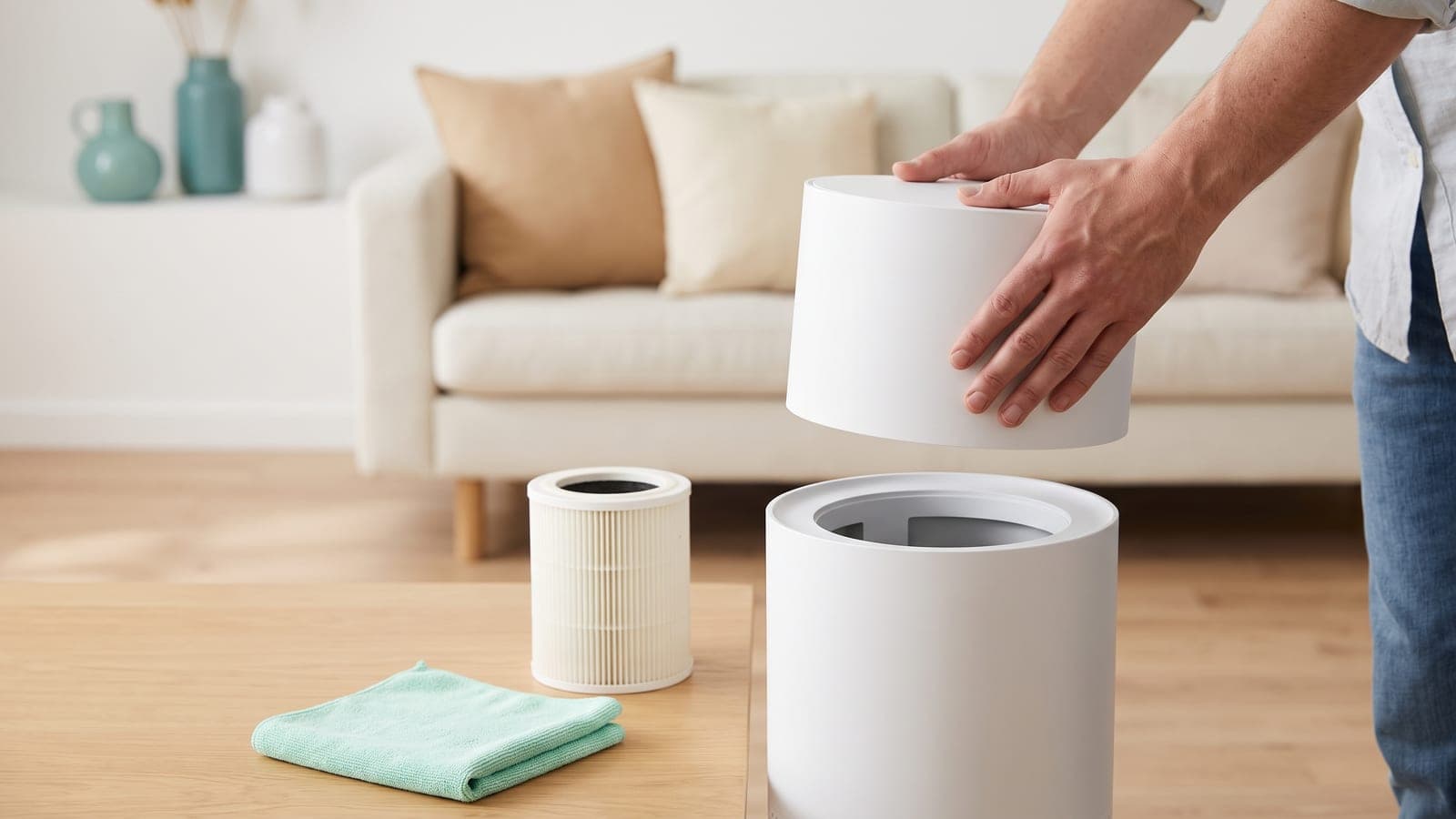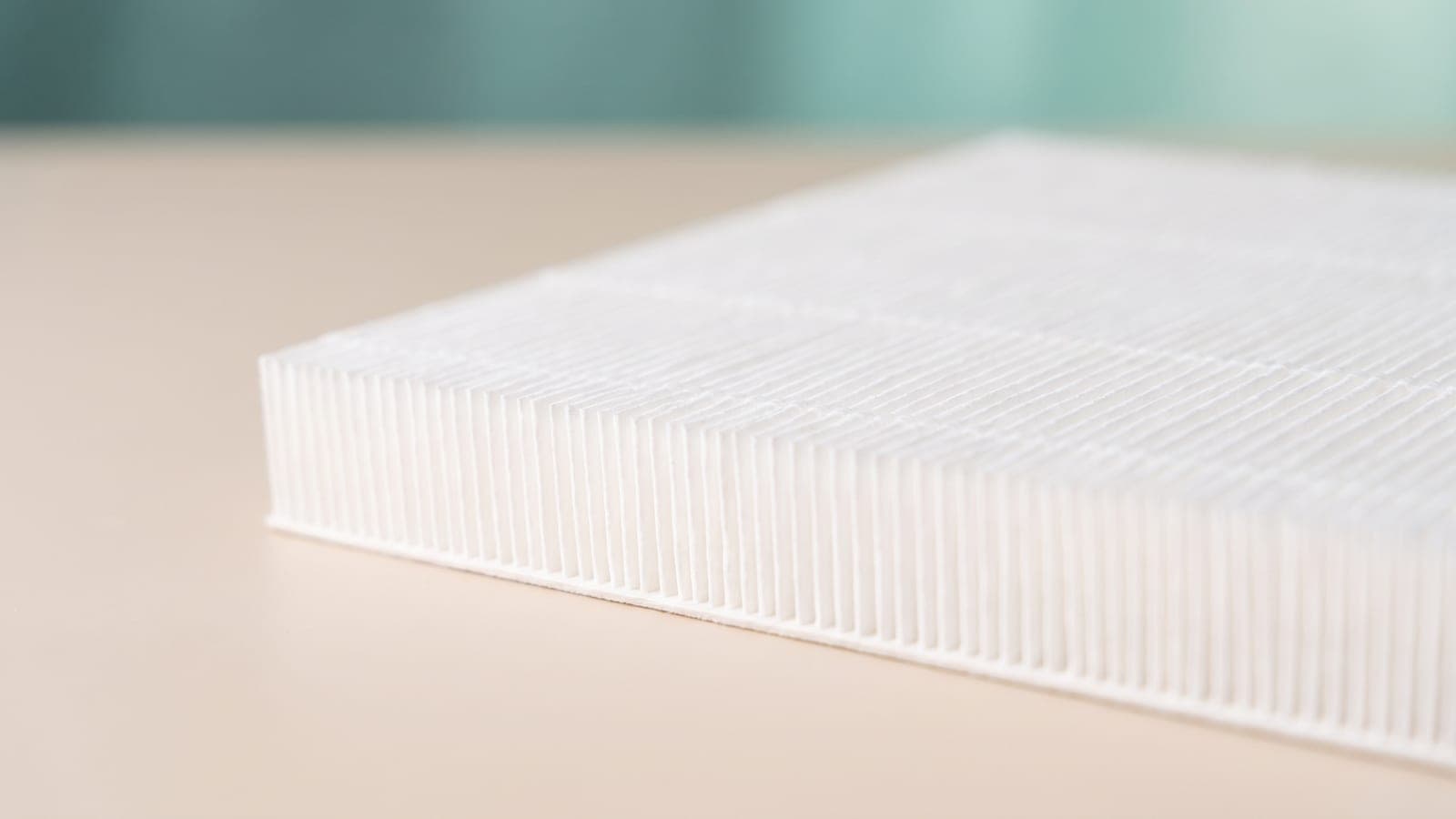
HEPA filter grades rank how efficiently a filter captures fine particles, using the European EN1822 standard. The scale runs from E10–E12 ("EPA," efficiency particulate air — just below True HEPA) up through H13 and H14 (True HEPA) and into U15+ (ULPA, for ultra-clean industrial and cleanroom use). The number to remember: True HEPA begins at H13, capturing roughly 99.95–99.97% of particles at the hardest-to-catch size. Anything graded below H13 isn't True HEPA, no matter how the box is worded.
Key takeaways
- EN1822 grades filters by efficiency: E10–E12 (EPA), H13–H14 (True HEPA), U15+ (ULPA).
- True HEPA starts at H13 — about 99.95% capture; H14 is about 99.995%.
- "HEPA-type" filters sit below H13 and don't meet the True HEPA bar.
- Higher grade means finer capture but more airflow resistance — bigger isn't automatically better.
- A sealed HEPA path matters as much as the grade — leaked air is unfiltered air.
What are the HEPA filter grades on the EN1822 scale?
The letters and numbers come from EN1822, the European standard that classifies high-efficiency filters by how well they capture particles at the most penetrating particle size (around 0.1–0.3 microns — the size that's hardest to trap). The scale groups into three families:
- EPA (E10, E11, E12) — "efficiency particulate air." Good filters, but below the True HEPA threshold. This is the tier most "HEPA-type" media actually lands in.
- HEPA (H13, H14) — "high-efficiency particulate air," the True HEPA range. H13 is the workhorse grade for home purifiers.
- ULPA (U15, U16, U17) — "ultra-low particulate air," for semiconductor cleanrooms and specialized medical spaces. Overkill for a home.
Here's how the common grades stack up:
| Grade | Class (EN1822) | Efficiency (at MPPS) | Notes |
|---|---|---|---|
| E10 | EPA | ≥ 85% | Below True HEPA; often sold as "HEPA-type" |
| E11 | EPA | ≥ 95% | Better, still not True HEPA |
| E12 | EPA | ≥ 99.5% | Close, but under the H13 bar |
| H13 | HEPA (True) | ≥ 99.95% | The home sweet spot; genuine True HEPA |
| H14 | HEPA (True) | ≥ 99.995% | Medical/cleanroom grade; more airflow resistance |
| U15 | ULPA | ≥ 99.9995% | Industrial cleanrooms; overkill for homes |
Which grade counts as True HEPA?
H13 and above. That's the line that matters. An H13 filter captures at least 99.95% of particles at the most penetrating size — and many home filters marketed as H13 hit the familiar U.S. figure of 99.97%. Step up to H14 and efficiency climbs to about 99.995%.
Everything below H13 — E10, E11, E12 — is officially EPA grade, not HEPA, even though marketing sometimes blurs the labels. This is exactly why the "HEPA-type" trap exists: a filter can sound HEPA-ish while sitting a full class below the True HEPA threshold. If a spec sheet lists an E-grade, or won't state a grade at all, treat it as not True HEPA. Our deeper guide on what "HEPA-type" really means unpacks the marketing games in detail.
Is a higher HEPA grade always better?
No — and this surprises people. A higher grade traps finer particles, but denser media also resists airflow more. Push air through an H14 with the same fan you'd use behind an H13, and you move less air per hour. Since a purifier's real-world performance comes down to how many times it cycles your room's air, a very high grade can actually reduce the clean air delivered.
For everyday home air — dust, pollen, dander, smoke particulate, and the PM2.5 that matters most for health — H13 is the sweet spot. It delivers true 99.95%+ capture while letting the fan move plenty of air. H14 is built for operating rooms and labs where the extra decimal places justify the airflow penalty; a living room rarely does. The right instinct isn't "highest grade wins," it's "match the grade to the job."
Why does sealed HEPA matter as much as the grade?
Because a filter can only clean the air that actually passes through it. If a purifier's housing lets air slip around the edges of the filter, that unfiltered air rejoins the room carrying its particles — a problem called bypass. And bypass doesn't care what grade the filter is: an H14 with a leaky seal can underperform a well-sealed H13.
Sealed HEPA (sometimes "fully sealed system") means the airway is engineered so all air is forced through the media with no shortcut. It's part of why a great filter grade on paper doesn't always translate to great results — leakage quietly costs you clean air. When you're comparing units, treat sealing as a partner to the grade, not an afterthought. A sealed H13 is a stronger buy than an unsealed higher grade.
How do you pick the right HEPA grade for your home?
Start from your need, not the number:
- General home air, allergies, everyday dust and pollen — H13 True HEPA is ideal. It's what most quality home purifiers use, and it balances capture with airflow.
- Wildfire smoke or heavy fine particulate — still H13, but focus on airflow and sizing. Match the purifier's clean air delivery closer to your room size during smoke events, since the particle load is so heavy. A choked H14 won't help if it can't cycle the air fast enough.
- Medical, immunocompromised, or cleanroom-level needs — H14 may be warranted, but that's a situation to discuss with a doctor. An air purifier isn't a medical device, and health decisions belong with a professional.
For the vast majority of homes, the answer lands on the same spot: a sealed H13 True HEPA purifier sized to the room.
The bottom line and your next step
HEPA grades boil down to a simple map: E10–E12 is below the bar, H13 is True HEPA and the home sweet spot, H14 is medical-grade with an airflow cost, and U15+ is industrial overkill. Higher isn't automatically better — grade, airflow, and a sealed path all have to work together.
Ready to shop with that in mind? Our best air purifiers for allergies list is built around exactly this standard — sealed H13 True HEPA in units that actually move enough air for the room — so it's the natural next step once you know what the grades mean.
Frequently asked questions
What are the HEPA filter grades?
Under the European EN1822 standard, filters are graded by efficiency: E10, E11, and E12 are 'EPA' (efficiency particulate air, below True HEPA), H13 and H14 are True HEPA, and U15 and up are 'ULPA' for ultra-fine industrial use. For homes, H13 is the common True HEPA grade and the sweet spot.
What grade is True HEPA?
True HEPA starts at H13. An H13 filter captures roughly 99.95% of particles at the most penetrating size, and H14 raises that to about 99.995%. Anything below H13 — E10, E11, E12 — is technically 'EPA' grade, not True HEPA, even though it's sometimes marketed loosely.
Is H13 or H14 better for a home air purifier?
H13 is ideal for nearly every home. It delivers genuine True HEPA capture without the extra airflow resistance of denser media. H14 is more efficient on paper but pushes less air for the same fan, and it's really aimed at medical and cleanroom settings. Most living rooms don't need it.
Is a higher HEPA grade always better?
Not for everyday use. Higher grades trap finer particles but also resist airflow more, so the same fan moves less clean air per hour. Since real-world results depend on air changes, an H13 that moves lots of air often beats an H14 that chokes the fan. Match the grade to the need, not the biggest number.
Does the filter grade matter if the purifier leaks air?
No — sealing matters just as much as grade. If air slips around the edges of the filter instead of through it, even an H14 can't clean what it never touches. A well-sealed H13 system beats a high-grade filter in a leaky housing. Look for a sealed HEPA path alongside the grade.