Making an air purifier more effective isn't about buying a bigger machine — it's about getting six things right: size it to the room by CADR, run it continuously on auto, place it well, keep windows closed, replace filters on time, and control the pollution at its source. A correctly sized unit that's placed and used well will outperform a more expensive one that's undersized, tucked in a corner, or running next to an open window. Here's how to get the most out of the purifier you have.
Key takeaways
- Right-size it by CADR. The clean-air output has to match the room so it can clean the space several times an hour.
- Run it continuously on auto. Air re-pollutes the moment it's off; auto keeps it quiet while still reacting to spikes.
- Place it with clearance, near the source. Blocked intakes and tight corners starve the unit of the air it's meant to clean.
- Keep windows and doors closed. Open windows bring in new particles faster than the purifier can remove them.
- Replace filters on time. A clogged filter quietly kills airflow and the real cleaning rate.
- Cut the source. Vacuuming, no indoor smoking, and lids on litter boxes reduce the load the purifier has to handle.
Is your air purifier the right size for the room?
This is the single biggest factor, and it's where most disappointment comes from. Every purifier has a CADR (Clean Air Delivery Rate) — how much clean air it puts out — and that number has to be big enough for your room's square footage to clean the space several times an hour. Put a small-room unit in a large living room and it simply can't keep up, no matter how long it runs.
The rule of thumb is to match CADR to the room so you get enough air changes per hour for your needs — more for allergies, asthma, or smoke, less for light general cleaning. Don't guess: run your room's dimensions through the air purifier room size calculator to see the CADR you actually need. If your current unit falls short, moving it to a smaller room where it is correctly sized instantly makes it more effective.
Should you run it continuously or only when you're home?
Continuously. Indoor air is a moving target — cooking, movement, pets, and outdoor air seeping in all add particles around the clock, and a purifier only cleans the air passing through it right now. Switch it off and the count climbs back up, so you return to a dirty room and the machine has to start over from behind.
Auto mode is what makes 24/7 running practical: with an air-quality sensor, the fan rises when pollution spikes and drops back to a whisper when the air is clean, so it's quiet and cheap most of the time while still reacting to a burnt dinner or a pollen surge. If your unit has no sensor, a fixed low setting achieves the same steady, quiet, continuous cleaning. Either way, the goal is a low, stable particle level that holds — which only happens when the unit stays on.
Where should you place your air purifier?
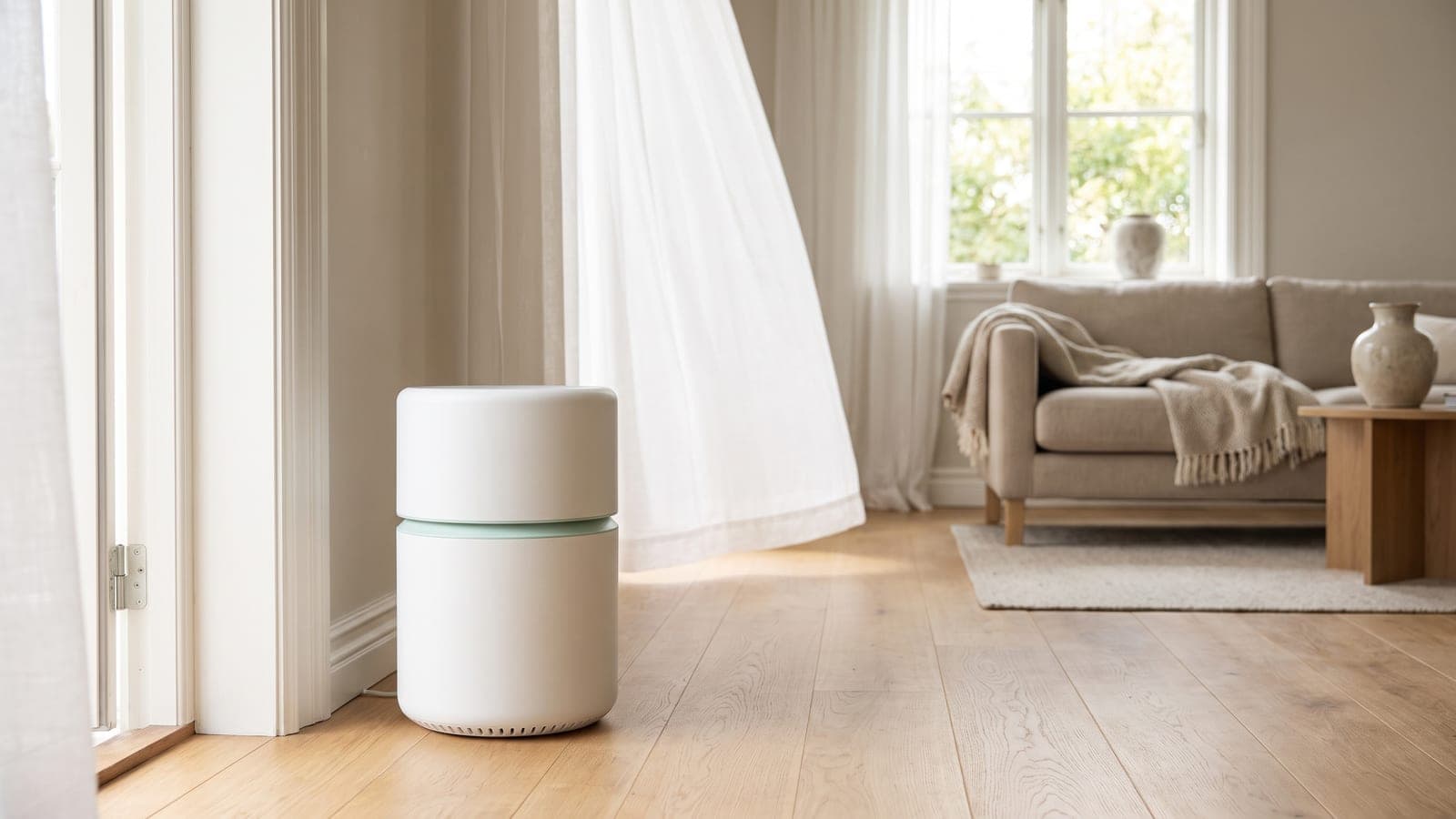
Placement decides whether the unit gets to breathe. A purifier needs a clear path to pull room air in and push clean air out, so give it at least a foot or two of clearance around the intake and outlet and keep it out of tight corners or from behind the couch, where it just recirculates the same stale pocket of air.
Beyond clearance, place it near the pollution source when you can — by the kitchen doorway for cooking smoke, near the litter box for pet odor, close to the window where wildfire smoke drifts in. Catching particles near where they're generated is more effective than cleaning them after they've spread through the whole room. Our full where should you place an air purifier guide covers height, corners, and doorways in more detail.
Do open windows undo the work?
They can undo most of it. An air purifier is designed to clean the air in a closed space; an open window or door is a constant firehose of new outdoor particles — pollen, dust, smoke — plus an escape route for the air you just cleaned. The unit ends up cleaning air that's immediately replaced with dirty air, and it never gets ahead.
This matters most exactly when you most want the purifier working: high pollen days and wildfire smoke events. Keeping windows and doors shut while the unit runs is one of the highest-impact things you can do. It's not about sealing the house airtight — it's about not deliberately piping in the very particles you're trying to remove.
Are your filters clogged?
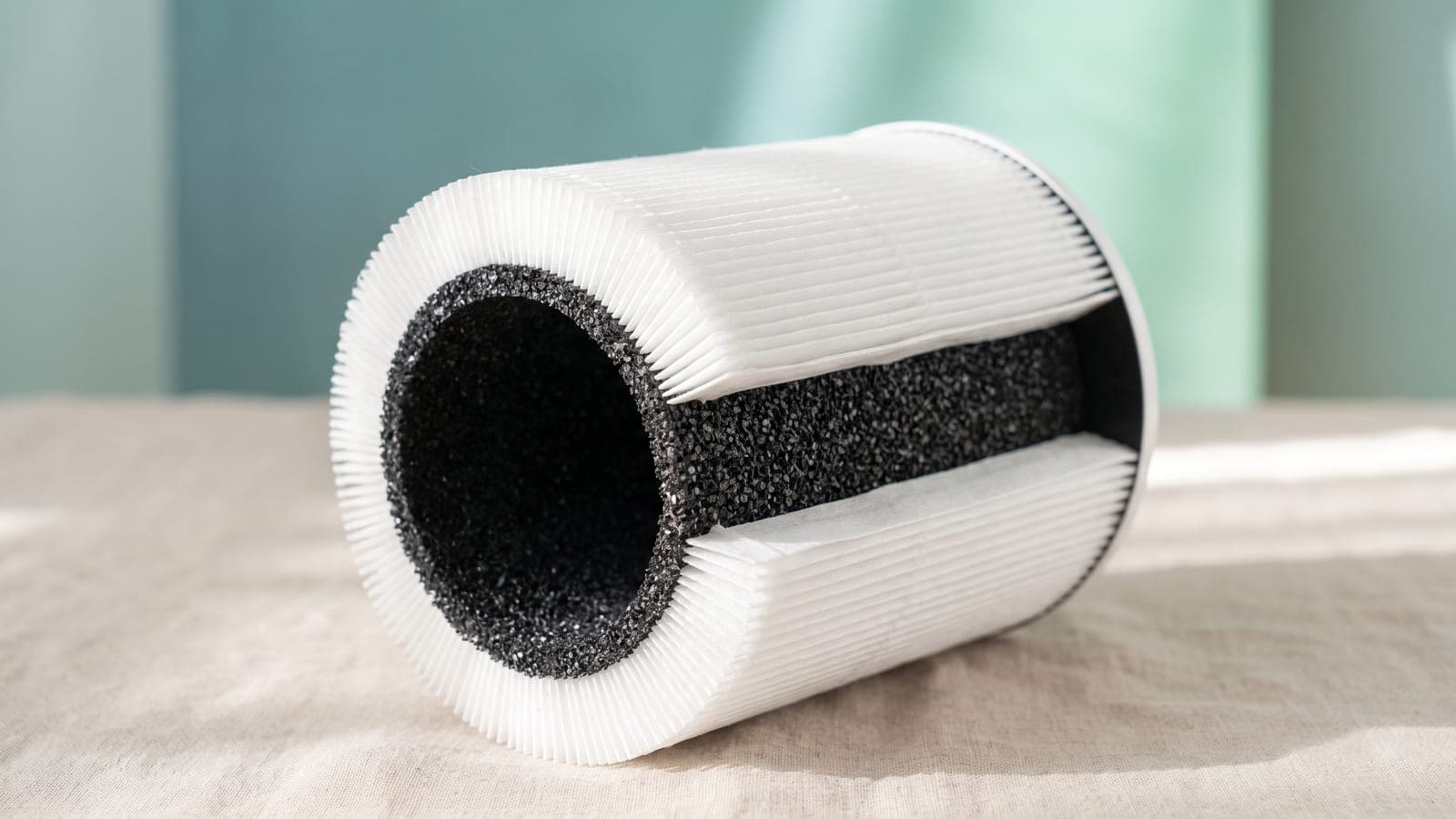
A filter is a consumable, and a clogged one is a quiet effectiveness killer. As the HEPA and carbon filters load up with particles, they restrict airflow — so less air passes through per minute and the real clean-air rate drops well below the rating, even though the machine is running and looks fine. A purifier with a packed filter can hum along cleaning almost nothing.
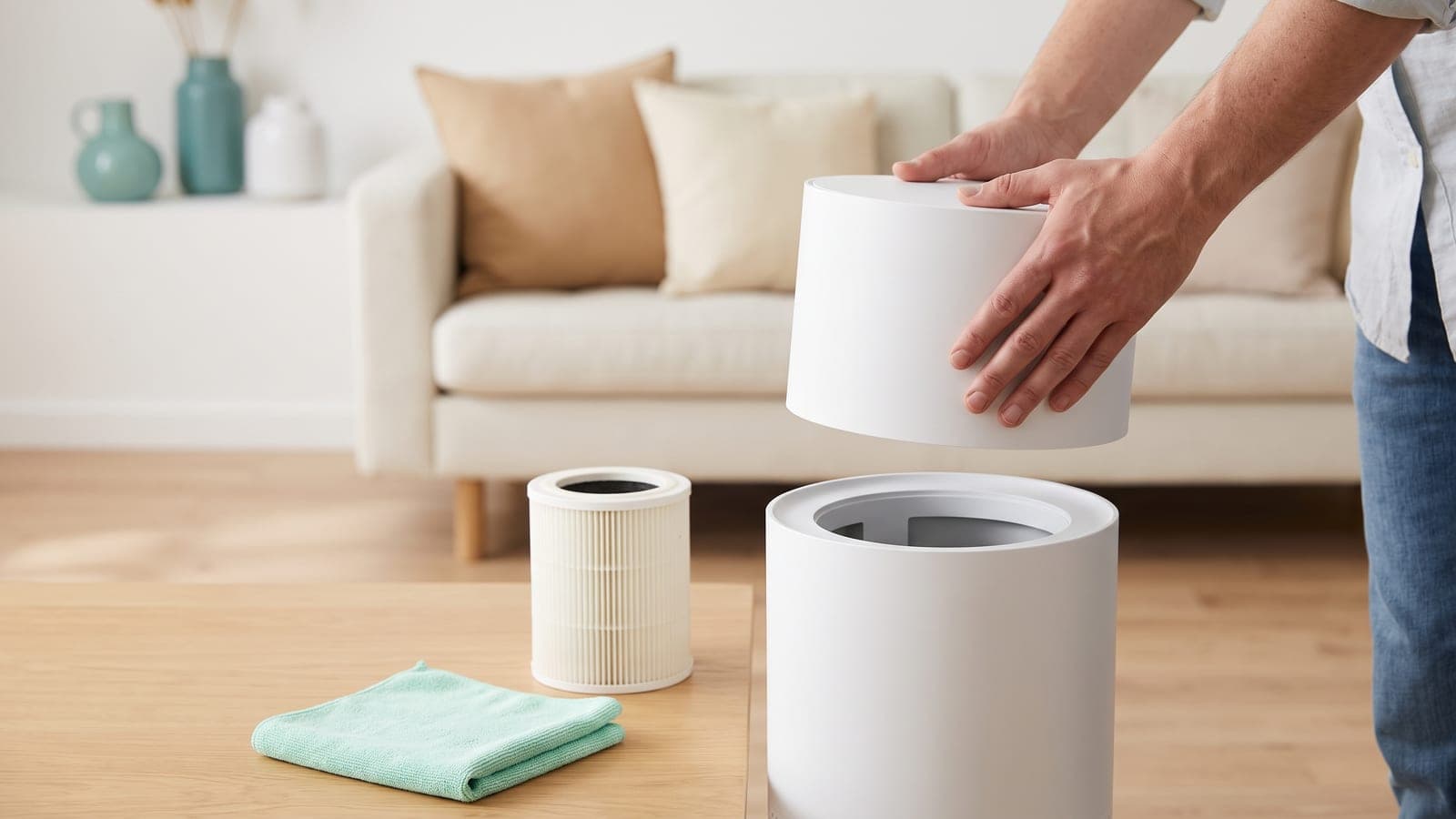
Replace the HEPA and carbon filters on schedule, and don't ignore a filter-replacement indicator light. A washable pre-filter should be vacuumed or rinsed regularly too, so it keeps catching the big stuff before it reaches the HEPA. Our how often to replace your air purifier filter guide has the timing — but the principle is simple: fresh filters keep the rated performance real.
What can you do about the pollution source?
The less pollution you generate, the easier the purifier's job — and the cleaner your air gets. A purifier removes particles from the air, but it can't out-run a source that's constantly pumping them out, so pairing it with source control multiplies its effect.
| Action | Why it helps the purifier |
|---|---|
| Vacuum with a HEPA vacuum regularly | Removes settled dust and dander before it becomes airborne again |
| Don't smoke indoors | Removes the single largest indoor particle and odor source |
| Use the kitchen range hood while cooking | Vents cooking smoke and grease at the source, not into the room |
| Keep pets groomed and off the bed | Cuts the amount of dander and hair the unit has to capture |
| Use a lid on the litter box | Contains odor and dust so the purifier handles less |
| Control humidity (30–50%) | Discourages dust mites and mold, which purifiers can't fully fix |
| Wipe surfaces with a damp cloth | Traps dust instead of kicking it back into the air |
Combine even a few of these with a correctly sized, well-placed unit and the difference in day-to-day air quality is obvious.
What's the bottom line on getting more from your purifier?
Effectiveness is mostly free. Size the unit to the room by CADR, run it continuously on auto, give it clearance near the pollution source, keep windows shut, change the filters on time, and cut the pollution at its source. Do those and an ordinary purifier delivers on its rating; skip them and even a premium one underperforms.
If you only fix one thing, start with sizing — it sets the ceiling on everything else. Plug your room into the room size calculator to confirm your unit's CADR is enough for the space, then pair the right-sized machine with the placement guide, and the rest of the list becomes easy to get right.
Frequently asked questions
How can I make my air purifier work better?
Match it to the room by CADR so it can clean the space several times an hour, run it continuously on auto, and place it with clear space around the intake and outlet — ideally near the pollution source. Keep windows and doors closed while it runs, replace filters on schedule so airflow stays strong, and cut the pollution at its source. Those six things do almost all the work.
Where is the most effective place to put an air purifier?
In the room you spend the most time in, with at least a foot or two of clearance around the intake and outlet so airflow isn't blocked, and reasonably close to the main pollution source — the litter box, the kitchen doorway, the spot where smoke drifts in. Avoid tucking it into a tight corner or behind furniture, which starves it of the air it's supposed to clean.
Does closing the windows make an air purifier more effective?
Yes. An air purifier cleans the air in a closed room; open windows and doors constantly bring in new outdoor particles and let cleaned air escape, so the unit never gets ahead. During high pollen or wildfire smoke, keeping windows shut is one of the biggest factors in whether the purifier actually lowers the particle count you breathe.
Should I run my air purifier on high to make it more effective?
High clears a pollution spike fast, but you don't need it running on high all the time. A purifier sized correctly for the room can hold the air clean on a quiet auto or low setting, which is more pleasant to live with, so you actually leave it on. If the only way to keep up is running on high constantly, the unit is probably undersized for the space.
Do dirty filters make an air purifier less effective?
Yes. A clogged filter restricts airflow, so less air passes through and less gets cleaned, even though the machine is still running. Replacing the HEPA and carbon filters on schedule is what keeps the rated clean-air output real rather than theoretical. A purifier with a packed filter can look like it's working while actually moving very little clean air.