Most air purifier filters need replacing on a predictable schedule: a True HEPA filter typically lasts 6 to 12 months, an activated carbon filter 3 to 6 months, and a washable pre-filter should be rinsed about once a month rather than thrown out. Those are starting points — how often you actually replace an air purifier filter depends on how many hours it runs and how dirty your air is. Pets, smoke, and round-the-clock use all shorten the interval.
Key takeaways
- True HEPA: every 6–12 months. Activated carbon: every 3–6 months. Washable pre-filter: rinse ~monthly.
- Runtime and air quality set the real schedule — pets, dust, and smoke shorten every interval.
- Don't wash a True HEPA filter unless it's explicitly labeled washable; water ruins standard HEPA media.
- Watch the signs: weaker airflow, returning odors, an indicator light, or gray matted media.
- Filter costs add up — factor them into the true cost of owning a purifier.
How long does each type of filter last?
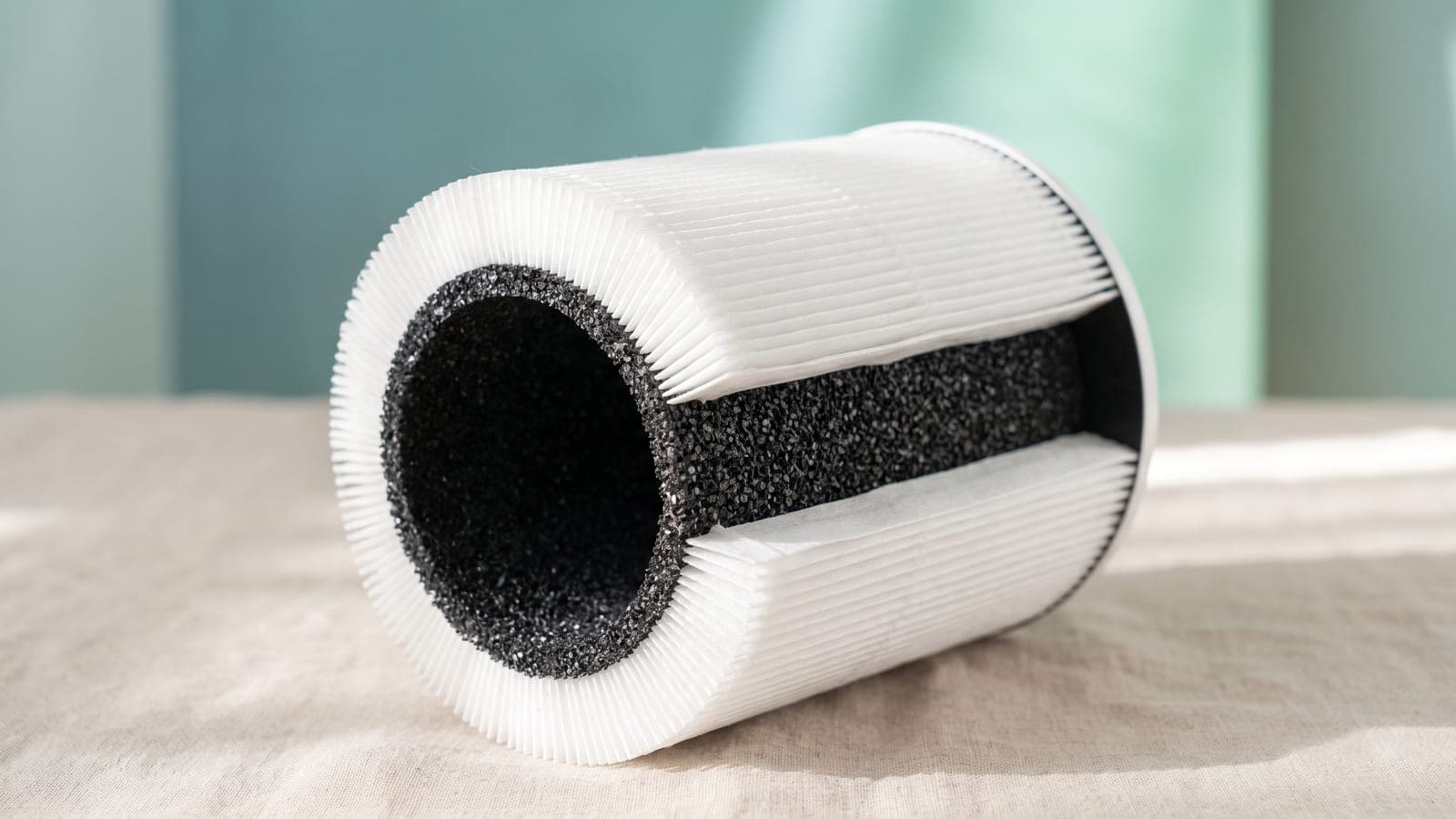
Most purifiers use a stack of two or three filters, and each layer has its own lifespan because each does a different job. Here's the typical picture:
| Filter type | What it does | Typical life | Wash or replace? |
|---|---|---|---|
| Pre-filter (washable) | Catches large debris, hair, lint | Rinse ~monthly | Wash, reuse |
| Activated carbon | Absorbs odors, gases, VOCs | 3–6 months | Replace |
| True HEPA | Traps fine particles | 6–12 months | Replace |
The pre-filter is the workhorse you maintain rather than buy — a quick rinse keeps it clearing the big stuff so the pricier filters last longer. Activated carbon wears out fastest of the replaceables because it fills up with gas molecules and stops adsorbing; a spent carbon filter can even start giving back odors. The True HEPA filter lasts longest, but it's also the one you must never wash.
Why shouldn't you wash a True HEPA filter?
It's tempting — the filter looks dirty, water is free, and a rinse seems harmless. It isn't. A True HEPA filter is a mat of extremely fine fibers arranged to catch 0.3-micron particles. Water pushes those fibers out of shape, tears the delicate media, and permanently drops the filter's efficiency. On top of that, a HEPA filter that stays damp is a breeding ground for mold, which then blows back into your room.
The one exception is a filter specifically labeled washable or reusable by the manufacturer — some lower-grade filters are built for it. If the label doesn't say so, assume it's not, rinse only the pre-filter, and replace the HEPA on schedule.
What are the signs a filter needs replacing?
Your purifier usually tells you, if you know what to look for:
- Weaker airflow. A clogged filter chokes the fan, so less air comes out even on the same speed. This is the most reliable everyday sign.
- Returning or musty odor. Once carbon is saturated it stops holding smells — and may release them. A room that starts smelling stale again is a cue.
- A filter-change indicator. Many units have a light or app alert. These are handy but often timer-based, so treat them as a reminder to check, not gospel.
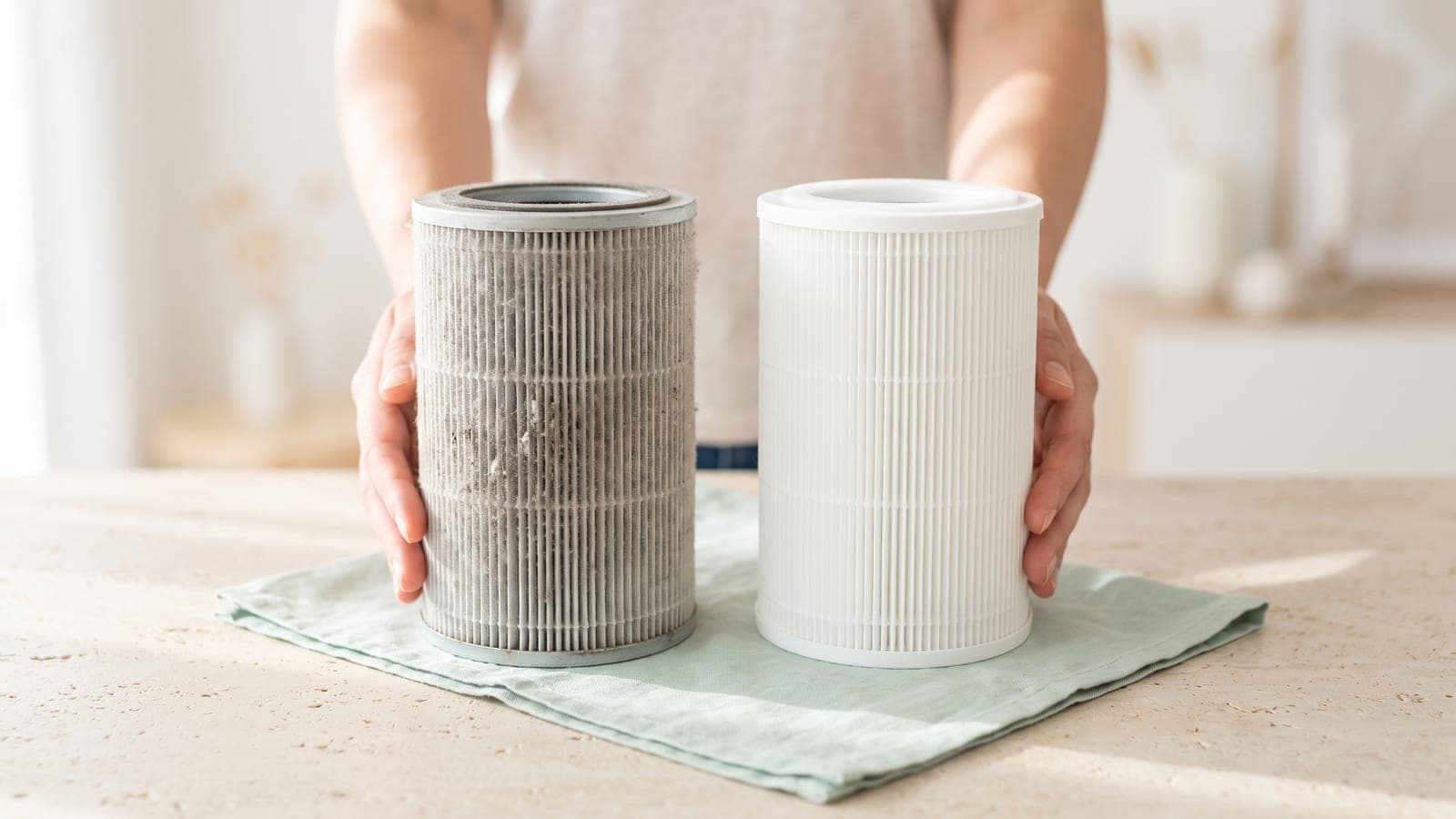
- Visibly gray, matted media. If the once-white HEPA is dark and packed, it's done.
Trust airflow and smell over the calendar. A filter in a clean, low-use home may outlast its interval; one in a dusty house with pets and 24/7 running will fall short of it.
What shortens filter life the most?
Manufacturers quote lifespans assuming average conditions — usually a few hours of daily use in ordinary air. Push past that and the filter loads faster. The biggest accelerators:
- Runtime. A unit running 24/7 processes far more air than one on for a few hours, so it clogs proportionally sooner.
- Pets. Dander and hair load the pre-filter and HEPA quickly.
- Smoke and heavy dust. Wildfire season or a nearby renovation can cut a HEPA filter's life dramatically.
- Poor baseline air quality. More particles in equals more particles trapped.
None of these are reasons to run the purifier less — clean air is the point. They're just reasons to expect the shorter end of each range and keep a spare filter on hand.
What do replacement filters cost over time?
This is the number shoppers forget at the register, and it can rival the purifier's own price over a few years. A cheap unit with expensive, short-lived filters often costs more to own than a pricier one with affordable, long-lived filters. Before you buy, it's worth checking the ongoing filter cost, not just the sticker price.
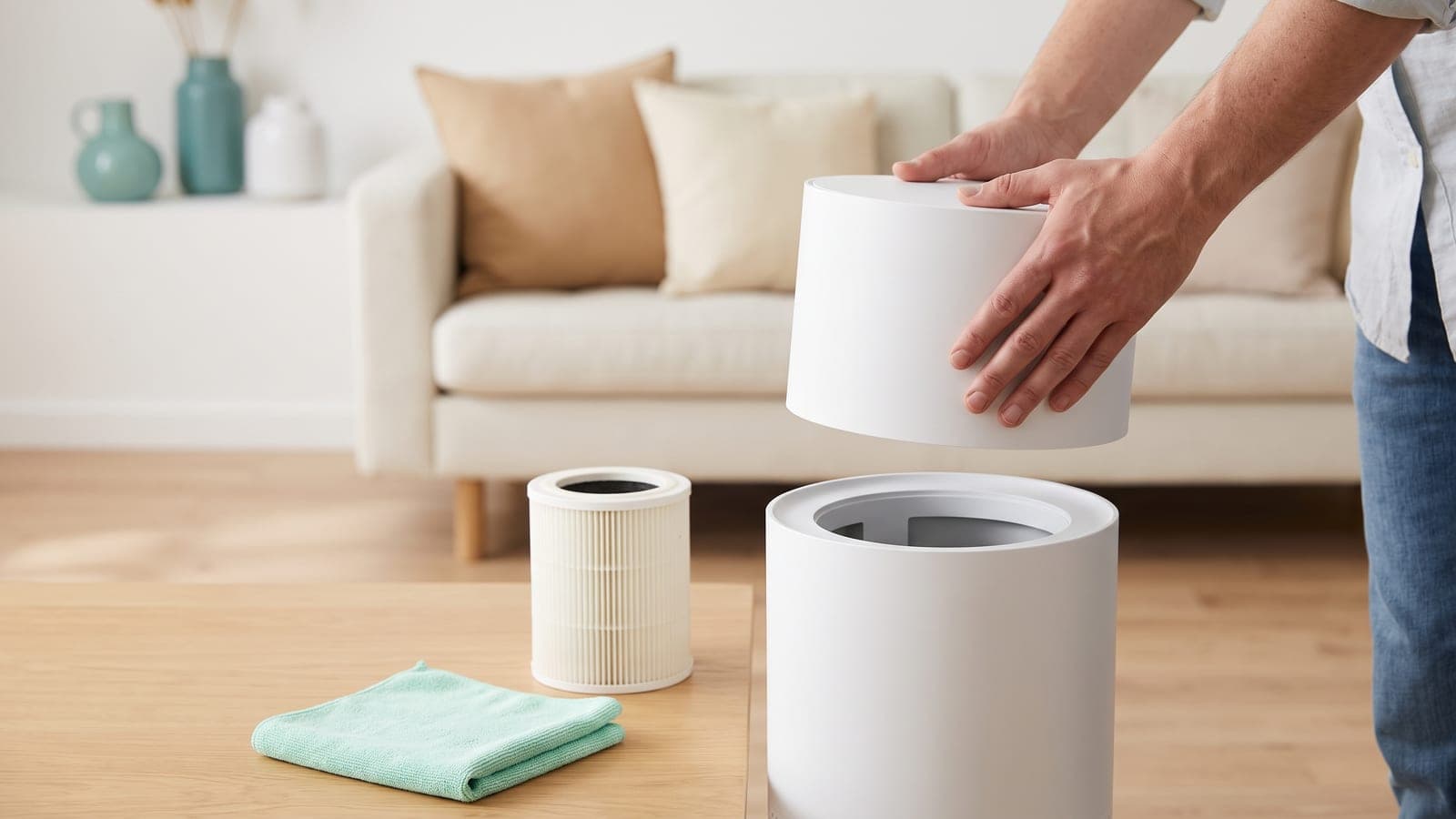
The filter cost calculator works out the real yearly and multi-year cost based on the filters your model uses and how often they need changing. When it's time to restock, our guide to replacement filters covers what to look for so you get genuine media rather than a knockoff that won't perform. Staying on schedule is cheap insurance — a fresh filter is the difference between a purifier that cleans your air and one that just moves it around.
Frequently asked questions
How often should I replace my air purifier filter?
As a general guide: True HEPA filters every 6 to 12 months, activated carbon filters every 3 to 6 months, and washable pre-filters rinsed about monthly rather than replaced. Heavy use, pets, or smoke shorten all of these. Always follow the label if it differs.
Can I wash and reuse a True HEPA filter?
No — unless it's specifically labeled washable. Washing a standard True HEPA filter damages the fine fibers and destroys its efficiency, and a wet filter can grow mold. Rinse only the pre-filter, and replace the HEPA when it's due.
What happens if I don't replace the filter?
Airflow drops as the filter clogs, so the purifier cleans less air even at the same speed. A saturated carbon filter can also start releasing odors it once absorbed. You lose performance long before the unit looks dirty.
How do I know when the filter needs changing?
Watch for weaker airflow, a musty or returning odor, a filter-change indicator light, or visibly gray, matted media. Any one of these is a cue to check. Runtime and air quality matter more than the calendar alone.
Does running the purifier more often wear the filter out faster?
Yes. Filter life assumes typical use — usually a few hours a day. Running 24/7, in a dusty home, with pets, or during smoke season all load the filter faster, so you'll replace it sooner than the stated interval.