If you want to know how to improve air quality in your apartment, the honest answer is that it's the same three-layer approach that works in any home — control the sources, ventilate what you can, then filter the rest with a right-sized HEPA purifier — just adapted to the realities of renting. You usually can't touch the HVAC, the windows may be limited, and shared walls can carry a neighbor's cooking or smoke. That makes source control and a good portable purifier your most powerful tools. Here's how to work through them without spending much or breaking your lease.
Key takeaways
- Source control comes first and it's free: vent cooking, don't smoke indoors, manage humidity, and choose low-VOC products.
- Ventilation is limited in apartments — use kitchen and bathroom exhaust fans, and open windows only when outdoor air is genuinely better.
- A right-sized HEPA purifier per room handles the airborne particles left over; one small unit can't clean a whole apartment through closed doors.
- Houseplants aren't enough to move the needle — treat them as decor, not air cleaning.
- Some hazards need dedicated tools — a carbon monoxide detector is not optional, and no purifier removes CO. For health concerns, talk to a doctor.
Why start with the sources you can control?
Because it's the layer with the most leverage and it costs nothing. The EPA identifies source control — reducing or eliminating individual sources of pollution — as generally the most effective approach to indoor air quality, and in a small apartment that logic is even stronger. A single strong source, like a smoky pan or a damp bathroom, fills a compact sealed space fast, faster than in a large house, so stopping the pollutant before it enters the air beats trying to filter it out afterward.
In practice, source control is a short checklist of habits: don't smoke indoors, since tobacco smoke is one of the worst indoor pollutants; vent your cooking, because frying and searing are major sources of fine particulate; run the bathroom exhaust fan during and after showers to keep humidity down; and choose low-VOC cleaners, candles, and furnishings where you can. None of these require a landlord's permission or a security deposit, and together they cut the pollution load before ventilation or filtration has to do anything.
How much can ventilation really do in an apartment?
Less than in a house, which is exactly why it matters how you use it. Ventilation dilutes indoor pollutants by swapping stale indoor air for fresher outdoor air, but apartments often lack cross-breezes, may have windows that open onto a busy street, or have windows that barely open at all. Your most reliable ventilation is usually the exhaust fans in the kitchen and bathroom, which vent moisture and cooking pollutants outside — use them every time you cook or shower.
Opening windows still helps when the outdoor air is genuinely cleaner than your indoor air, which is most of the time. The exceptions are wildfire smoke, high-pollen days, and heavy street pollution, when opening up imports the problem. On those days you seal the windows and lean on filtration. If your unit faces a highway or the air outside is often poor, treat ventilation as a limited tool and put more weight on source control and your purifier.
Where does an air purifier fit — and how big?
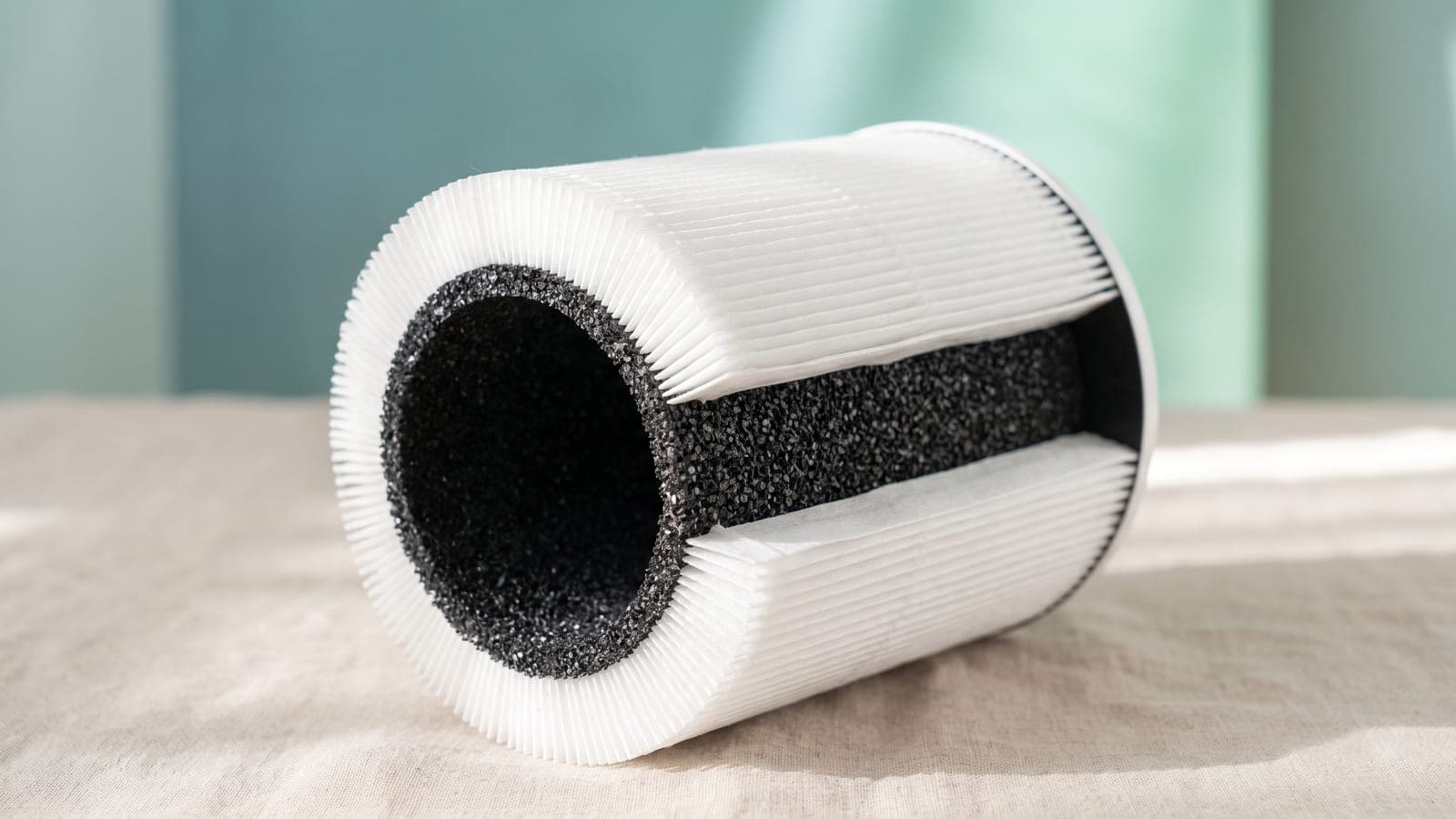
Third, after sources and ventilation, and it's the layer most renters actually shop for. A right-sized True HEPA purifier captures the airborne particles the first two layers leave behind: dust, pollen, dander, and cooking or smoke particulate still floating in the room. Add an activated carbon stage and it also reduces some gases and odors that plain HEPA passes straight through — useful if cooking smells or a neighbor's smoke are your issue.
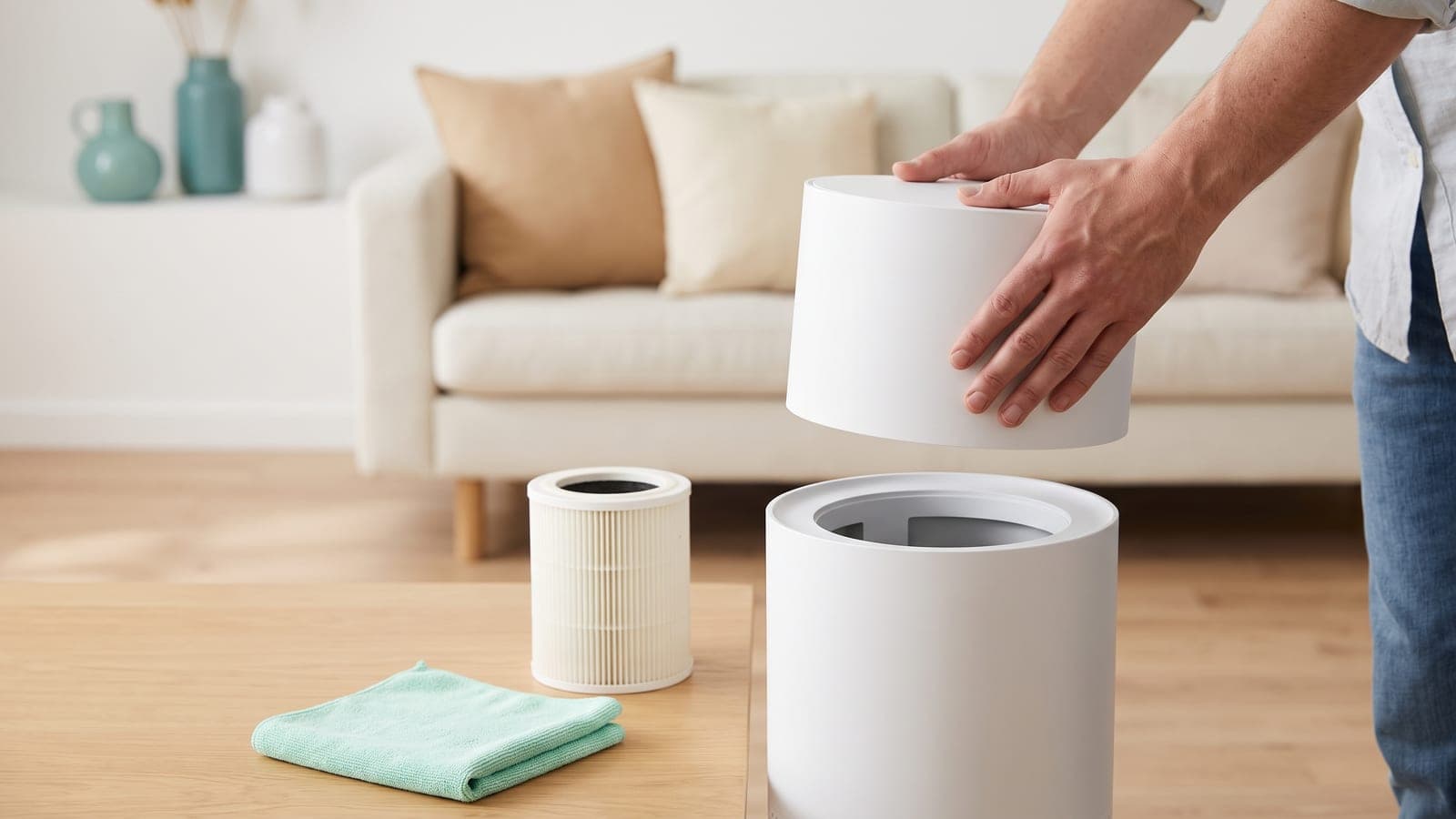
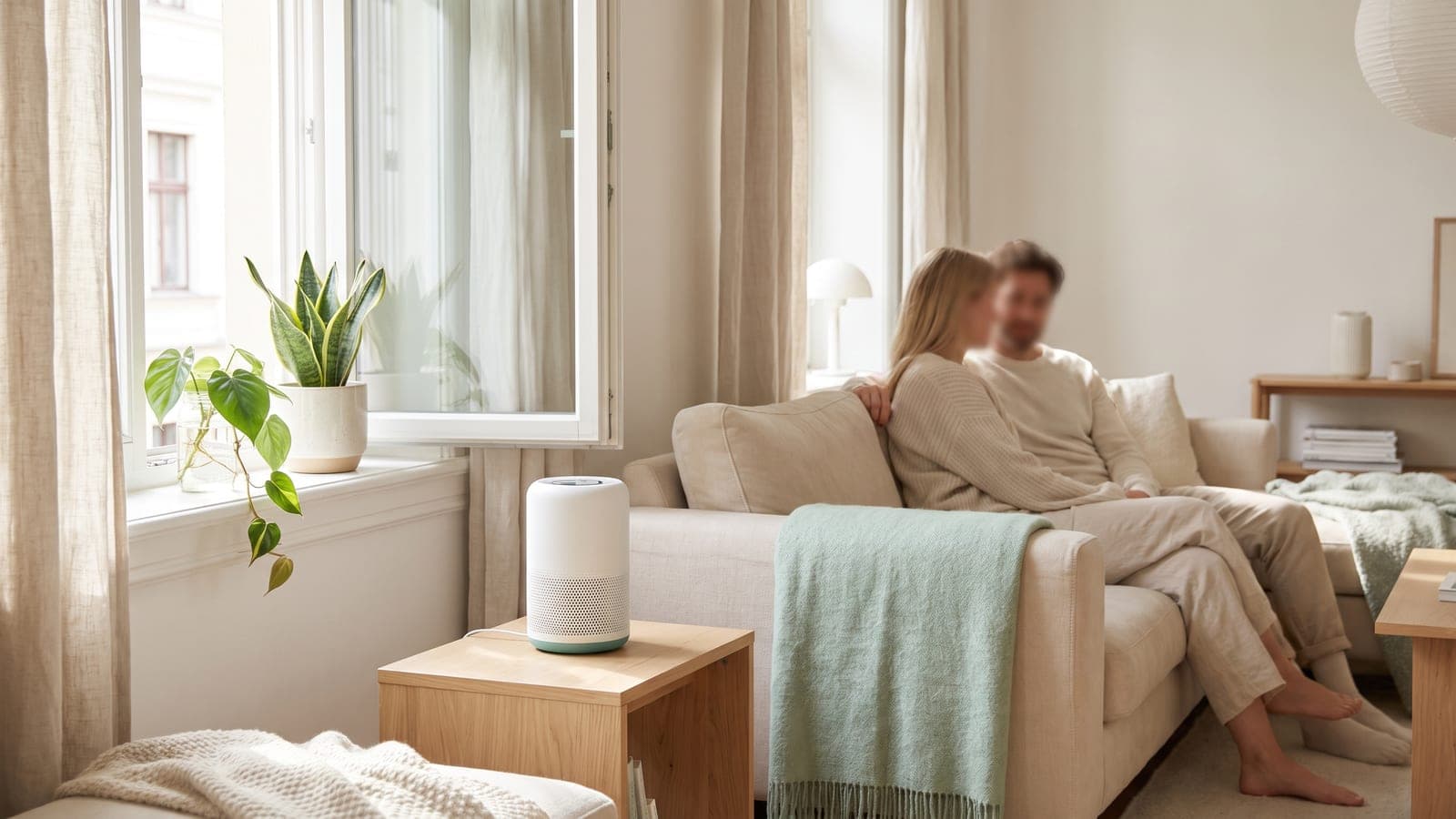
The key word is right-sized. A purifier cleans the room it sits in, and its clean-air delivery rate (CADR) needs to match the room's square footage to actually turn the air over a few times an hour. A tiny desktop unit in a 300-square-foot living room is mostly decorative. Because doors and walls block airflow, one purifier won't clean the whole apartment — plan on one unit per room you care about, typically the bedroom first, then the living area. To land on a size that fits your space and your main concern, the air purifier finder is the quickest route, and our best air purifiers for apartments roundup narrows it further.
Which problem gets which fix?
Different apartment air problems have different best answers, and matching them saves you money on the wrong device. Here's how the common ones map to the fix that actually moves the needle:
| Problem | What causes it | Best fix |
|---|---|---|
| Cooking particulate & smells | Frying, searing, gas burners | Range hood or open window first; carbon-stage purifier for lingering odor |
| Neighbor's smoke drifting in | Shared walls, hallways, vents | Seal gaps, run a HEPA + carbon purifier; ask management about the source |
| Dust & pollen | Tracked in, shed indoors | Doormats, regular cleaning; True HEPA purifier |
| Pet dander | Cats and dogs | Grooming and cleaning; HEPA purifier for airborne dander |
| Mold & musty smell | Damp bathroom, leaks, high humidity | Fix moisture, run exhaust fans, dehumidify — purifier only catches airborne spores |
| Stuffiness / high CO2 | Poor ventilation, sealed rooms | Ventilate; exhaust fans; open windows when outdoor air is good |
| Carbon monoxide | Gas stove, attached garage, furnace | CO detector and repair — a purifier does NOT remove it |
The pattern is worth remembering: for most problems the first fix is a habit or a moisture repair, with the purifier as backup — and for carbon monoxide, a purifier is never the answer.
What about humidity, mold, and damp bathrooms?
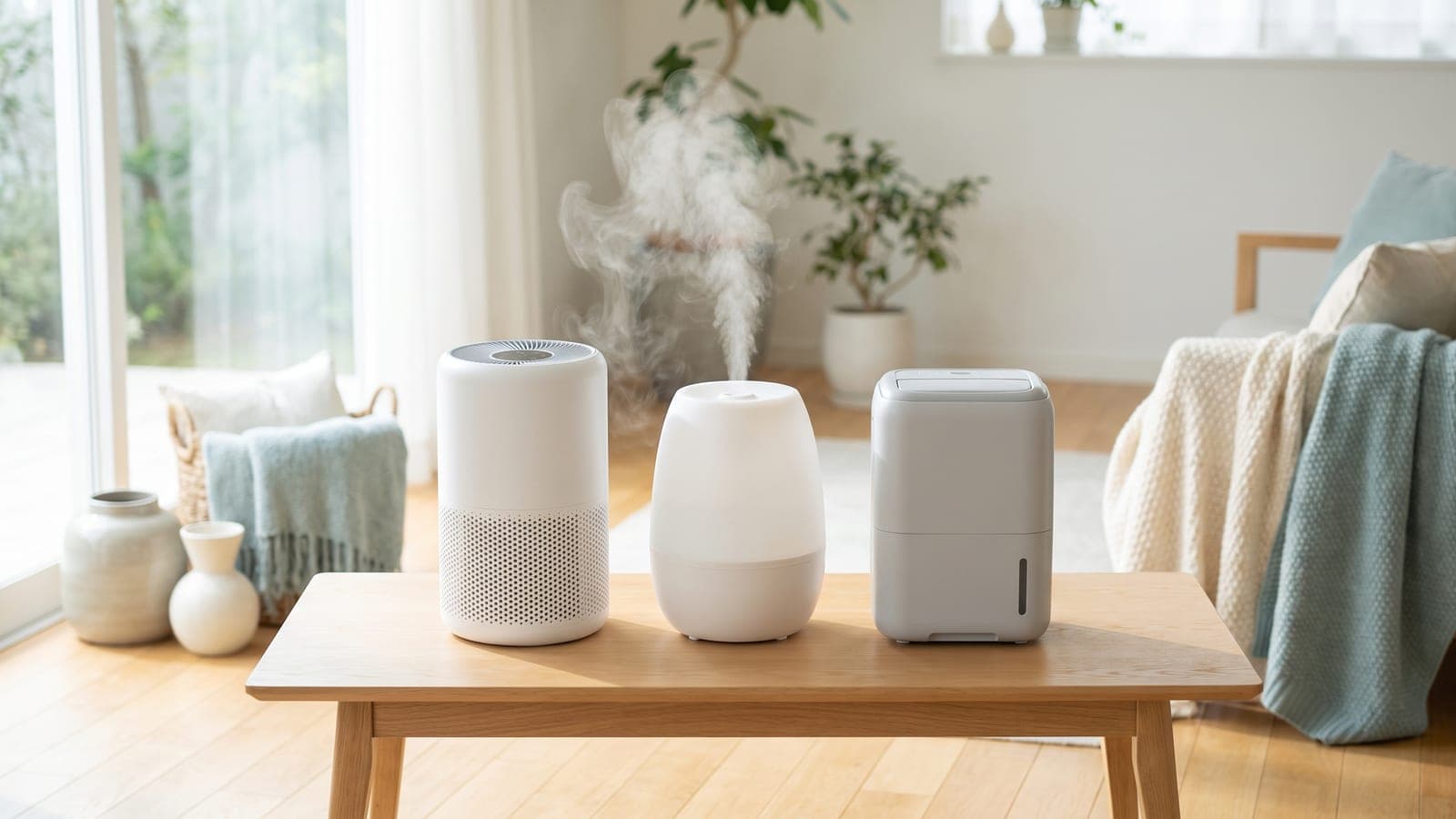
Moisture earns its own step because apartments are prone to it and it drives two problems at once. High humidity feeds both mold and dust mites, and a small bathroom with a weak fan is the classic starting point. Keeping indoor humidity in a moderate range — the EPA generally points to roughly 30–50% — removes the condition mold and mites need. That means running the exhaust fan during and after showers, wiping down visible condensation, drying wet towels outside the bathroom, and using a small dehumidifier if a room stays damp.
This is a source-control job that a purifier can't do for you. A True HEPA unit can capture some mold spores already airborne, but it will never dry out a damp corner or remove mold growing on grout — the growth just keeps producing spores until you fix the dampness. If you spot mold spreading or suspect it's behind a wall, that's a maintenance request to your landlord, not a filtration problem.
Do houseplants actually help?
Barely, and it's worth being clear-eyed about it. The idea traces back to a famous NASA experiment, but that was done in small sealed chambers, and later analysis found you'd need an impractical number of plants — on the order of dozens per room — to match the air-cleaning of even a modest purifier. In a normal apartment with normal air exchange, a few pots of pothos do essentially nothing measurable for particulate or VOCs.
That's not a reason to toss your plants. They're pleasant, they can nudge humidity slightly, and greenery is good for the spirit. Just don't file them under air quality. The device that reliably lowers dust, pollen, dander, and smoke particulate in your rooms is a right-sized HEPA purifier, not a windowsill garden.
How do you put it all together?
Layer the three steps instead of betting on one. Start by cutting sources: vent your cooking, keep smoking outside, run the bathroom and kitchen fans, control humidity, and choose low-VOC products. Then ventilate when the outdoor air is good and seal up when it isn't. Finally, add a right-sized True HEPA purifier (with carbon if odors or VOCs are your concern) in the bedroom first and the living area next, running continuously on a low, quiet setting. And make sure a carbon monoxide detector is in place — especially with a gas stove — because no filter replaces it.
The filtration layer is the one to get right for your specific space, so size it to the actual room rather than guessing. The quickest way to land on a fitting unit is the air purifier finder; for the bigger picture on sources and ventilation, our guide to how to reduce indoor air pollution walks through the full framework, and understanding what PM2.5 is and why it matters explains exactly what your filter is catching. For any symptoms you're worried about, talk to a doctor.
Frequently asked questions
What's the fastest way to improve air quality in an apartment?
Start with source control, because it's free and immediate: turn on the range hood or crack a window when you cook, keep smoking outside, and run the bathroom fan after showers to control moisture. Then add a right-sized True HEPA purifier in the room you spend the most time in. Sources first, filter second — that order does the most with the least money.
Do I need one air purifier for the whole apartment or one per room?
Air purifiers clean the room they're in, and doors, walls, and hallways block airflow between rooms. The practical approach is one right-sized unit in the bedroom and, if budget allows, a second in the living area. A single small purifier can't meaningfully clean a whole apartment through closed doors, so size each unit to the room it actually sits in.
Can I improve apartment air quality if I can't open the windows?
Yes. Ventilation helps, but when windows are painted shut, face a busy road, or open onto wildfire smoke, you lean harder on the other two layers: cut indoor sources and run a HEPA purifier. Use your kitchen and bathroom exhaust fans, which vent to the outside, and keep humidity in check so mold never starts.
Will houseplants clean the air in my apartment?
Not meaningfully. The famous NASA experiment was done in sealed chambers, and later analysis found you'd need an impractical number of plants — dozens per room — to match even a modest purifier. Plants are lovely and worth having, but treat them as decor, not an air-cleaning strategy. A right-sized HEPA purifier does the actual work.
How do I deal with cooking smells and smoke in a small apartment?
Vent at the source first: run the range hood (ideally one that exhausts outside) or open a window while cooking, since frying and searing throw off fine particulate and odors. For lingering smell, a purifier with an activated carbon stage helps, because plain HEPA captures particles but passes odor gases straight through. Carbon is the part that tackles smell.
Is apartment air worse than a house?
Not inherently, but apartments have their own quirks: shared walls and hallways can carry neighbors' cooking or smoke, ventilation is often limited, and small sealed rooms let pollutants concentrate fast. The upside is that small rooms are easy and cheap to clean with a modestly sized purifier. Focus on your own sources and the rooms you use most.