If you want to know how to get rid of cooking smells, the order of operations is what matters: vent at the source first, then filter with activated carbon. Turn on the range hood and crack a window while you cook so the odor gases and grease particulate leave before they spread — that single step does more than anything else. For the smell that lingers afterward, a purifier with a substantial activated carbon stage adsorbs the odor gases that a plain HEPA filter passes straight through. And a monitor makes the invisible visible, showing the PM2.5 and VOC spikes that cooking throws off. Here's what actually works, in the right sequence.
Key takeaways
- Vent at the source first — a range hood (ideally exhausting outside) plus an open window removes odor and particulate as it's produced.
- Plain HEPA won't touch the smell — it captures particles, not the odor gases that make cooking smell.
- Activated carbon is the odor tool — a carbon-heavy purifier adsorbs the lingering gases HEPA misses.
- Contain it — close doors to the rest of the house and cook with lids on to keep smells from spreading.
- A monitor shows the spikes — PM2.5 and VOCs jump when you cook, confirming when to vent harder and how long.
Why vent at the source first?
Because it's far easier to remove a pollutant as it's created than to clean it out of a whole room later. Cooking is a major source of both fine particulate and odor gases — frying, searing, roasting, and gas burners all throw off a burst of PM2.5 and volatile compounds. If you capture that burst right at the stove with a range hood, especially one that exhausts outside, most of it never enters the room's air at all. Add an open window for cross-ventilation and you dilute whatever the hood misses.
This is the same source-control-first logic that governs indoor air quality generally: stop the pollutant at its origin before asking a filter to chase it around. A recirculating hood that just blows air back into the kitchen helps less than one vented outdoors, but even a window and a fan pulling air out makes a big difference. Vent while you cook and for a few minutes after — the smell is easiest to remove before it settles into curtains, upholstery, and rugs.
Why won't a HEPA purifier remove the smell?
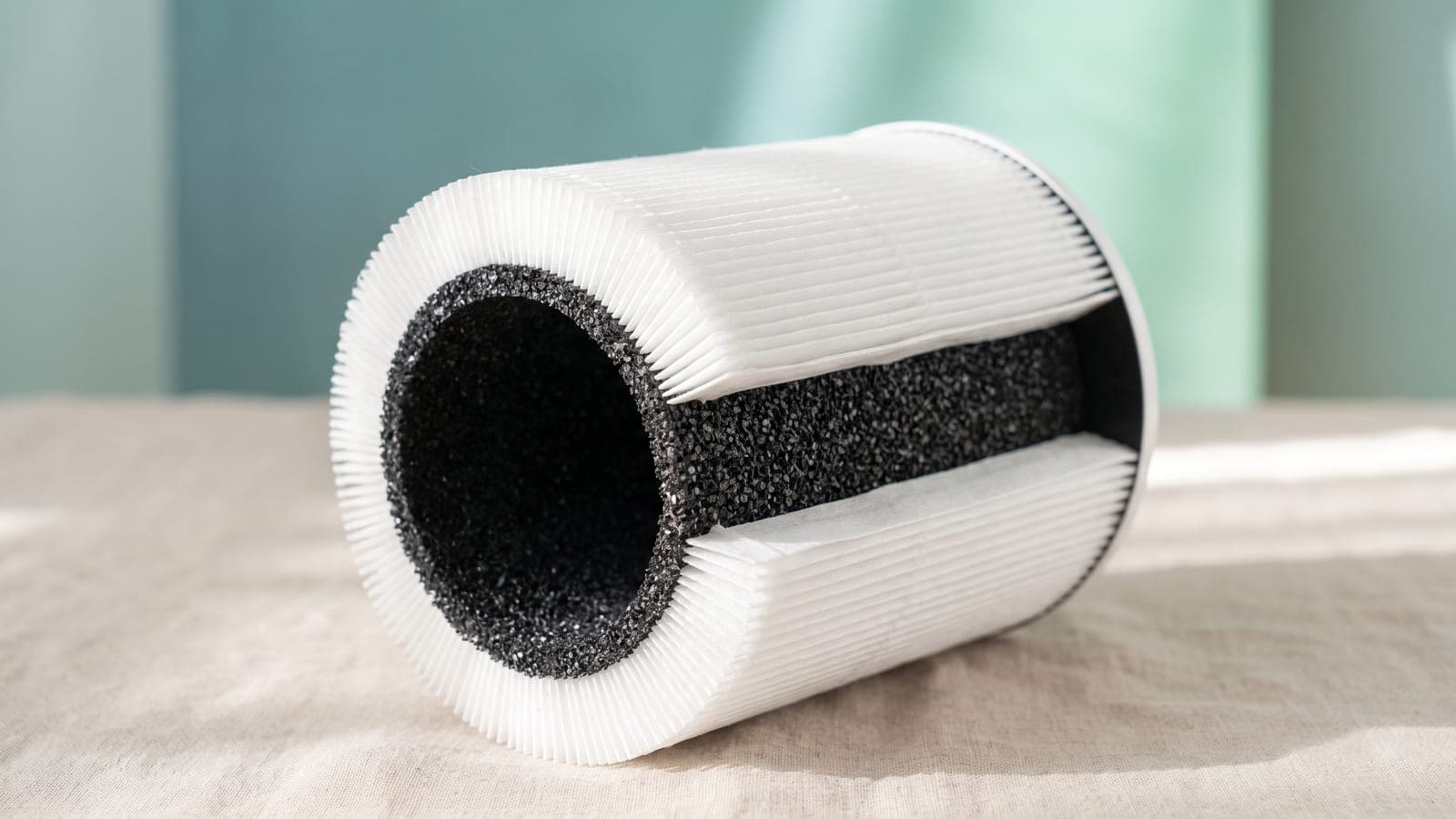
Because a smell is a gas, and HEPA is built for solids. A True HEPA filter is a dense fiber mat that traps particles — dust, grease aerosols, smoke particulate — but the molecules responsible for the smell of cooking are odor gases and VOCs small enough to slip straight through those fibers. So a HEPA-only purifier can clear the greasy haze from searing a steak yet leave the room smelling like dinner for hours.
This surprises a lot of people who assume a purifier handles everything airborne. It's a genuine limitation worth understanding: HEPA and odor control are two different jobs. The purifier's HEPA stage is still useful for cooking — it captures the grease and combustion particulate — but for the smell specifically, you need a different mechanism entirely. That mechanism is activated carbon.
How does activated carbon get rid of odors?
By adsorbing the gas molecules that HEPA can't catch. Activated carbon is processed to have an enormous internal surface area — a small amount holds a vast, porous network — and odor and VOC molecules stick to that surface as air passes through, a process called adsorption. That's why activated carbon is the standard odor-control media in air purifiers, kitchen hoods, and even fridge deodorizers. It's the part of a purifier that actually reduces the smell of cooking.
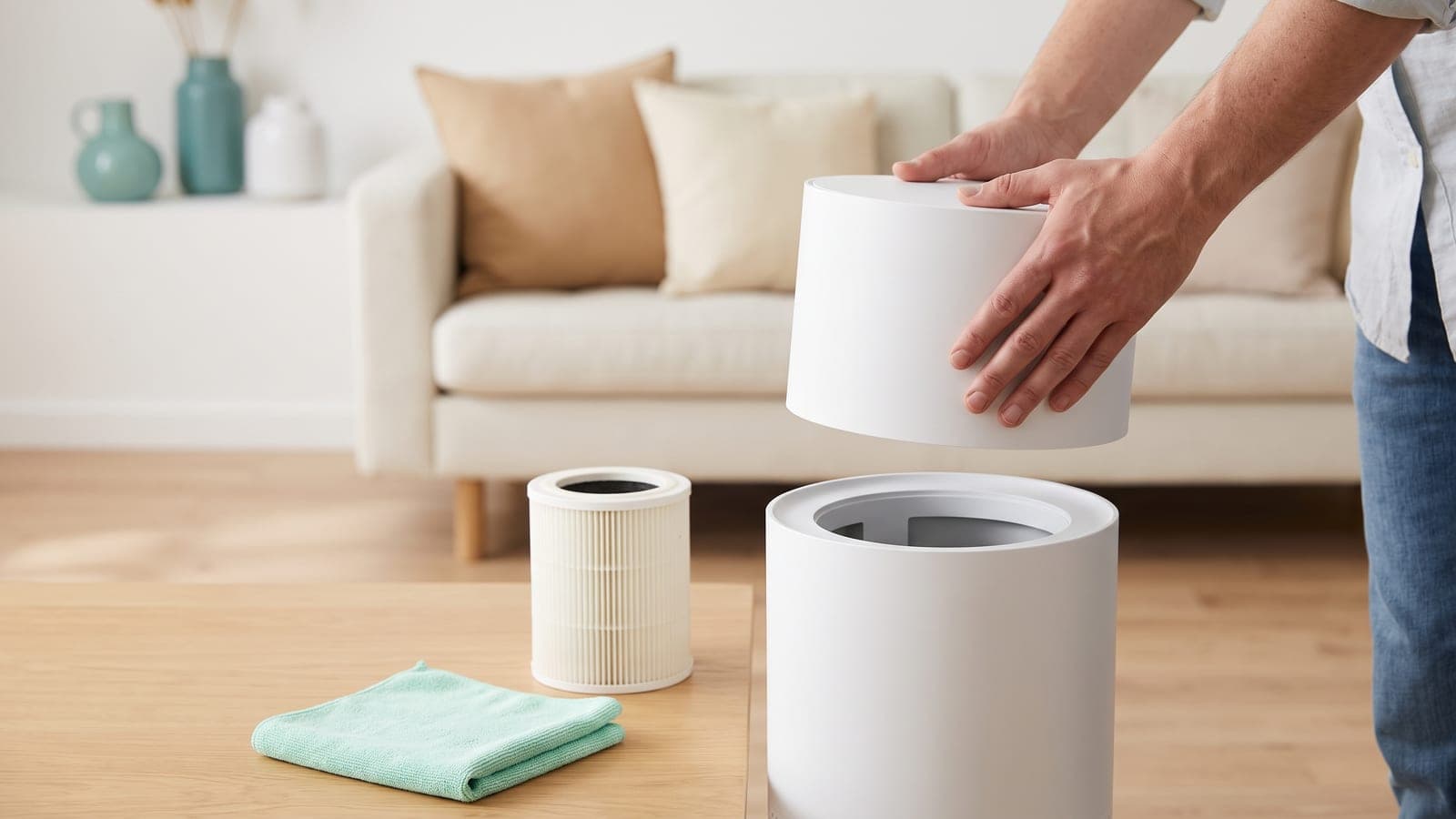
The amount of carbon is what separates real odor control from a token gesture. Budget purifiers often have a thin carbon-coated screen that saturates in weeks and does little for persistent cooking smells, while units built for odors carry several pounds of loose or pelletized carbon that work harder and last longer. Carbon does saturate over time and needs replacing, but a substantial carbon filter is the difference between a purifier that dents cooking odor and one that ignores it. Our explainer on activated carbon air filters covers how much you actually need.
Which method works how well?
Different tactics tackle different parts of the problem, and knowing what each does saves you from expecting a purifier to do a range hood's job. Here's how the common methods rate:
| Method | How well it works |
|---|---|
| Range hood vented outside | Best — removes odor and particulate at the source before it spreads |
| Open window + fan (cross-ventilation) | Very good — dilutes and exhausts while cooking |
| Cooking with lids on / containing splatter | Good preventive step — less escapes the pan |
| Carbon-heavy air purifier | Good for lingering smell after venting — adsorbs residual odor gases |
| Plain HEPA purifier (no carbon) | Poor for smell — captures grease particulate but not odor gases |
| Closing doors to the rest of the house | Good containment — keeps smell out of bedrooms and soft furnishings |
| Air freshener / candles | Masks, doesn't remove — covers the smell temporarily |
The pattern is clear: ventilation at the source does the heavy lifting, carbon cleans up the remainder, and plain HEPA and air fresheners are the weakest links for odor specifically.
How do you keep smells from spreading through the house?
Contain them where they start. Cooking odor migrates fast into the rest of the home and clings to soft furnishings — curtains, upholstery, carpet, bedding — which then re-release it for days. To limit that, close doors to bedrooms and living areas while you cook, run the range hood to pull the smell out rather than letting it drift, and cook with lids on where you can to reduce what escapes the pan in the first place.
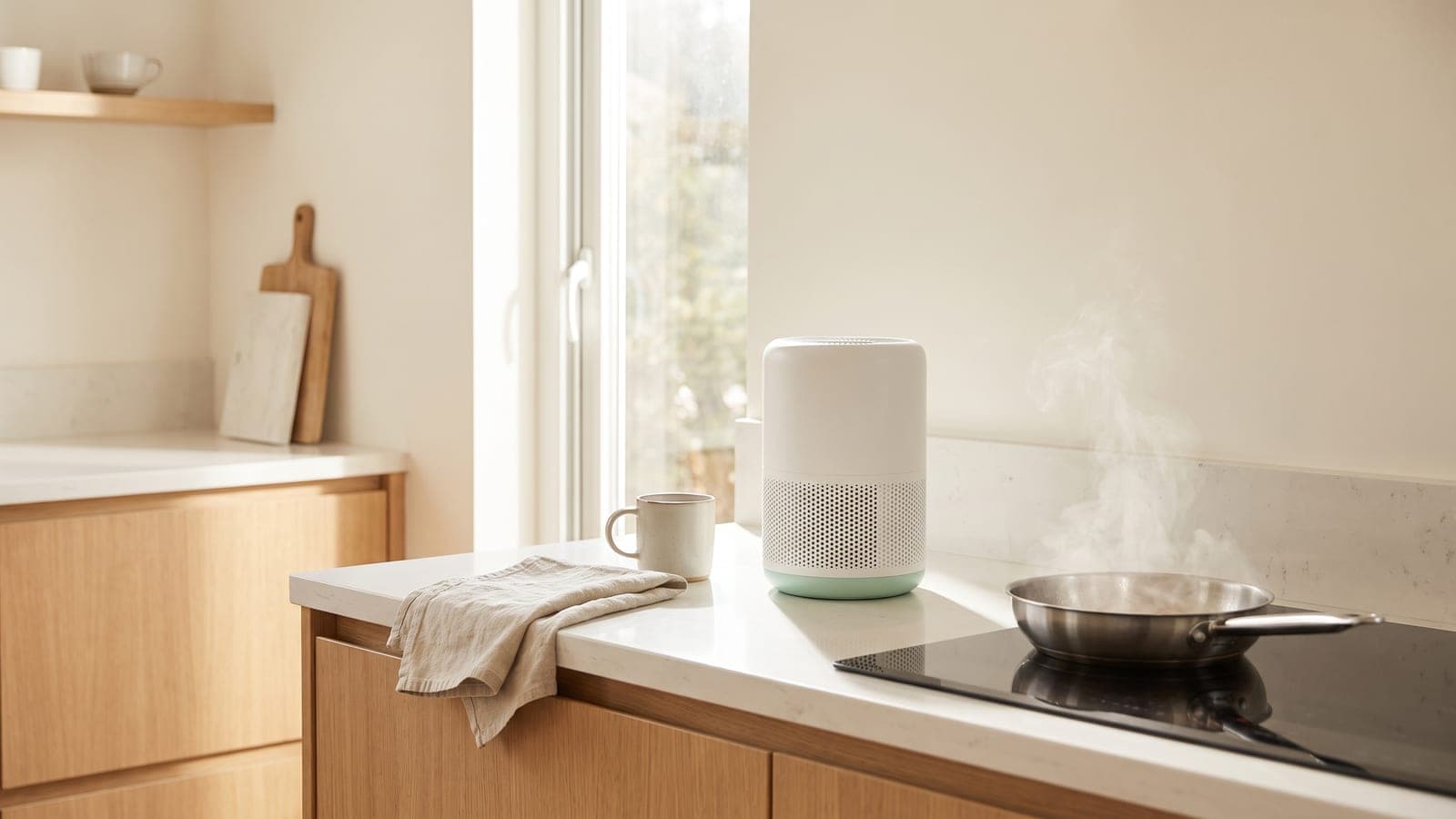
For open-plan kitchens where you can't close a door, the tactic shifts to maximizing ventilation and filtration in the shared space: hood on high, a window open, and a carbon-equipped purifier running in the room to catch what wanders. Positioning that purifier between the kitchen and the living area gives it a chance to intercept odor before it reaches the couch. Containment plus filtration keeps a fish fry from becoming a three-day houseguest.
Can a monitor help you manage cooking smells?
Yes, by making the invisible visible. An air quality monitor that tracks PM2.5 and VOCs typically shows a sharp spike the moment you start frying, searing, or fire up a gas burner, followed by a gradual decline as ventilation and filtration clear the air. Seeing that spike in real time is genuinely useful: it tells you when to turn the hood or fan to high, and how long to keep venting before the air actually recovers.
It also holds your gear accountable. If your range hood and purifier are working, the monitor shows PM2.5 and VOCs falling back toward baseline within a reasonable time after cooking; if the numbers stay elevated, you know your ventilation is inadequate or your carbon filter is spent. Our guide on what an air quality monitor measures explains how to read those spikes, and it's a satisfying way to confirm your kitchen setup is doing its job.
Putting it all together
Work the problem in order: vent, contain, then filter. While cooking, run the range hood (vented outside if possible) and open a window, keep doors to the rest of the house closed, and cook with lids on to limit what escapes. After the meal, let a carbon-heavy purifier clean up the lingering smell — remembering that the HEPA stage handles the grease particulate while the activated carbon is what actually removes the odor gases. Keep an eye on a monitor to know when the air has genuinely cleared.
The device to get right is the purifier, and specifically its carbon capacity — a thin coated screen won't cut it for cooking odor. To find a carbon-equipped unit sized to your kitchen or open-plan space, start with the air purifier finder, and see our best air purifiers for VOCs roundup for the models with serious carbon. Between good ventilation and real carbon, cooking smells become a non-issue rather than a lingering guest.
Frequently asked questions
What's the fastest way to get rid of cooking smells?
Vent at the source while you cook: run the range hood — ideally one that exhausts outside — and open a window for cross-ventilation. Removing the odor gases and cooking particulate as they're produced beats trying to clean them out of the whole room afterward. For lingering smell after the meal, an air purifier with activated carbon helps mop up what's left.
Will an air purifier remove cooking smells?
Only if it has activated carbon. Cooking smells are largely odor gases, and a plain HEPA filter captures particles, not gases, so HEPA alone won't touch the smell. A purifier with a substantial activated carbon stage adsorbs those odor molecules and reduces lingering smell. Look specifically for a carbon-heavy model if odor control is your goal — the HEPA part handles the grease particulate.
Why doesn't my HEPA air purifier get rid of food smells?
Because HEPA is built for particles, not gases. A True HEPA filter traps fine solid particles — dust, smoke particulate, grease aerosols — but the molecules that make a smell are gases that pass straight through the fibers. To reduce odor you need activated carbon, which adsorbs gas molecules. Many purifiers include a thin carbon layer; for real odor control you want a heavier carbon filter.
Does activated carbon really absorb cooking odors?
Yes, that's exactly what it's for. Activated carbon has an enormous internal surface area that adsorbs odor and VOC gas molecules as air passes through it, which is why it's the standard for odor control in air purifiers. The amount matters — a few pounds of carbon works far better and lasts longer than a thin coated screen — and carbon saturates over time and needs replacing.
How do I stop cooking smells from spreading through the house?
Contain and vent at the source. Run the range hood, open a nearby window, and close doors to the rest of the house so the smell doesn't migrate into bedrooms and soft furnishings that hold odor. Cooking with lids on reduces what escapes the pan. Once the meal's done, a carbon-equipped purifier in the kitchen or open-plan area cleans up the lingering remainder.
Can an air quality monitor tell me when cooking pollutes the air?
Yes, and it's eye-opening. A monitor that tracks PM2.5 and VOCs typically shows a sharp spike when you fry, sear, or use a gas burner, then a gradual fall as ventilation and filtration clear it. Watching those spikes tells you when to turn the fan up and how long to keep venting, and it confirms your range hood and purifier are actually doing their jobs.