For VOCs, buy on carbon, not on CADR: the AirDoctor AD5500i and IQAir HealthPro Plus carry the deep carbon beds that keep up with real off-gassing, while the Winix 5530 and Blueair Blue Signature Large bring granular and pelleted carbon to mid-range prices for everyday chemical smells. VOCs are the volatile organic compounds that off-gas from new furniture, paint, adhesives, and cleaning products, and as gases they slip straight through a HEPA filter. Be realistic about the thin carbon most purifiers carry: a dusted sheet or a light layer helps with faint odors and saturates quickly against anything stronger. The picks below are ranked on genuine carbon capacity, and each links to our full research-based review.
Quick answer
| Model | CADR (smoke) | Coverage | Filters/yr | Best for |
|---|---|---|---|---|
| AirDoctor AD5500i | 556 CFM | ~862 sq ft | ~$355 | Best overall for VOCs |
| IQAir HealthPro Plus | N/A (HyperHEPA) | 1,125 sq ft | ~$200 | Best premium for gases and odors |
| Blueair Blue Signature Large | 455 CFM | ~705 sq ft | ~$100–$133 | Pelleted carbon for big living spaces |
| Winix 5530 | 253 CFM | ~392 sq ft | ~$80 list | Best value granular carbon |
| Winix 5500-2 | 232 CFM | ~360 sq ft | ~$60 | Best budget with carbon |
CADR measures particle removal only; no standard rating exists for VOC capacity, so treat the carbon descriptions below as the deciding column. Coverage is smoke CADR × 1.55, and IQAir's figure is its own.
Key takeaways
- Carbon, not HEPA, handles VOCs. HEPA traps particles; VOCs are gas molecules that pass through it. A genuine activated-carbon stage is the only part of a purifier that adsorbs them.
- Quantity is the whole game. Units with a few ounces of carbon help with everyday odors but saturate fast against a real off-gassing source. Serious VOC control needs pounds of media.
- Form matters below that. Granular or pelleted carbon, as in the Winix 5530 and Blue Signature Large, holds more than carbon-coated fabric, but it's still grams of media rather than pounds.
- Budget for faster carbon replacement. Heavy VOC loads fill carbon quickly, so annual filter cost matters more here than on a particle-only purifier.
Best overall for VOCs: AirDoctor AD5500i
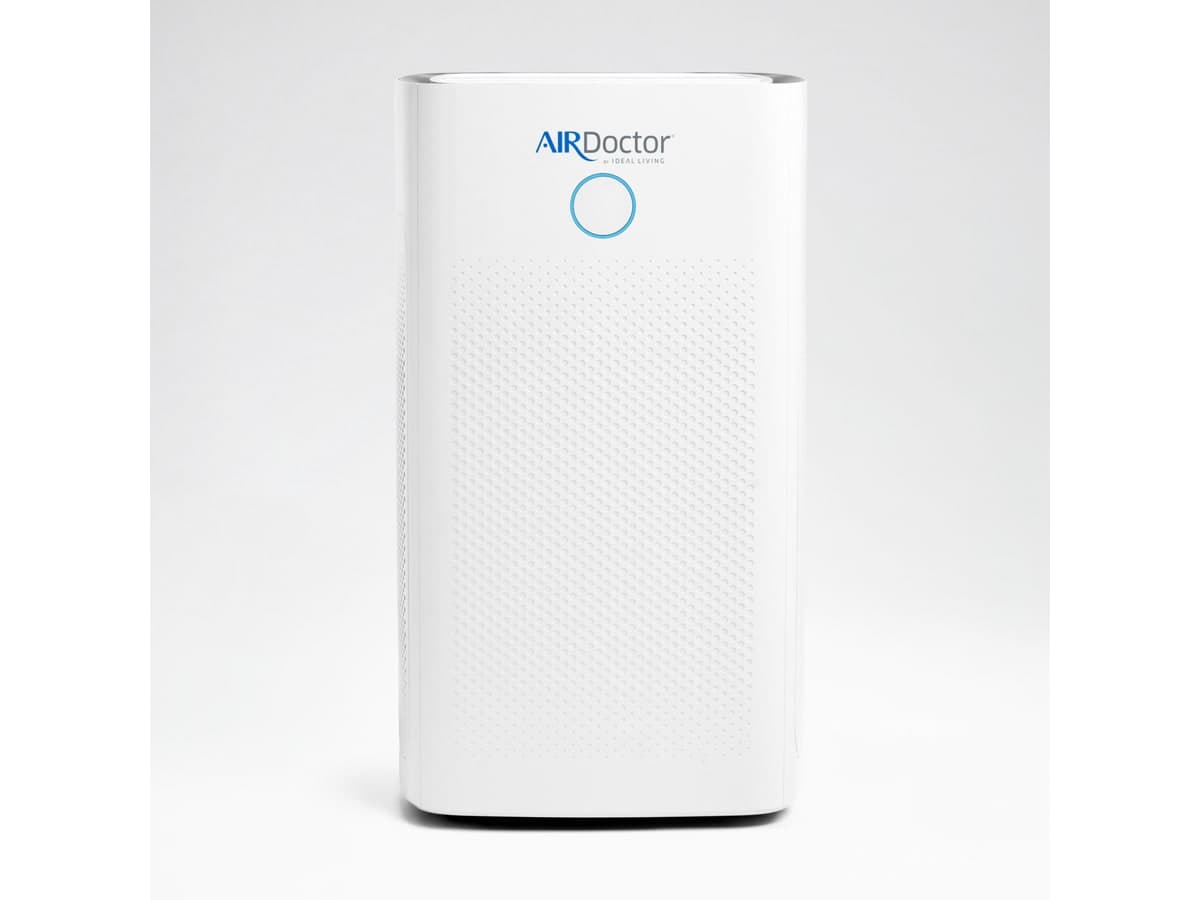
Premium · 556 CFM CADR · 862 sq ft
Paid links: we may earn a commission at no cost to you. Disclosure
The AD5500i is purpose-built for exactly this problem. Alongside its UltraHEPA particle filter it carries a dual carbon/VOC gas-trapping stage — far more adsorption media than a typical combination filter — which is what lets it stay ahead of off-gassing and chemical odors rather than merely blunting them for a few weeks. Its 556 CFM CADR covers rooms up to about 862 sq ft at 4.8 air changes an hour, so it clears large open spaces where VOCs tend to accumulate. The costs are real: it runs around $999, draws 110 watts, and a year of its filters, two UltraHEPA and four Carbon/VOC, costs about $355. But for a genuine VOC problem in a big room, it's the most capable pick here.
Best premium for gases and odors: IQAir HealthPro Plus
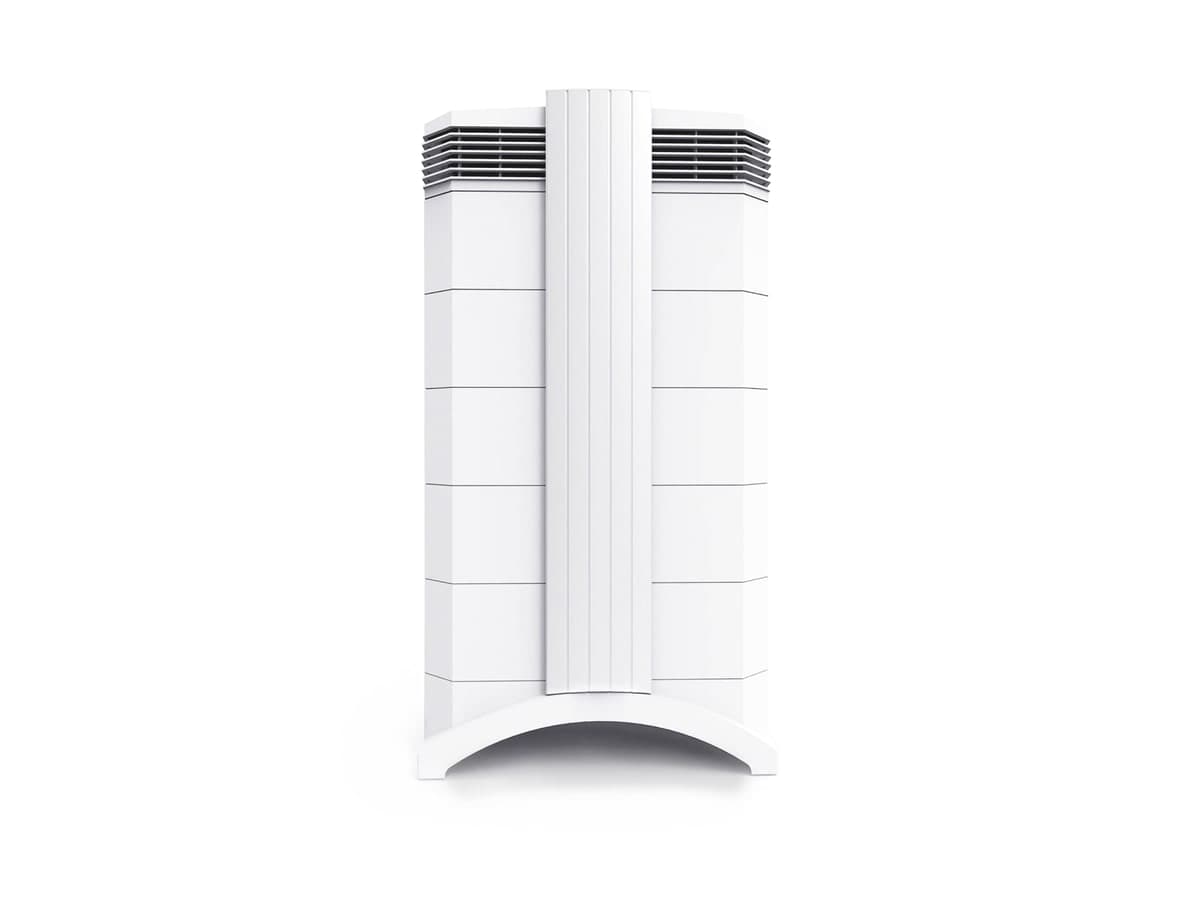
If your priority is the strongest gas-and-odor capture available, the HealthPro Plus is the benchmark. Its large V5-Cell filter holds a substantial bed of activated carbon plus alumina impregnated with potassium permanganate — a combination engineered to adsorb a wider range of VOCs than carbon alone, including some that plain charcoal struggles with. HyperHEPA handles the particle side across rooms up to 1,125 sq ft, and a 10-year warranty backs it. It's expensive to buy at around $1,199 and to re-filter at roughly $200 a year, and the XE version's auto mode follows a particle sensor, not a VOC sensor, so set a fixed speed for chemical smells. For chemical sensitivities where nothing else quite does the job, it's the one.
Pelleted carbon for big living spaces: Blueair Blue Signature Large
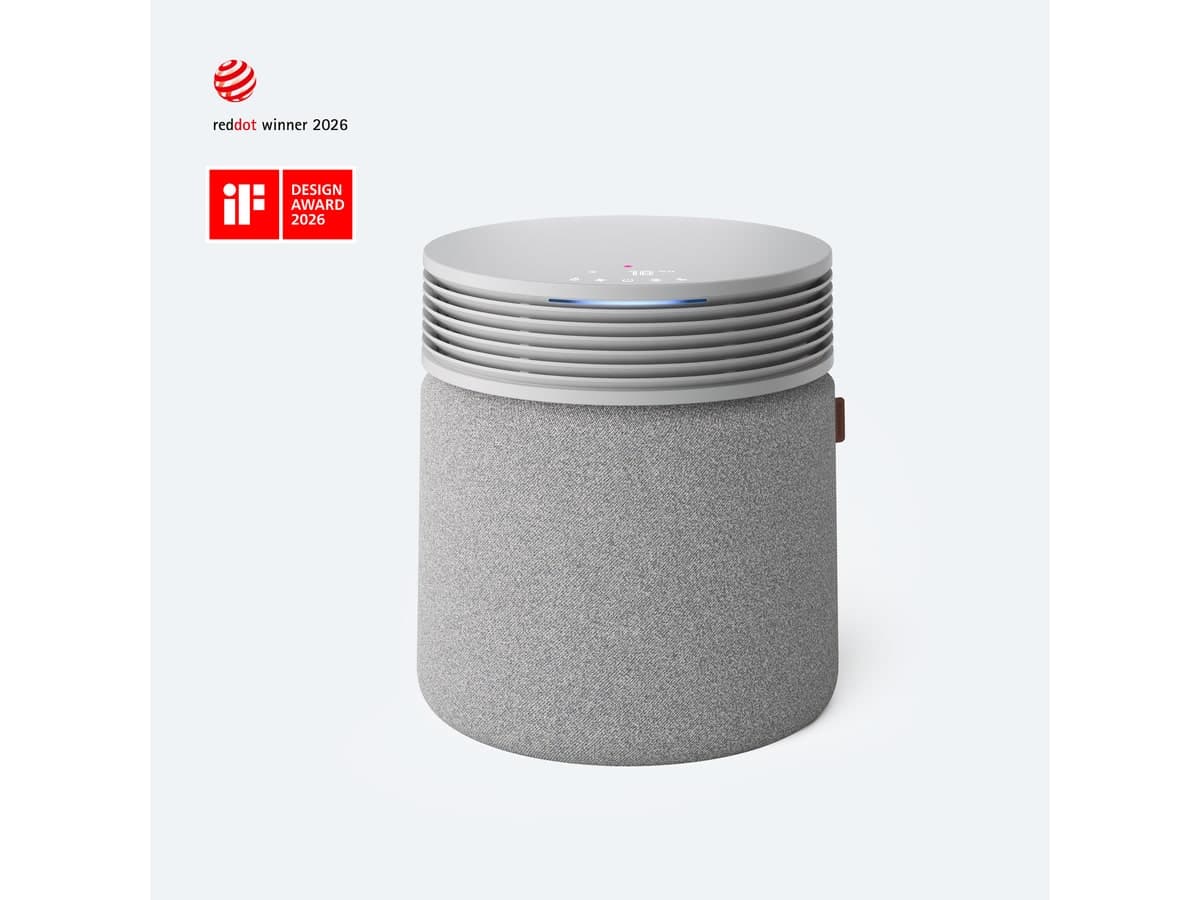
Premium · 455 CFM CADR · 705 sq ft
Paid links: we may earn a commission at no cost to you. Disclosure
The Blueair Blue Signature Large is the first Blueair worth a place on a VOC list, and the reason is inside the filter. Where the Blue Pure models rely on carbon-impregnated fabric, this table-top unit packs pelleted activated carbon into its wrap-around filter, which HouseFresh judged much better at odors than the fabric versions. Blueair brands it OdorFence but doesn't publish how much carbon it holds, so think of it as a strong everyday-odor machine for an open kitchen or living room, not a chemical scrubber.
Its particle side is big: 455 CFM of smoke CADR covers about 705 sq ft, and HouseFresh measured it at just 6.63 W and 40 dBA on speed 2, so running it all day while new furniture airs out costs very little. The $99.99 filter lasts nine to twelve months, about $100–$133 a year. It sells for $340–$450, a premium over the Blueair Blue Pure 211i Max with similar airflow, and on a VOC page that premium is justified only by the pelleted carbon; the 211i Max's standard filter is not a VOC tool. The trade-offs: its electrostatic charging stage can't be turned off, and very heavy or persistent fumes will still outrun it.
Best value granular carbon: Winix 5530
Winix
5530
Mid-range · 253 CFM CADR · 392 sq ft
Paid links: we may earn a commission at no cost to you. Disclosure
For off-gassing in a bedroom or small living room, the Winix 5530 now takes the value slot from the Coway Airmega AP-1512HH Mighty, because carbon is the job here and Winix builds its carbon stage from granular pellets. Its Filter Q splits into a True HEPA panel and an AOC carbon panel packed with granular pellets, about 226 g by CleanAirAdviser's count, at a price ($180–$220) slightly under the Mighty's. Its AHAM-verified 253 CFM smoke CADR suits a room of about 392 sq ft.
Keep the ceiling in view. A quarter-kilogram of carbon handles new-mattress smell, cleaning sprays and a freshly assembled bookcase; a newly painted room or a garage workshop will saturate it within weeks, and Filter Q lists at $79.99 with carbon you can't rinse. The Winix 5510/5530 filter guide covers genuine versus third-party panels, which matters because cheaper copies don't always match the carbon fill. PlasmaWave ships in the unit and can be switched off; our PlasmaWave on-or-off guide explains why switching it off costs you nothing in cleaning.
Best budget with carbon: Winix 5500-2
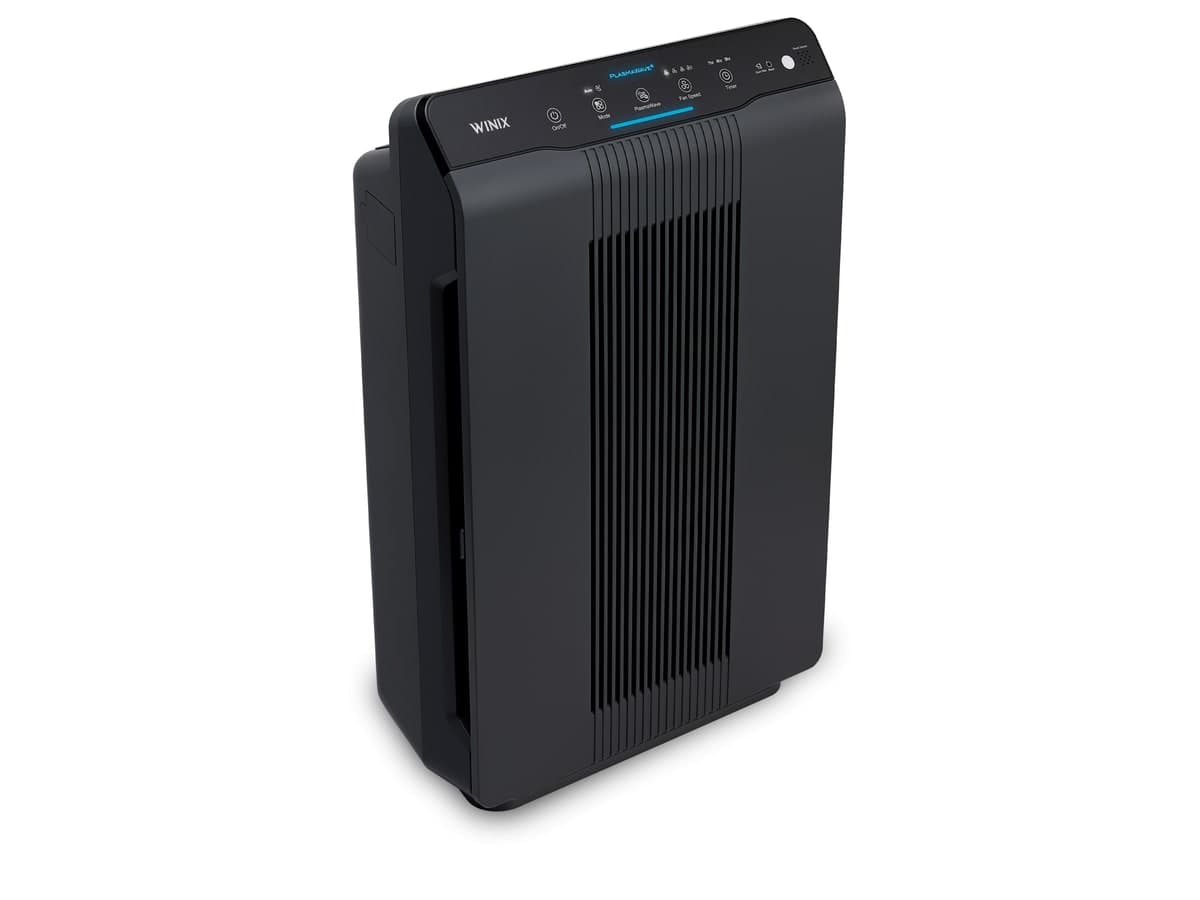
For the tightest budget, the Winix 5500-2 gets you real carbon at around $160. Its washable carbon pre-filter is the clever bit — you rinse and reuse it, which softens the cost of the frequent carbon maintenance VOCs demand and keeps filters near $60 a year. Its 232 CFM smoke CADR covers about 360 sq ft. The carbon volume is modest, lighter than the 5530's granular panel, so it's meant for faint everyday off-gassing rather than a persistent chemical source, and it has an off-able PlasmaWave setting you can ignore. As the cheapest way to get genuine carbon working on light VOCs, it earns its place.
How to choose the right one for you
The deciding question is how much carbon your situation calls for. For a real off-gassing source — a freshly painted room, new cabinetry, a home workshop — you want a high-capacity unit like the AirDoctor or IQAir; anything thinner will saturate and stop helping within weeks. For everyday household VOCs and cooking smells in an open living area, the Blue Signature Large's pelleted carbon is the mid-priced answer, and in a smaller room the Winix 5530 gives you granular carbon for about $200. The 5500-2 is the floor. Our guide on activated-carbon filters explains why quantity matters so much, and because carbon needs replacing more often under VOC loads, run your shortlist through the filter-cost calculator before you commit. If smoke is part of your problem too, our best air purifiers for smoke roundup covers that overlap. And remember: for off-gassing, ventilation does half the work — open a window when you can.
Frequently asked questions
Do air purifiers remove VOCs?
A purifier with a genuine activated-carbon stage can adsorb many VOCs — the gases behind off-gassing furniture, paint, cleaning products, and adhesives. HEPA alone does nothing for gases because VOCs are molecules, not particles. The more carbon a unit holds, the more it captures and the longer it lasts before saturating. Thin carbon pads do very little.
Why doesn't HEPA remove VOCs?
HEPA is a physical mesh that traps particles down to 0.3 microns — pollen, dust, smoke particulate. VOCs are individual gas molecules far smaller than that, so they pass straight through. Removing them requires adsorption onto activated carbon, which is a chemical process, not filtration. That's why VOC control is about carbon quantity, not HEPA grade.
How much carbon do I need for VOCs?
More than most consumer units carry. A granular panel of a few hundred grams, like the roughly 226 g in the Winix 5530's Filter Q, is a real step up from carbon-dusted fabric and handles everyday odors and light off-gassing. A persistent source such as fresh paint or new cabinetry calls for the much larger beds in the AirDoctor's dual carbon/VOC stage or the IQAir's V5-Cell.
Do carbon filters need replacing more often for VOCs?
Yes. Carbon works by filling up its surface area, and heavy VOC exposure saturates it faster than particle loading wears out a HEPA filter. Budget for more frequent carbon replacement if you're fighting a constant source. Our filter-cost calculator helps you compare the real annual cost across models before you buy.
Should a chemically sensitive person avoid purifiers with ionizers?
It's a reasonable preference. The Blueair Blue Signature Large's charging stage can't be switched off, though HouseFresh reports AHAM certified it at 3 ppb of ozone, under the 5 ppb UL 2998 line. The Winix 5530's PlasmaWave can be turned off, and the AirDoctor and IQAir picks here have no ionizer at all.
Can an air purifier fix off-gassing from new furniture?
It can reduce the airborne VOCs while the source cures, but it won't stop the off-gassing itself — that's the material releasing chemicals over time. Ventilation matters just as much: open windows when you can. A high-carbon purifier is best thought of as a supplement to airing the room out, not a replacement.