Can an air purifier help you sleep? Indirectly, yes — for the right reasons and within real limits. A well-sized HEPA purifier lowers the airborne allergens that cause nighttime congestion, and for people whose sleep is disrupted by a stuffy nose or itchy eyes, easing that can genuinely help. Its fan also produces steady white noise that many find soothing, masking the sounds that would otherwise wake them. What it is not is a sleep treatment: it won't cure insomnia, snoring, or sleep apnea, and it isn't a medical device. Here's an honest look at what a bedroom purifier can and can't do for your sleep, and what features actually matter.
Key takeaways
- Cleaner air can ease allergy congestion — lowering airborne pollen and dander may help people whose sleep is disrupted by a stuffy nose.
- The fan's white noise masks disruptive sounds for many sleepers, a genuine side benefit.
- Pick a quiet unit with a sleep mode whose lowest setting still cleans your room without keeping you up.
- A dimmable or off-able display matters — bright air-quality lights can light up a dark bedroom.
- It's not a sleep treatment. An air purifier won't fix insomnia, snoring, or apnea — for a persistent sleep problem, talk to a doctor.
How could cleaner air help you sleep?
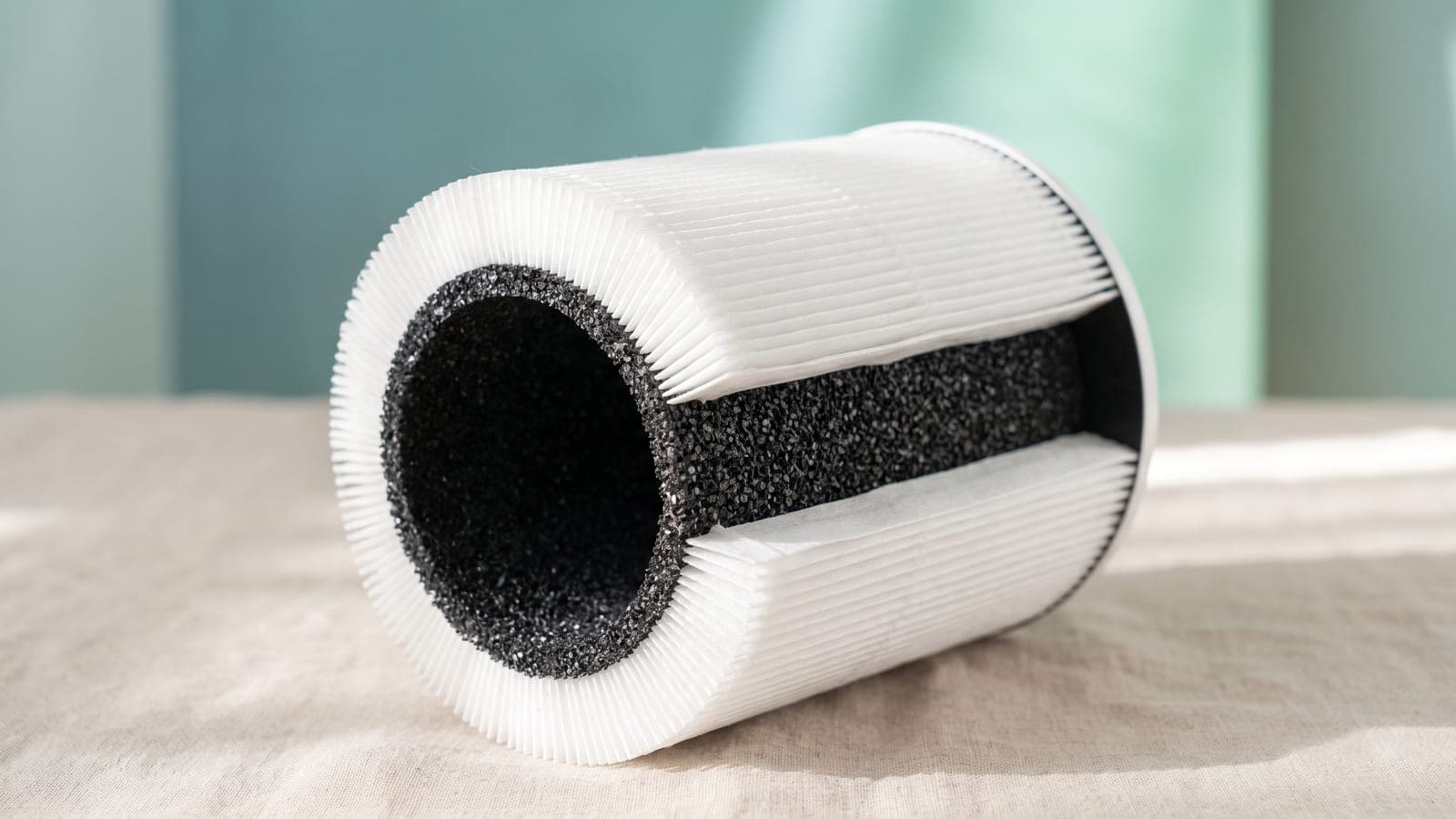
Through comfort, mostly. If you have allergies or sensitivity to airborne particles, the pollen, dust, and pet dander in your bedroom can leave you congested, sniffly, or itchy-eyed at night — and that discomfort makes it harder to fall asleep and stay asleep. A True HEPA air purifier captures those airborne particles, lowering the allergen load in the air you breathe for hours while you sleep. For people whose nights are disrupted by congestion, reducing the trigger can make sleep more comfortable.
The important framing is that this is a comfort effect, not a cure. The purifier isn't treating your allergy or your sleep — it's removing an irritant from the air, which some people notice and others don't. If congestion isn't what's disrupting your sleep, cleaner air won't change much. And for anyone with a real sleep disorder, it's a supporting comfort at best, not the intervention that matters.
Does the white noise actually help?
For a lot of people, yes. A purifier's fan produces a steady, low-frequency hum — the same principle as a dedicated white-noise machine. That consistent sound masks the sudden noises that jolt you awake: traffic outside, a snoring partner, a creaking house, a neighbor's door. Instead of jarring silence broken by random sounds, you get an even backdrop your brain tunes out.
It's worth being honest that this is a matter of preference. Some sleepers find a fan's hum deeply relaxing; others find any mechanical noise distracting. If steady sound already helps you sleep, a purifier's white noise is a pleasant bonus layered on top of the cleaner air. If you're sound-sensitive, prioritize a unit that runs genuinely quietly on its lowest setting so you can dial the noise down.
What features actually matter for sleep?
A handful, and they're specific. The three that separate a good bedroom purifier from a frustrating one are quiet operation, a sleep mode, and a dimmable display. Here's how each maps to a real overnight benefit:
| Feature | Sleep benefit |
|---|---|
| Quiet low / sleep-mode setting | Cleans the air without a loud fan keeping you awake — look for a low-setting figure in the mid-20s to low-30s dB range |
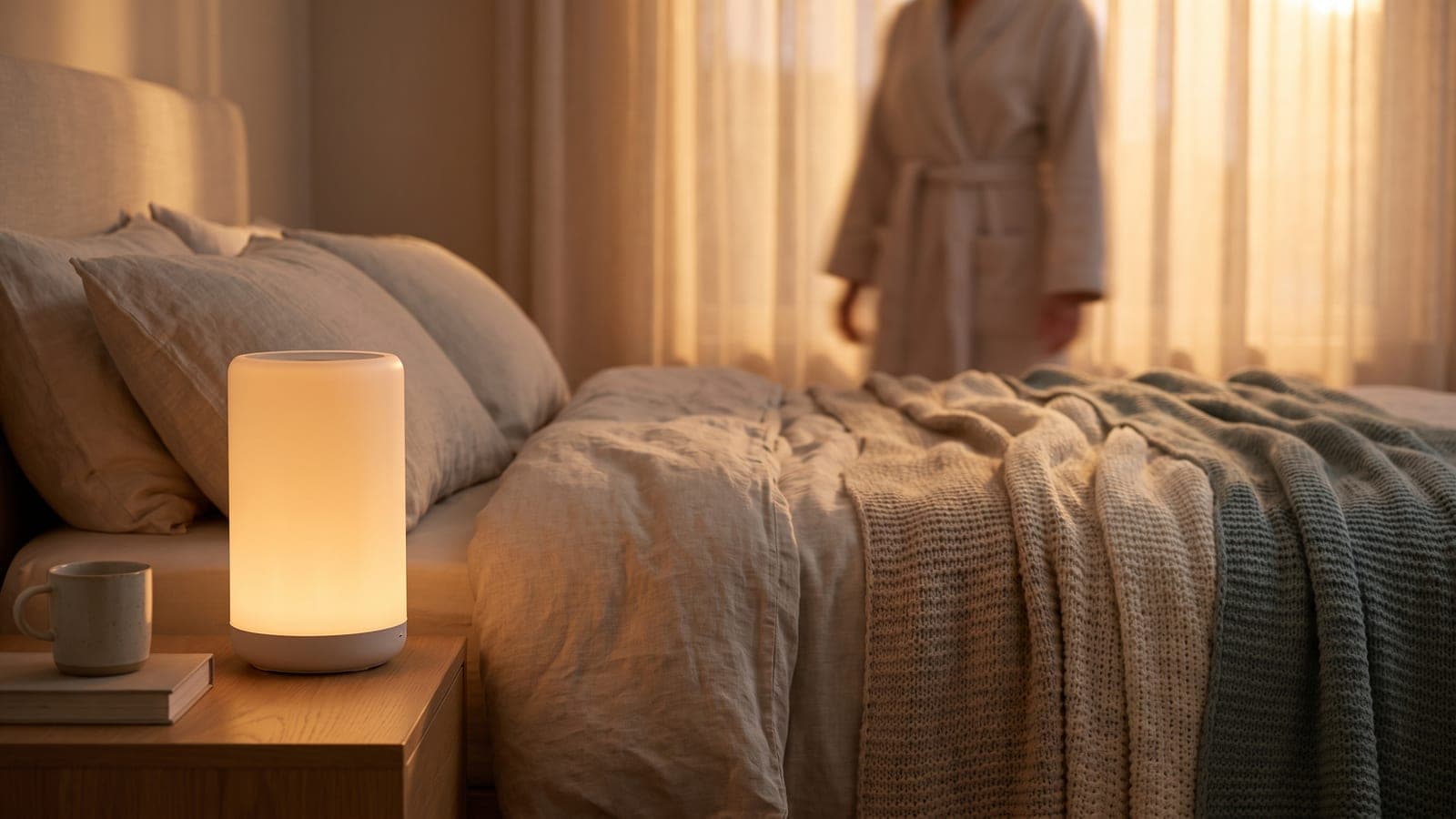
| Dimmable or off-able display | Stops glowing air-quality lights from lighting up a dark room |
| Sleep mode (dims light + drops fan) | One button sets the unit to quiet, dark overnight operation |
| Right-sized CADR for the bedroom | Cleans effectively on a low, quiet setting instead of forcing a loud high speed |
| Auto mode with a quiet floor | Adjusts to air quality without spiking to a loud speed mid-night (check it has a quiet minimum) |
| Filter with carbon (optional) | Reduces bedroom odors that might bother light sleepers |
The theme is that a bedroom purifier has to do its job quietly and darkly. A unit that's excellent in a living room but can only clean your bedroom on a loud, bright high setting is the wrong tool for sleep. For units chosen with quiet in mind, see our best quiet air purifiers and best air purifiers for bedrooms roundups.
How loud is too loud?
Quieter than you might expect is achievable. On their lowest or sleep setting, well-designed purifiers drop into roughly the mid-20s to low-30s decibels — below the level of a soft whisper, and low enough to fade into the background. The catch is that a purifier's quietest setting also moves the least air, so a unit that's undersized for your room may not clean adequately on that quiet floor, tempting you onto a louder speed.
That's why sizing matters for sleep specifically: a purifier with enough CADR for your bedroom can clean the room effectively while running slow and quiet, whereas an underpowered one has to run loud to keep up. When comparing models, look at the decibel figure for the lowest setting, not just the maximum, and match the unit's capacity to your room so quiet operation is actually enough.
Where should you put it in the bedroom?
Close enough to help, not so close it disturbs you. A purifier works best with clear airflow — not jammed against a wall, tucked under a nightstand, or blocked by furniture — so it can pull in and return air freely. Placing it a few feet from the bed, in an open spot, lets the cleaned air circulate through your breathing zone without the unit becoming an obstacle.
If the fan noise or any residual light bothers you up close, move it a little farther from the bed while keeping the airflow path open. There's a balance between proximity (cleaner air right where you breathe) and distance (less noise and light in your face), and it's worth experimenting over a few nights. Our guide on where to place an air purifier covers the airflow principles in more detail.
When is a purifier the wrong answer for sleep?
When the problem isn't the air. If your sleep is disrupted by snoring, sleep apnea, insomnia, or anxiety, an air purifier does nothing for the underlying cause — it's not a medical device and can't treat a breathing obstruction or a sleep disorder. Buying one hoping it will fix apnea or chronic insomnia sets you up for disappointment and, worse, delays getting real help.
The honest boundary is this: a purifier can make bedroom air cleaner and quieter, which helps people whose sleep is nudged off track by allergens or random noise. It cannot address a genuine sleep disorder. If you snore heavily, wake gasping, or can't sleep despite a comfortable room, that's a conversation for a doctor, who can evaluate what's actually going on and recommend interventions that work.
So should you get one for your bedroom?
If you have allergies, live somewhere with dusty or smoky air, or simply sleep better with a steady hum, a quiet, right-sized bedroom purifier with a sleep mode and dimmable display is a reasonable, low-risk addition — it delivers cleaner air overnight and, for many, a white-noise bonus. Just buy it for what it does: cleaner, sometimes more soothing bedroom air, not a cure for a sleep problem.
To find a unit sized to your bedroom that runs quietly on its low setting, start with the air purifier finder, and cross-check our best quiet air purifiers picks for the models that stay hushed overnight. And if you're chasing better sleep because something feels genuinely wrong with your nights, talk to a doctor first — the purifier is a comfort layer, not the answer.
Frequently asked questions
Can an air purifier really help you sleep better?
It can help indirectly for some people. By lowering airborne allergens like pollen and dander, a HEPA purifier can ease the nighttime congestion and irritation that disrupt sleep, and the steady hum of its fan acts as white noise that masks disruptive sounds. It is not a sleep treatment and won't fix insomnia or apnea — for a persistent sleep problem, talk to a doctor.
Should I leave my air purifier on all night?
Yes. Airborne allergens rebuild whenever the purifier is off, so running it continuously through the night keeps bedroom air at its cleanest while you breathe it for hours uninterrupted. Use a quiet low or sleep-mode setting so the noise and any display light don't disturb you. Continuous overnight operation is exactly the use case a bedroom purifier is built for.
Are air purifiers too loud to sleep next to?
The good ones aren't. Many purifiers have a sleep or low mode that drops noise into the mid-20s to low-30s decibel range — quieter than a whisper — while still cleaning. The trick is to buy a unit whose lowest setting still moves enough air for your room, so you're not forced onto a loud high speed at night. Check the quietest-setting decibel figure before buying.
Does the white noise from an air purifier help sleep?
For many people, yes. The consistent low hum of the fan masks sudden noises — traffic, a partner, a creaky house — that would otherwise jolt you awake, similar to a dedicated white-noise machine. It's a genuine side benefit, though it's a matter of preference; some people find any fan noise distracting. If steady sound helps you, it's a nice bonus on top of cleaner air.
Will a bright display on an air purifier keep me awake?
It can, which is why a dimmable or off-able display matters in the bedroom. Many purifiers have glowing air-quality lights or screens bright enough to light up a dark room. Look for a model with a night or sleep mode that dims or turns the display off entirely, so you get the cleaner air without a light show. It's a small feature that makes a real difference at night.
Can an air purifier cure snoring or sleep apnea?
No. An air purifier is not a medical device and does nothing for the airway obstruction behind snoring or the breathing interruptions of sleep apnea. It may reduce allergy congestion that makes nighttime breathing feel stuffier, but that's a comfort effect, not a treatment. Snoring and apnea warrant a conversation with a doctor, who can evaluate and recommend real interventions.