The Coway Airmega Mighty2 is the quietest purifier on paper that most people should consider: Coway rates its Sleep mode at 19 dB, it tops out at 50 dB, and it does that while still moving 240 CFM. It replaces the original Mighty on this list because it is quieter at both ends and draws less power. For bigger rooms the Coway Airmega 400 is still the quiet choice, and three Levoit models cover app control, a tight budget and large spaces. Every rating below is the maker's figure unless an independent measurement is named.
Quick answer
| Model | Smoke CADR | Room size | Noise, low to high (rated) | Filter cost/yr | Best for |
|---|---|---|---|---|---|
| Coway Airmega Mighty2 | 240 CFM | 372 sq ft | 19 / 50 dB | ~$70 | Lowest rated noise floor |
| Coway Airmega 400 | 328 CFM | ~508 sq ft | 22 / 52 dB | ~$129 | Quiet in a large room |
| Levoit Core 400S-P | 231 CFM | 358 sq ft | 22 / 52 dB | ~$85 | Quiet with app control |
| Levoit Core 300S | 141 CFM | 219 sq ft | 24 / 50 dB | ~$45–$60 | Quiet on a budget |
| Levoit Core 600S | 391 CFM | 606 sq ft | 26 / 55 dB | ~$60 | Quiet in open-plan spaces |
Coverage uses the site's rule of smoke CADR × 1.55, or about 4.8 air changes per hour at 8 ft ceilings. Coway's own figure for the Airmega 400 is 1,560 sq ft at two air changes an hour, which is a lighter standard.
Key takeaways
- Ratings rank, meters inform. Makers' low-speed figures (19 to 26 dB here) are useful for comparing models; independent readings in the mid-30s dBA are closer to what you will hear.
- Spare CADR is what makes a purifier quiet. A unit rated well past your square footage can sit on its bottom speeds and still keep the air clean.
- Low power usually means low noise. The quietest speeds on these machines draw only a few watts, so leaving them on all day costs little.
Lowest rated noise floor: Coway Airmega Mighty2
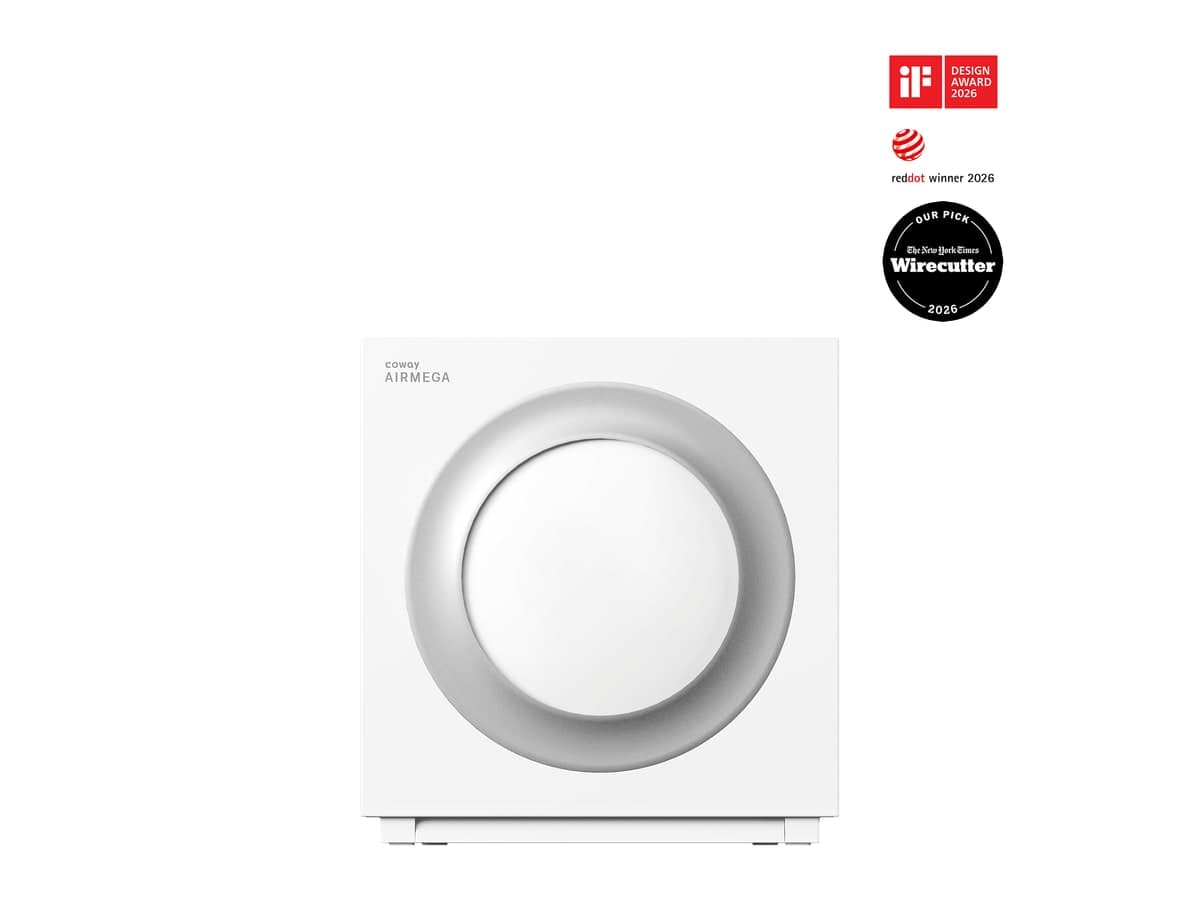
Mid-range · 240 CFM CADR · 372 sq ft
Paid links: we may earn a commission at no cost to you. Disclosure
Coway cut the Coway Airmega Mighty2's rated floor to 19 dB from the 24.4 dB of the AP-1512HH it replaces, and its rated top speed fell from 53.8 to 50 dB. Peak power dropped from 77 W to 56 W, and HouseFresh measured just 2.53 W in Sleep and about 10 W on speed 2.
HouseFresh's meter put Sleep at 35.9 dBA and Turbo at 56.9 dBA. RTINGS concluded that it cleans far better than the old Mighty at its lower, quieter speeds, so the quiet settings are more useful, not just softer. For a 300 to 370 sq ft room, that is the best quiet-to-capacity balance here.
What it lacks: there is no app, and the buttons aren't lit, which owners mention when adjusting it in the dark. Expect to pay $230 to $270, plus $69.99 a year for its single filter, which does not fit the older Mighty. If you are deciding between the two generations, our bedroom guide explains why the Mighty2 now leads there too.
Quiet in a large room: Coway Airmega 400
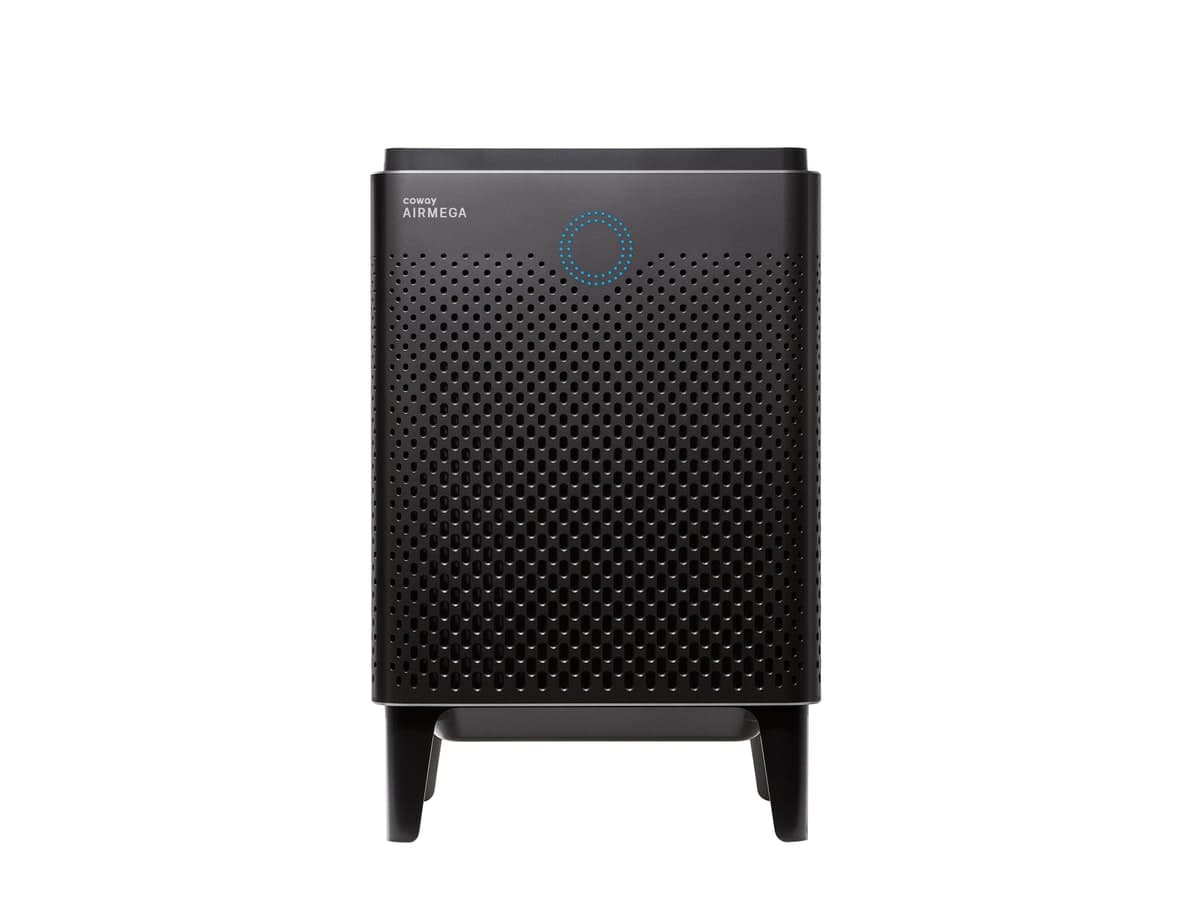
Premium · 328 CFM CADR · 508 sq ft
Paid links: we may earn a commission at no cost to you. Disclosure
The Coway Airmega 400 stays on this list because its quietness scales up. It is rated at 22 dB on its lowest speed and 52 dB flat out, and with 328 CFM it covers about 508 sq ft, so in a 15 × 20 ft living room it can stay near the bottom of its range most of the day. It draws air through two sets of pre-filter, carbon and HEPA panels, one on each side.
It has a numeric air-quality readout and an auto mode, but no app on the base model. At $400 to $450 street (with a much higher list price) and about $129 a year in filters, it costs more than anything else here. You buy it when a mid-size unit would need its loud speeds to keep up with a big room.
Quiet with app control: Levoit Core 400S-P
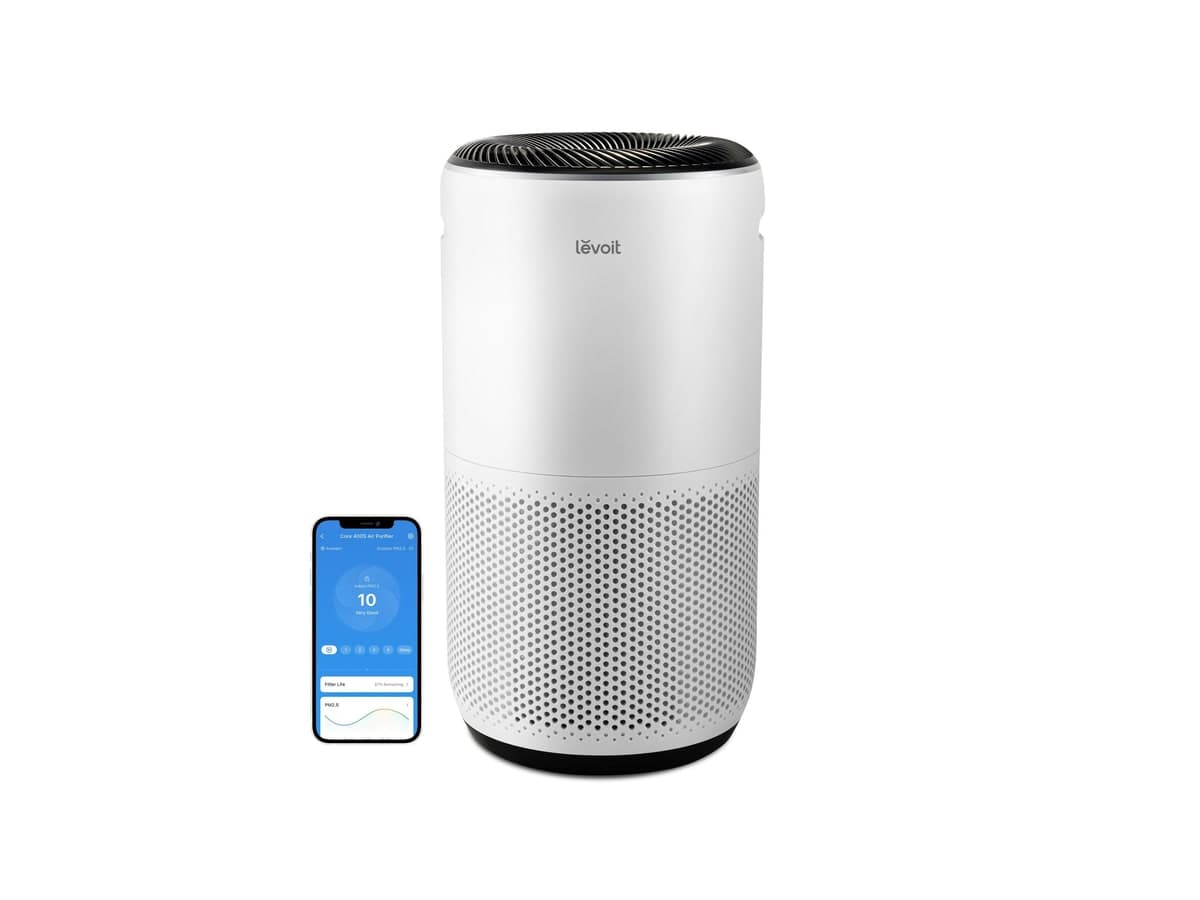
Mid-range · 231 CFM CADR · 358 sq ft
Paid links: we may earn a commission at no cost to you. Disclosure
Levoit rates the Levoit Core 400S-P at 22 dB. HouseFresh measured the original Core 400S, which uses the same body and filter, at 35.5 dBA in sleep, effectively a tie with the Mighty2 on an independent meter, and estimated about 134 CFM below 45 dBA. That is enough for roughly 5.6 air changes an hour in a 12 × 15 ft room without becoming intrusive.
What sets it apart from the Coways is control. The VeSync app lets you schedule quiet speeds for the night and work hours, and the laser PM2.5 sensor drives auto mode. It also has no ionizer. On the other hand HouseFresh recorded 60.3 dBA at its top speed, and filters cost around $85 a year. Price: $160 to $220.
Quiet on a budget: Levoit Core 300S
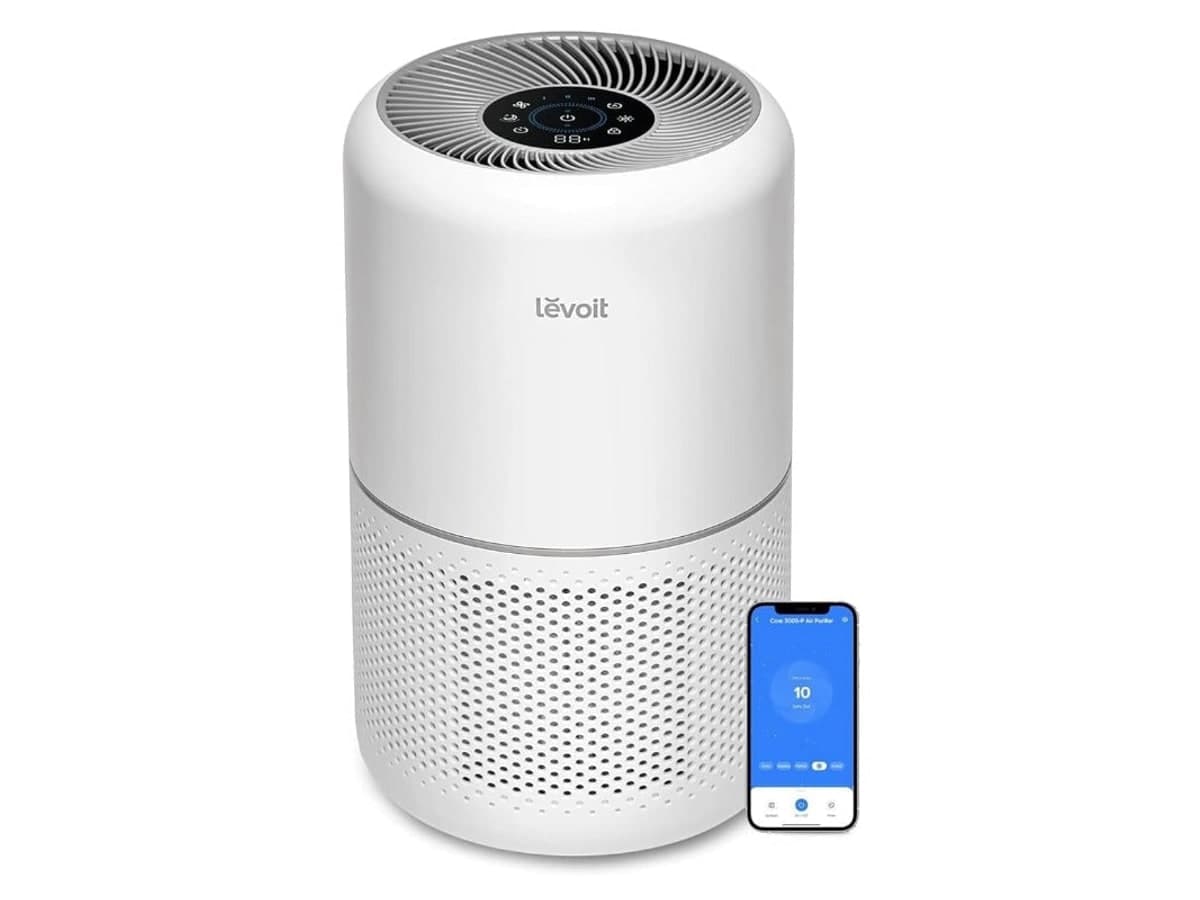
The Levoit Core 300S costs around $100 and is rated at 24 dB in its sleep setting, which also dims the lights. Its 24 W maximum draw is the lowest on this list. With 141 CFM it is meant for rooms of about 219 sq ft, such as a 12 × 18 ft bedroom or a home office.
Its limit is the room size. In a larger room it has to stay on its louder speeds, and its 50 dB top speed is then what you will hear. Filters are $25 to $35 every six to eight months.
Quiet in open-plan spaces: Levoit Core 600S
Mid-range · 391 CFM CADR · 606 sq ft
Paid links: we may earn a commission at no cost to you. Disclosure
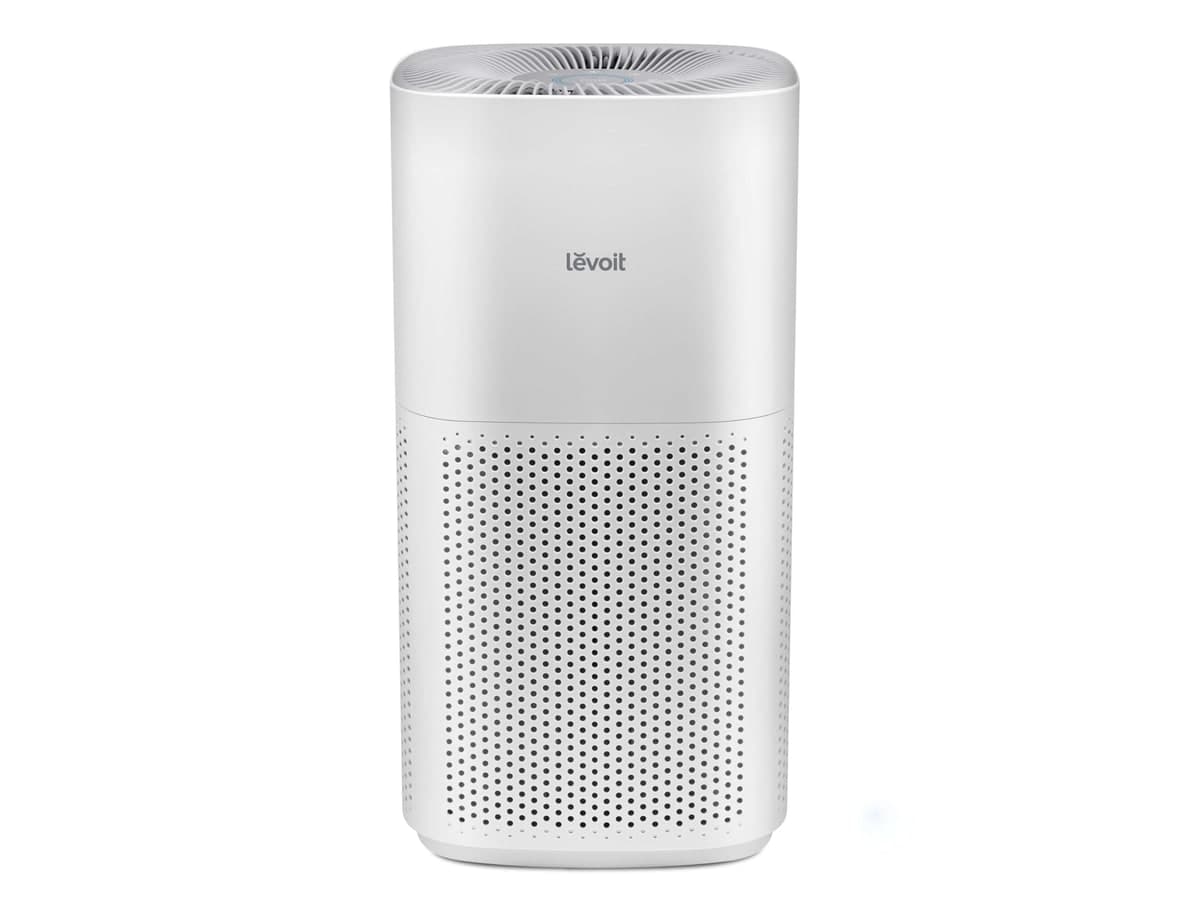
The Levoit Core 600S has the highest rated floor of the five at 26 dB, but it earns its place with capacity. At 391 CFM, about 606 sq ft, it can keep an open kitchen and living area clean on its lower speeds, where a mid-size unit in the same space would be running loud. Its top speed is rated at 55 dB.
It has the full VeSync app and auto mode, uses 49 W at most, and sells for around $280 to $320 with filters near $60 a year. If you are deciding between this and the smaller Core 400S-P, our Core 400S-P vs Core 600S comparison works through the room sizes.
Close calls
Two newer machines almost made the list. The Levoit Vital 200S-P is rated at 23 dB, one step above the Core 400S-P, and HouseFresh measured 38.3 dBA on speed 1 for both machines; at full speed the Vital was actually the quieter of the two, 57.7 against 60.3 dBA. If you want its washable pre-filter, it is just as good a quiet choice. The Winix 5530 is rated at 23.5 dB in Sleep and has a light sensor, but Winix publishes no top-speed figure; HouseFresh measured its 5510 twin at 35.2 dBA on speed 1 and 67.2 dBA on Turbo, the widest spread of any model mentioned here.
How to choose a quiet purifier
Work out how much clean air your room needs, then buy enough capacity that a low speed delivers it. The air changes per hour calculator shows what a given CFM does in your room; aim for about five air changes an hour from the speed you plan to run, not from turbo.
After that, compare rated floors to rank models and use independent measurements to judge real volume. A purifier that was quiet and has become loud usually needs maintenance rather than replacing; our guide to an air purifier making a loud or rattling noise goes through the usual causes.
Frequently asked questions
What is the quietest air purifier?
On manufacturer ratings, the Coway Airmega Mighty2 at 19 dB in Sleep is the lowest on this list. On an independent meter the gap closes: HouseFresh measured it at 35.9 dBA in Sleep, almost the same as the 35.5 dBA it recorded for the Levoit Core 400S. Either one is quiet enough to sleep beside.
Why are measured decibel numbers higher than the box says?
Makers rarely say how or from what distance they took their figure. Reviewers such as HouseFresh measure at a fixed distance in an ordinary room, and that room's background noise sets a floor of its own. Use the maker's figure to rank models against each other and the independent one to judge what you will actually hear.
Is 50 dB loud for an air purifier?
It is roughly the level of a quiet conversation, which is fine during the day and too much for most people at night. All five picks here are rated at 50 to 55 dB on their top speed. Their low speeds, between 19 and 26 dB on paper, are where they spend most hours.
My quiet purifier has started making noise. What changed?
Common causes are a clogged pre-filter forcing the fan to work harder, a filter that isn't seated properly and rattles, or auto mode reacting to a real particle spike. Check and clean the pre-filter first, then reseat the main filter. Our guide to a purifier making a loud or rattling noise goes through the rest.
Does running a purifier on its quietest speed still clean the air?
It does if the unit has spare capacity for the room. A purifier rated for well over your square footage still delivers several air changes an hour on a low speed, while an undersized one has to run loud to achieve the same. Buying one size up is the most reliable way to get quiet.