The best air purifier for fireplace smoke pairs True HEPA with a real activated-carbon stage and enough CADR for the room, which for most living rooms means 300 to 450 CFM. Our pick is the Coway Airmega 450, with an optional Intense Smoke+ cartridge. The Levoit Core 600S is the budget choice, and the AirDoctor AD5500i suits big open spaces with strong odors. But a working fireplace shouldn't fill the room with smoke. If yours does, the fix is the fireplace, and the purifier is the backup.
Key takeaways
- Wood smoke is fine particles plus gases. HEPA handles the particles; carbon handles some of the smell; nothing in a purifier handles carbon monoxide.
- Size by room volume, not floor area. A tall ceiling over a fireplace can double the CADR you need.
- Regular smoke in the room points to a fireplace, chimney or wood problem. Get it inspected.
- Skip ionizers and ozone generators for smoke. The EPA doesn't recommend them.
- Keep working CO alarms on every level, whatever purifier you buy.
Can an air purifier handle fireplace smoke?
Yes, mostly. The EPA describes wood smoke as a complex mixture of gases and fine particles, and says the fine particles (PM2.5, particles 2.5 microns and smaller) are the biggest health threat. Those particles are what a True HEPA filter is built to trap.
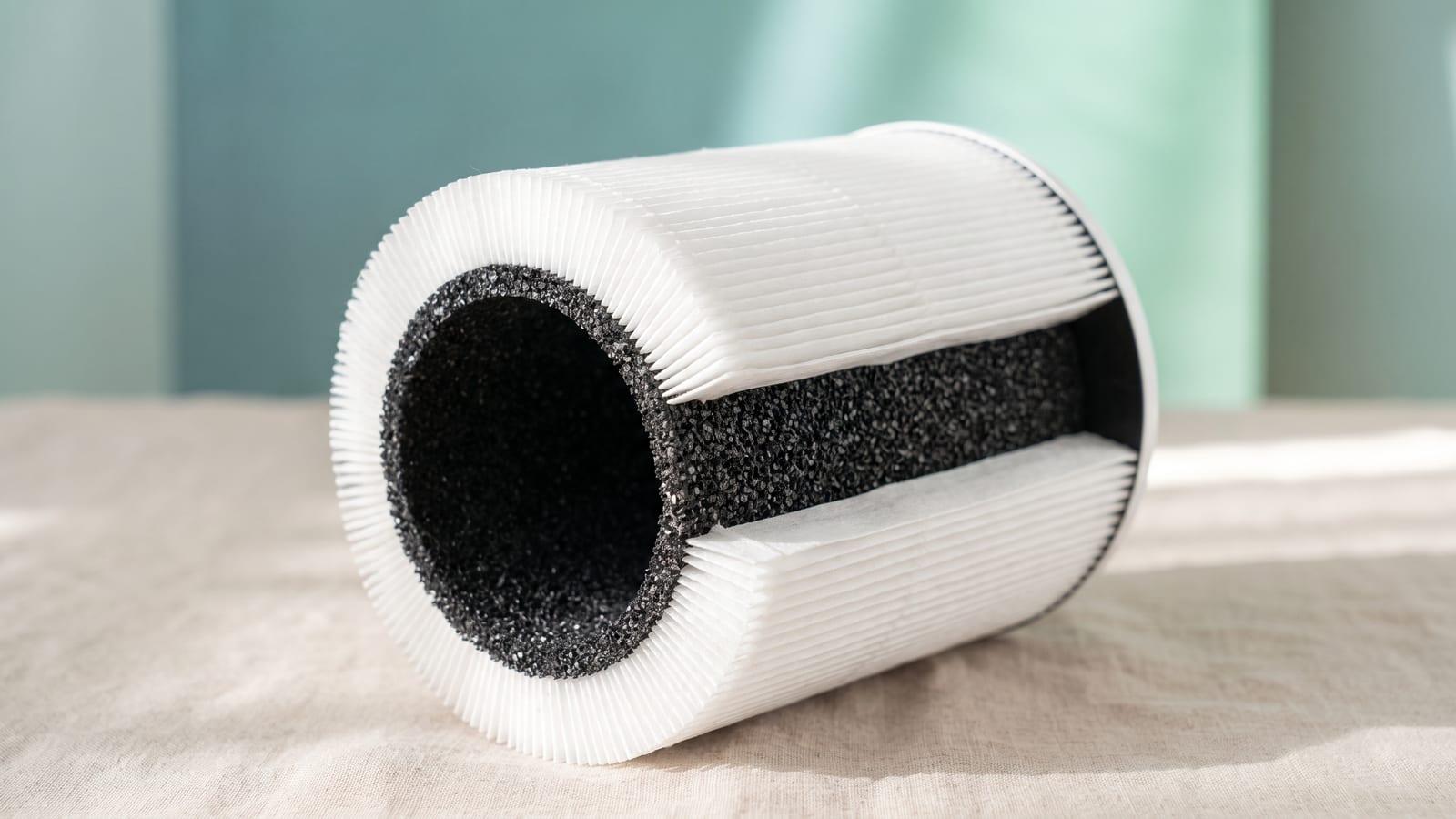
The gases are harder. The EPA lists benzene, formaldehyde, acrolein and polycyclic aromatic hydrocarbons among the toxic pollutants in wood smoke. Activated carbon adsorbs some of these and much of the smell, but its capacity depends on how much carbon is in the filter. Carbon monoxide is a separate problem that no portable purifier removes.
So a purifier is a real help with the haze and the lingering smell, and no help with a fireplace that is venting into the room.
Why does fireplace smoke get into the room?
A fireplace that draws properly sends almost all its smoke up the chimney. The EPA says a properly installed, correctly used wood-burning appliance should produce very little smoke, and that if you regularly see or smell smoke, you may have a problem.
Common culprits include:
- A damper that isn't fully open. Check it before every fire.
- Wet wood. The EPA says wood burns best at under 20% moisture and recommends seasoning it for at least six months and checking it with a moisture meter.
- The wrong fuel. The EPA says not to burn trash, cardboard, painted or pressure-treated wood, plywood, particle board or ocean driftwood.
- A dirty or obstructed chimney. The Chimney Safety Institute of America cites the NFPA 211 standard, which calls for chimneys, fireplaces and vents to be inspected at least once a year.
- A house that pulls air down the flue. Running a kitchen or bathroom exhaust fan during a fire can compete with the chimney for air in a tight house.
If smoke spills every time, stop using the fireplace until a certified chimney professional has looked at it.
What size air purifier do you need for a fireplace room?
Aim for about 4.8 air changes an hour, and calculate from room volume. The formula is length × width × ceiling height × 4.8 ÷ 60, which simplifies to multiplying the volume by 0.08. The EPA's smoke guidance gives a quicker floor: a CADR for smoke of at least two-thirds of the room's square footage.
Fireplace rooms often have tall ceilings, and that's where the floor-area rule falls short.
| Room | Floor area | Ceiling | EPA minimum (2/3 of area) | CADR at 4.8 ACH |
|---|---|---|---|---|
| 14 x 18 den | 252 sq ft | 8 ft | ~168 CFM | ~161 CFM |
| 18 x 22 living room | 396 sq ft | 9 ft | ~264 CFM | ~285 CFM |
| 20 x 24 family room | 480 sq ft | 10 ft | ~320 CFM | ~384 CFM |
| 24 x 26 great room | 624 sq ft | 12 ft (vaulted) | ~416 CFM | ~599 CFM |
The great room is the trap. Its floor area says a 420 CFM unit is plenty, but at 12 ft it holds 7,488 cubic feet of air, and even the AirDoctor AD5500i's 556 CFM falls a little short of 4.8 changes. Two mid-size units, one at each end, work better there than one flagship. The room size calculator handles sloped and open layouts.
Which air purifiers make sense for fireplace smoke?
Look for a published smoke CADR that fits your room and a carbon stage with real substance. These four cover a den through a large open space.
| Model | Smoke CADR | Room size (4.8 ACH, 8 ft) | Carbon stage | Filters per year | Best for |
|---|---|---|---|---|---|
| Coway Airmega 450 | 439 CFM | ~680 sq ft | 3-in-1 cartridge; Intense Smoke+ version available | $109 to $119 | Most living rooms with a fireplace |
| Levoit Core 600S | 391 CFM | ~606 sq ft | Activated carbon in the main filter | ~$60 | Budget living rooms |
| AirDoctor AD5500i | 556 CFM (AirDoctor figure) | ~862 sq ft | Carbon/VOC filters, changed every 6 months | ~$355 | Large open spaces, strong odors |
| Coway Airmega AP-1512HH Mighty | 233 CFM | ~361 sq ft | Carbon pre-filters, changed every 6 months | ~$60 | Bedrooms near the fireplace room |
Room sizes are manufacturer CADR figures converted at the site's 4.8 air-change standard; CADR (clean air delivery rate) is the filtered air a unit delivers per minute on top speed.
The Coway Airmega 450 is our pick because it combines big-room airflow with a smoke-specific cartridge option, at a filter cost far below the AirDoctor's. The Core 600S cleans nearly as much air for less, with a thinner carbon stage. For more smoke-focused picks, see our best air purifiers for smoke.
Will a purifier get rid of the smoky smell?
Partly, and it depends on the carbon. Smell is gas, and HEPA doesn't touch gases. Activated carbon traps odor molecules on its surface until that surface fills up, so a thick bed of carbon lasts longer than a thin carbon-coated sheet. Our activated carbon explainer covers why filter mass matters.
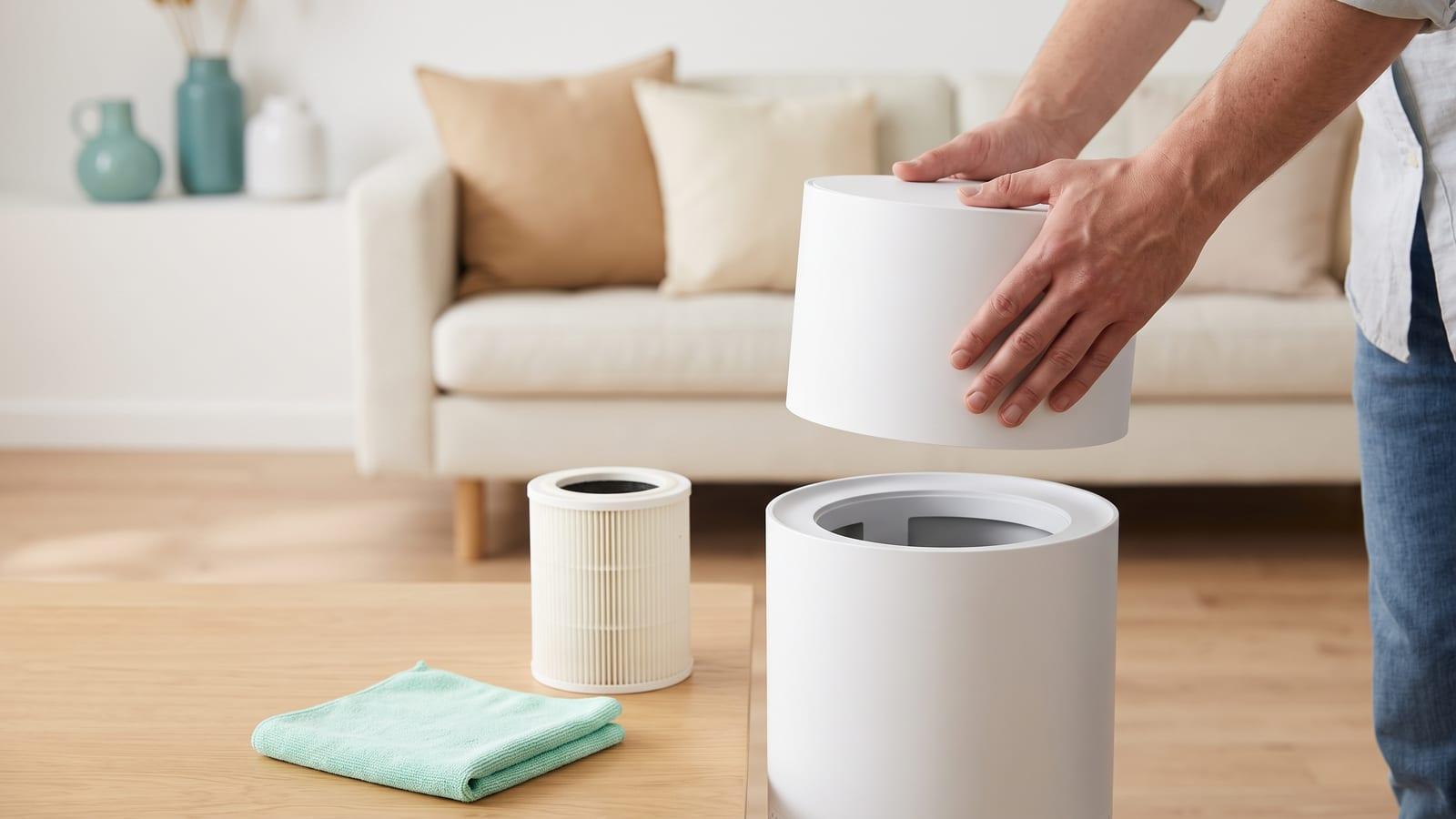
Two practical points. First, smoke smell settles into curtains, rugs and upholstery, so a purifier clears the air faster than it clears the room. Second, carbon wears out first under regular fireplace use. If the filter smells stale or odors stop clearing, the carbon is spent, whatever the filter light says.
Where should the purifier go in a room with a fireplace?
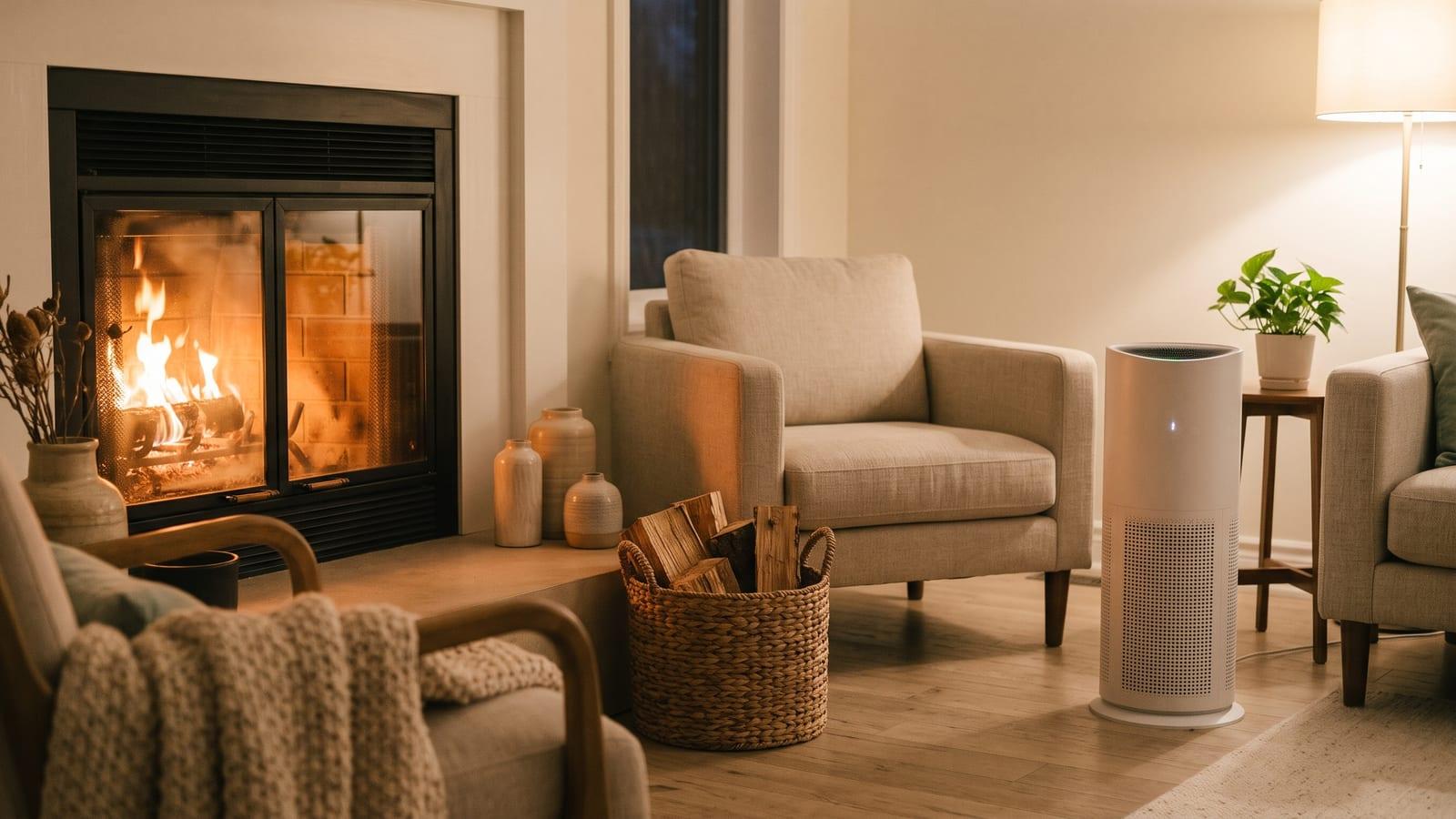
Put it where you sit, not on the hearth. Keep it clear of heat, sparks and the fireplace screen, on a stable surface, with the clearance the manual calls for around the intake.
A portable purifier recirculates the room's air, so it doesn't compete with the chimney the way an exhaust fan can. Run it on a higher speed while the fire is burning and until its sensor reading settles, then let auto mode take over. Close bedroom doors on fireplace nights and run a smaller unit in the bedroom; one clean room is easier than a whole clean house.
What can't an air purifier protect you from?
Carbon monoxide, first. It is invisible, odorless, and passes straight through HEPA and carbon. The CPSC advises CO alarms on every level of the home and outside sleeping areas, and says that if you suspect CO poisoning, get outside to fresh air immediately and then call 911.
Ozone is the other trap. The EPA's indoor smoke guidance says electronic air cleaners such as ionizers are not recommended for smoke removal and may produce ozone, a harmful pollutant. Our guide to ionizer and ozone purifiers explains which purifiers have a switchable ionizer you can simply leave off.
Frequently asked questions
Do air purifiers help with fireplace smoke?
Yes, for the particles and some of the smell. A True HEPA filter traps the fine particles in wood smoke, and an activated-carbon stage adsorbs some of the odor and gases. A purifier does nothing about carbon monoxide, and it can't fix a fireplace that is spilling smoke into the room.
What size air purifier do I need for a room with a fireplace?
Work from room volume. At 4.8 air changes an hour, multiply length × width × ceiling height by 0.08 to get the CADR you need. An 18 x 22 living room with 9 ft ceilings needs about 285 CFM. The EPA's simpler smoke rule is a CADR of at least two-thirds of the floor area, which assumes a standard ceiling.
Is it normal to smell wood smoke inside when the fireplace is lit?
A faint smell when you open the doors or add wood is common. The EPA says a properly installed, correctly used wood-burning appliance should produce very little smoke, and that regularly seeing or smelling smoke may signal a problem. Have the chimney and fireplace inspected before relying on a purifier.
Does an air purifier remove carbon monoxide from a fireplace?
No. Neither HEPA nor activated carbon captures carbon monoxide. Install CO alarms on every level of the home and outside sleeping areas, as the CPSC advises, and if you suspect CO poisoning, get outside to fresh air and call 911.
Should I use an ionizer for fireplace smoke?
No. The EPA's indoor smoke guidance says electronic air cleaners such as ionizers are not recommended for smoke removal and may produce ozone. Use a mechanical HEPA purifier, and if yours has a switchable ionizer, leave it off.
How often should I change the filter if I use the fireplace a lot?
Expect the carbon to wear out first. Carbon that smells stale or stops clearing odors is spent, whatever the filter light says. Follow the manufacturer's schedule as a maximum and check the filters more often during heavy fireplace use.