A room full of fog or windows streaming with water both mean the same thing: the air is holding about as much water as it can at that temperature, so the extra is turning back into droplets. Turn the humidifier down or lower its humidity target, point the mist up and away from walls and glass, and check the real humidity with a separate hygrometer. In cold weather, the setting that keeps windows dry is lower than most people expect.
Do this first
- Measure the room. Set a hygrometer a few feet from the unit and away from the window. The EPA advises against humidifying above 50%.
- Lower the output or the target. The makers' own fixes for condensation:
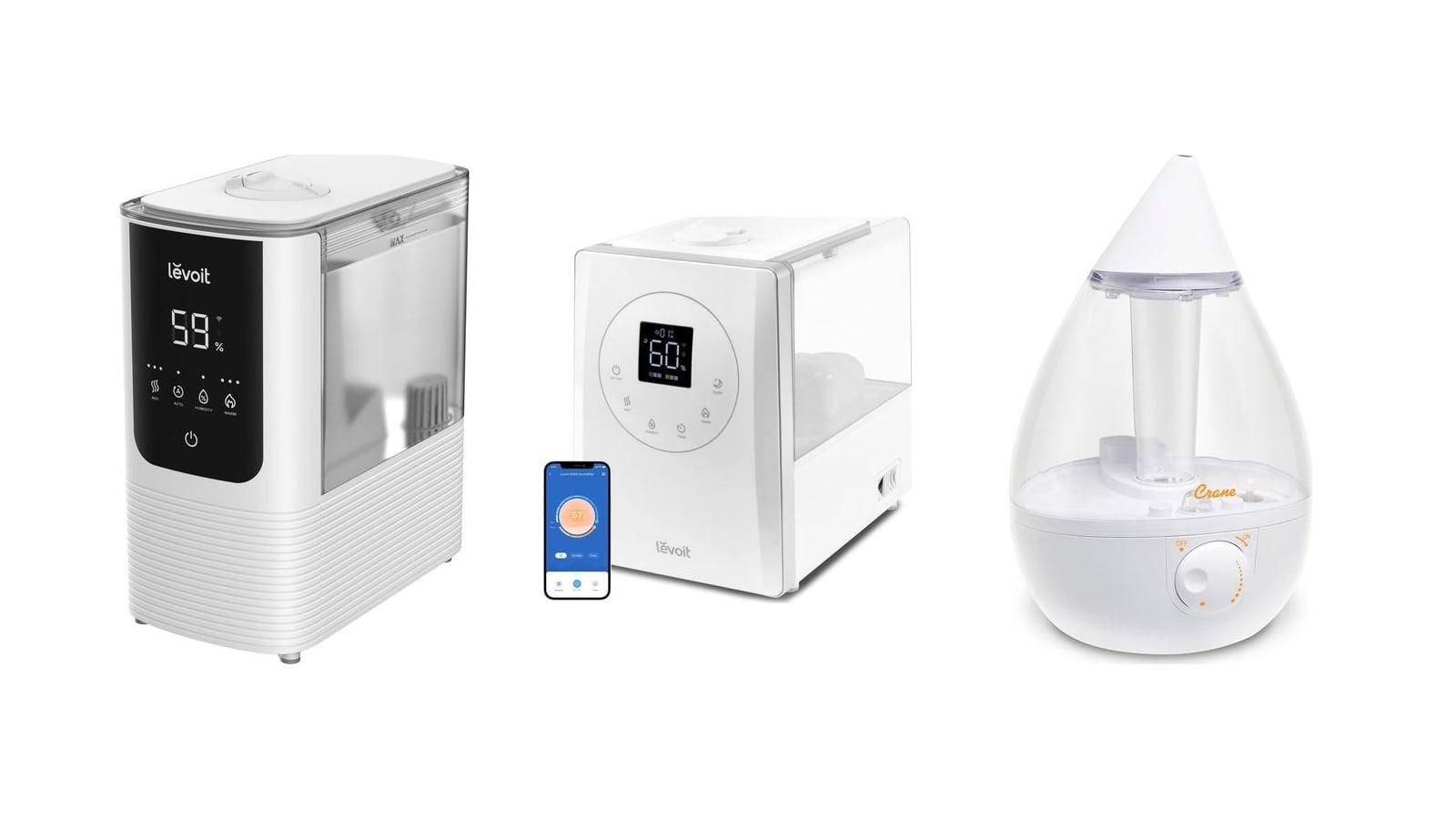
- Levoit Classic 300S and Levoit Dual 200S: humidity may be too high; turn the mist level down, switch the unit off, or open a door or window.
- Levoit OasisMist 450S, Levoit LV600S and Levoit OasisMist 1000S: the same, plus open a window for airflow or move the unit to a better-ventilated room.
- Vicks V745: if condensation forms on walls or windows, or the room goes above 60%, switch to low, open the door or turn it off.
- Honeywell HUL525: Honeywell blames mist intensity set too high for the room size or humidity; turn it to low or open the door.
- Crane Drop Shape: set the dial so the mist rises and is absorbed. If it drops quickly, turn it down.
- Change the default target. Levoit sets Auto Mode at 60% on the OasisMist 450S and 1000S and 50 to 60% on the LV600S. Drop it to 40%, which is as low as the LV600S and 1000S go, in the app or on the unit.
- Reposition it. Levoit asks for a hard, water-resistant surface at least 12 inches from any wall, with the mist aimed away from walls, furniture, bedding and appliances, and not directly on floors or rugs. Vicks gives the same "away from walls and furniture" instruction for the V745.
Why does the mist hang in the air instead of disappearing?
Ultrasonic models such as the Classic 300S throw out liquid droplets, not vapor. In dry winter air they evaporate soon after leaving the nozzle. When the room is already damp or cool, they last longer, drift and settle on whatever is nearby as a wet film. If the table under the unit is wet too, our guide to a leaking humidifier helps tell settling mist from a real leak.
Evaporative units such as the Vornado Evap40 and Levoit Superior 6000S never make a visible cloud, because water leaves the wick as vapor. They can still overshoot and wet the windows, so the visible mist is a symptom, not the cause.
Why do the windows get wet first?
Glass is the coldest surface in a heated room. The Fenestration and Glazing Industry Alliance explains window condensation as the inside surface of the glass falling below the dew point of the air touching it. Colder weather means colder glass, so it sweats at lower humidity.
FGIA's chart, based on 70°F indoors, caps indoor humidity at 40% when it's 20 to 40°F outside and 30% when it's 0 to 10°F. Our guide to what humidity to set in winter has the full chart and a simple routine for adjusting through the season. FGIA also suggests opening curtains and blinds during the day and running ceiling fans, which it compares to using a car's defroster.
Likely causes, most common first
1. No humidistat, left running all night. The Crane Drop Shape, Vicks V745, Honeywell HUL525 and Pure Enrichment MistAire have no humidity control at all; they run at whatever output you set until the tank is empty. The Canopy Bedside Humidifier 2.0's Auto mode follows room light, not humidity. In a closed bedroom, any of these can overshoot by morning.
2. A target set too high for the weather. A 50 or 60% target that feels fine in November can fog single-pane windows in January.
3. Too much humidifier for the room. The Crane Drop Shape is rated for 500 sq ft and has nothing to stop it, so in a 120 sq ft bedroom it is easy to set the dial higher than that room needs. The humidifier size calculator shows roughly what a room actually takes.
4. A sensor reading its own mist. Levoit says its sensors can't read the room properly within 12 inches of a wall or in a corner, and that mist settling on the sensor skews it. Live Science's review notes the Dreo HM713S needs its nozzle about 12 inches from a wall and shouldn't sit on the floor. A sensor that reads low keeps the unit misting past the point the room needs.
5. The house is damp anyway. If windows sweat with the humidifier off, it isn't the cause. The University of Minnesota Extension lists winter window condensation as a sign of excess moisture and suggests briefly opening windows, using exhaust fans or running a dehumidifier. Our air purifier vs humidifier vs dehumidifier guide covers which machine fits.
When is it a fault?
Rarely. If a unit with a humidistat keeps misting well past its target on a separate hygrometer, after you've moved it away from walls and let a damp sensor dry out, the sensor may have failed. Levoit's LV600HH manual says a display stuck at 30% or 90% on startup means a malfunctioning sensor and a call to Customer Support. Until then, wipe the sills dry each morning: the EPA warns against letting the area around a humidifier become damp, and says to keep nearby carpet and drapes dry.
If your current unit has no humidistat and you keep waking to wet glass, a model that can hold a low target fixes the habit. The Dreo HM713S sets anywhere from 30 to 90% in 5% steps, and the Superior 6000S goes from 30 to 60%.
Frequently asked questions
Is a visible cloud of mist normal for an ultrasonic humidifier?
A short plume above the nozzle is normal: that is liquid droplets that haven't evaporated yet. A haze that spreads across the room, or mist that sinks to the floor, means the air can't absorb more water at that output. Turn it down until the plume rises and disappears.
Why are only the bedroom windows wet?
Bedrooms are usually small, closed at night and cooler than the rest of the house, so a humidifier there pushes the humidity up fast. Crane's manual warns against running a humidifier unattended in a closed room for exactly this reason and suggests leaving the door partly open.
Will a steam humidifier fog the room less than an ultrasonic one?
It won't leave a lingering mist, because steam is already vapor, but it adds water just as readily. Vicks still tells V745 owners to switch to low or turn it off if condensation forms on walls or windows.
Should I wipe the window condensation every morning?
Yes, wipe the glass and sills dry so water doesn't sit on the frames, but treat it as a warning rather than a chore. The EPA says that if water condenses on windows, walls or pictures, the humidifier should be relocated, and lowering the target is the lasting fix.
My humidifier's display says 40% but the windows still sweat. Why?
Either the built-in sensor is reading low, or 40% is too high for how cold it is outside. Levoit says its sensors misread within 12 inches of a wall or in a corner. Check with a separate hygrometer, and in very cold weather the window-industry chart in our winter guide puts the safe ceiling at 30% or lower.