Set your humidifier to about 40% for most of the winter, inside the 30 to 50% range the EPA and Mayo Clinic both recommend. As it gets colder outside, turn it down: around 35% when it's 10 to 20°F, and 30% or lower below that, or your windows will start to collect water.
What's the right indoor humidity range?
Health and building sources land in the same neighborhood. The EPA advises keeping indoor humidity below 60% and ideally between 30 and 50%. Mayo Clinic gives the same 30 to 50% range. Allergy groups pull the top end down: the American Academy of Allergy, Asthma and Immunology suggests 40 to 50% for people running a humidifier, and the American College of Allergy, Asthma and Immunology advises keeping humidity under 50% for dust mite allergy.
The University of Minnesota Extension, writing for a very cold climate, goes lower still and calls 25% in winter healthy and comfortable for people and better for the house. That isn't a contradiction. Health guidance sets the range where people feel well; building guidance sets the ceiling a house can take in January without water damage. In a cold climate, the second number usually wins.
Why should the setting drop as it gets colder outside?
Because the coldest surface in the room decides how much moisture the air can hold before it turns to water. In winter that surface is the window glass, and its inside face gets colder as the outdoor temperature falls. Once the air touching the glass cools past its dew point, it condenses, and wet window frames and sills are where mold gets started.
The Fenestration and Glazing Industry Alliance publishes a chart of maximum indoor humidity by outdoor temperature, assuming 70°F inside:
| Outdoor temperature | Maximum indoor humidity |
|---|---|
| 20 to 40°F | 40% |
| 10 to 20°F | 35% |
| 0 to 10°F | 30% |
| -10 to 0°F | 25% |
| -20 to -10°F | 20% |
| Below -20°F | 15% |
Treat it as a ceiling, not a target. Older single-pane glass and windows hidden behind heavy curtains run colder than the chart assumes and may sweat sooner. If you see water at the bottom of the glass in the morning, your house is telling you its limit, whatever the chart says.
What happens if the air is too dry?
Mayo Clinic notes that low humidity dries out skin and can irritate the inside of the nose and the throat. Heated winter air in cold regions often sits well below 30% with no humidifier, which is where cracked lips, static shocks and waking up with a dry throat come from. You don't have to chase 50% to fix that. Getting a bedroom out of the low 20s and into the 30s reaches the EPA's floor, and it's a level most homes can hold through a cold snap without damp windows.
What happens if it's too humid?
Mayo Clinic warns that condensation from humidity that's too high can feed bacteria, dust mites and mold. Dust mites are the clearest case: the ACAAI says they die when humidity falls below 50% and do best around 75 to 80%. A humidifier that holds a bedroom at 55 or 60% all winter is building them a better home. Cleaning matters here too; the EPA recommends not humidifying above 50% indoors and cleaning portable units every third day.
If your home is above 50% in winter without any humidifier running, you need the opposite machine. Our air purifier vs humidifier vs dehumidifier guide covers when a dehumidifier is the fix.
What should you set on your humidifier?
Check what your model's humidistat can actually do, because several default higher than this guide recommends and some can't go low enough.
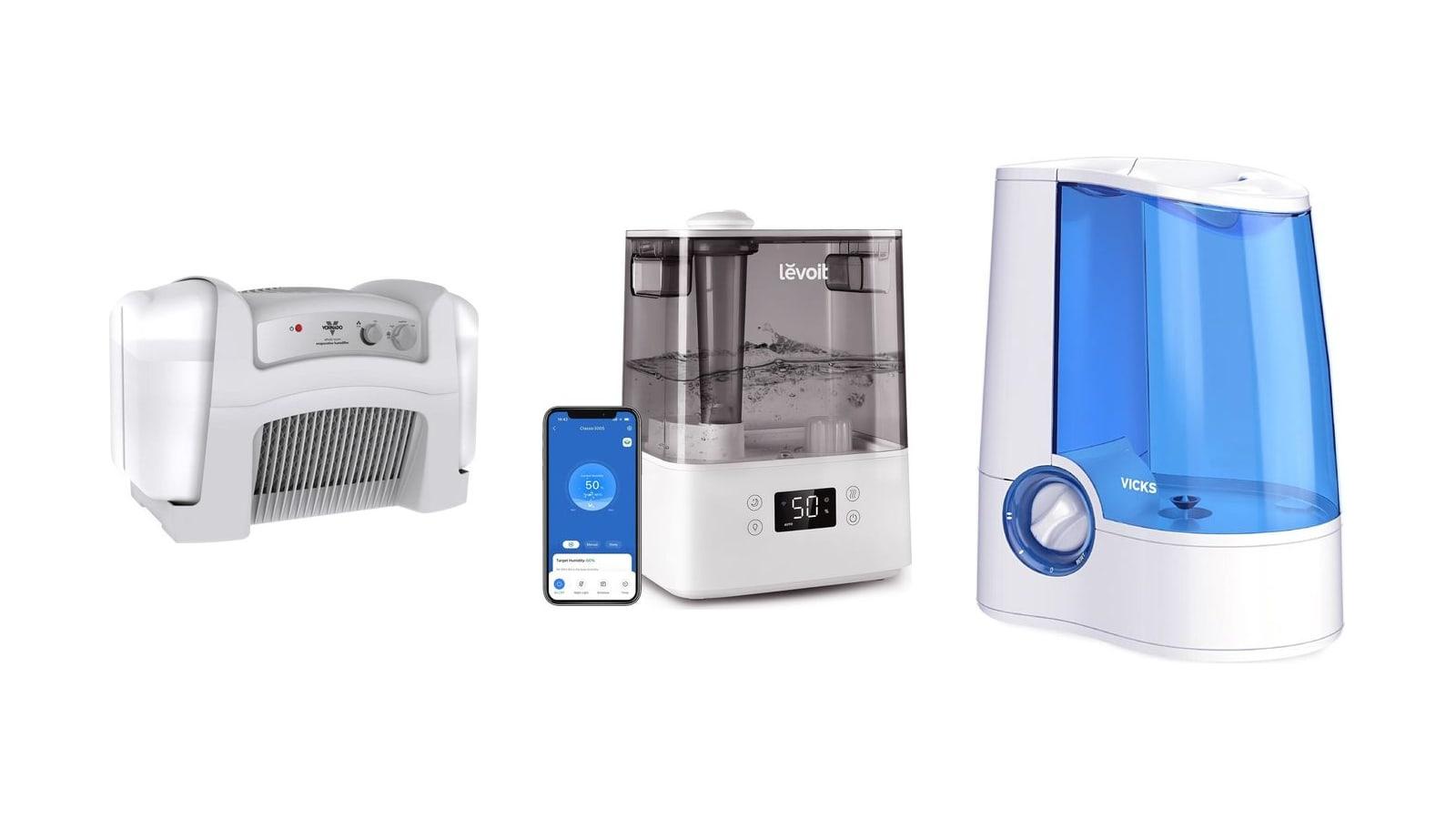
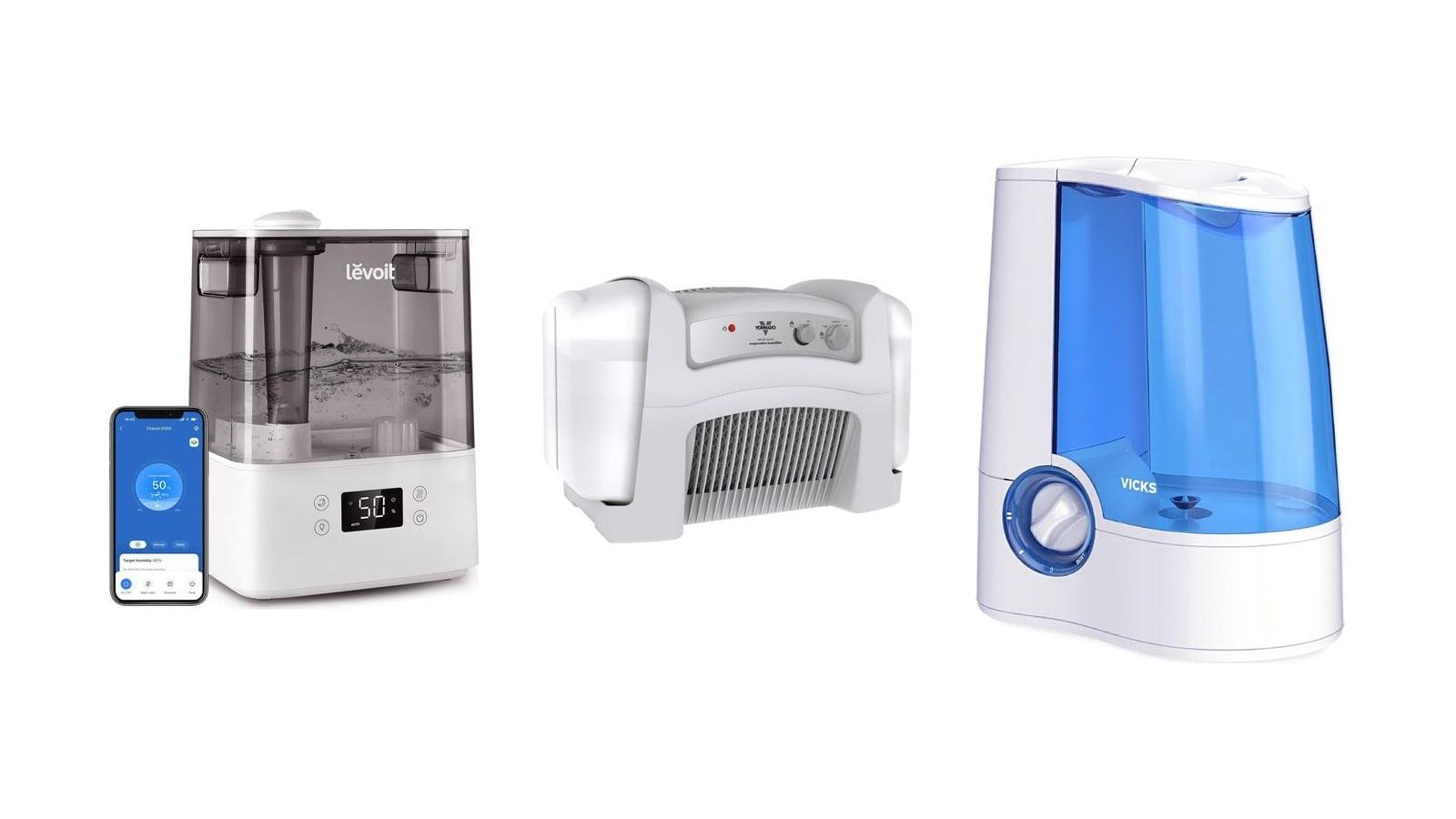
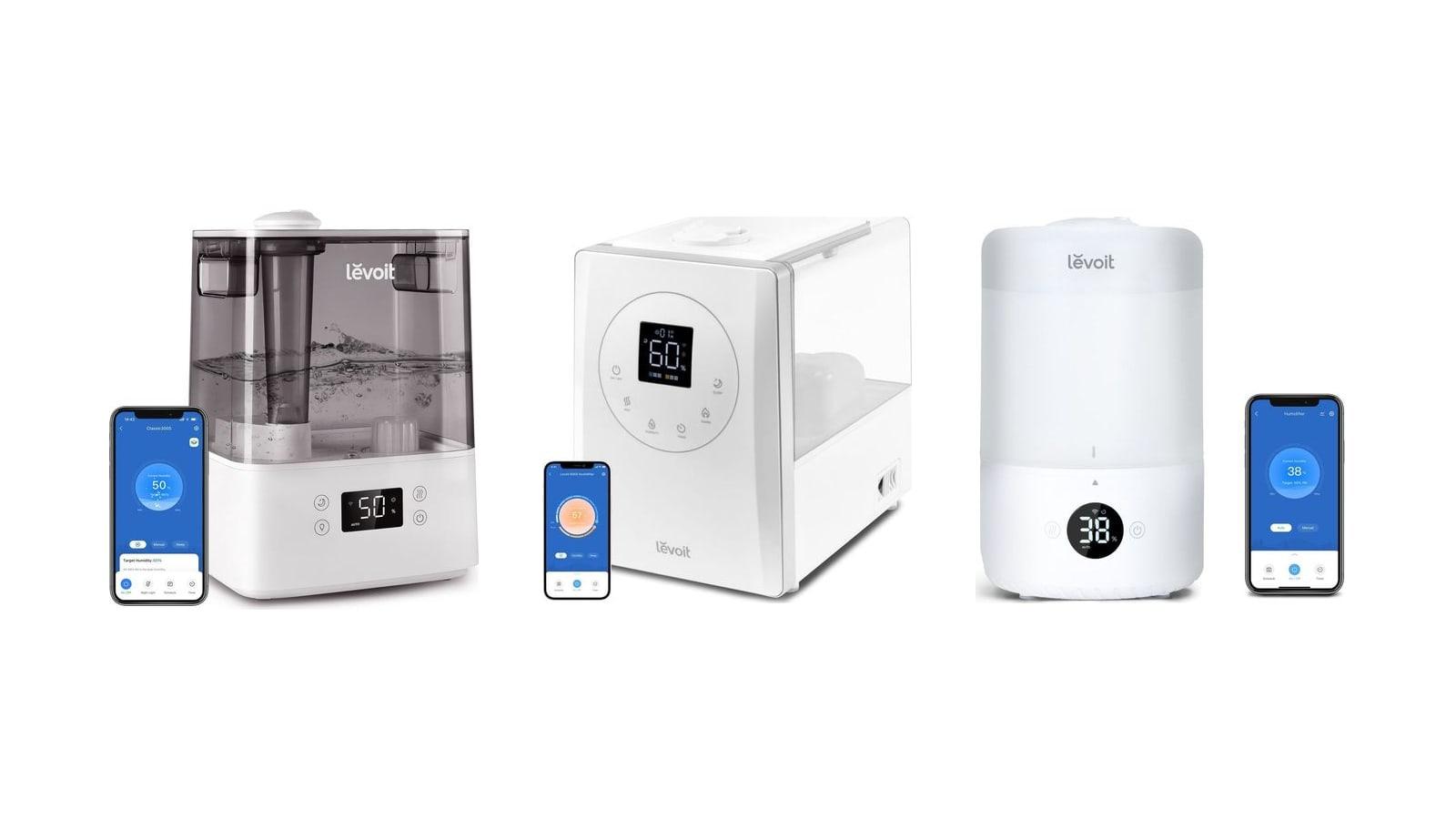
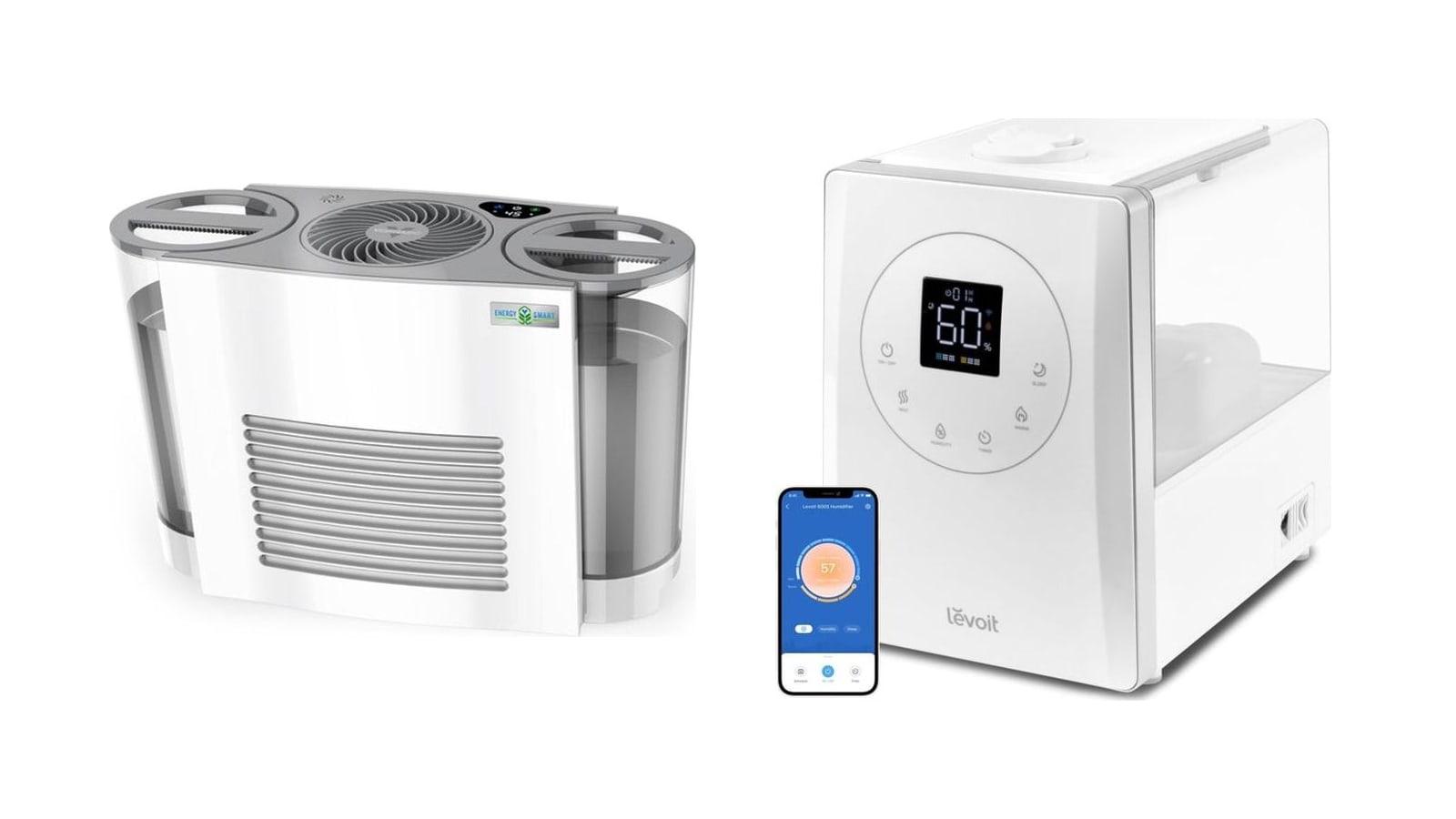
- Defaults above 50%: Levoit sets the Auto Mode default at 60% on the Levoit OasisMist 450S and the Levoit OasisMist 1000S, and at 50 to 60% on the Levoit LV600S. Change it to 40% on the first day.
- Lowest setting is 40%: the LV600S, Levoit LV600HH, OasisMist 1000S, Vornado EVDC500 and Vornado EV100 can't be set to 35 or 30%. On the coldest nights, switch them to a low fixed output or off, and watch the windows.
- Can go down to 30%: the Levoit Superior 6000S (30 to 60% in 5% steps), the Dreo HM713S (30 to 90% in 5% steps) and the Dyson Purifier Humidify+Cool PH2 (30 to 70%).
- No percentage at all: the Vornado Evap40 uses a MIN to MAX dial, and models such as the Vicks V745 and Crane Drop Shape have no humidistat. You'll need a hygrometer and a habit of adjusting by hand.
One more catch: the Dreo HM713S shows a green light anywhere from 31 to 60%, so green doesn't mean ideal in a cold snap.
How do you measure humidity accurately?
Use a separate hygrometer rather than trusting the humidifier's display. The sensor on a humidifier sits close to its own mist, so it can read the air it just dampened rather than the room. Put the hygrometer at bed height, a few feet from the unit and away from the window, and give it half an hour to settle after you move it.
Watch for the thermostat effect too. Relative humidity depends on temperature, so the same air that reads 40% at 70°F reads about 48% if you set the heat back to 65°F overnight. If you use a night setback, set the humidifier a few points lower than you'd want during the day.
A simple winter routine
Start at 40% in early winter. When the forecast low drops below 20°F, turn it down to 35%; below 10°F, try 30%. If the windows still sweat, drop another 5 points. If nobody in the house has dry skin or a sore throat at 30%, there's no reason to push higher.
To find out whether your current unit can hold these levels in your space, the humidifier size calculator works out the gallons a day the room needs. The spec tables in our humidifier catalog give each model's humidistat range, so you can check before buying whether it can be set as low as your winters need.
Frequently asked questions
Is 50% humidity too high in winter?
It's at the top of the EPA's ideal range, and in a cold snap it's high enough to fog most windows. The window-industry chart from FGIA puts the ceiling at 40% even when it's 20 to 40°F outside. Save 50% for mild spells, and drop it if you see water on the glass.
Is 30% humidity too low?
It's the bottom of the EPA's 30 to 50% range, so it's acceptable, and in very cold weather it's often the highest level your windows will tolerate. If dry skin or a scratchy throat still bothers you at 30%, try a few points higher in the bedroom alone and watch that room's windows.
Should I run the humidifier all night?
Yes, if it has a humidistat, because it will switch itself off at the target. Without one, a small unit running all night in a closed bedroom can push past 50% by morning, so set it low or put it on a timer and check a hygrometer when you wake up.
Why do my windows fog only in the morning?
Two reasons stack up overnight. Outdoor temperatures bottom out before dawn, which makes the glass coldest, and a lower thermostat setting at night raises the relative humidity of the same air. Try turning the humidifier's target down 5 points and check the glass again the next morning.
Do I need a humidifier if my home stays above 30%?
Probably not for health reasons. Some homes in milder or damper climates stay in range all winter without one. Check with a hygrometer for a week before buying; if you're already at 35 to 45%, a humidifier adds cleaning without much benefit.