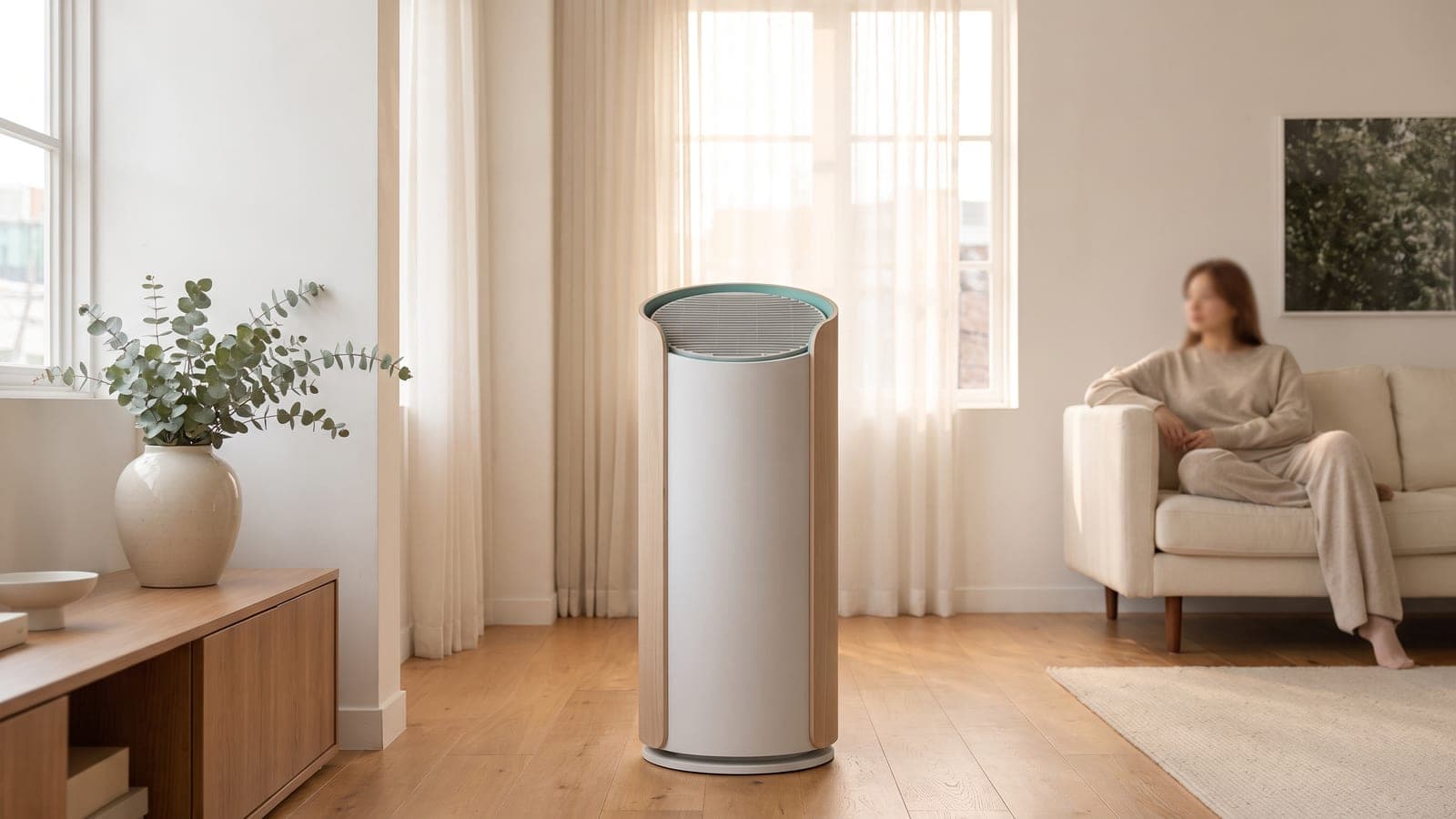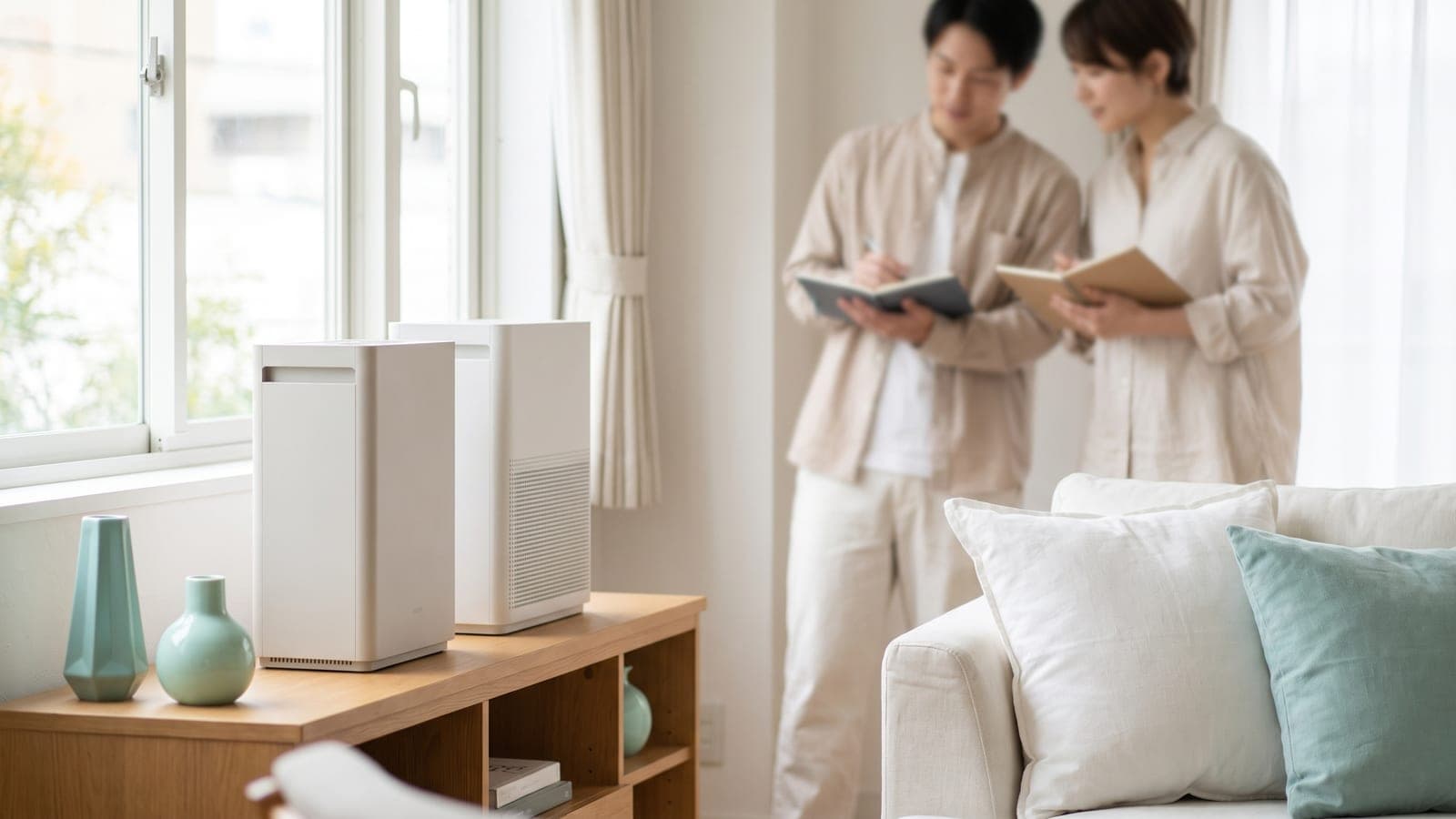
The Winix to buy now is the 5510 or the 5530, whichever costs less on the day you shop. They are the same purifier in black and white, rated at 253 CFM for rooms up to about 390 sq ft, with Wi-Fi and the same Filter Q. The older 5500-2 still makes sense if you never want an app, but its running-cost advantage is smaller than its reputation suggests.
All three share Winix's recipe of a True HEPA filter, a granular carbon stage and a PlasmaWave ionizer you can switch off. The differences come down to filters, smart features and about 20 CFM of airflow.
5500-2, 5510 or 5530: what's actually different?
| Model | Smoke CADR | Room size (site rule) | App | Filter | Typical price |
|---|---|---|---|---|---|
| Winix 5500-2 | 232 CFM | ~360 sq ft | No | Filter H, washable carbon, ~$60/yr | $150–$170 |
| Winix 5510 | 253 CFM | ~392 sq ft | Yes | Filter Q, $79.99 list, 12 months | $180–$200 |
| Winix 5530 | 253 CFM | ~392 sq ft | Yes | Filter Q, $79.99 list, 12 months | $180–$220 |
Room sizes use smoke CADR × 1.55, about 4.8 air changes an hour at an 8 ft ceiling. The Winix 5530 box claims 1,882 sq ft, which assumes the air turns over once an hour. A 16×24 living room of 384 sq ft is about the largest space the 5510 and 5530 are properly sized for.
Winix 5530 vs 5510: one purifier, two colors
The Winix 5530 arrived in 2026 as a white version of the Winix 5510. Winix's manuals give both the same 65 W rating, the same 12.6 lb, 13.59 × 8.27 × 22.17 in body and the same Filter Q. The AHAM numbers match too: 253 smoke, 252 dust, 247 pollen. A third sibling, the 5520, changes only the front grille.
The spec sheets you will see online disagree on noise, and that's a measuring artifact, not a quieter fan. The 5530's retail listing quotes 23.5 dB on Sleep, while the 5510 figure that gets passed around starts at 40 dB. HouseFresh measured the 5510 from 35.2 dBA on its lowest setting to 67.2 dBA flat out, at 3 ft. Expect the same from either color.
Both connect to the Winix Smart app and Alexa. Air quality shows as a colored light rather than a PM2.5 reading. The 5530 drops into Sleep mode by itself when the lights go off. Winix covers it with a 2-year limited warranty, excluding filters. If the black 5510 is $20 or more cheaper, buy it. Otherwise pick the color.
Is the 5500-2 still worth buying?
Yes, for a buyer who wants no app and no account. The Winix 5500-2 is rated at 232 CFM, about 9% less than the 5510, which still covers a 360 sq ft room. Its Filter H set has a carbon stage you rinse rather than replace, which keeps the yearly filter cost near $60. It is a little noisier at the top (59 dB rated) and draws 70 W at most.
In practice the running-cost gap is modest. Over three years you would buy two Filter H sets (about $120) or two Filter Q units ($160 at list, $100 to $130 on sale). That is about $40 saved against Filter Q at list and roughly nothing when Filter Q is on sale, on top of a purchase price that is usually about $30 lower. Worth having, but not enough on its own to outweigh the app if you want one. Run your own electricity and filter assumptions in the filter cost calculator. The two filter types don't interchange, so match the part to the model.
PlasmaWave: off is the sensible default
Each of these Winix models has PlasmaWave, an ionizing stage that sits on top of the filters. Winix's units are CARB certified, which means they meet California's ozone emission limit. Even so, the True HEPA and carbon do the actual cleaning, and there is no reason to add trace ozone to a room you sleep in. Our guide to ionizer and ozone safety covers the evidence. One button disables it.
If you would rather not have ionizer hardware in the box at all, two similar-sized alternatives skip it. The Coway Airmega Mighty2 is rated at 240 CFM, has no app and runs quieter at its lowest speed. The Levoit Vital 200S-P is rated at 250 CFM, has an app, and its filter lists for $49.99 against Filter Q's $79.99.
Which Winix should you buy?
- Room up to ~390 sq ft and you want the app: Winix 5510 or 5530, whichever is cheaper.
- No app wanted, and you see it near $150: Winix 5500-2.
- A 12×15 bedroom: any of the three. At 253 CFM, the 5510 or 5530 gives a 12×15 room more than ten air changes an hour at top speed, so a low speed will do overnight.
- Over ~400 sq ft: none of them. Step up to the Levoit Core 600S (about 606 sq ft) or the Coway Airmega 400 (about 508 sq ft).
Cross-shopping the other value brands? See our Levoit vs Winix and Coway vs Winix comparisons.
Where these numbers come from
CADR and room-size figures are AHAM-verified ratings. Power, weight and dimensions come from Winix's own manuals, and filter part numbers and list prices from Winix. Measured noise is HouseFresh's, labeled as such. Room sizes follow the same CADR × 1.55 rule as every other page on the site, so a Winix lines up directly against a Levoit or Coway.
This is a research-based review — our analysis draws on manufacturer specifications, manuals, warranty terms, and verified owner feedback rather than our own hands-on testing, and we note where a detail couldn't be confirmed. How we review
Every Winixmodel we've reviewed
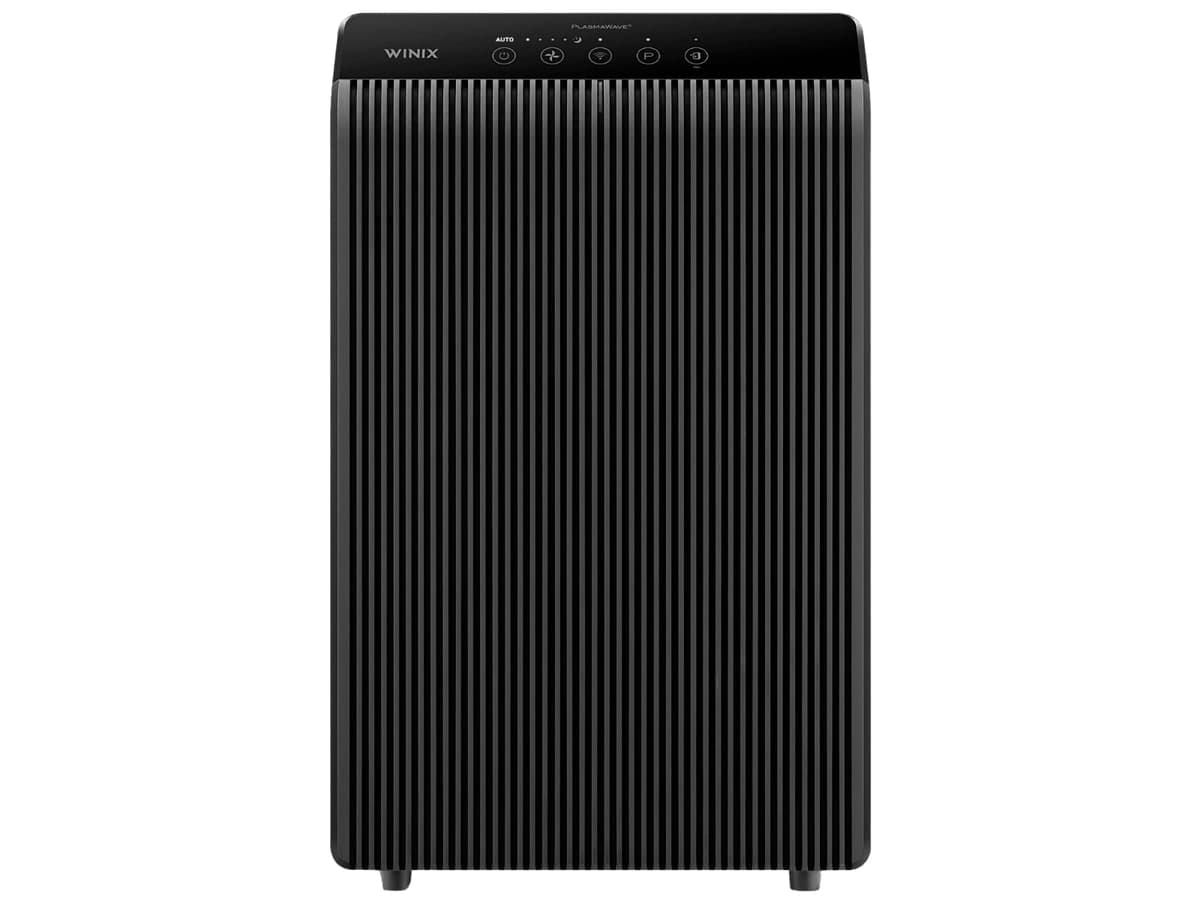
Winix
Winix 5510
Best smart mid-range
A smart, app-connected Winix with True HEPA, carbon, and strong coverage — the step up from the 5500-2 for people who want auto scheduling.
- 253 CFM CADR
- 392 sq ft
- $180–$200
Winix
5530
Winix
Winix 5530
Best Winix for app control in white
The white, 2026 version of Winix's 5510: same 253 CFM AHAM rating, same Filter Q, same 65 W rating and Wi-Fi app. Sized for ~390 sq ft.
- 253 CFM CADR
- 392 sq ft
- $180–$220
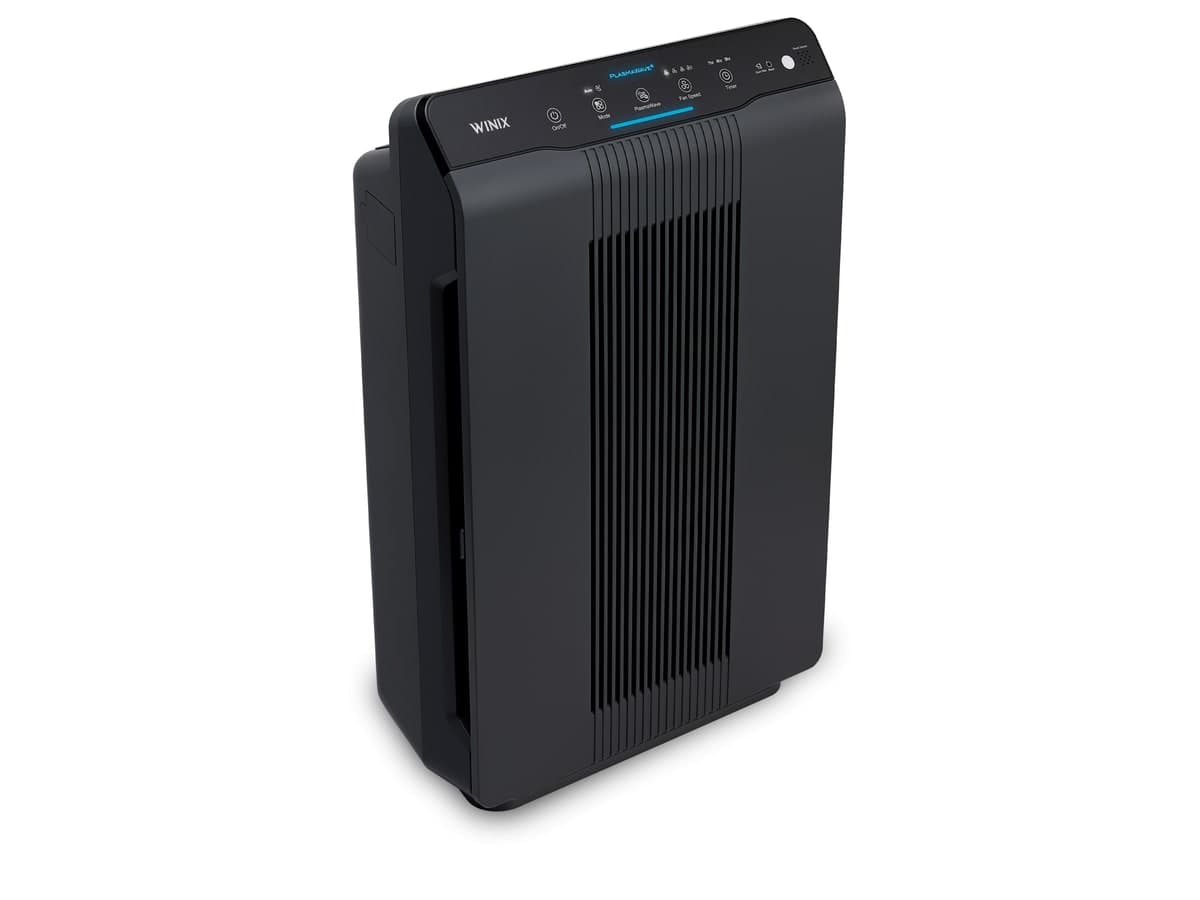
Winix
Winix 5500-2
Best budget for larger rooms
More coverage than the usual budget pick, with a washable carbon filter that keeps running costs low.
- 232 CFM CADR
- 360 sq ft
- $150–$170
Winix replacement filters
Winix comparisons, filter guides and fixes
- Coway Mighty2 vs Winix 5530: Odor Control or Quiet?Compare
- Levoit Core 300S vs Winix 5500-2: App or Airflow?Compare
- Levoit Core 400S-P vs Winix 5530: Shape, Smarts and CostCompare
- Levoit Vital 200S-P vs Winix 5530: Ionizer, Filters and CostCompare
- Winix 5510 vs 5530: What's Actually Different?Compare
- Winix vs Blueair: Which Air Purifier?Compare
- Winix 5530 PlasmaWave: Should You Leave It On or Off?Guides
- Winix 5530 Replacement Filter: Filter Q Fit, Price and LifeGuides
- Air Purifier Red Light Won't Turn Off? Here's What It MeansTroubleshooting
- Air Purifier Smells Bad, Musty, or Like Burning? What to DoTroubleshooting
- When to Replace Your Air Purifier Filter: The SignsTroubleshooting
- Winix 5500-2 Filter Reset and Red Light: What Each MeansTroubleshooting
- Winix 5530 Filter Reset: Steps and Why the Light Stays OnTroubleshooting
Frequently asked questions
What's the difference between the Winix 5510 and the 5530?
Color, and the year it went on sale. The 5530 is the 2026 white version of the black 5510: Winix's manuals list the same 65 W motor, the same 13.59 × 8.27 × 22.17 in body and the same Filter Q, and both carry a 253 CFM smoke rating. Buy whichever is cheaper or suits your room's color scheme.
Do Winix 5500-2 filters fit the 5510 or 5530?
No. The 5500-2 takes Filter H (part 116130), with a carbon stage you rinse and reuse. The 5510, 5520 and 5530 all take Filter Q (part 1712-0123-00), a one-piece True HEPA and carbon unit you replace. The two are different shapes and won't swap.
Should I leave PlasmaWave on?
We'd switch it off. PlasmaWave is the ionizing stage on all three models, and the True HEPA and carbon filters do the cleaning without it. Winix's units are CARB certified, so it is within the legal ozone limit, but there is little reason to add any ozone to a bedroom. One button turns it off.
Which Winix is cheapest to run?
The 5500-2, by less than you might expect. Its filter set costs about $60 a year at street price ($84.99 at Winix list) because the carbon washes. Filter Q for the 5510 or 5530 lists at $79.99 and often sells for $50 to $65. Over three years the 5500-2 saves about $40 against Filter Q at list and roughly nothing when Filter Q is on sale.
Does the Winix 5530 have an app?
Yes. It connects to the Winix Smart app over Wi-Fi for scheduling and remote control, and it works with Alexa. Air quality appears as a colored light, not a PM2.5 number, and the unit switches itself to Sleep mode when the room goes dark.
Is the Winix 5500-2 discontinued?
Winix has moved its lineup on to the Wi-Fi 5510 family, so the 5500-2 can be harder to find and prices vary by retailer. It remains a sound machine if you see it near $150. If it's out of stock, the 5510 or 5530 is the direct replacement.