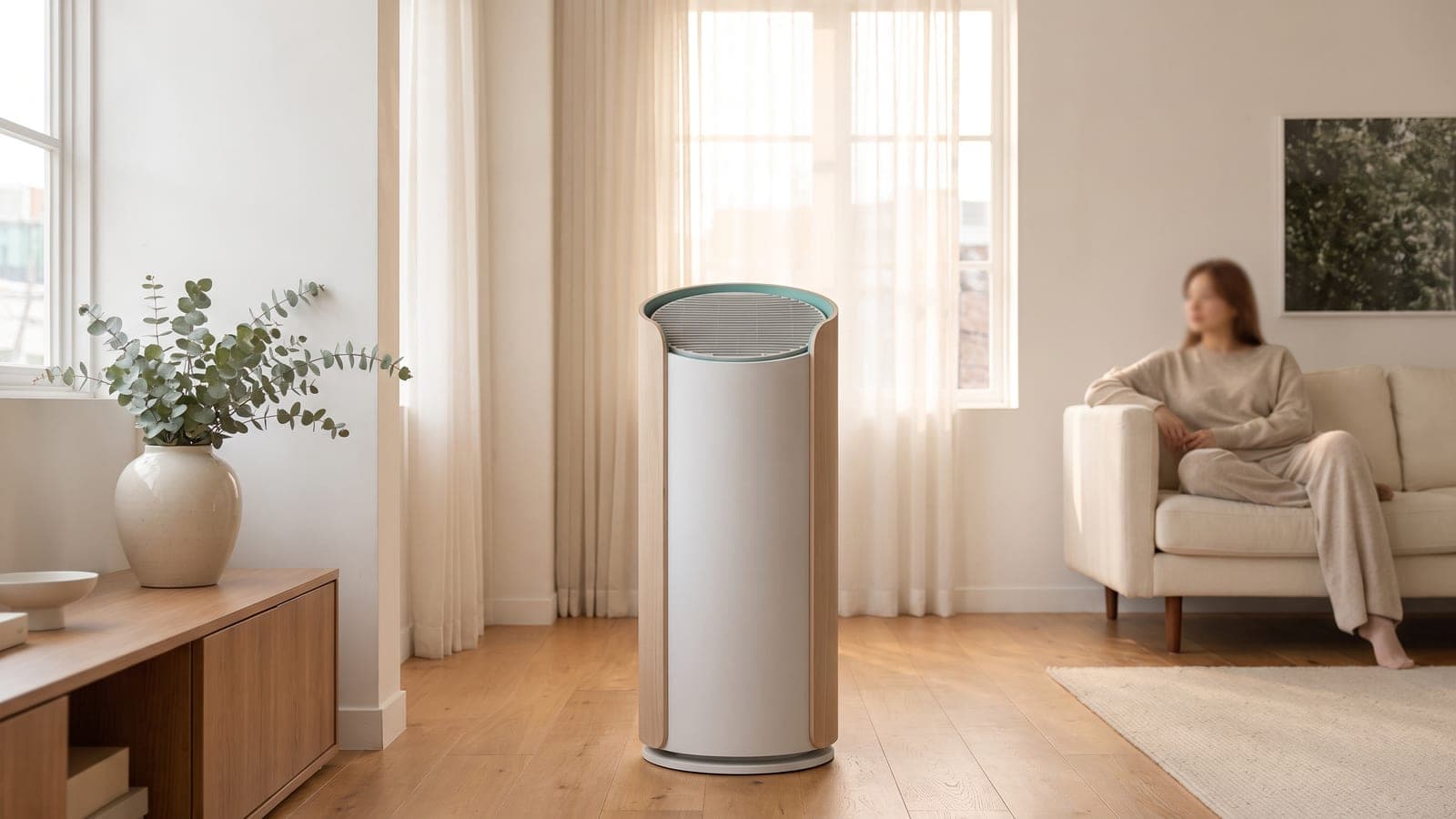
Blueair is worth it if you want a lot of clean air for very little noise and electricity, and you can live with an ionizing stage that never switches off. Its current big-room Blue Pure model, the Blueair Blue Pure 211i Max, covers about 674 sq ft on a 46 W maximum and has auto mode and an app. The trade-off is the filter bill, which runs higher than Levoit, Winix or Coway equivalents.
The Swedish brand's calling card is HEPASilent, and its Blue Pure line is known for a washable fabric pre-filter that doubles as the exterior and comes in different colors. This hub covers what HEPASilent buys you, why the 211i Max is the Blue Pure to buy now, and where a rival makes more sense.
What Blueair is known for
Blueair's signature is HEPASilent filtration: instead of forcing air through a dense True HEPA sheet, it lightly charges incoming particles and then captures them in less-restrictive media. Less resistance means the fan can move more air at a lower noise level, which is why Blueairs consistently punch above their size on airflow-per-decibel. The particles end up trapped in the filter, but the charging stage is an always-on ionizer; Blueair's US units are CARB-certified under the 50 ppb ozone limit, and Blueair cites an Intertek "zero ozone" result (0.005 ppm or less).
The brand used to be just as known for one-button minimalism. The Blue Pure 211+ had no sensor, no auto mode and no app, and plenty of buyers liked it that way. That era is over: the current Blue Pure Max models keep the fabric sleeve and the simple look, but add particle sensors, auto mode and app control. What hasn't changed is that Blueair filters cost more per year than most value brands.
Blueair Blue Pure 211i Max: the Blue Pure to buy now
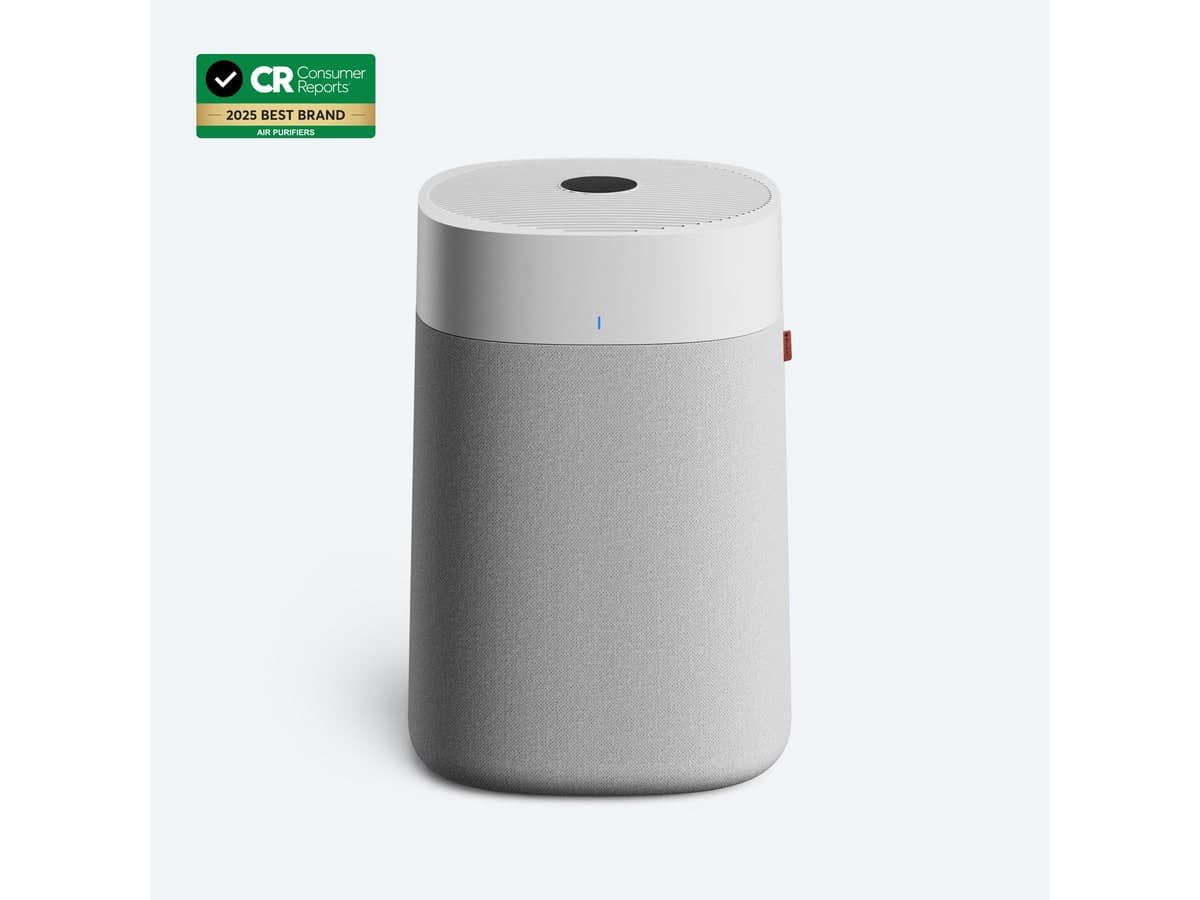
The Blueair Blue Pure 211i Max is the model that best represents the brand today. It is rated at 435 CFM for smoke (452 dust, 450 pollen), which works out to about 674 sq ft at the site's 4.8 air-changes-an-hour rule: an open 20×30 living and dining area with 8-foot ceilings. Blueair rates it at 23 to 53 dB and 46 W at most, so it moves big-room airflow on less power than a lot of mid-size purifiers.
It is also the first big Blue Pure that runs itself. A sensor tracking PM1, PM2.5 and PM10 drives the auto mode, night mode drops to the lowest speed and dims the lights, and the app adds schedules, a filter-life estimate and Alexa or Google Assistant control. Blueair's warranty is one year, extended to three if you register within 60 days. List price is $349.99, and it is often discounted to around $230 to $260.
The asterisk is upkeep. The standard Particle + Carbon filter is $69.99 and lasts six to nine months, or about $93 to $140 a year. With the first filter in the box, three years means buying three to five more ($210 to $350), so purchase plus filters comes to about $560 to $700 at list price, or $440 to $580 on sale. Running flat out around the clock at $0.17/kWh would add up to about $206 in electricity over those three years; Blueair doesn't publish per-speed wattage, and auto mode will use far less. Put your own figures into the filter-cost calculator, and check the fit for your space with the room-size calculator and our CADR explainer.
What happened to the Blue Pure 211+?
The Blueair Blue Pure 211+ is no longer sold new, and the 211i Max is its replacement. The newer model moves about 24% more air (435 vs 350 CFM smoke) on 25% less power (46 vs 61 W) and adds the sensor, auto mode and app the 211+ never had. If you own a 211+ that still runs well, there's no urgent reason to replace it. Just note that the two machines take different filters, so don't stock up on 211+ filters before switching.
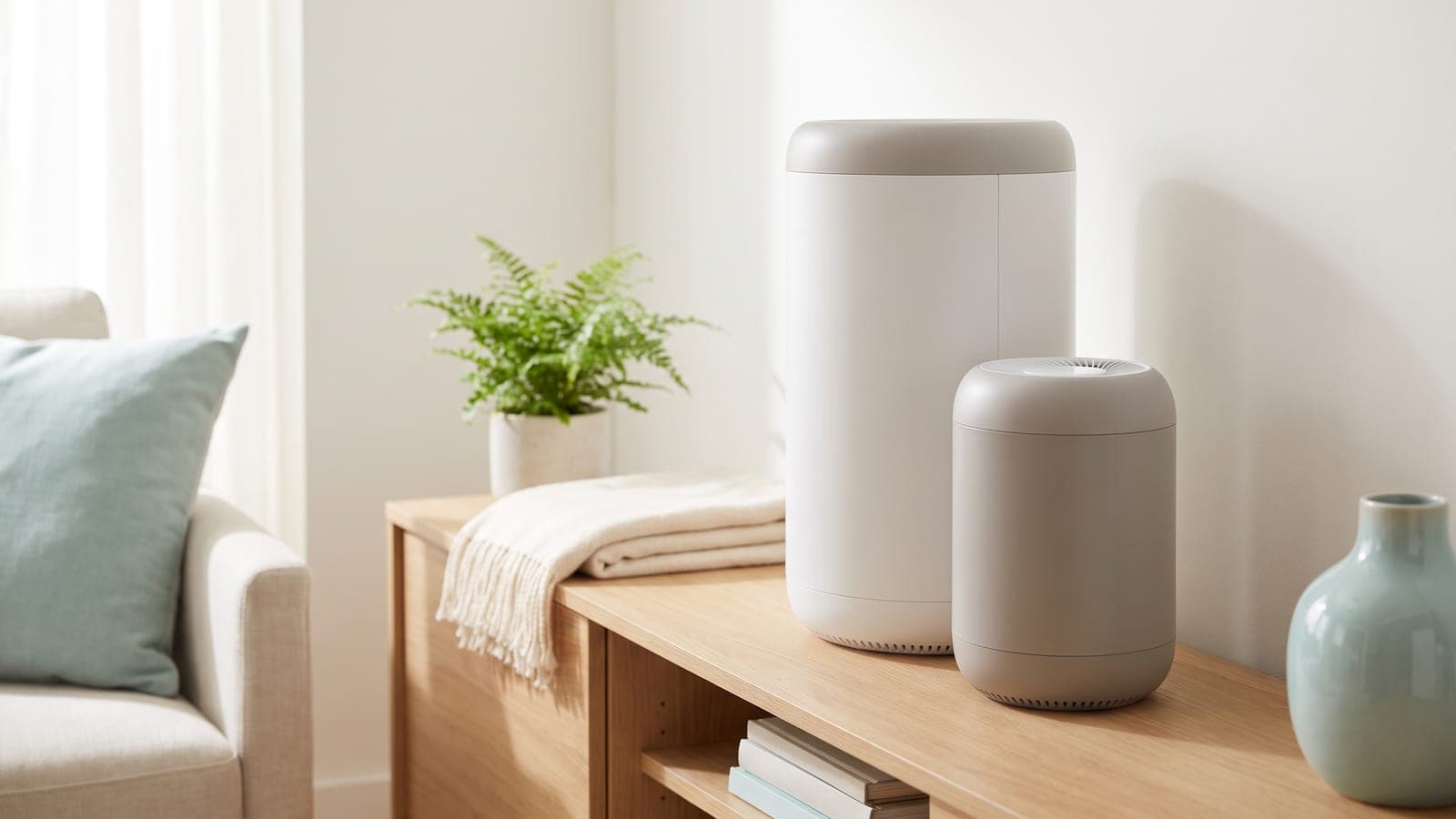
Blueair also sells smaller Blue Pure Max models for bedrooms and a table-top Blue Signature line.
Is Blueair worth it?
For the right buyer, yes. If your priority is moving a lot of clean air quietly and cheaply through a large or open room, the 211i Max is among the most efficient purifiers in its price range, and it now matches Levoit on smart features. It is a weaker buy on two counts: the lowest possible filter bill, and a strict no-ionizer preference.
Weigh it against the alternatives before buying. The Levoit Core 600S covers about 606 sq ft with no ionizer and roughly $60 a year in filters; see Levoit vs Blueair. For a room under about 360 sq ft, Winix vs Blueair shows how much the Winix 5500-2 saves. And Blueair vs Coway covers the True HEPA, no-ionizer Coway Airmega 400. One caveat applies to any purifier: it cleans airborne particles (and, with carbon, some odors), but it won't fix a moisture or mold source and it isn't a medical device, so if you're buying for asthma or allergies, treat it as one useful tool and talk to a doctor about the health specifics.
This is a research-based review — our analysis draws on manufacturer specifications, manuals, warranty terms, and verified owner feedback rather than our own hands-on testing, and we note where a detail couldn't be confirmed. How we review
Every Blueairmodel we've reviewed
Blueair
Blueair Blue Pure 211i Max
Best low-wattage big-room smart pick
A 435 CFM big-room purifier (about 674 sq ft) that sips 46 W and adds auto mode and an app over the 211+. Its ionizer stage can't be turned off.
- 435 CFM CADR
- 674 sq ft
- $230–$350 ($349.99 list; frequent sales)
Blueair
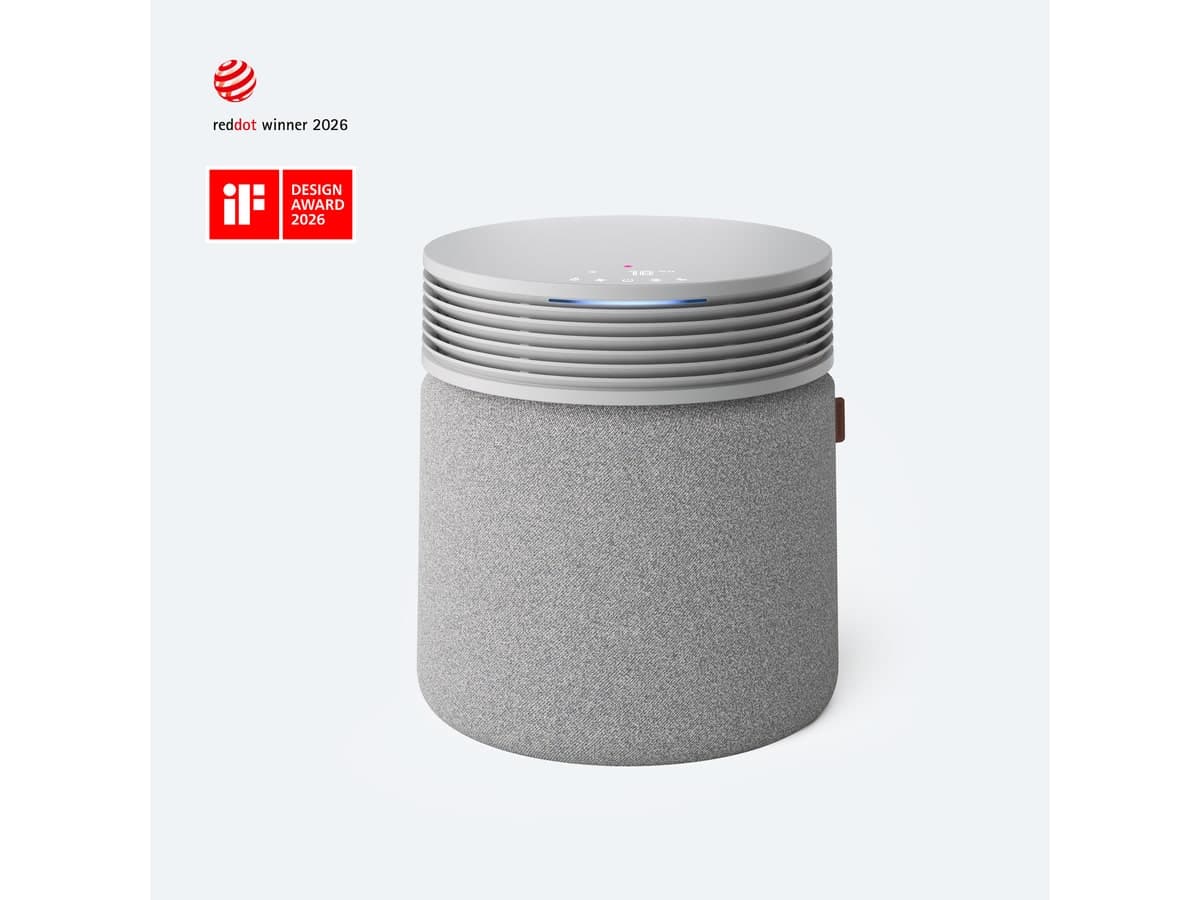
Blueair Blue Signature Large
Best design-led big-room purifier
Blueair's table-top purifier: 455 CFM smoke CADR (about 705 sq ft), pelleted carbon and a laser sensor, at a design premium over the 211i Max.
- 455 CFM CADR
- 705 sq ft
- $340–$450 ($449.99 list; frequent sales)
Blueair replacement filters
Blueair comparisons, filter guides and fixes
- Blueair 211+ vs 211i Max: Should You Upgrade?Compare
- Blueair vs Coway: Which Air Purifier?Compare
- Levoit vs Blueair: Which Air Purifier?Compare
- Winix vs Blueair: Which Air Purifier?Compare
- Blueair 211i Max Replacement Filter: Which One and What It CostsGuides
- Air Purifier Not Improving Air Quality? Here's WhyTroubleshooting
Frequently asked questions
Is Blueair worth the money?
For a large or open room, yes. The Blue Pure 211i Max is rated at 435 CFM for smoke, which covers about 674 square feet, on a 46 W maximum draw, and it often sells for $230 to $260 against a $349.99 list price. The catch is running cost: its $69.99 filter lasts six to nine months, about $93 to $140 a year, more than Levoit or Winix filters.
What is HEPASilent?
HEPASilent is Blueair's filtration approach: an ionizing stage gives incoming particles an electrostatic charge, and a less dense filter then captures them. Less resistance means more airflow for less noise and power. The charging stage can't be switched off. Blueair's US models are CARB certified under the 50 ppb ozone limit, so output is within California's legal limit, but they are not ozone-free designs.
Does the Blueair Blue Pure 211i Max have an app?
Yes. The 211i Max connects to the Blueair app for schedules, air-quality history and filter-life tracking, and works with Alexa and Google Assistant. It also has a PM1/PM2.5/PM10 sensor driving an auto mode, plus night mode and a child lock. The older Blue Pure 211+ it replaced had none of that: one button cycled three fan speeds.
How much do Blueair replacement filters cost?
For the Blue Pure 211i Max, the standard Particle + Carbon filter is $69.99 and Blueair rates it at six to nine months, or about $93 to $140 a year. SmokeBlock ($84.99), AllergenBlock ($89.99) and EcoLast ($99.99) versions fit the same slot. These filters do not fit the older 211+, and 211+ filters don't fit the 211i Max.
Is Blueair better than Coway or Levoit?
On raw airflow and airflow per watt, the 211i Max beats both the Coway Airmega 400 and the Levoit Core 600S on paper. Levoit wins on filter cost (about $60 a year) and on having no ionizer, and Coway's Airmega 400 also skips the ionizer. Pick Blueair for a big room where airflow and low power matter most; pick Levoit for the lowest running cost.