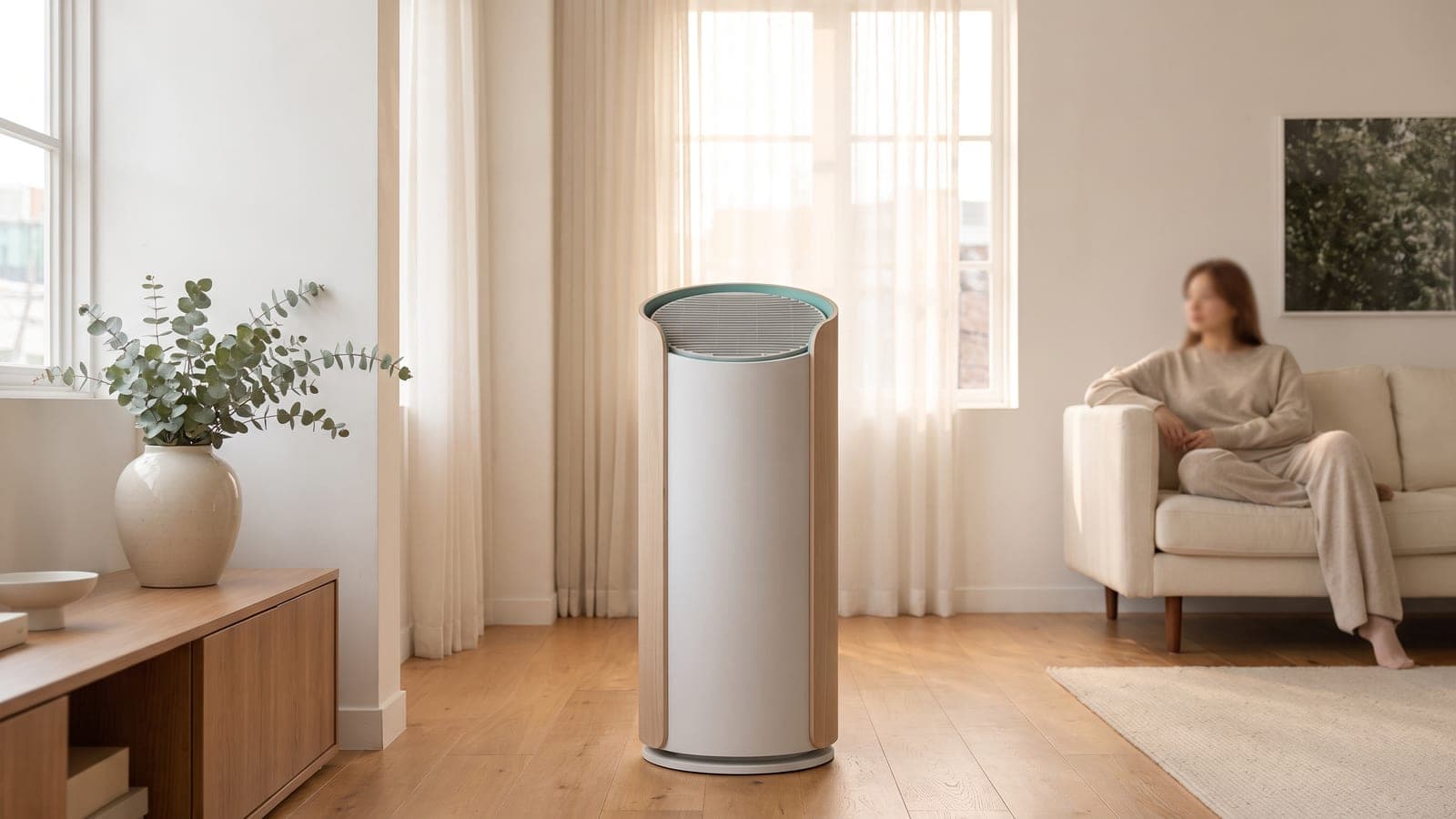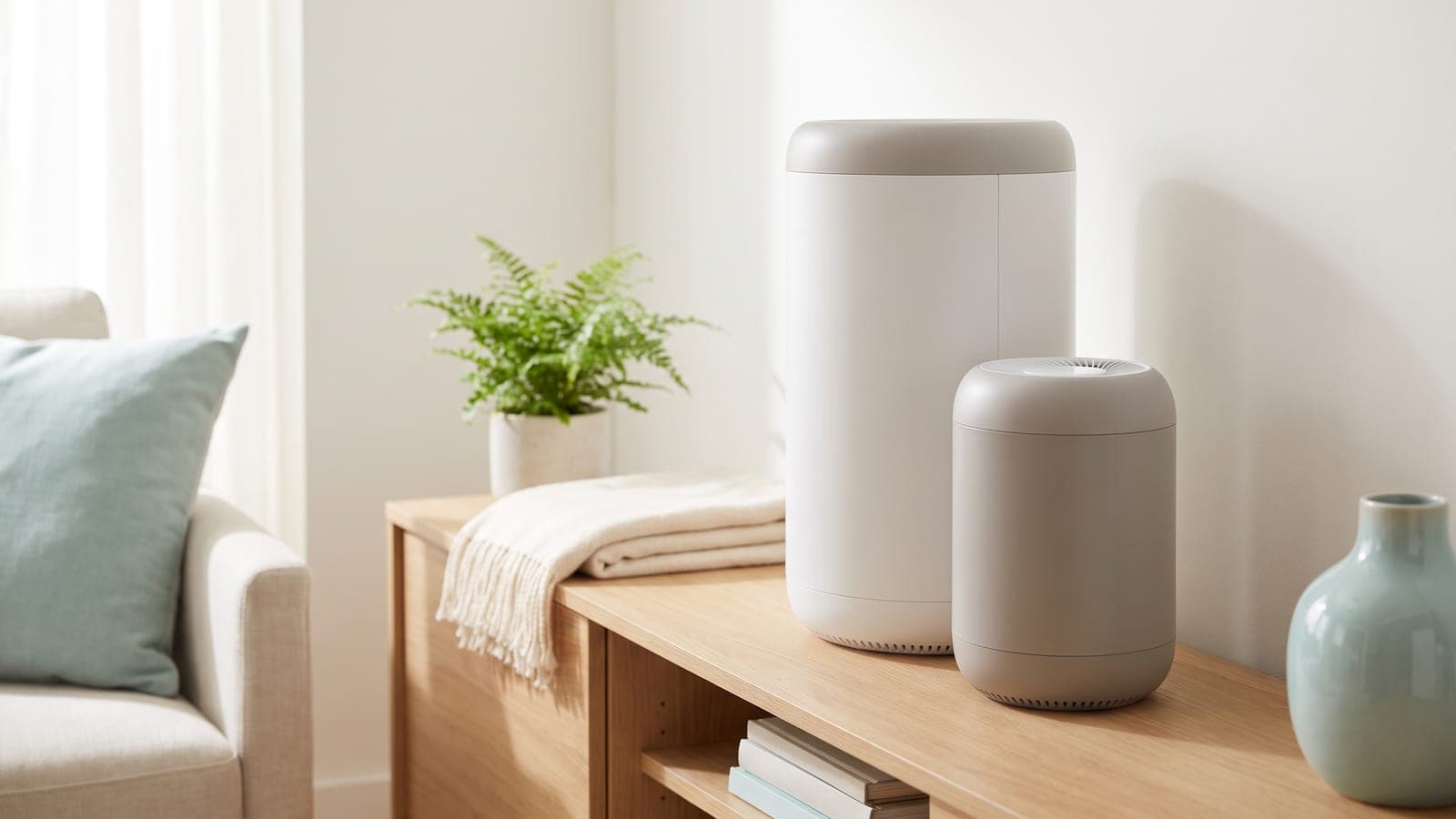
Pick a Levoit by the size of the room and whether a pet lives in it. The Core 300S suits a bedroom or office up to about 220 sq ft. For a 250 to 390 sq ft room, or any room with a shedding dog or cat, get the Vital 200S-P. Open-plan spaces past 400 sq ft need the Core 600S. The Core 400S-P is the specialist of the four: buy it when the purifier has to stand in the middle of a room, because elsewhere the Vital matches it for less money.
All four use a filter and no ionizer, and all four have a particle sensor, an auto mode and the VeSync app. Moving up or down the range therefore doesn't cost you features. What changes is airflow, filter cost and the shape of the box.
Which Levoit fits which room?
| Model | Smoke CADR | Room size (site rule) | Typical price | Filters per year |
|---|---|---|---|---|
| Levoit Core 300S | 141 CFM | ~219 sq ft | $90–$110 | ~$45–$60 |
| Levoit Vital 200S-P | 250 CFM | ~388 sq ft | $130–$180 | ~$50 (more with pets) |
| Levoit Core 400S-P | 231 CFM | ~358 sq ft | $160–$220 | ~$85 |
| Levoit Core 600S | 391 CFM | ~606 sq ft | $280–$320 | ~$60 |
Room sizes are smoke CADR multiplied by 1.55, which gives about 4.8 air changes an hour under an 8 ft ceiling. Levoit's own boxes quote far bigger figures (1,862 sq ft for the Vital 200S-P) because they assume the air only needs cleaning once an hour. If your ceiling is higher or the room opens onto a hallway, plug the real dimensions into the room-size calculator.
Small bedroom, office or nursery: the Core 300S
The Levoit Core 300S is still the cheapest way into the range, and it is the right size for a 10×12 or 12×14 bedroom. In a 12×14 room with an 8 ft ceiling, 141 CFM works out to a little over six air changes an hour at top speed, so it can spend the night on a lower, quieter setting. It draws 24 W at most, and a $25 to $35 filter lasts six to eight months.
Its limits are size and odor. Past about 220 sq ft it runs flat out without keeping up, and the carbon layer is too thin for cigarette smoke or a litter box. In a small room with a pet, the Vital 200S-P is oversized but worth it for its washable pre-filter.
Living room, large bedroom or pets: the Vital 200S-P
Most people shopping Levoit's middle tier should end up with the Levoit Vital 200S-P. It is rated at 250 CFM, which is more than the pricier Core 400S-P, and it usually sells for less. The pre-filter is a separate panel that rinses clean under a tap, so fur builds up there rather than in the main filter. Pet Mode cycles between 15 minutes on speed 3 and an hour on speed 2.
Running costs are low. The Vital 200S-RF filter lists at $49.99 and Levoit rates it for about 12 months. A common complaint in owner reviews is that heavy shedding or renovation dust clogs it in three or four months. HouseFresh measured about 8 W on speed 2, which comes to roughly $12 a year in electricity at $0.17/kWh. Assuming a $150 street price, two or three filters and that electricity, three years of ownership comes to about $290 to $340.
Some retailers list it as the plain Vital 200S. Levoit documents no hardware difference between the two names, and the filter is the same.
When the Core 400S-P makes more sense
The Levoit Core 400S-P is a cylinder that draws air in from every side on a 10.8-inch round base. That design pays off when the purifier has to stand beside a sofa or in the middle of an open room, where a flat-backed unit would face the wrong way. It is rated at 231 CFM (about 358 sq ft), uses a laser PM2.5 sensor and drops to 22 dB on its lowest setting.
The drawback is the filter bill. The $49.99 Core 400S-RF is due every six to eight months, and its pre-filter is bonded to the cylinder, so pet hair can't be rinsed off. Over three years that puts the 400S-P near $480 all-in, against $290 to $340 for the Vital. Already own a Core 400S? The same filters fit. Our Core 300S vs Core 400S-P comparison covers the step up from the smallest model.
Open-plan spaces: the Core 600S
The Levoit Core 600S is the Levoit for great rooms and kitchen-diner layouts. At 391 CFM it gives a 20×25 living room about six air changes an hour on top speed, so in daily use it can run a notch lower and quieter. It is rated at 26 to 55 dB and draws 49 W at most.
It costs about $300 up front, but its filter runs only about $60 a year, less than the Core 400S-P's. For the in-between room of 350 to 450 sq ft, see our Core 400S-P vs Core 600S comparison before deciding.
Which Levoit should you buy?
- Bedroom or office up to ~220 sq ft, no pets: Core 300S.
- 250 to 390 sq ft, or any room with a shedding pet: Vital 200S-P.
- Purifier must stand mid-room, or you already stock Core 400S filters: Core 400S-P.
- 400 to 600 sq ft open plan: Core 600S.
If a room sits between two brackets, buy the bigger model. A larger purifier on a low speed is quieter than a smaller one running flat out. Past about 600 sq ft, no single Levoit here reaches 4.8 air changes an hour, so put a unit at each end of the space.
Shopping outside Levoit? The Coway Airmega Mighty2 is the closest rival to the Vital 200S-P. It is rated at 240 CFM and runs quieter at its lowest setting, but it has no app. Our Coway vs Levoit comparison sets out the brand-level trade-offs. Pet owners comparing brands should also see the best air purifiers for pets.
Where these numbers come from
CADR figures are Levoit's AHAM-verified ratings. Wattage at mid speeds and real-world noise come from HouseFresh's independent measurements, because Levoit only publishes maximum draw. Every room size on this page follows the same CADR × 1.55 rule used across the site, so a Levoit can be lined up directly against a Coway or Winix. As with any purifier, these handle airborne particles and some odor. They won't fix the damp corner behind the wardrobe.
This is a research-based review — our analysis draws on manufacturer specifications, manuals, warranty terms, and verified owner feedback rather than our own hands-on testing, and we note where a detail couldn't be confirmed. How we review
Every Levoitmodel we've reviewed
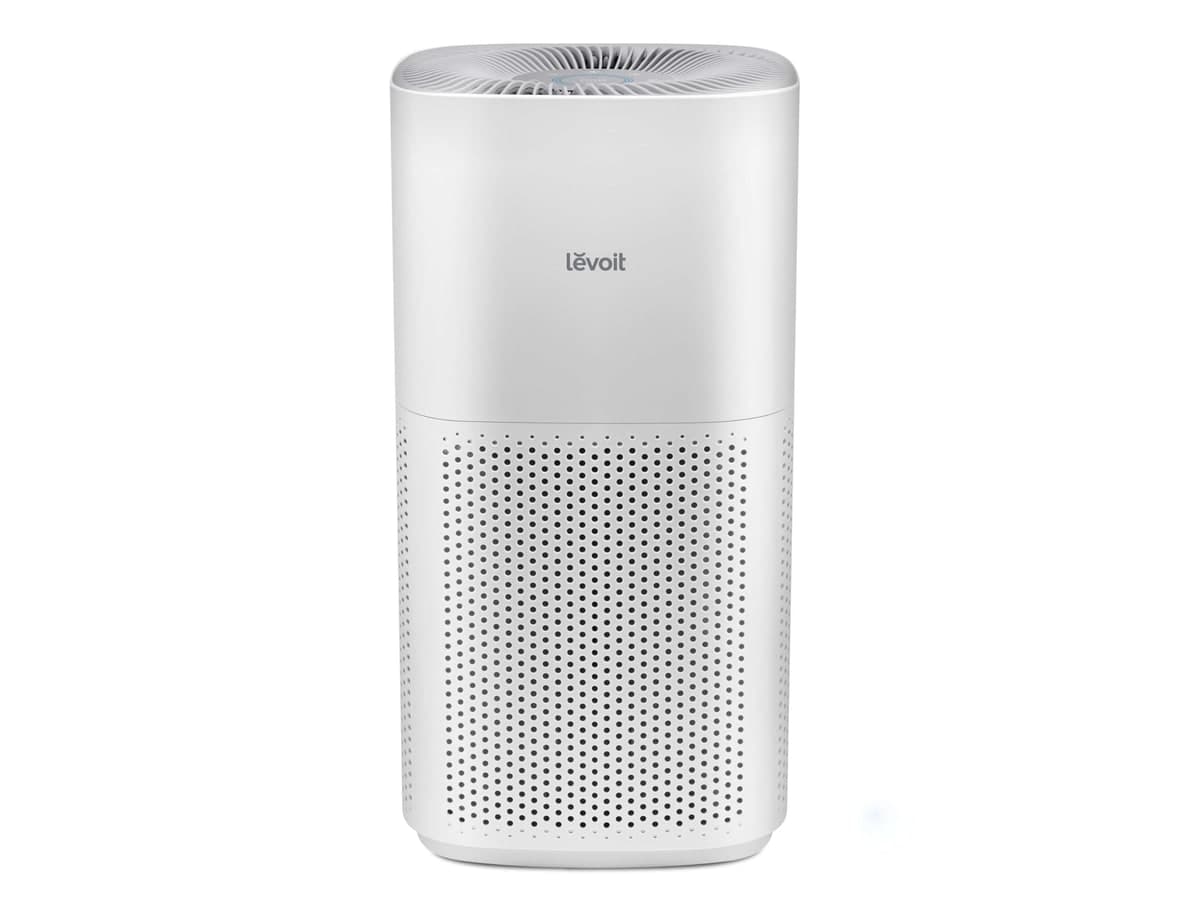
Levoit
Levoit Core 600S
Best value for large rooms
Large-room CADR of 391 CFM with full smart features, at a price well below the premium large-room set.
- 391 CFM CADR
- 606 sq ft
- $280–$320
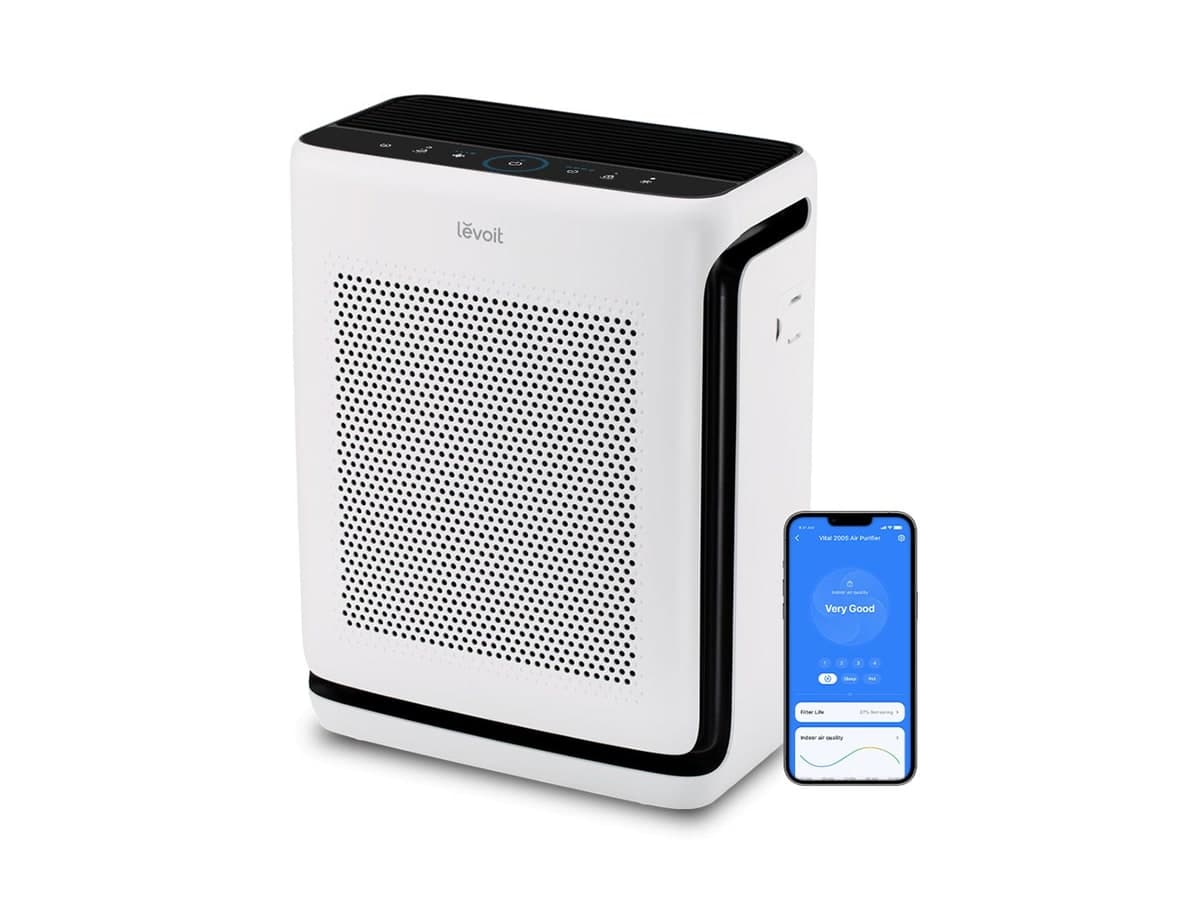
Levoit
Levoit Vital 200S-P
Best Levoit for pet hair
A 250 CFM smart Levoit with a washable pre-filter and Pet Mode, sized for pet-hair rooms up to about 388 sq ft.
- 250 CFM CADR
- 388 sq ft
- $130–$180
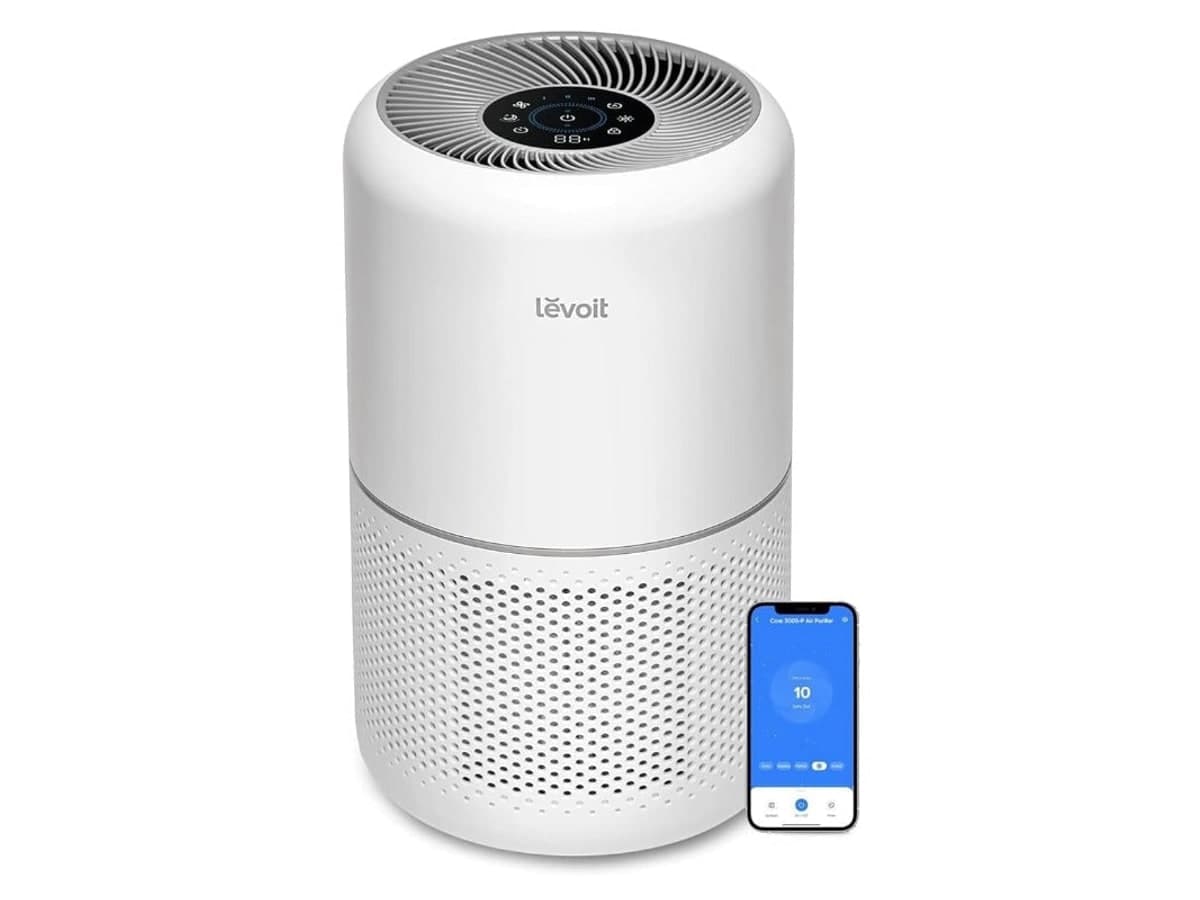
Levoit
Levoit Core 300S
Best budget
A compact, quiet, smart True HEPA purifier for small rooms at a price that makes a second unit easy.
- 141 CFM CADR
- 219 sq ft
- $90–$110
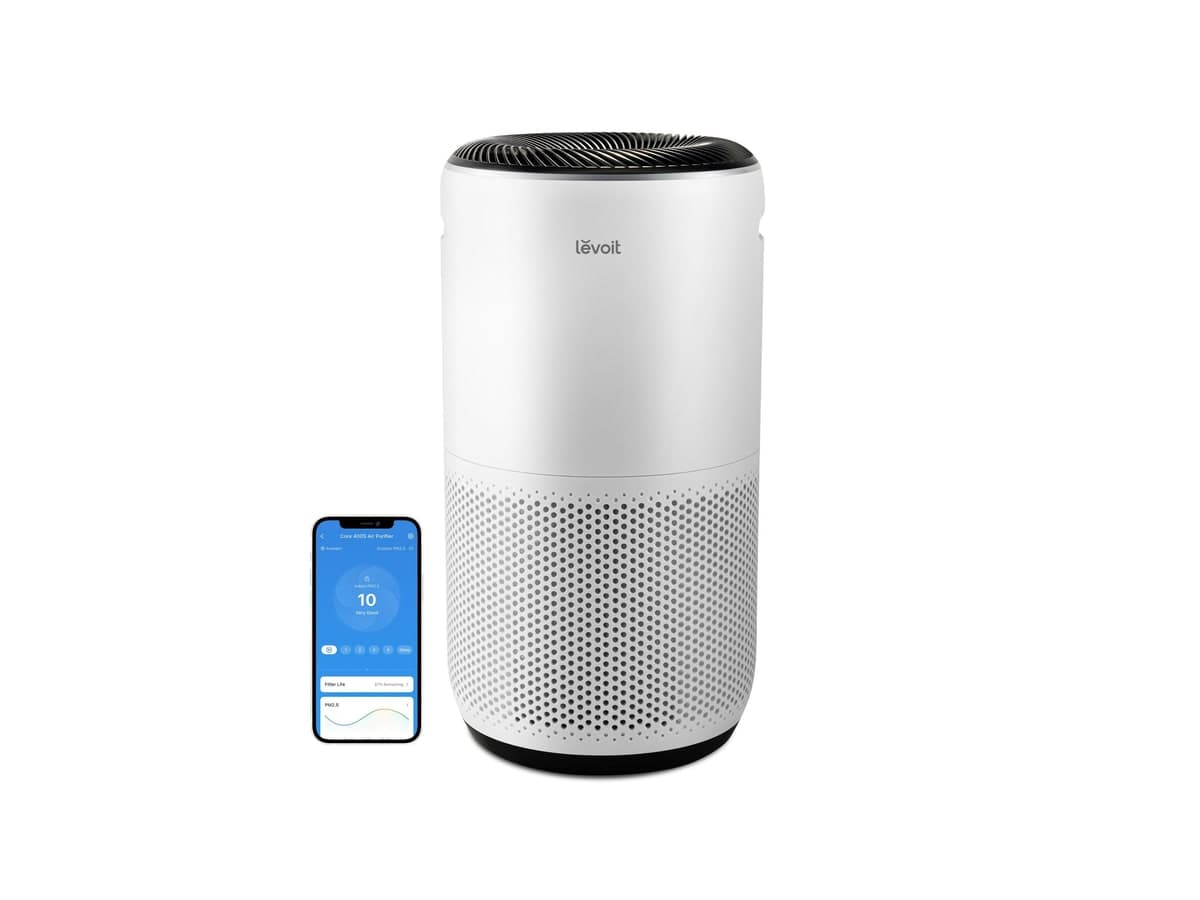
Levoit
Levoit Core 400S-P
Best round Levoit for mid-size rooms
The current Core 400S: a 231 CFM AHAM-verified smart cylinder for rooms up to about 358 sq ft, with a laser PM2.5 sensor.
- 231 CFM CADR
- 358 sq ft
- $160–$220
Levoit replacement filters
- Levoit Core 300 Replacement Filter
- Levoit Core 600S Replacement Filter
- Levoit Core 400S Replacement Filter
- Levoit Vital 200S Replacement Filter
Levoit comparisons, filter guides and fixes
- AirDoctor AD5500i vs Levoit Core 600S: Is $999 Worth It?Compare
- Coway Airmega 400 vs Levoit Core 600S: Worth the Extra $125?Compare
- Coway Mighty2 vs Levoit Vital 200S-P: Which to Buy?Compare
- Dyson vs Levoit: Which Air Purifier?Compare
- Levoit Core 300S vs Core 400S-P: Which Size Do You Need?Compare
- Levoit Core 300S vs Core 600S: Bedroom Unit or Big-Room Unit?Compare
- Levoit Core 300S vs Winix 5500-2: App or Airflow?Compare
- Levoit Core 400S-P vs Core 600S: Which One Fits Your Room?Compare
- Levoit Core 400S-P vs Vital 200S-P: Which Is Better With Pets?Compare
- Levoit Core 400S-P vs Winix 5530: Shape, Smarts and CostCompare
- Levoit Vital 200S-P vs Coway Mighty: App or No App?Compare
- Levoit Vital 200S-P vs Winix 5530: Ionizer, Filters and CostCompare
- Levoit vs Blueair: Which Air Purifier?Compare
- Levoit Core 400S Replacement Filter: Fit, Variants and CostGuides
- Levoit Vital 200S Replacement Filter: Which One, How OftenGuides
- Air Purifier Not Improving Air Quality? Here's WhyTroubleshooting
- Air Purifier Red Light Won't Turn Off? Here's What It MeansTroubleshooting
- Air Purifier Smells Bad, Musty, or Like Burning? What to DoTroubleshooting
- Levoit Core 300S Filter Light Reset: Hold Sleep, Not a Reset KeyTroubleshooting
- Levoit Core 300S Won't Connect to Wi-Fi? Setup and Offline FixesTroubleshooting
- Levoit Core 400S Filter Light Reset: The 3-Second Button FixTroubleshooting
- Levoit Core 600S Filter Light Reset: Button, Steps and FixesTroubleshooting
- Levoit Vital 200S Filter Light Reset: Hold Sleep for 3 SecondsTroubleshooting
- Levoit Vital 200S Won't Connect to Wi-Fi? Pairing FixesTroubleshooting
- When to Replace Your Air Purifier Filter: The SignsTroubleshooting
Frequently asked questions
Which Levoit air purifier is best for a bedroom?
For a bedroom up to about 220 sq ft, the Core 300S: it is the cheapest Levoit to run, drops to 24 dB on its sleep setting, and its display can be switched off. For a bigger bedroom, or one shared with a dog or cat, the Vital 200S-P is the better fit. Its Light Detection feature dims the display in the dark, but it ships turned off, so enable it in the VeSync app.
Are Levoit air purifiers ozone-free?
The Core 300S, Vital 200S-P, Core 400S-P and Core 600S have no ionizer; they clean with a filter and nothing else. The one to watch for is the PlasmaPro 400S, sold at some big-box stores, which uses the Core 400S body but adds an ionizer. If you want a purely mechanical unit, check that the box says Core, not PlasmaPro.
Should I buy the Levoit Vital 200S-P or the Core 400S-P?
The Vital 200S-P for most rooms. It is rated at 250 CFM against the Core 400S-P's 231, Levoit rates its filter for about a year instead of six to eight months, its pre-filter rinses clean, and it usually costs less. The Core 400S-P earns its place when the purifier has to stand mid-room, where its round, all-sides intake works better than the Vital's flat back.
How much do Levoit replacement filters cost per year?
Roughly $45 to $60 for the Core 300S, about $50 for the Vital 200S-P (plan on $65 to $100 if a pet sheds heavily), about $60 for the Core 600S and about $85 for the Core 400S-P. The Core 400S-P costs the most because its $49.99 filter is due every six to eight months.
What does the -P mean on the Vital 200S-P and Core 400S-P?
Neither Levoit nor the manuals document a hardware change. The -P versions carry Levoit's current AHAM-verified ratings: the Core 400S-P is listed at 231 CFM where the original Core 400S was sold on a 260 CFM claim. Filters are shared, so a Core 400S filter fits the 400S-P and a Vital 200S filter fits the 200S-P.
Is the Levoit Core 600S worth it over the Vital 200S-P?
Only once the room passes about 400 sq ft. The Core 600S is rated at 391 CFM, enough for roughly 606 sq ft, against about 388 sq ft for the Vital. In a typical living room under 400 sq ft, the Vital does the job for about half the price, and its filter costs a little less per year.