To tell if your air purifier is working, start with the simplest check — feel for a steady stream of clean air from the outlet — then look for confirming signs over time: a PM2.5 monitor dropping after you turn it on, odors clearing faster, the filter greying gradually, and the sensor reacting on auto mode. No single sign is definitive, but together they paint a clear picture. Just as important is having realistic expectations: a purifier lowers airborne particles, it doesn't make a room feel dramatically "fresh" like an open window.
Key takeaways
- Feel the airflow. Clean air should push steadily out of the outlet — weak flow means a clogged or wrapped filter, or a blocked intake.
- Watch PM2.5 on a monitor. A reading that drops after you switch it on and holds low is the most objective proof.
- Use the smell test for odors — carbon filters saturate faster, so lingering smells often mean a carbon replacement, not a broken unit.
- A greying filter is good news. Discoloration over months is captured pollution, a normal sign of operation.
- Read the sensor/auto behavior. A sensor that ramps up when you cook and settles when air clears is working as intended.
Can you feel air coming out of it?
This is the fastest check and the one most people skip. A purifier works by pulling room air through its filters and pushing it back out, so with the fan on a medium or high setting you should feel a steady stream of air when you hold your hand near the outlet vent. Strong, consistent airflow means the fan is running and the filter path is clear — the basic mechanics are sound.
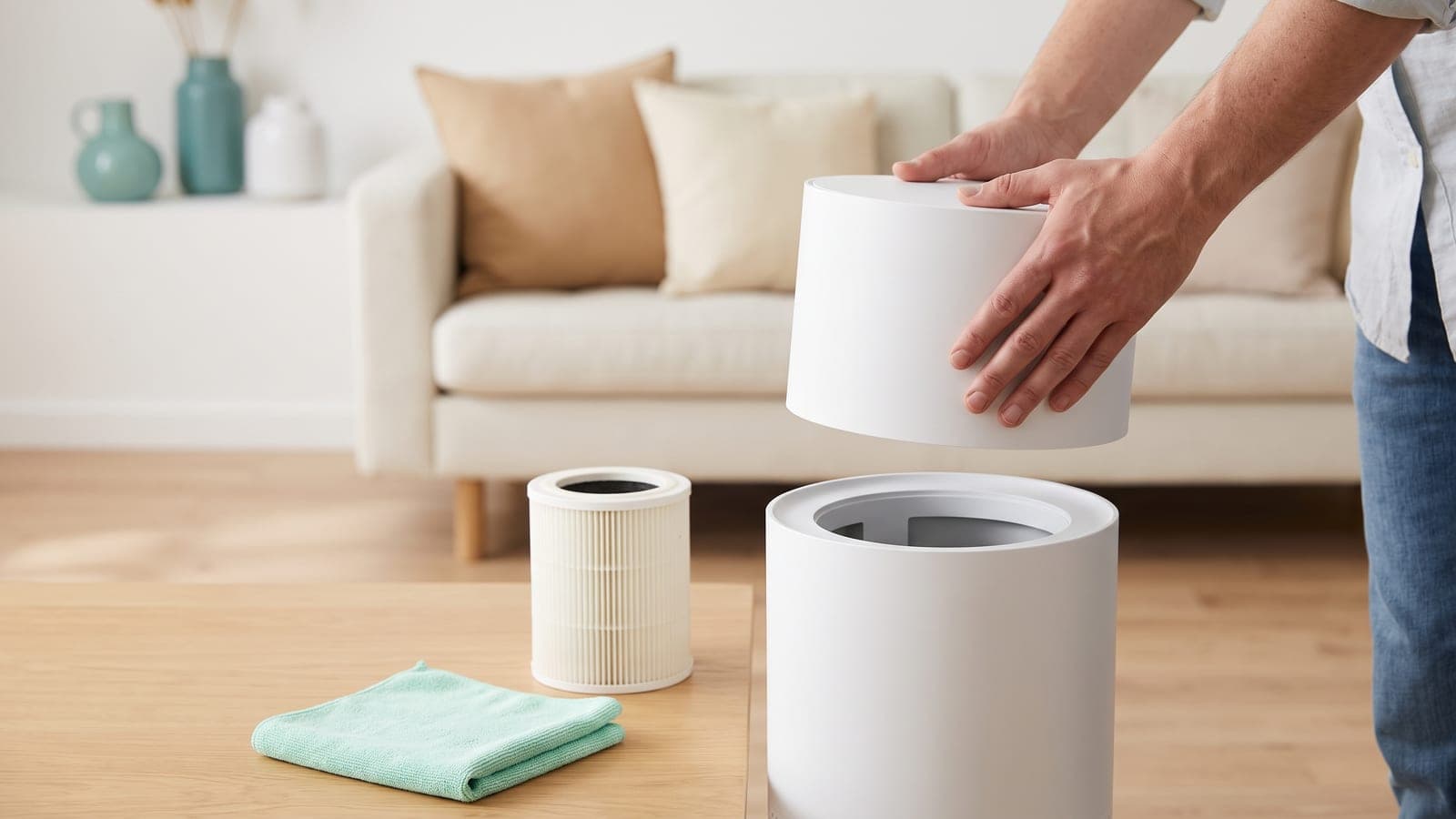
Weak or nonexistent airflow on a high setting is a red flag, and the causes are usually simple: a new filter still sealed in its plastic wrap (extremely common), a filter installed wrong, a clogged old filter choking the airflow, or a blocked intake pressed against a wall or furniture. Fix any of those and the airflow — and the cleaning — comes right back. If you feel good airflow, move on to the signs that confirm it's actually removing particles.
What does an air-quality monitor tell you?
A PM2.5 monitor turns "I think it's working" into an actual number, and it's the most direct evidence you can get. PM2.5 is fine particulate matter — the pollen, smoke, and dust that purifiers are best at removing — and a monitor reads it in real time. Note the number, run the purifier in a closed room, and watch: over the next 20–40 minutes a working unit drives PM2.5 down and holds it there.
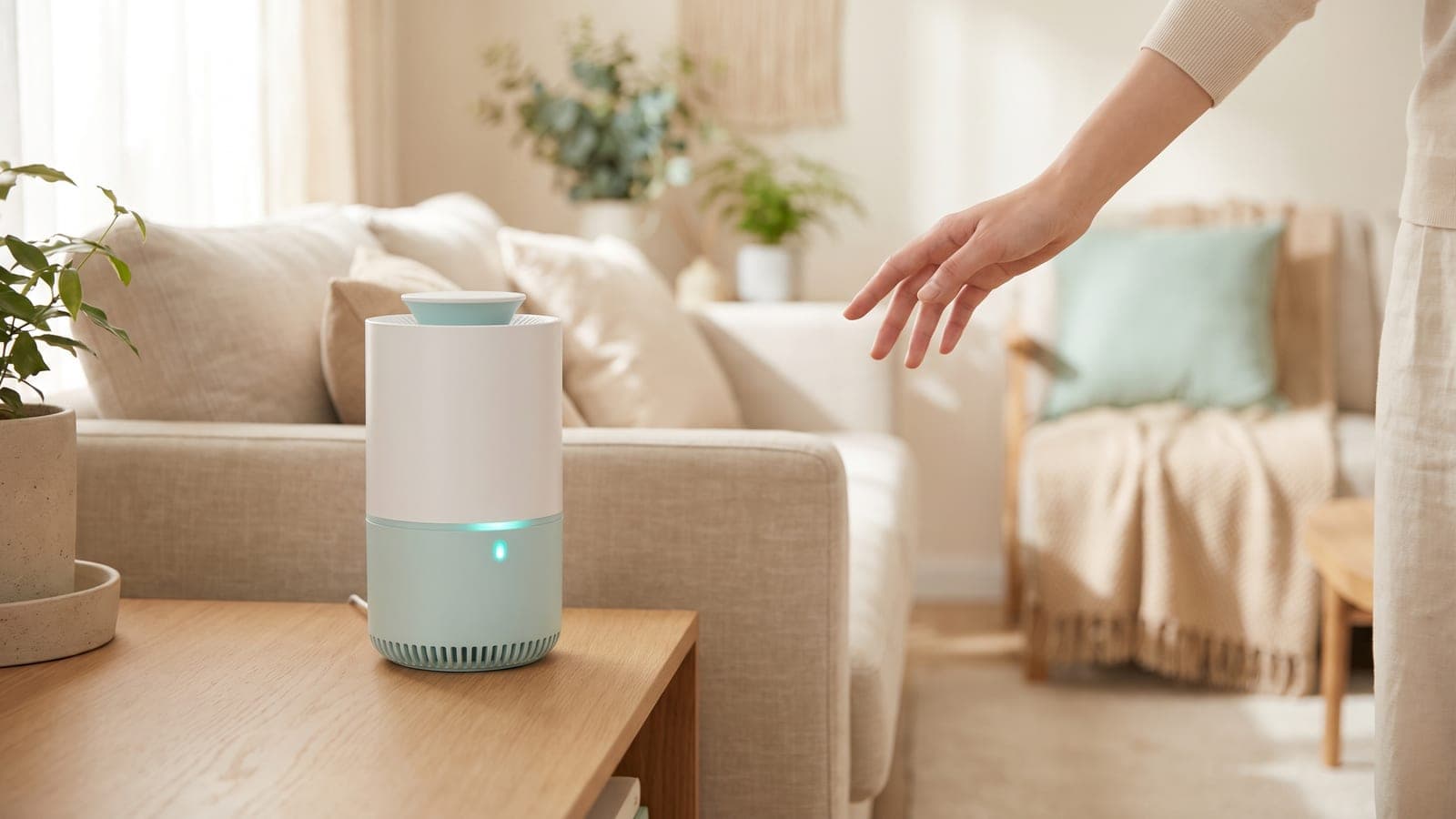
You can also stress-test it: light a match or cook something, watch the reading spike, then watch the purifier pull it back down. That fall is the unit doing its job in front of you. Many purifiers include a built-in sensor and a color-coded light (blue/green good, red bad) that show the same trend without a separate device, though an independent monitor gives you the raw figure. Our guide on what PM2.5 is and why it matters explains what the numbers mean.
Does the smell test work?
For odors, yes — with a caveat. If a purifier has an activated carbon filter, it should noticeably speed up how fast cooking smells, pet odor, or smoke clear from a room compared with no purifier at all. Run it after cooking and the kitchen smell should fade faster than it otherwise would. That's a real, everyday sign the carbon stage is active.
The caveat is that carbon saturates far faster than HEPA — often in a few months — so a unit that's clearly moving air and dropping PM2.5 but no longer touching odors usually just needs a fresh carbon filter, not repair. And no purifier can win against a constant source: an uncovered litter box, ongoing indoor smoking, or a mold/moisture problem will keep producing odor faster than the carbon can remove it. Smell is a useful signal, but read it alongside the airflow and PM2.5 checks.
Is the filter greying over time?
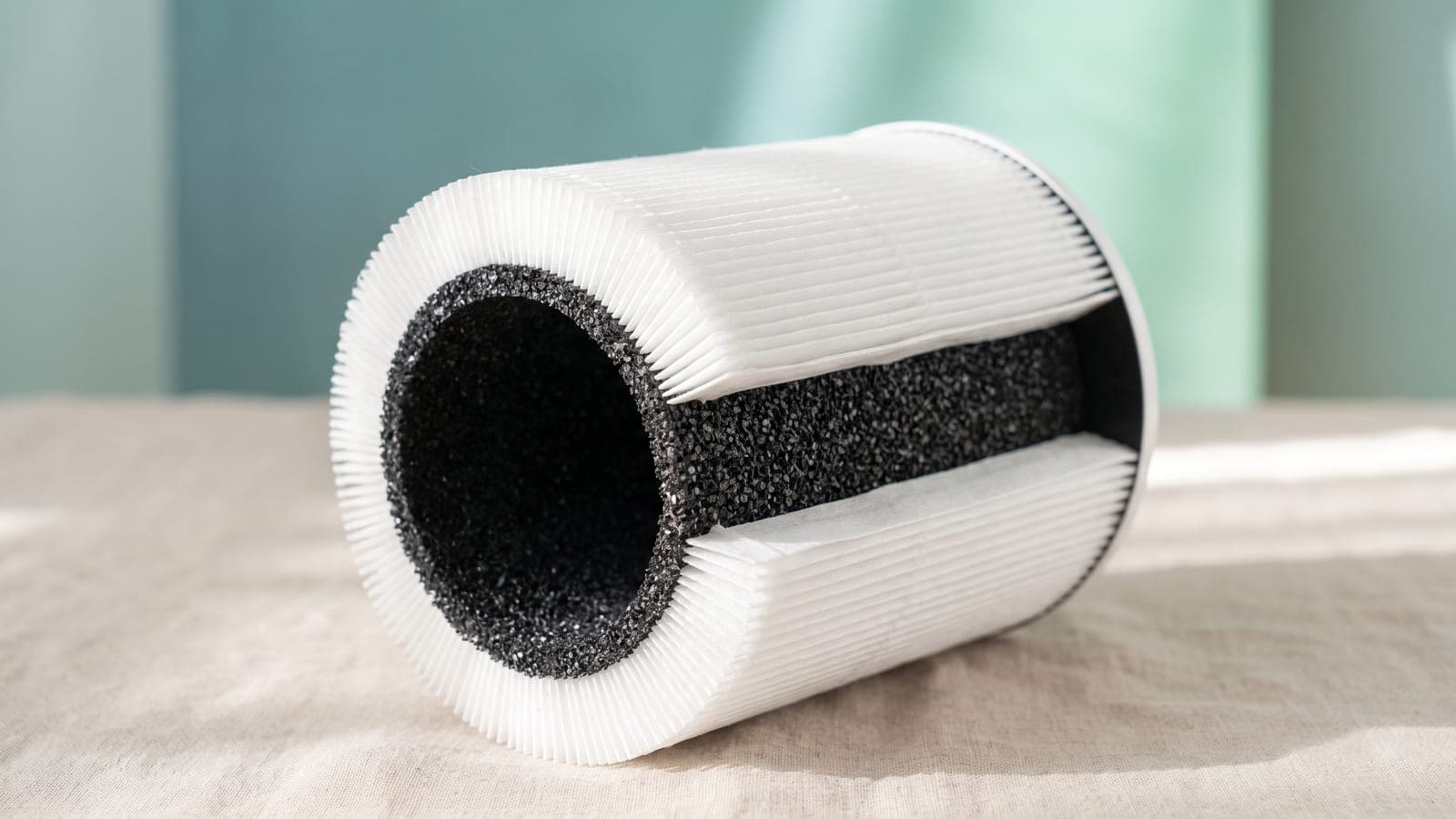
Pull the HEPA filter after a few months and look at it. A working filter in a lived-in room turns grey and dusty — that discoloration is the trapped pollen, dust, and particulate you're no longer breathing. It's one of the most reassuring signs there is: the pollution is on the filter instead of in your air. Greying is normal operation, not a defect.
The counterintuitive worry is a filter that stays pure white after long use in a normal room. That can mean air is bypassing the filter (a poor seal, or the filter seated wrong), or airflow is so restricted that little is passing through. Some very clean environments genuinely load filters slowly, but in most homes a HEPA that shows no discoloration after many months is worth investigating rather than celebrating.
What should the sensor and auto mode be doing?
If your purifier has an air-quality sensor and auto mode, its behavior is a live readout of whether it's sensing and responding. On auto, the fan should ramp up when you cook, spray something, or smoke drifts in, and settle back down to a quiet speed once the air clears. That responsiveness means the sensor is reading the room and the unit is reacting — exactly what you want.
Two failure patterns stand out. A sensor stuck on red / high fan even in clean air usually just has a dusty sensor lens — a two-minute cleaning fixes it. A sensor that never reacts to obvious pollution may have a lens blocked the other way or a fault. Either way, watching how auto mode responds to a deliberate pollution spike tells you a lot about whether the sensing side is healthy.
What are realistic expectations?
Here's where a lot of "is it even working?" doubt comes from: a purifier removes airborne particles, which is largely invisible and odorless work. It won't make a room smell like a pine forest, it won't cool or freshen the air the way an open window does, and it can't remove gases like carbon monoxide or fix the source of mold and moisture. Judging it by "does the room feel amazing" sets it up to seem like it's doing nothing.
Here's how the signs line up against what each one actually proves:
| Check | What it tells you |
|---|---|
| Feel the airflow at the outlet | Fan is running and the filter path is clear (basic function) |
| PM2.5 monitor drops after switch-on | Objective proof it's removing fine particles |
| Odors clear faster | Carbon filter is active (saturates faster than HEPA) |
| Filter greying over months | It's capturing and holding particles — normal operation |
| Sensor ramps up then settles on auto | Sensor is reading and the unit is responding |
| Built-in light shifts green↔red with air changes | Real-time trend matches actual conditions |
If airflow is strong, PM2.5 drops in a closed room, and the filter greys over time, your purifier is working — even if the room doesn't feel transformed. Judge it by the particle count, not the vibe.
What's the bottom line?
Confirm the airflow, watch PM2.5 fall on a monitor, use the smell test for the carbon stage, check the filter for greying, and see whether the sensor reacts on auto. If those line up, the unit is doing its job. If airflow is strong but nothing improves, the issue is usually a clogged or wrapped filter, an undersized unit for the room, or a pollution source the purifier can't out-run.
To rule out the "undersized for the room" possibility — the most common reason a working unit still disappoints — run the numbers through the air changes per hour calculator to confirm it's actually strong enough for your space. And if it checks out but air quality still isn't improving, our air purifier not improving air quality troubleshooting guide walks through the rest.
Frequently asked questions
How do I know if my air purifier is actually working?
Check the airflow first — you should feel clean air pushing out of the outlet. Then look for confirming signs over time: a PM2.5 monitor dropping after you switch it on, odors clearing faster, the HEPA filter greying gradually, and the sensor reacting to cooking or smoke on auto. No single sign is proof, but together they show the unit is moving and cleaning air.
Should I feel air coming out of my air purifier?
Yes. A working purifier pulls room air in and pushes it out, so you should feel a steady stream of air from the outlet vent when your hand is near it. Weak or no airflow on a high setting usually means a clogged filter, a filter left in its plastic wrap, or a blocked intake. Strong airflow is the simplest confirmation the fan and filter path are clear.
Does a greying HEPA filter mean the air purifier is working?
Generally yes. A True HEPA filter turns grey and dusty over months because it's capturing particles from the air — that discoloration is the trapped pollution you're no longer breathing. It's a slow, reassuring sign of normal operation, not a fault. A filter that stays pure white after long use in a lived-in room may mean poor airflow or a bypass around the filter.
What's the best way to measure if an air purifier is cleaning the air?
A PM2.5 air-quality monitor is the most direct method. Note the reading, run the purifier in a closed room, and watch the number fall over the next 20–40 minutes. A clear drop that holds low is objective proof it's working. Many purifiers have a built-in sensor and color light that show the same trend, though a separate monitor gives you an actual number.
My air purifier is running but the room still smells — is it broken?
Not necessarily. Odor removal depends on the carbon filter, which saturates faster than the HEPA and may need replacing. A purifier also can't fix a constant source, like a litter box or ongoing smoke, or a mold and moisture problem. If airflow is strong and PM2.5 drops but odors linger, replace the carbon filter and address the source before assuming the unit has failed.