How long should you run an air purifier? In most homes, the answer is simple: run it continuously — 24 hours a day — on auto or a low speed. Indoor air re-pollutes fast once the unit is off, so the particle count you worked to lower creeps right back up. Because a well-sized purifier sips power and runs quietly on low, leaving it on around the clock costs little and keeps the air consistently clean. Turning it off to "save energy" mostly just gives you dirtier air and a machine that has to start over.
Key takeaways
- Run it continuously. 24/7 operation keeps particle levels consistently low; the air re-pollutes whenever it's off.
- Use auto or low. Auto mode ramps up only when pollution rises, keeping noise and power minimal the rest of the time.
- The cost is small. Many units draw roughly 25–110 watts; on auto or low, the monthly running cost is modest.
- Size it right. A purifier matched to the room can run effectively on a quiet low speed instead of a loud high one.
- Filters are the real upkeep — continuous running is safe and intended; just replace filters on schedule.
Why should you run an air purifier continuously?
Because indoor air is a moving target, not a one-time job. Every hour, new particles enter the picture — pollen tracked in on clothes, dust stirred up by movement, dander shed by pets, particulate from cooking. A purifier only cleans the air passing through it right now, so the moment you switch it off, those sources keep adding particles and the count climbs back toward where it started.
Running continuously flips that dynamic. When the purifier removes particles faster than they accumulate, the room reaches a low, steady particle level and holds there. Stop-and-start use never lets the air stabilize — you spend a chunk of each session just clawing back the ground lost while it was off. For any room you actually spend time in, continuous operation is what delivers consistently clean air rather than a sawtooth of clean-then-dirty.
Does leaving it on all day cost a lot of electricity?
Rarely. Air purifiers are low-draw appliances — many popular models pull somewhere between about 25 and 110 watts depending on the unit and fan speed. That's the range from less than a standard lightbulb up to roughly one lightbulb, not a space heater or an air conditioner. On auto or low, where a well-sized unit spends most of its time, the draw sits near the bottom of that range and the monthly cost stays modest.
The exact figure depends on your unit's wattage and your local electricity rate, so it's worth estimating rather than guessing. Run your model through the air purifier running cost calculator to see the real monthly number — most people are surprised how small it is. For a deeper look at consumption, our guide on whether air purifiers use a lot of electricity breaks it down further.
Which setting should you use, and when?
The setting is where you balance cleaning power against noise and cost. Here's the practical breakdown:
| Setting | When to use it |
|---|---|
| Auto (with sensor) | The default for most people — the fan rises when the sensor detects pollution (cooking, smoke, pollen) and drops when air is clean, keeping noise and power low the rest of the time |
| Low / sleep | Overnight or quiet work; near-silent continuous running that maintains clean air in a properly sized room |
| Medium | Steady background cleaning in a larger room, or when auto isn't available |
| High / turbo | Knocking down a pollution spike fast — after cooking, when smoke drifts in, or on a high-pollen day — then let it settle back down |
The pattern most people land on is auto if the unit has a sensor, low if it doesn't, with an occasional bump to high to clear a spike. That combination keeps the air clean around the clock without the fan ever being loud for long.
How does room sizing change how long you run it?
Sizing and runtime are linked more than people expect. A purifier that's correctly matched to the room can hold the air clean while running on a quiet low or auto setting, because it has enough clean-air output to keep up without straining. An undersized unit, by contrast, has to run on high just to tread water — louder, less pleasant, and still not fully keeping up, which tempts you to switch it off.
That's why sizing is really a runtime decision. Match the purifier's CADR to the space using the room size calculator, and continuous operation becomes easy: the unit runs softly in the background and you barely notice it. Get sizing wrong and 24/7 running feels like a chore, which is exactly how rooms end up with a purifier that's switched off half the time.
Is it safe to leave an air purifier running unattended?
Yes — continuous, unattended operation is the intended use. Air purifiers are designed to run for extended stretches, draw modest power, and produce negligible heat, so leaving one going overnight or while you're at work is normal and safe. There's no need to "rest" the motor or cycle it off.
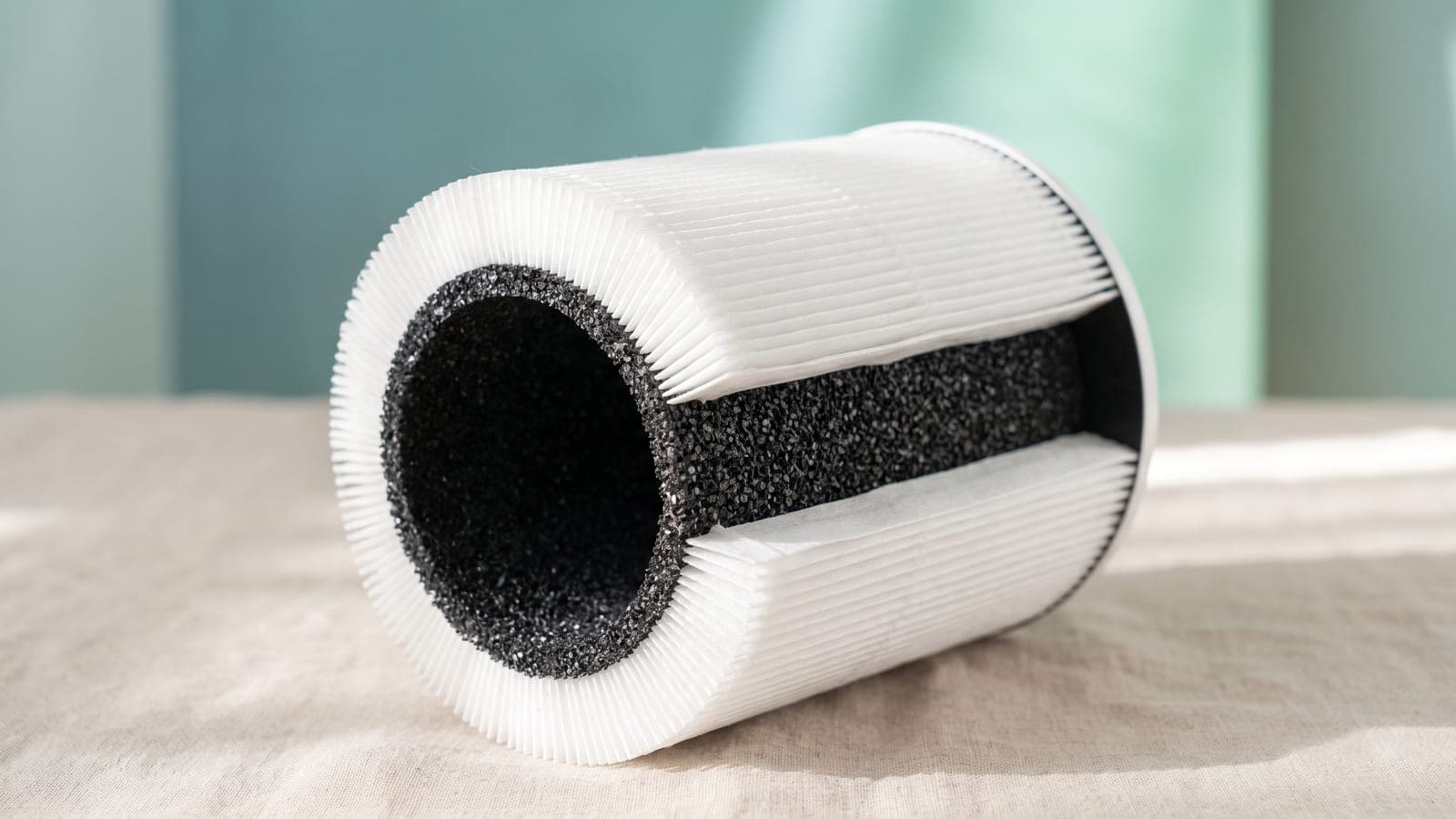
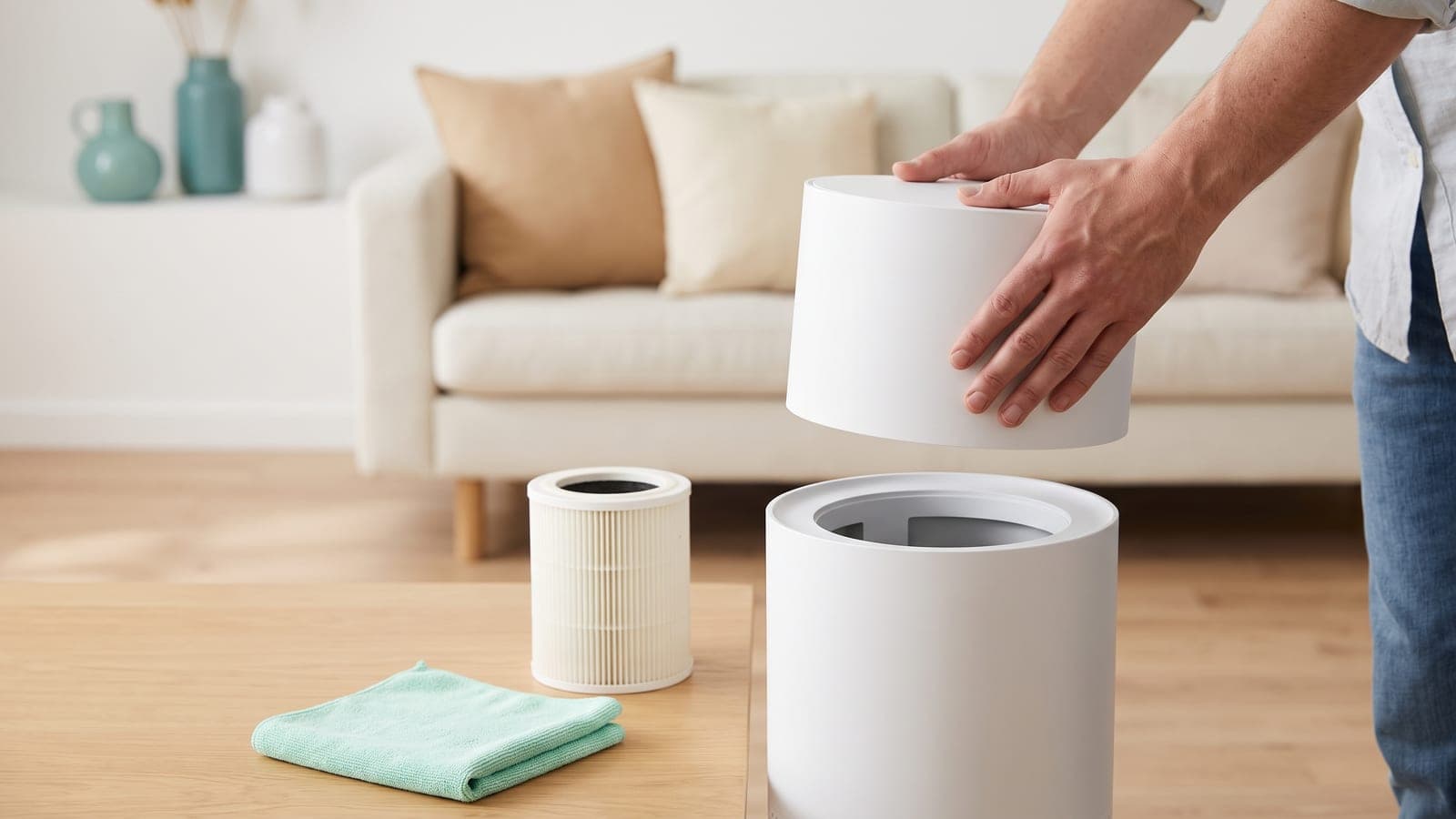
The real maintenance isn't switching it off — it's replacing the filter on schedule. A clogged filter restricts airflow and cleans less effectively no matter how long the unit runs, so continuous operation only pays off if the filter is fresh. Give the purifier a bit of clear space around its intake and outlet for airflow, keep it away from spills, and otherwise let it run.
What's the bottom line on runtime?
For any room you use daily, leave the purifier on continuously, set to auto or low, and bump it to high only to clear an occasional spike. That's the setup that keeps particle levels consistently low, stays quiet, and costs little — because the air genuinely does re-pollute the moment the unit is off.
Before you commit to running one around the clock, it's worth confirming the actual cost so the decision feels easy. Plug your model into the air purifier running cost calculator to see the monthly figure — for most well-sized units on auto, it's small enough that turning the purifier off to save money never really made sense.
Frequently asked questions
How long should you run an air purifier each day?
Ideally continuously — 24 hours a day. Indoor air re-pollutes quickly once the purifier is off, so leaving it running keeps particle levels consistently low. Most units are designed for continuous use, and running on auto or a low speed keeps both noise and electricity cost minimal.
Is it safe to leave an air purifier on all the time?
Yes. Air purifiers are built for continuous operation, draw modest power, and don't generate meaningful heat. The main upkeep is replacing filters on schedule. Leaving one running 24/7 is the intended use, not a risk — just keep it away from spills and give it clear space for airflow.
Does running an air purifier all day use a lot of electricity?
Usually not. Many popular units draw somewhere between about 25 and 110 watts depending on model and speed — less than a lightbulb to about the same as one. On auto or low, the running cost over a month is typically small. Use the running-cost calculator to estimate the exact figure for your unit and electricity rate.
Should I run my air purifier on auto or a set speed?
Auto mode is the easiest choice if your unit has an air-quality sensor. It ramps the fan up when pollution rises and drops it back down when the air is clean, which keeps noise and power low most of the time while still reacting to cooking, smoke, or pollen spikes. A fixed low speed also works well for continuous quiet running.
Can I turn the air purifier off when I leave the room?
You can, but the air will slowly re-pollute while it's off, so you'll return to a dirtier room and the unit has to catch back up. For rooms you use daily, like a bedroom or living room, it's better to leave it running continuously on a low or auto setting than to cycle it on and off.