Knowing when to replace your air purifier filter comes down to four signs, and you don't need to guess. Replace it when you see a filter-change indicator light, feel noticeably weaker airflow, notice a lingering or returning smell, or spot a visibly gray, matted filter. On the calendar side, a True HEPA filter typically lasts 6 to 12 months and activated carbon 3 to 6 months, sooner with pets, smoke, or round-the-clock running. Trust the signs over the date — and never wash a True HEPA filter to squeeze out more life.
Key takeaways
- Four signs to watch: indicator light, weaker airflow, lingering smell, and gray matted media.
- Rough schedule: True HEPA every 6–12 months, carbon every 3–6, pre-filter rinsed about monthly.
- Never wash a True HEPA filter unless it's labeled washable — water destroys the media and invites mold.
Is the indicator light on?
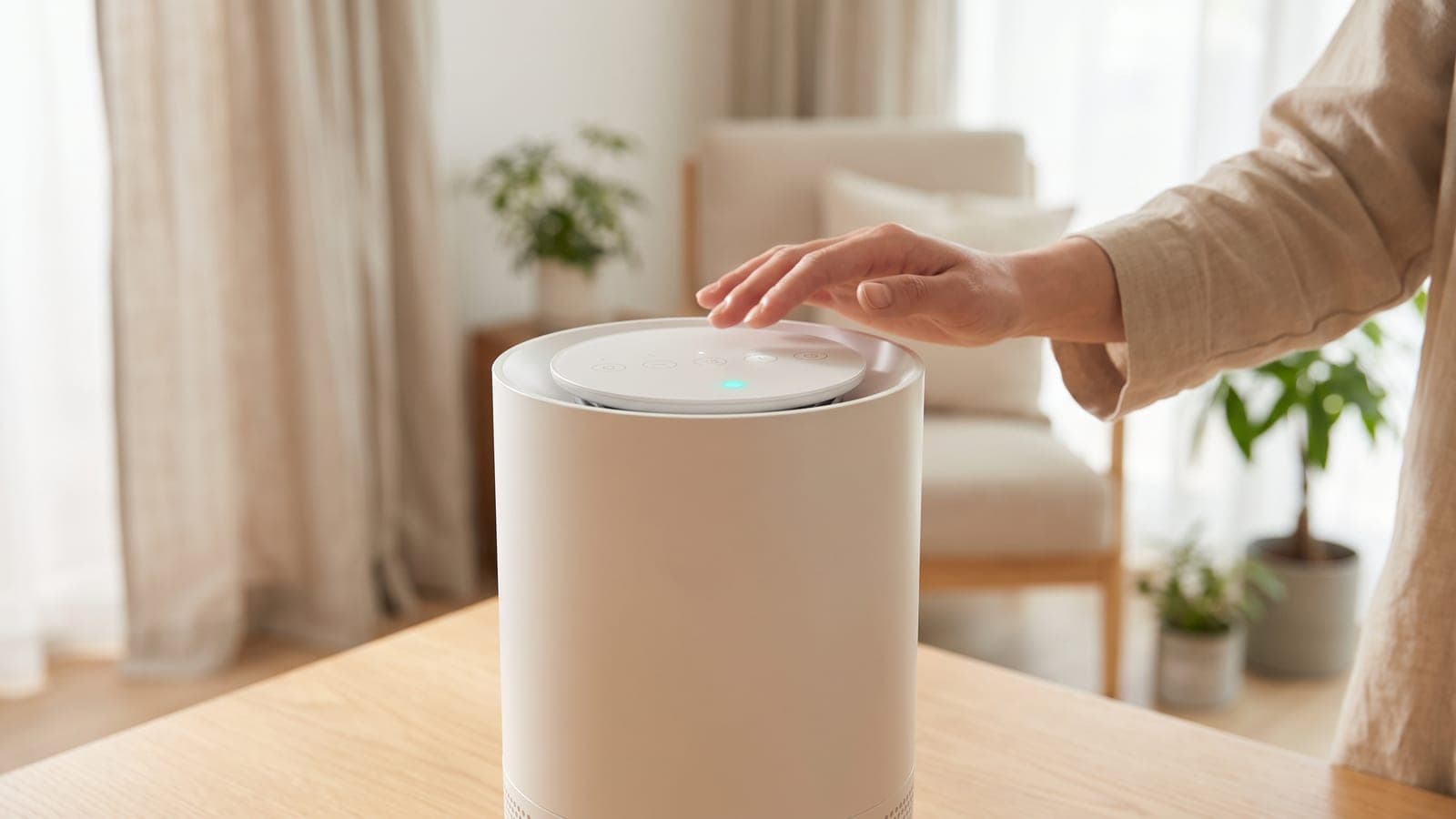
Many purifiers have a filter-replacement light or an app alert, and it's the most obvious cue. When it lights up, take it as a prompt to check the filter. The catch is that most of these indicators run on a usage timer, not a real measurement of how clogged the filter actually is — they count the hours the unit has run and assume average conditions.
That means the light can be early or late for your home. In a dusty house with pets it may come on while the filter still has some life, or the filter may be spent before the timer fires in unusually heavy use. So treat the light as a reminder to look, then confirm with the other signs below. And once you've fitted a new filter, remember to reset the indicator — it won't clear on its own, and an unreset light will keep nagging you about a filter that's already fresh.
Has the airflow gotten weaker?
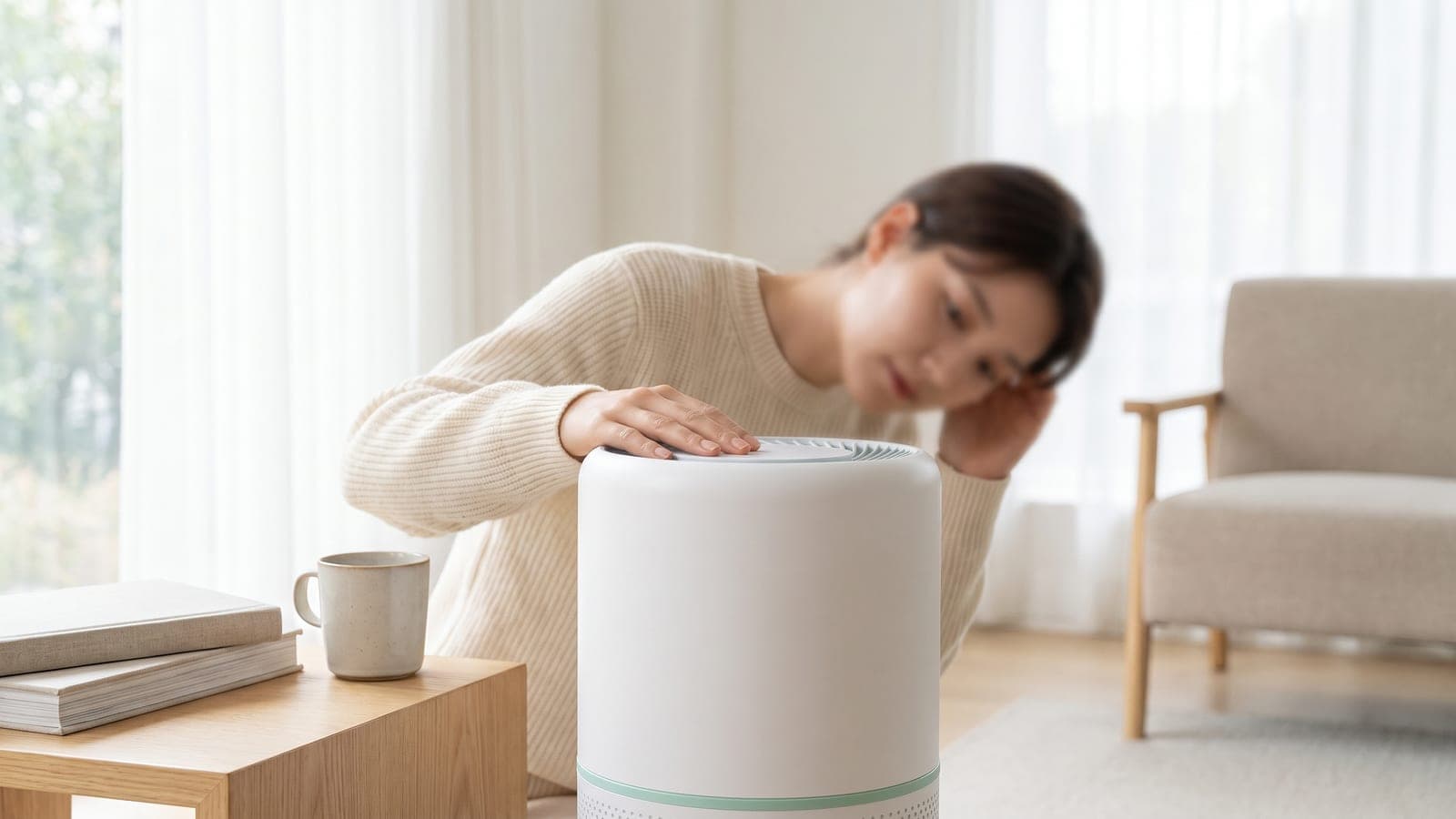
This is the most reliable everyday sign, and the one your indicator light can't fake. As a filter fills with trapped particles, it chokes the fan — so less air comes out of the unit even on the same speed setting. Hold your hand over the outlet and compare it to how strong it felt when the filter was new. A clear drop means the media is loaded.
Weaker airflow matters because it's exactly the performance you're paying for slipping away quietly. The purifier keeps running and looks fine, but it's cleaning far less air than it should. If the airflow is weak and you've confirmed there's no plastic wrap left on the filter and it's seated correctly, the filter itself is due.
Is there a lingering or returning smell?
Smell is the carbon filter's tell. Activated carbon works by adsorbing odor molecules, and it holds a finite amount. Once it's saturated it stops absorbing — and can even begin releasing captured odors back into the room. So a purifier that used to keep a room smelling fresh and now smells stale, or lets cooking and pet smells linger, is signaling a spent carbon layer.
Carbon typically wears out fastest of the replaceable filters, which is why it's on the shorter 3-to-6-month cycle. If odors are creeping back, replacing the carbon usually fixes it fast. A word of caution, though: a musty or moldy smell is a different problem — that points to moisture or mold, not just a tired filter, and our guide on an air purifier that smells bad, musty, or like burning walks through sorting those out.
Does the filter look gray, dark, or matted?
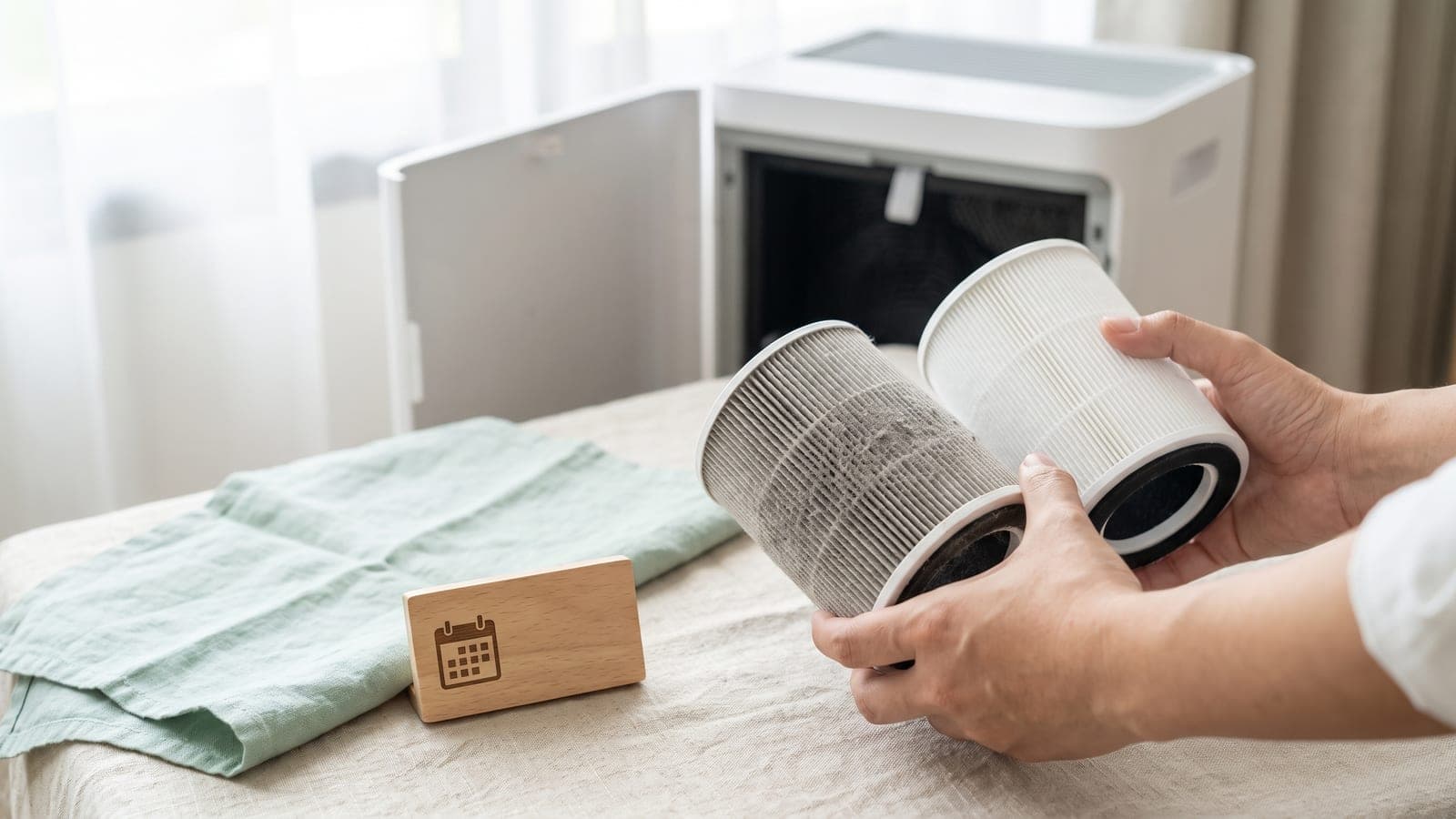
Sometimes the simplest check is to look. Pull the filter out (unplug first) and inspect the media. A fresh True HEPA filter is white or off-white. When it's spent, the surface goes gray, brown, or black and the pleats look packed and matted with a felt of trapped dust. That visible layer is proof it's done its job — and can't do much more.
A word on what not to do with a dirty-looking filter: don't wash it. A True HEPA filter must never be washed unless the label specifically says it's washable. The fine fibers that catch tiny particles tear when wet, permanently wrecking the filter, and a damp HEPA becomes a mold farm. You can gently vacuum or rinse a washable pre-filter (dry it fully before reinstalling), but the True HEPA and carbon layers are replace-only.
What's the general schedule to plan around?
Signs come first, but a schedule helps you keep spares on hand and budget for the real cost of ownership. Here's the typical picture:
| Filter type | What it does | Typical life | Wash or replace? |
|---|---|---|---|
| Pre-filter (washable) | Catches hair, lint, big debris | Rinse ~monthly | Wash and reuse |
| Activated carbon | Adsorbs odors, gases, VOCs | 3–6 months | Replace |
| True HEPA | Traps fine particles | 6–12 months | Replace |
Those ranges assume average use. Push past it and the filters load faster: running 24/7, homes with pets, smoke season, and heavy dust all pull you toward the short end of every interval. None of that is a reason to run the purifier less — clean air is the whole point — just a reason to expect earlier changes. For the full breakdown of intervals and what drives them, see our guide on how often to replace an air purifier filter. And if you're shopping, factoring ongoing filter cost into the decision matters as much as the sticker price; our HEPA room purifiers lineup is a good place to compare.
Quick troubleshooting table
| Symptom | Likely cause | Fix |
|---|---|---|
| Indicator light or app alert | Runtime timer reached | Check the filter; replace if due; reset the light |
| Weaker airflow than when new | Clogged HEPA/pre-filter | Replace HEPA; rinse washable pre-filter |
| Odors lingering or returning | Saturated carbon filter | Replace the carbon layer |
| Filter looks gray, matted, dark | Fully loaded media | Replace (don't wash True HEPA) |
| Filter looks fine but light is on | Timer early for your use | Verify by airflow/smell before replacing |
| Musty or moldy smell | Moisture/mold, not just wear | Fix moisture source; replace damp filter |
When to contact the manufacturer
You rarely need the manufacturer for filter changes — that's routine maintenance you handle yourself. But get in touch if the airflow stays weak even with a brand-new, correctly seated filter (that points to a fan or motor fault, not the filter), if the indicator light won't reset after you've followed the exact steps for your model, or if you can't find genuine replacement filters and want to confirm the correct part number for your unit. Have your model number and purchase date ready. Buying the right filter matters — a knockoff that doesn't seal or perform undoes the whole point — so when in doubt, confirm the part with the maker before you restock.
Frequently asked questions
How do I know when to replace my air purifier filter?
Watch for four signs: an indicator light or app alert, noticeably weaker airflow, a lingering or returning smell, and visibly gray, matted filter media. Any one of these means it's time to check. As a schedule, True HEPA lasts 6 to 12 months and carbon 3 to 6, sooner with heavy use.
Can I just vacuum or wash my HEPA filter to extend its life?
No — don't wash a True HEPA filter unless it's explicitly labeled washable. Water tears the fine fibers and ruins its efficiency, and a damp filter grows mold. You can gently vacuum a washable pre-filter, but the True HEPA layer must be replaced, not cleaned.
Is the filter-change indicator light accurate?
It's a useful reminder but usually runs on a timer, not a real measurement of how clogged the filter is. Treat it as a cue to check the filter rather than gospel. Your air quality and how the airflow feels are better guides than the calendar or the timer alone.
What happens if I don't replace the filter?
Airflow drops as the filter clogs, so the purifier cleans less air even on the same speed. A saturated carbon layer can also start releasing odors it once absorbed. You lose real performance well before the unit looks or sounds different.
How long do air purifier filters usually last?
As a general guide, a True HEPA filter lasts 6 to 12 months, an activated carbon filter 3 to 6 months, and a washable pre-filter should be rinsed about monthly rather than replaced. Pets, smoke, and 24/7 running all shorten these intervals.