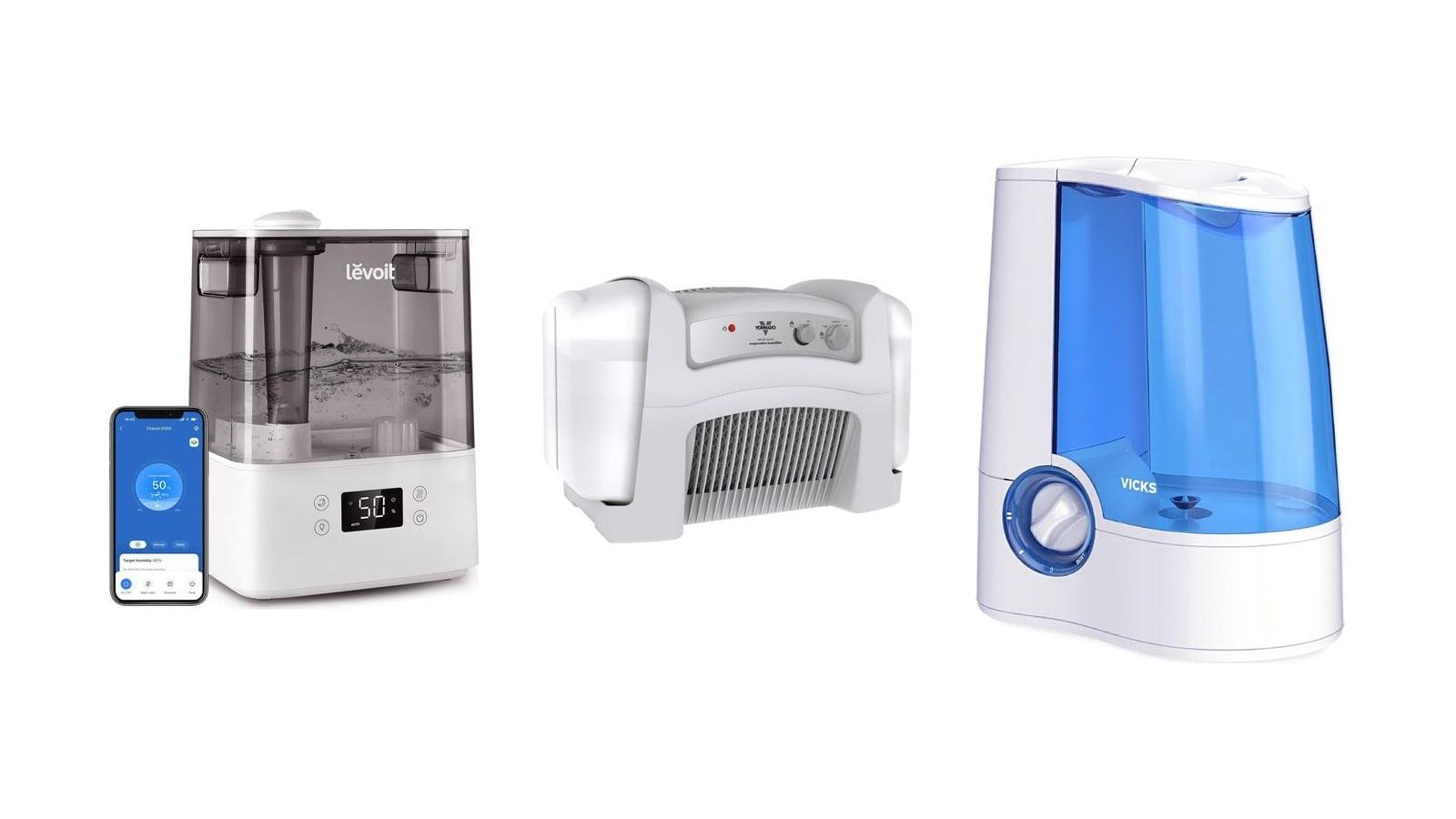
Buy an evaporative humidifier if your tap water is hard or you want the lowest-effort option for a large room; buy an ultrasonic one if you want silence and the cheapest electricity bill and will fill it with distilled water; buy a steam model only if you want warm moisture from tap water and no small child can reach it. Once the moisture is in the air, all three do the same job, so the choice comes down to what else leaves the machine, what it costs per winter and what you have to clean.
Key differences at a glance
| Evaporative | Ultrasonic | Steam | |
|---|---|---|---|
| How it adds water | Fan blows air through a wet wick | Vibrating plate throws off a fine mist | Heater boils water into steam |
| Where tap-water minerals go | Stay in the wick | Into the room as white dust | Stay as scale in the boiling chamber |
| Typical rated power | 14–45 W | 12–28 W (cool mist) | About 250 W |
| Main recurring cost | Wicks | Distilled water or a cartridge | Electricity |
| Burn risk | None | None on cool mist | Hot water and steam |
Power figures are the makers' ratings for the models in our humidifier catalog. Warm-mist ultrasonic hybrids are a fourth case, covered below.
How does each type actually put water into the air?
An evaporative unit is a fan and a sponge. Water soaks up a paper or fiber wick, the fan pushes room air through it, and the air leaves carrying water as invisible vapor. Because evaporation slows as the surrounding air gets damper, these machines tend to taper off on their own as the room approaches saturation, which makes them hard to overdo.
An ultrasonic unit vibrates a small metal plate under the water at a frequency too high to hear. That shakes the surface into droplets small enough to float, and a small fan pushes them out as visible mist. Everything dissolved in the water rides along in those droplets.
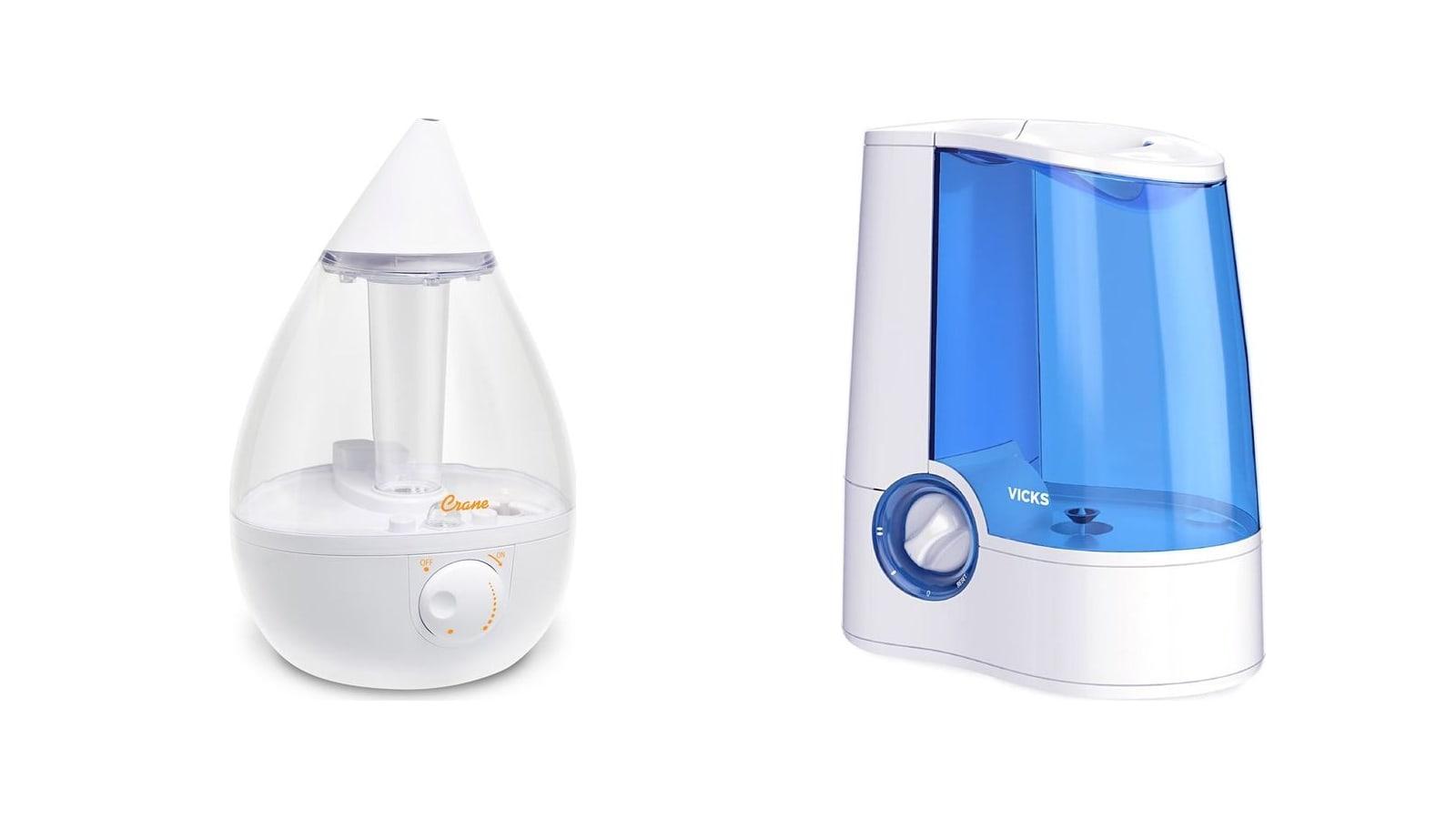
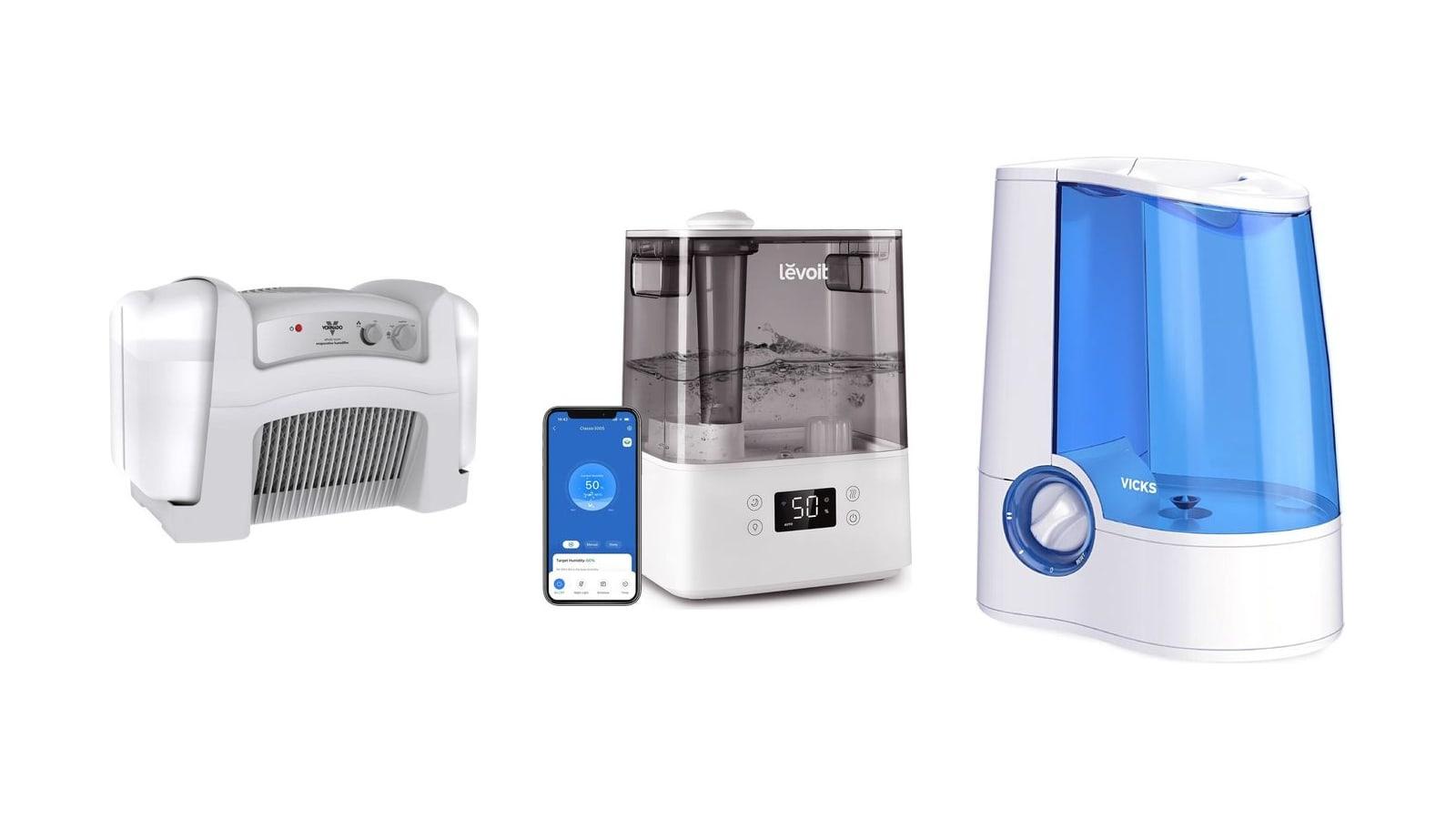
A steam unit, also called a steam vaporizer, is a kettle with a vent. It boils water with an electric element and lets the steam out, usually cooled a little on the way. The Vicks V745 is the classic example: 248 W of heater and no filter at all.
Mayo Clinic's position is that warm-mist and cool-mist units humidify a room equally well. By the time the vapor reaches your airways it has reached room temperature either way, so the "warm mist feels better for a cold" idea has nothing to do with how much moisture you get.
Which type is best if your tap water is hard?
This is the question that settles it for most people. The EPA says ultrasonic and impeller units are very efficient at dispersing the minerals in their fill water, and that steam and evaporative units aren't expected to put out substantial amounts. Andrea Dietrich, a Virginia Tech engineering professor who studies humidifier emissions, recommends distilled or reverse-osmosis water for ultrasonic units for the same reason.
On hard water, then, an ultrasonic machine needs distilled water or a demineralization cartridge. An evaporative unit traps the same minerals in its wick, which is why wicks crust over and need replacing. A steam unit leaves them as scale in the heating chamber; Vicks tells V745 owners to descale weekly with white vinegar. Our white dust guide goes into the fixes, and the best humidifiers for hard water list sorts the picks by how they handle it.
Which costs the least to run over a winter?
Electricity favors ultrasonic and evaporative units by a wide margin, because boiling water is expensive. Heating a gallon of cold water to a boil and then turning it all to steam takes about 2.7 kWh, or roughly 47 cents at $0.17 per kWh. A steam unit putting out one gallon a day for a 150-day heating season uses about $70 of electricity, whatever the brand.
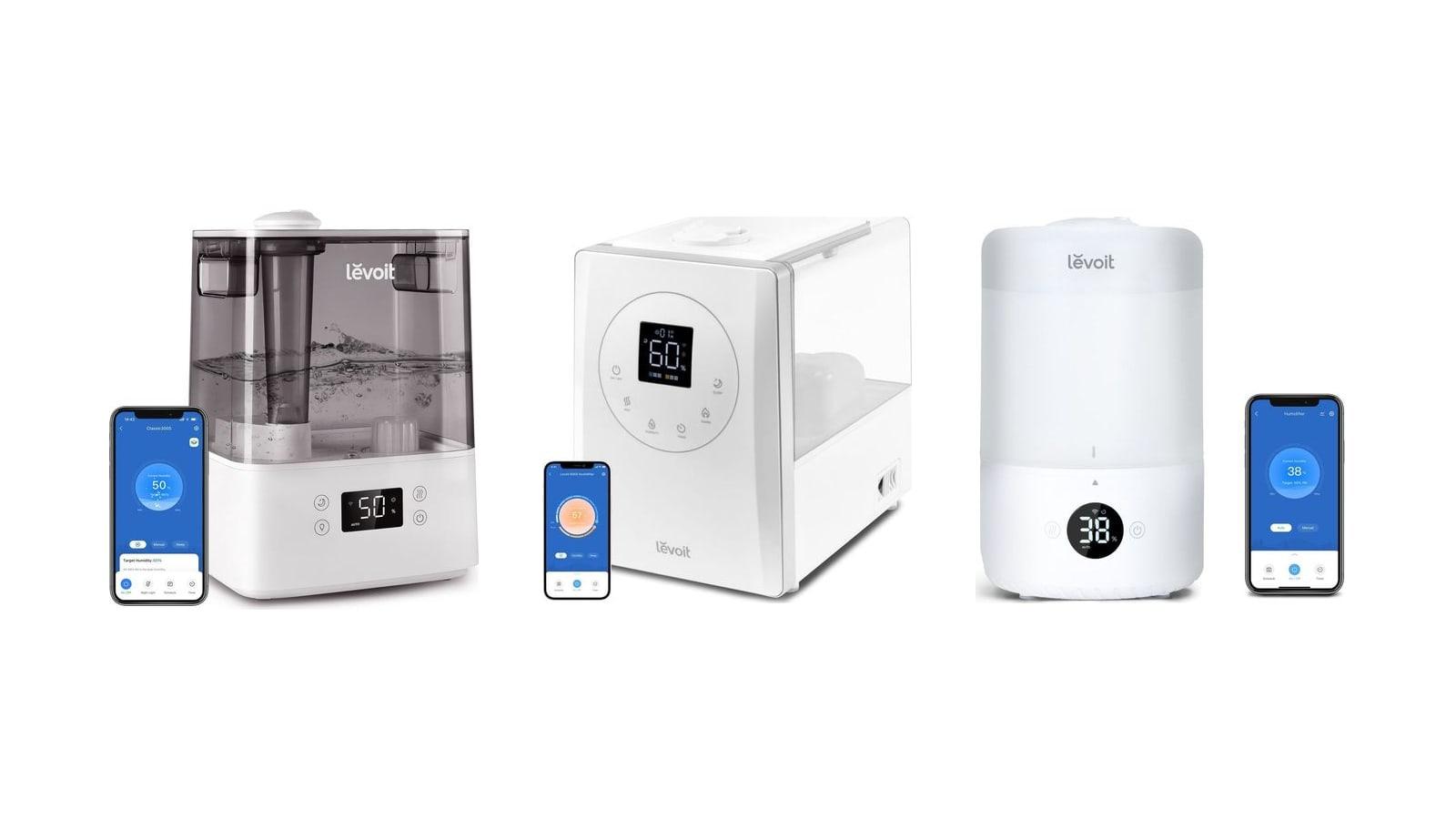
The Levoit Classic 300S, by comparison, is rated at 26 W. Even at that full draw around the clock, it uses about 0.6 kWh a day, under a quarter of what one boiled gallon takes, and RTINGS measured it putting out about 1.1 gallons a day. Its sponges add about $9 to $18 a year.
Evaporative units shift the cost from the meter to the wick. The Vornado Evap40 draws about 45 W, roughly $28 for a season of continuous running at the same rate, but its wicks run about $60 a season, more on hard water. The Canopy Large Room Humidifier spends about $88 a season on filters. Per gallon delivered the evaporative still wins easily, but over a season the total spend on a wick-hungry evaporative and a modest steam unit lands closer than the wattage suggests. The ultrasonic stays cheapest unless you're buying distilled water by the jug.
Which type is safest around children?
Cool mist, either evaporative or ultrasonic. Mayo Clinic says to always use cool-mist humidifiers for children, because the hot water or steam from a warm-mist unit can burn a child who gets too close. The EPA also says to keep steam vaporizers out of children's reach. Vicks' own V745 manual repeats the warning in capital letters and asks for the unit to sit about 4 feet from a bed.
The trade-off is that cool-mist units are the ones that can spread whatever grows in the tank. The EPA says ultrasonic and impeller types appear to disperse the most microorganisms along with minerals, and it recommends emptying and refilling portable units daily and cleaning them every third day. Steam boils its water first, a point in its favor where nobody small is around.
What about warm-mist ultrasonic hybrids?
Models like the Levoit LV600S, Levoit LV600HH and Dreo HM713S heat the water before an ultrasonic plate turns it to mist. They're still ultrasonic at heart, so tap-water minerals still come out as dust; Levoit's LV600S manual warns about exactly that and recommends purified water. Warm mode also brings a 280 W heater into the picture, so the running cost climbs toward steam territory while you use it. Treat warm mode with the same caution as steam around small children, since Mayo's burn warning covers any warm-mist unit.
So which type should you buy?
- Hard water, medium to large room: evaporative. The Vornado Evap40 is rated at 4 gallons a day; the Levoit Superior 6000S is rated at 9.5 for open floors.
- Bedroom, soft water or happy to buy distilled: ultrasonic with a humidistat, such as the Levoit Classic 300S.
- Spare room or office, no small children, hard water, no wick budget: steam, such as the Vicks V745.
- Nursery: an evaporative or ultrasonic cool-mist unit, never steam.
Whichever type you pick, size it first. The humidifier size calculator tells you how many gallons a day the space actually loses, which matters more than any of the differences above.
Frequently asked questions
Is an impeller humidifier the same as an ultrasonic one?
No, but they behave alike. An impeller unit flings water off a spinning disk instead of vibrating it, and the EPA groups the two together as the types most likely to throw tap-water minerals and microbes into the room. Every mist-making cool unit in our catalog is ultrasonic.
Do evaporative humidifiers make a visible mist?
No. The water leaves the wick as invisible vapor, so there is no plume to watch. That surprises some first-time owners, who assume the unit isn't working. A hygrometer, or a wick that stays wet and slowly dries out, is how you tell.
Does a steam humidifier kill germs in the water?
Boiling does kill most microbes in the water it turns to steam, which is one reason steam units don't spread them the way a dirty ultrasonic tank can. The tray and heater still need regular descaling, and standing water left in the base between uses can still grow slime.
Can I use tap water in an evaporative humidifier?
Yes. Vornado, Levoit and Canopy all say tap water is fine for their evaporative models, because the minerals stay in the wick. Hard water shortens wick life, and Vornado says chemically softened water hardens its wicks, so plain untreated tap water is the better choice.
Which humidifier type is quietest?
Ultrasonic, as a rule, because the only moving part is a vibrating plate and sometimes a small fan. RTINGS measured the Levoit Classic 300S at about 33 dBA on both low and high. Evaporative models need a fan, so they're louder on high, and steam units make a low bubbling sound.