To clean a humidifier with vinegar, empty it, pour plain distilled white vinegar into the tank and base, let it sit for the time the manual gives, usually 15 to 30 minutes, so the scale softens, scrub gently with a soft brush and rinse until you can't smell vinegar. Keep vinegar off wick filters, use bleach or 3% hydrogen peroxide separately if you also want to disinfect, and never let bleach and vinegar meet.
Step by step: descaling any humidifier with vinegar
- Unplug it and let it cool. For a steam unit, Vicks says to wait 20 to 30 minutes after use.
- Empty the tank and base, and pour away from any fan vent or control knob.
- Take out anything that filters water: wicks, sponges and demineralization cartridges come out before the vinegar goes in.
- Add vinegar to the tank and let it drain into the base, in the amount your manual gives (see the table below). Swish it around the tank with the cap on.
- Soak for the time your manual gives. Most say 15 to 30 minutes.
- Scrub with a soft brush or cloth. No steel wool or hard brushes, especially on a heating element or ultrasonic plate.
- Rinse until the smell is gone, then dry every part before you reassemble or store it.
- Never submerge the base. Levoit, Honeywell, Crane, Pure Enrichment and Vicks all forbid it; the base holds the motor and electronics.
How much vinegar, and for how long?
| Model | Type | Vinegar | Soak |
|---|---|---|---|
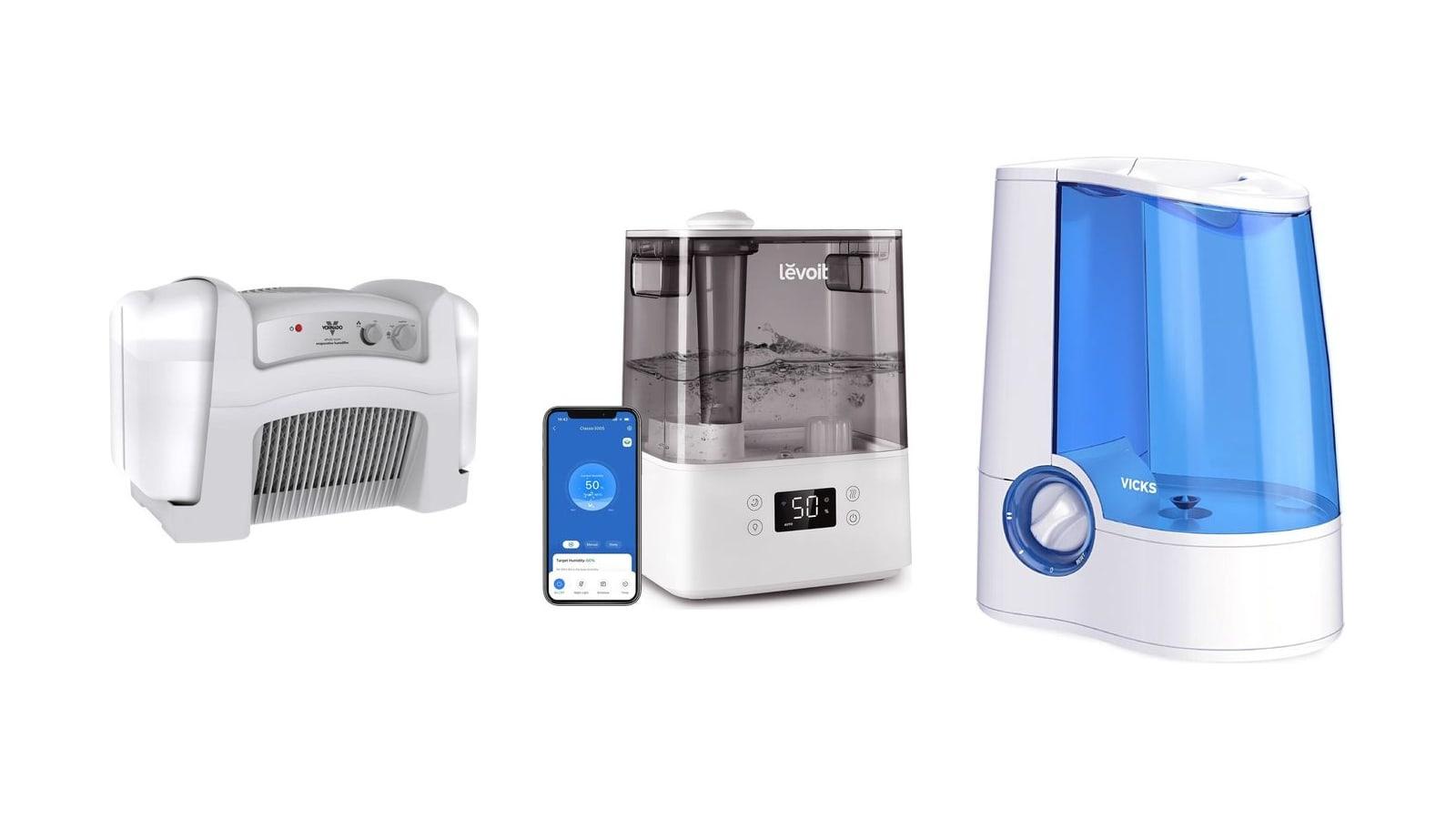
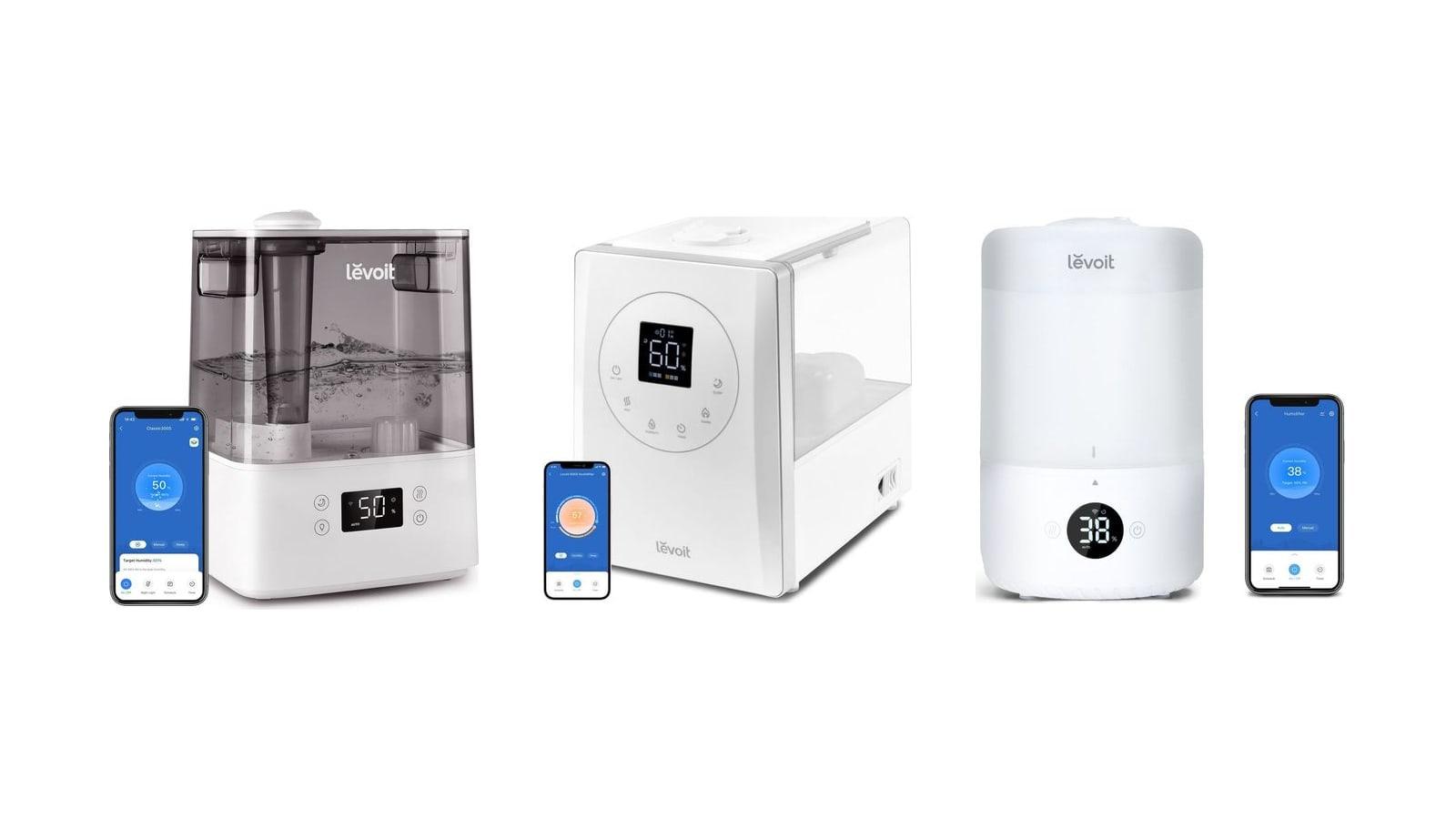
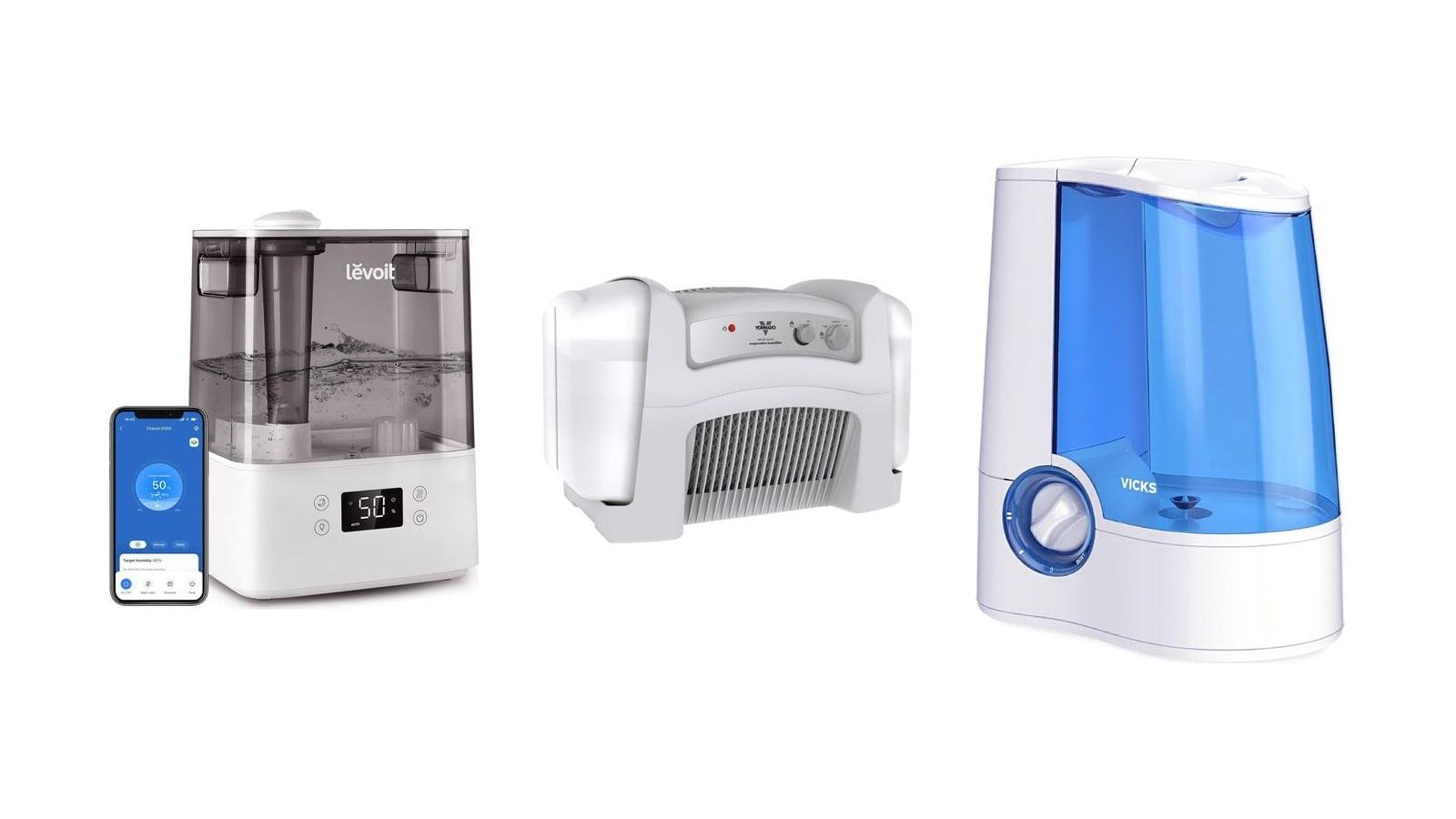
| Levoit Classic 300S | Ultrasonic | 3 cups / 710 mL, undiluted | 15–20 min |
| Honeywell HUL525 | Ultrasonic | 2 cups / 0.5 L, undiluted | 20 min |
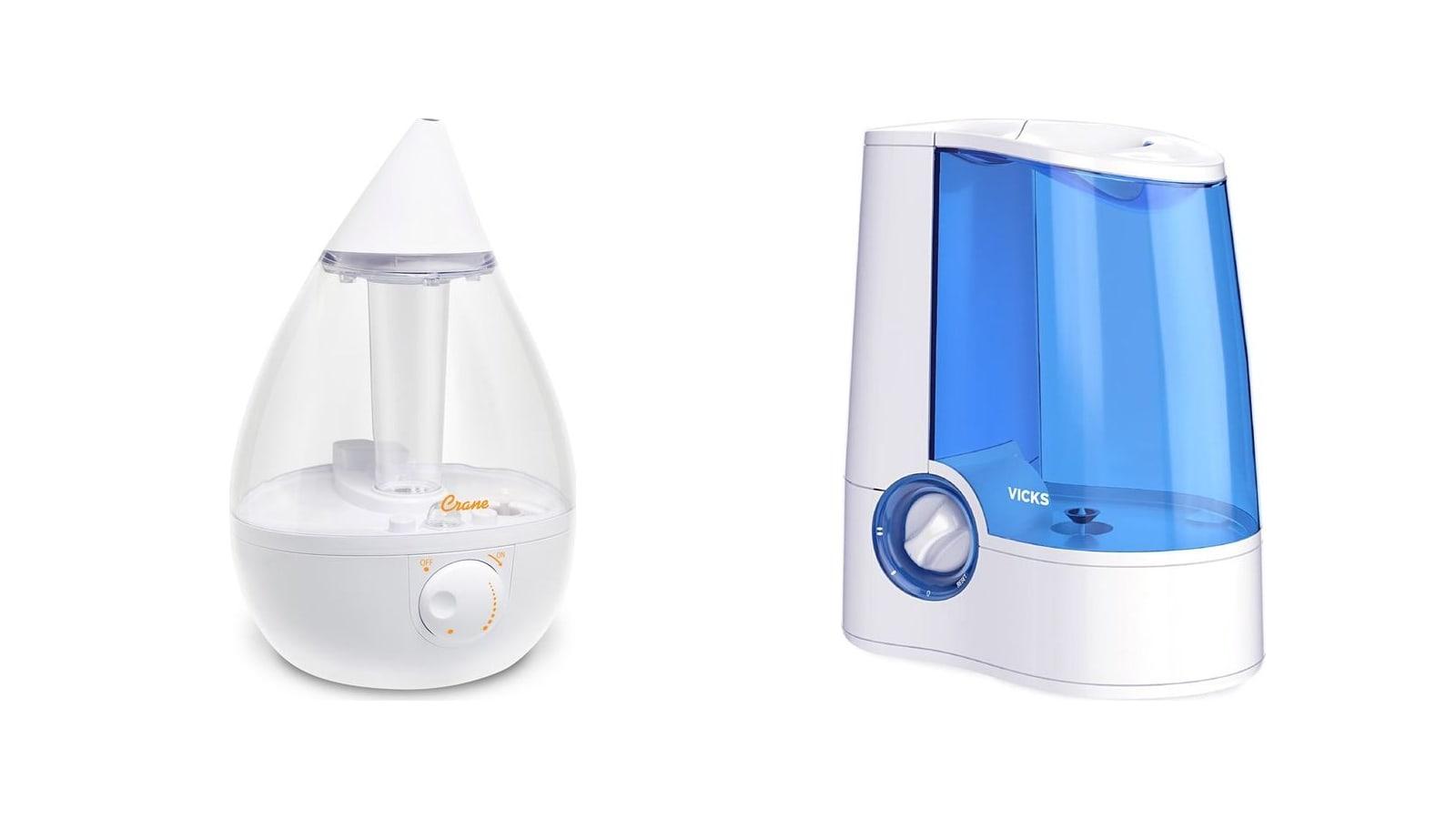
| Crane Drop Shape | Ultrasonic | 2 tbsp in a half tank of warm water, plus 1 tbsp in the base | 30 min |
| Pure Enrichment MistAire | Ultrasonic | 1 tsp vinegar plus 1 tsp water, in the base | 5 min |
| Dreo HM311S | Ultrasonic | 50/50 vinegar and water, small parts only | 15–20 min |
| Vicks V745 | Steam | 1 cup in the tank and heating chamber | 20 min |
| Vicks V3700 Starry Night | Evaporative | Undiluted, in the tank and filter tray | 10–15 min |
| Vornado Evap40 | Evaporative | 1 cup per gallon of water, in the tanks | 20 min |
Crane's routine is a gentle weekly rinse; Levoit and Honeywell use straight vinegar. Stick to your own manual's figures. Honeywell and Vicks both warn that failing to keep the unit clear of mineral deposits may void the warranty.
Ultrasonic humidifiers: where the scale hides
The scale that matters sits on the small vibrating disc in the base, called a transducer or nebulizer, and on the float beside it. A crusted disc makes less mist, which is why Honeywell tells HUL525 owners to clean the nebulizer when output drops. Honeywell also says the disc is fragile, so let the soak do the work and wipe it, don't grind it.
Soak small parts such as floats and filter sponges in a cup of vinegar while the tank sits. Our Levoit cleaning guide lists exactly which parts come out on each Levoit.
Steam humidifiers: the heating element
On a steam unit such as the Vicks V745, minerals stay behind as crust on the heating element. Vicks wants a weekly descale: a cup of vinegar in the tank and heating chamber for 20 minutes, a soft brush on the element, and a vinegar-dampened cloth on the cooling chamber, medicine cup and tray. Vicks warns that hard brushes, steel wool or abrasives will damage the element.
The V745 has a shortcut. Its medicine cup, removable tray and mist chimney are top-rack dishwasher-safe on a light or normal cycle below 158°F, with no detergent, and Vicks says that covers both descaling and disinfecting for those parts. The tank and main housing must never go in the dishwasher.
Evaporative units: leave the wick out of it
Wick filters are the exception. Vicks says not to clean the V3700's WF2 wick with vinegar or any chemical because it may damage the filter, and to take the wick out before the tank and tray get their vinegar soak. A crusty wick can soak in cool water for a temporary boost, but Vicks's real fix is a new one every 30 to 60 days. Levoit's Superior 6000S manual likewise gives its wicks a water rinse and a brush, not vinegar.
Canopy takes a different route: the Canopy Bedside Humidifier 2.0's tank, cap and tray are top-rack dishwasher-safe, so most of its cleaning happens in the dishwasher instead. If you're choosing between designs partly on upkeep, our comparison of evaporative, ultrasonic and steam humidifiers covers the trade-offs.
When should you use bleach or hydrogen peroxide instead?
Vinegar dissolves scale. Several makers add a separate disinfecting step with a measured dose of bleach:
- Vicks V745: 1 teaspoon per gallon of water for 20 minutes. Vicks warns that more than a teaspoon per gallon will damage the unit.
- Vicks V3700 Starry Night: Vicks's manual calls for 1 tablespoon per gallon, wick removed.
- Honeywell HUL525: half a teaspoon in half a gallon of water for 20 minutes, with rubber gloves.
- Dreo HM311S: 1 teaspoon per gallon in the tank for 15 to 20 minutes during its monthly clean, while the float, filter and silencer soak in diluted vinegar in a separate container.
- Vornado Evap40: 1 teaspoon per gallon in the base for 20 minutes.
Hydrogen peroxide is the other option. The EPA says that without specific maker instructions, a 3% hydrogen peroxide solution can be used on surfaces that touch water, followed by rinsing with several changes of tap water. Levoit's LV600HH manual allows 3% peroxide in place of vinegar.
Never mix bleach with vinegar (or peroxide with vinegar)
The New Jersey Department of Health warns that bleach mixed with vinegar gives off harmful vapors, including chlorine and chloramine, and that hydrogen peroxide and vinegar together form peracetic acid, which irritates the eyes, skin and lungs. Levoit's LV600HH manual says the same about peroxide and vinegar.
In practice: descale first, rinse until the vinegar smell is completely gone, and only then add the bleach or peroxide solution. Vicks's V3700 manual tells owners to do the two steps in that order to avoid harmful chemical interactions. If your manual has both on the go at once, as Dreo's does, keep them in separate containers and rinse each part before it goes back with the others.
How often should you do it?
The EPA recommends emptying and drying portable humidifiers daily and cleaning them every third day. Makers vary: Levoit asks for every 3 days on some models and weekly on others, Vicks and Crane say weekly, and Dreo descales the HM311S monthly. Hard water shortens every interval; the best humidifiers for hard water cope better. And if a leak starts right after cleaning, a seal probably went back crooked, as our leaking humidifier guide explains.
Frequently asked questions
Can I run vinegar through the humidifier instead of soaking it?
Only if the maker says so. Levoit's LV600HH manual is the one example here: its two-weekly deep clean runs 1 cup of vinegar in a gallon of water through the unit for an hour, outdoors. Every other manual in this guide uses a soak with the power off, so no vinegar mist goes into the room.
Will vinegar damage the ultrasonic plate?
Not in the amounts makers use; Levoit, Honeywell and Crane all soak the transducer in it. The risk is the scrubbing. Honeywell warns the nebulizer is fragile and should be cleaned without heavy pressure, so use the soft brush that came with the unit.
How do I get rid of the vinegar smell?
Rinse with plain water until you can't smell it, then let the parts dry with the tank cap off. Crane suggests leaving the empty tank open in a cool place for 12 hours if an odor lingers.
Can I clean a humidifier with baking soda?
None of the manuals in this guide call for it. Vinegar handles scale, and bleach or 3% hydrogen peroxide handles disinfection, each in the amounts the maker gives.
Is citric acid better than vinegar?
It does the same job, removing scale, and Dyson specifies it for the Dyson Purifier Humidify+Cool PH2's deep clean cycle at 150 g a time. For other brands, follow the descaler the manual names, which is almost always white vinegar.