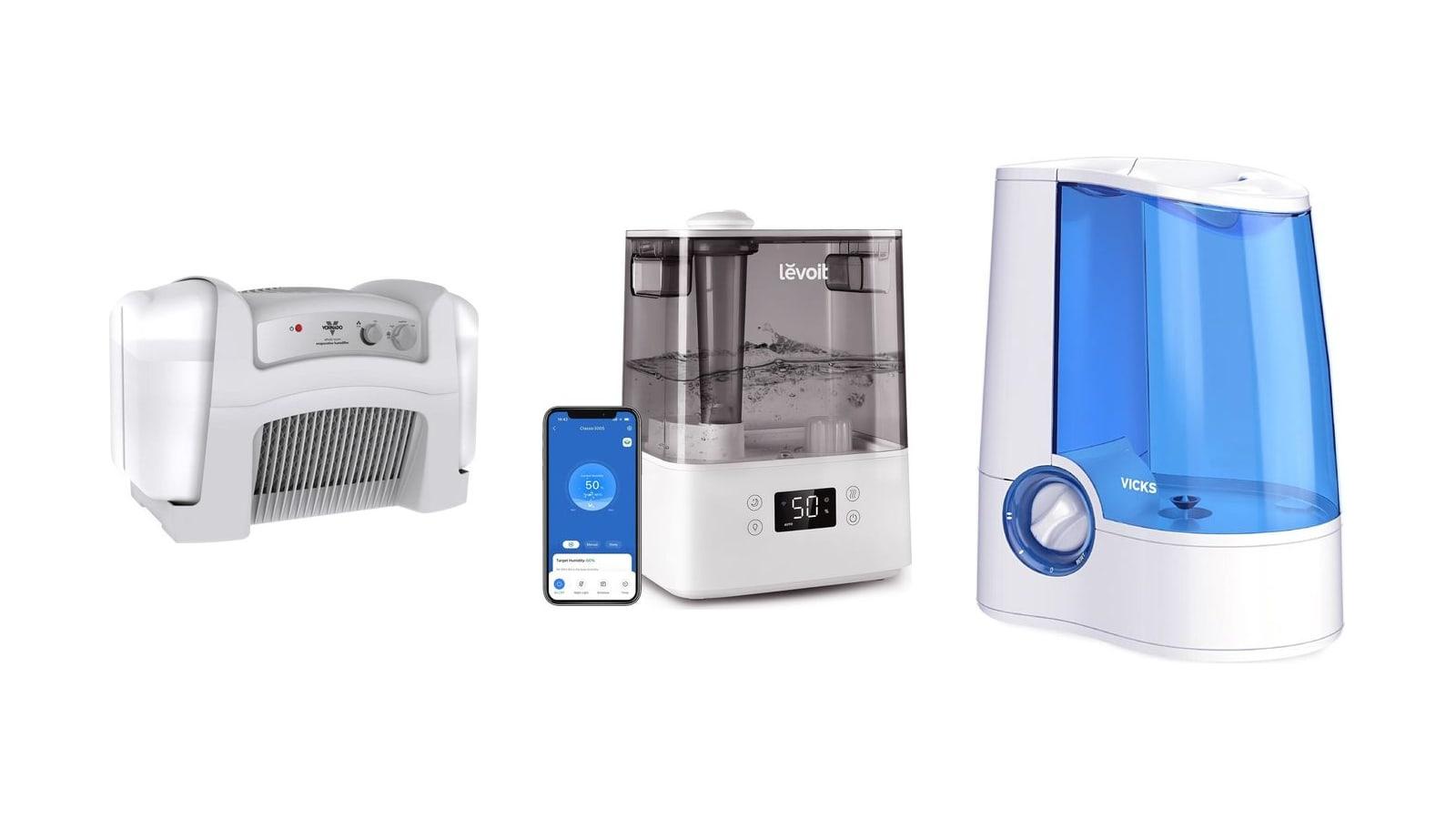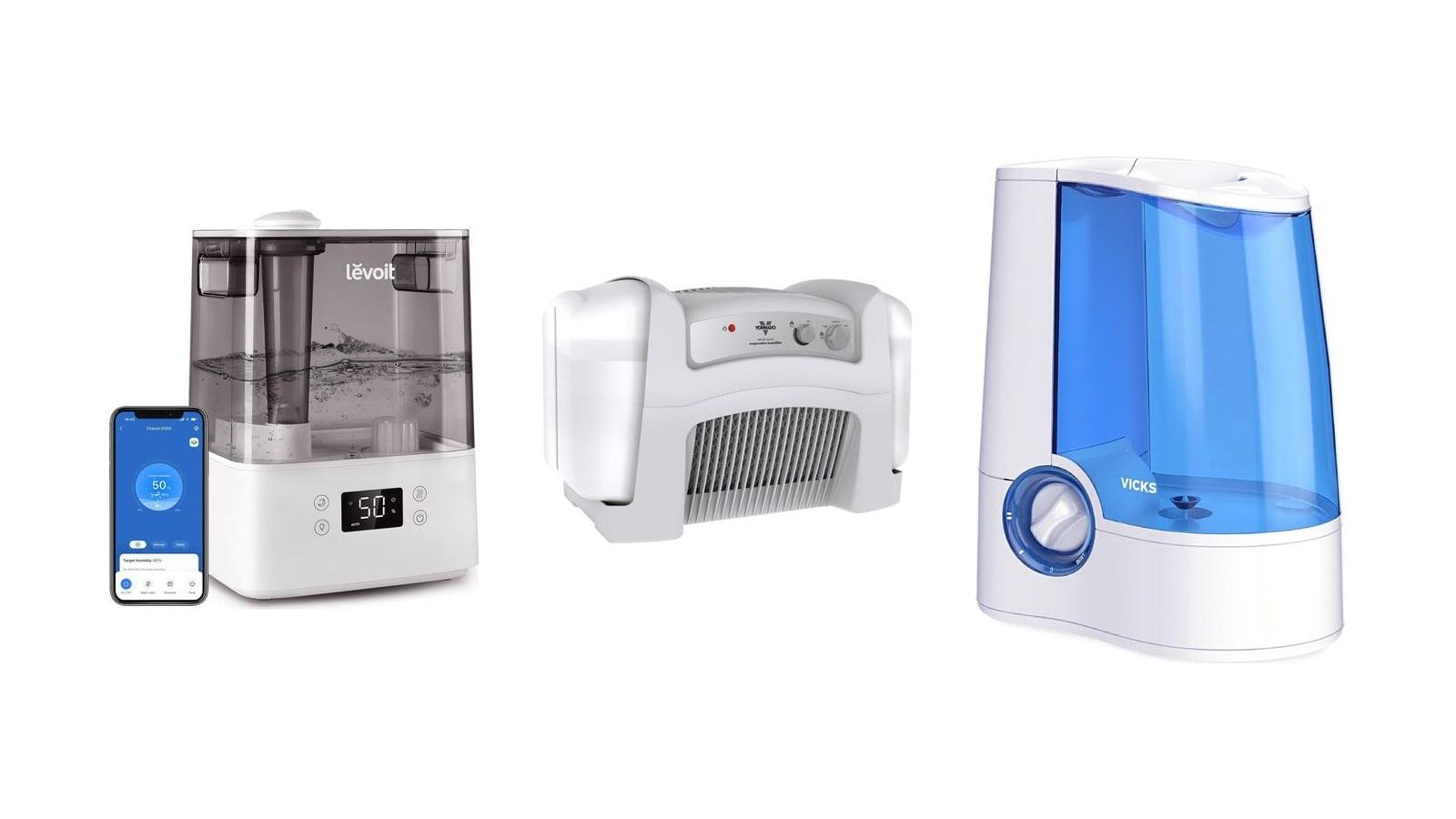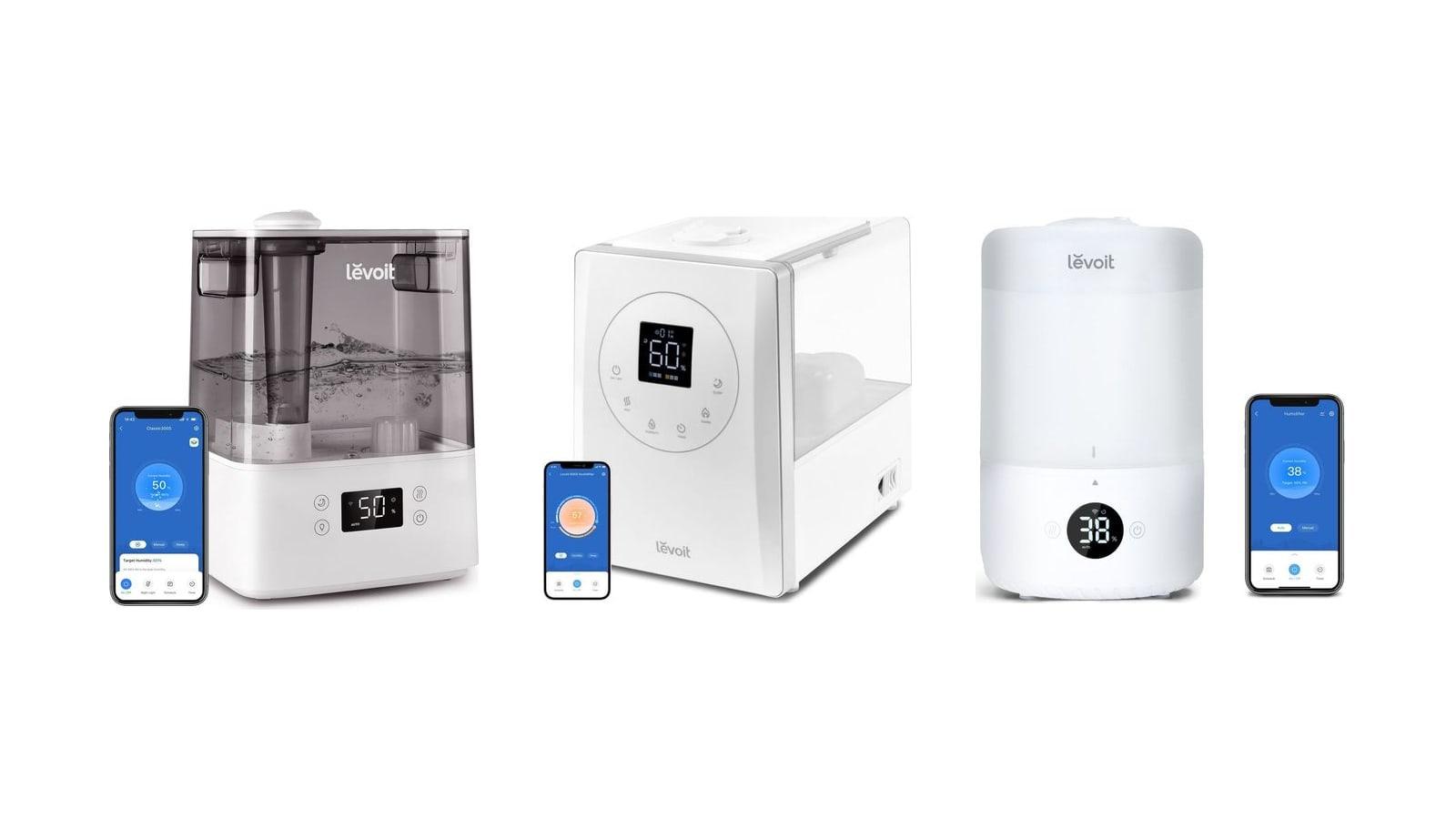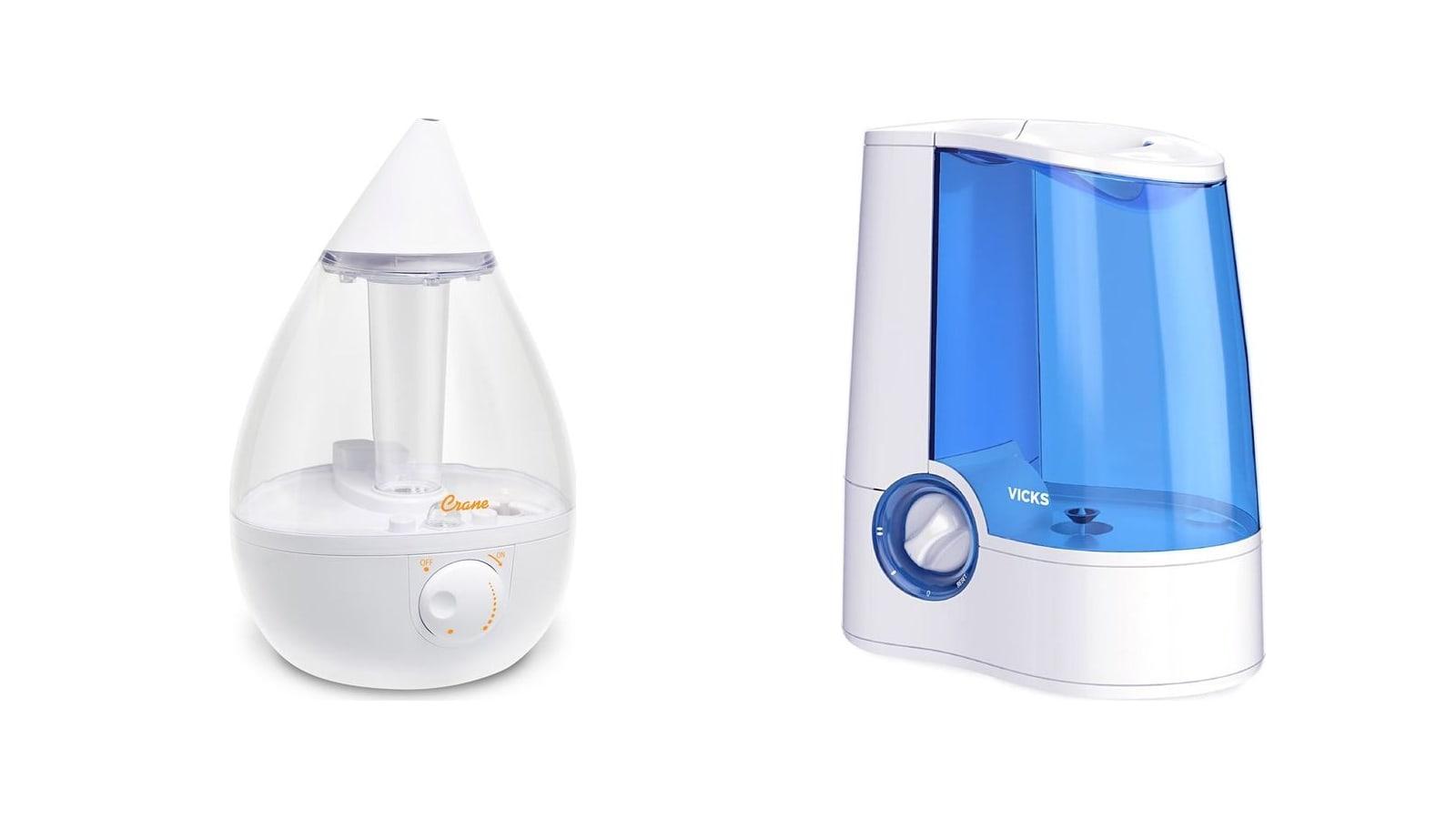
A vaporizer is a steam humidifier: it boils water with a heating element and releases the steam. A humidifier, as most stores use the word, adds moisture without boiling, either by blowing air through a wet wick or by shaking water into a fine mist. Once in the air, the moisture from both is the same, so the real differences are burn risk, what happens to tap-water minerals, the power bill and the cleaning.
Humidifier vs vaporizer at a glance
| Vaporizer (steam) | Cool-mist humidifier | |
|---|---|---|
| How it works | Electric element boils water | Wick and fan, or an ultrasonic plate |
| Burn risk | Hot steam and hot water | None |
| Tap-water minerals | Left behind as scale | Wick traps them; ultrasonic sprays them as dust |
| Germs from the tank | Boiling kills most | Can be spread if the tank isn't cleaned |
| Power | About 250 W | Roughly 12–45 W |
| Medicated liquids | VapoSteam in a medicine cup, on some models | Not in the tank |
| For a child's room | No | Yes |
The wattages are the makers' ratings for the models in our humidifier catalog.
What exactly counts as a vaporizer?
The EPA describes a steam vaporizer as a unit that creates steam by heating water with an electric element or electrodes, and treats warm-mist humidifiers as a variant that cools the steam slightly before it leaves. In practice the labels blur. The Vicks V745 is sold as a "warm mist humidifier," yet it works exactly like a vaporizer: a 1-gallon tank feeds a heating chamber, the water boils, and its manual warns in capital letters that the unit produces hot steam.
"Vaporizer" also names devices for inhaling nicotine or cannabis. Those have nothing to do with room humidity; this page is only about the room appliance.
Does a vaporizer work better for a cold?
No. Mayo Clinic says warm-mist and cool-mist units are equally effective at humidifying the air, and the vapor has cooled to room temperature by the time anyone breathes it. What a vaporizer does offer is a way to add medicated vapor. The V745 has a medicine cup for Vicks VapoSteam, a camphor liquid; Vicks' manual limits it to 1 tablespoon in that cup and rules out oils or medicine anywhere else in the unit.
That medicated angle comes with its own limit. The VapoSteam label says not to use it for children under 2, so the one room where parents most want relief is the one where it's ruled out.
Which is safer around children?
The cool-mist humidifier, by a clear margin. Children's Hospital of Philadelphia says the American Academy of Pediatrics recommends a cool-mist humidifier, because a vaporizer can burn a child who gets too close to the steam or tips over a device full of hot water. Mayo Clinic says to always use cool mist for children, and the EPA says to keep steam vaporizers out of their reach.
CHOP's placement advice applies to either type: about 3 feet from the child and the bed or crib, and an automatic shut-off for when the water runs out. Vicks' own V745 manual is more cautious still, asking for 4 feet from the bed and saying not to leave the unit running unattended in a closed room. Warm-mist ultrasonic hybrids deserve the same caution in heated mode, since the heater is a button press away. Our nursery picks are all cool mist for this reason.
Which handles hard tap water better?
The vaporizer. Boiling leaves dissolved minerals behind, and the EPA says steam and evaporative units are not expected to disperse substantial amounts of them. An ultrasonic humidifier is the opposite case: it turns whatever is in the water into mist, so hard tap water comes out as fine white dust unless you use distilled water or a cartridge; our white dust guide explains the fixes. An evaporative humidifier sits in between, catching the minerals in a wick that you replace.
The minerals a vaporizer leaves behind still have to go somewhere. They build up as scale on the heating element, and Vicks tells V745 owners to soak the chamber in a cup of white vinegar for 20 minutes every week. TechGearLab rated the V745 very difficult to clean.
What does a vaporizer cost to run?
More than any cool-mist unit, because boiling water takes a lot of energy. The V745 is rated at 248 W. Run on High for an 8-hour night, that's about 2 kWh, or 34 cents at $0.17 per kWh, and around $50 over 150 nights of a heating season. TechGearLab's estimate for a year of use came to about $71.
A cool-mist ultrasonic like the Levoit Classic 300S is rated at 26 W, which works out to under 4 cents for the same night. Evaporative fans draw in the same low range, from 14.3 W for the small Vornado EV100 to about 45 W for the large Vornado Evap40, and their main running cost is wicks: the Vicks V3700 Starry Night takes a WF2 wick, about four a season.
Which needs more cleaning?
Both need regular attention, for different reasons. A vaporizer's boiling chamber collects scale that has to be soaked off. A cool-mist tank can grow microbes that an ultrasonic unit then sprays into the room, which is why the EPA suggests emptying portable units daily and cleaning them every third day. CHOP recommends cleaning every two to three days of use and soaking water-contact parts in a solution of one part bleach to nine parts water. Never mix bleach with vinegar when switching between descaling and disinfecting; rinse thoroughly in between.
So which should you buy?
- A child's room or anywhere a toddler or pet can reach: a cool-mist humidifier. The Vicks V3700 Starry Night is an evaporative wick unit with a ceiling star projector.
- An adult's room on hard tap water, with no wick budget: a vaporizer such as the Vicks V745, kept on a stable surface out of reach.
- You want medicated vapor: a vaporizer with a medicine cup, used only as the liquid's label allows.
- The lowest running cost: a cool-mist ultrasonic, filled with distilled water if yours is hard.
For a head-to-head on the two Vicks models, see V745 vs V3700. The three humidifier types explained covers evaporative and ultrasonic units in more depth.
Frequently asked questions
Is a vaporizer the same as a warm-mist humidifier?
Close, but not always identical. Both heat water into steam. The EPA describes warm-mist models as steam units that cool the vapor a little before it leaves, while a classic vaporizer lets the steam out more directly. Warm-mist ultrasonic hybrids are a third design: they heat the water, then an ultrasonic plate turns it into mist, so they still spread tap-water minerals.
Can a vaporizer be used in a baby's room?
Children's Hospital of Philadelphia cites the American Academy of Pediatrics in recommending a cool-mist humidifier instead, because a vaporizer can burn a child who gets too close to the steam or knocks over the hot water. Mayo Clinic gives the same advice. The EPA also says to keep steam vaporizers out of children's reach.
Does a vaporizer kill germs?
Boiling kills most microbes in the water being turned into steam, and the EPA says steam units generally disperse fewer microorganisms than ultrasonic or impeller types. Water left standing in the tank between uses can still grow them, so a vaporizer still needs emptying and cleaning on schedule.
How far from a bed should a vaporizer or humidifier be?
Children's Hospital of Philadelphia suggests keeping a humidifier about 3 feet from a child and their bed or crib. Vicks asks for its V745 steam unit to sit 4 feet from the bed and 12 inches from the wall. Follow whichever is greater for the model you own.
Can you put essential oils in a vaporizer?
Not in the water. Vicks' V745 manual says not to add essential oils or medication to the tank, base or nozzle; only VapoSteam goes in, and only in the medicine cup. Cool-mist units are stricter still: the V3700 Starry Night manual rules out oils, VapoSteam and inhalants in the tank entirely.