Humidifier white dust is dried tap-water minerals, mostly calcium and magnesium, that an ultrasonic or impeller humidifier throws into the air with its mist and that settle as a fine powder on furniture. The fix is to stop feeding it minerals: fill it with distilled or reverse-osmosis water, or switch to an evaporative or steam humidifier, which leave the minerals behind inside the machine.
What is the white dust, exactly?
It's the same stuff that scales a kettle. The USGS defines water hardness as mostly compounds of calcium and magnesium, and Andrea Dietrich, a Virginia Tech engineering professor who studies humidifier emissions, lists sodium, iron and manganese among the other minerals tap water can carry. An ultrasonic humidifier shatters the water into droplets so small they float. When each droplet evaporates in the room, whatever was dissolved in it is left behind as a particle.
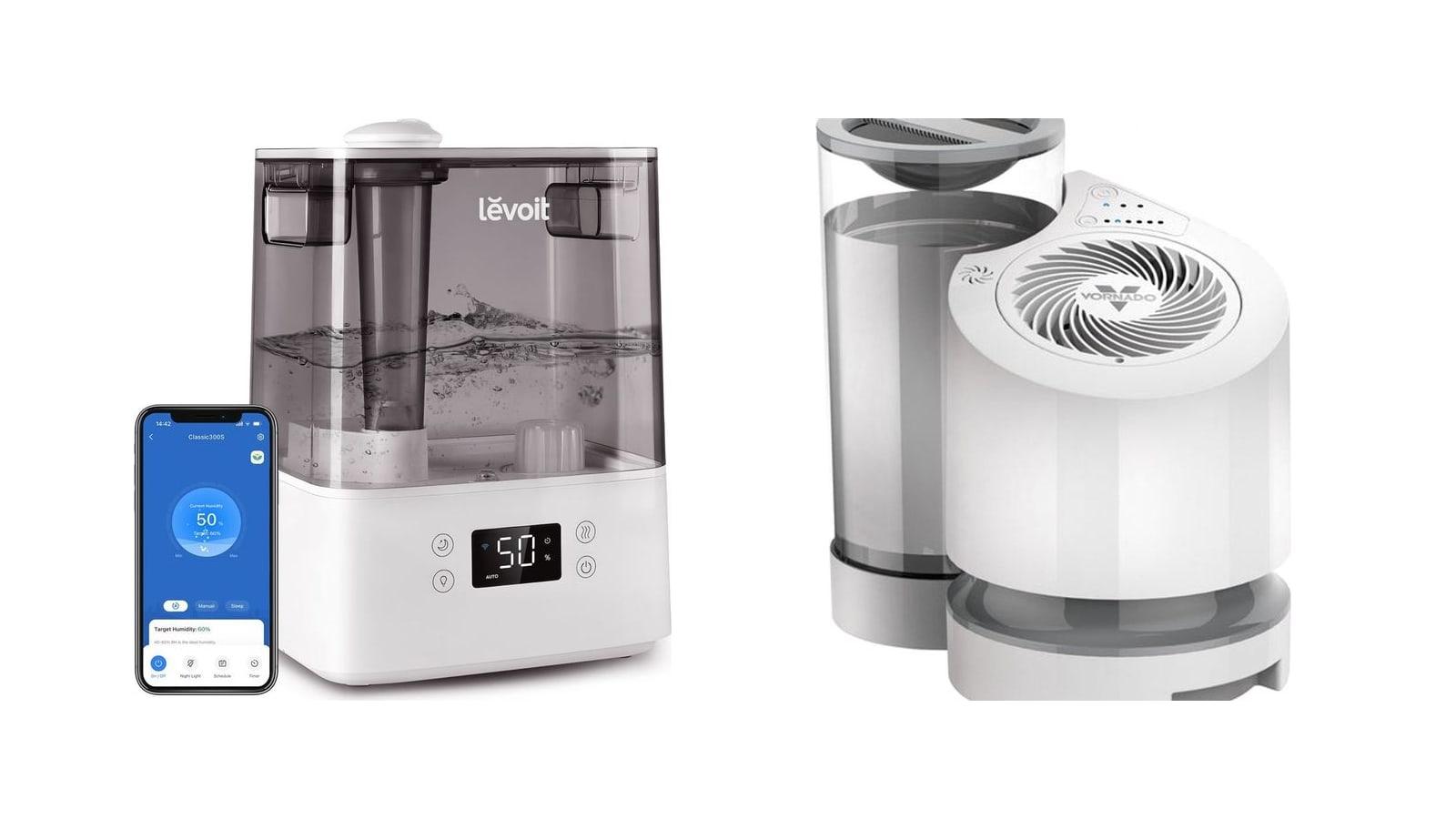
The amounts add up faster than people expect. Water at the USGS "very hard" line of 180 mg/L carries about 680 mg of hardness minerals per gallon, counted as calcium carbonate. RTINGS measured the Levoit Classic 300S putting out about 1.1 gallons a day, so on very hard water that unit is releasing roughly 20 grams of minerals a month. Some lands on the nearest shelf; the finest particles drift around the house.
Why does my humidifier do it when others don't?
It depends on the type, not the brand. The EPA says ultrasonic and impeller humidifiers are very efficient at dispersing minerals from their water, while steam and evaporative units aren't expected to release substantial amounts. A steam unit boils off pure water and leaves the minerals as scale in its heating chamber. An evaporative unit lets water evaporate off a wick, and the minerals stay in the wick fibers, which is why wicks stiffen and turn crusty.
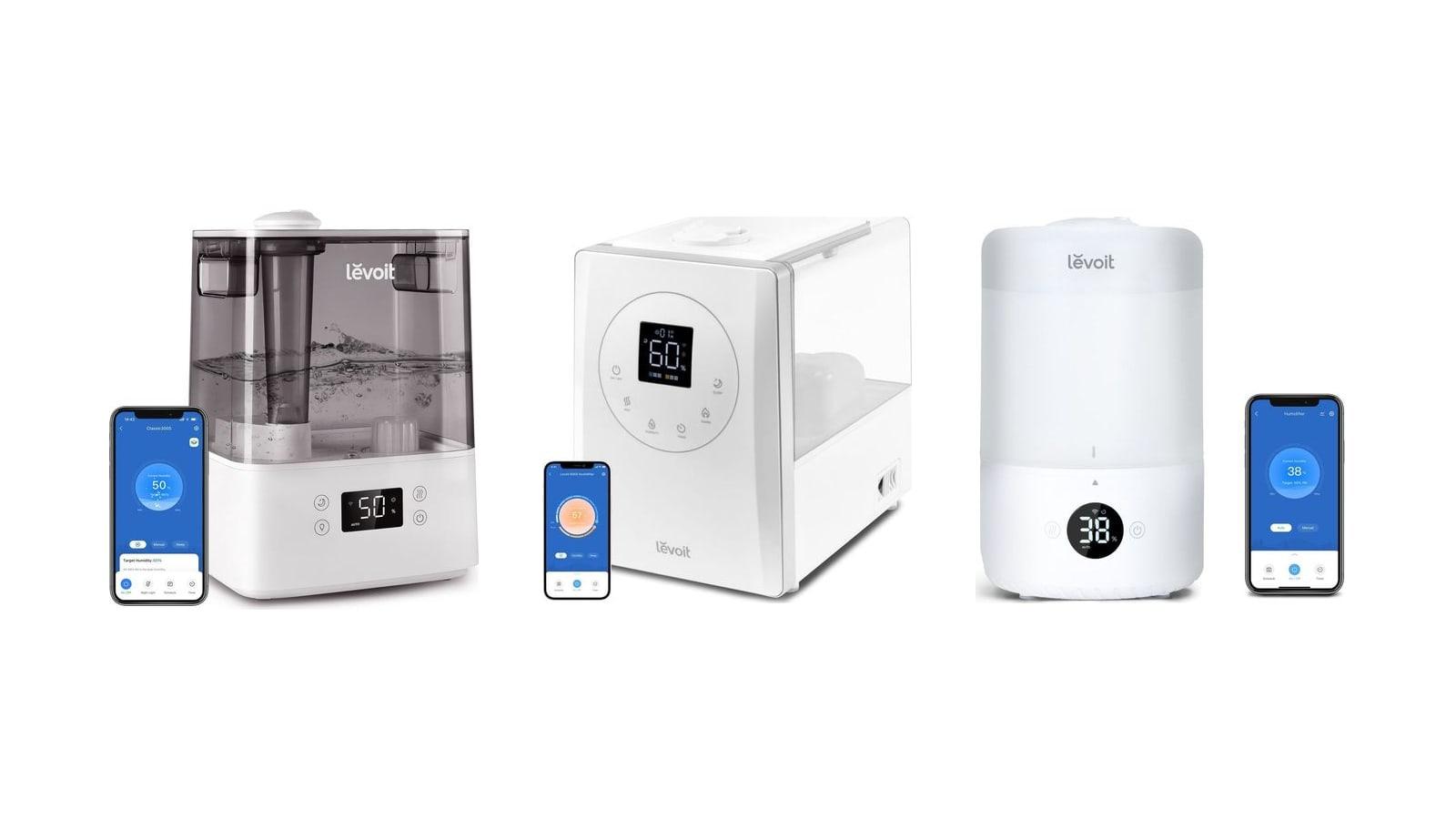
Warm-mist ultrasonic hybrids don't escape this. The Levoit LV600S heats its water but still turns it to mist with an ultrasonic plate, and Levoit's own manual warns that tap water can leave white dust. The in-tank sponge that Levoit's ultrasonic models use catches particles in the water, not the dissolved minerals, so it doesn't help either. Our explainer on humidifier types covers the other trade-offs between the three designs.
Is white dust bad to breathe?
The honest answer is that nobody has settled it. The EPA says the health effects of minerals dispersed by home humidifiers are not fully understood. Dietrich is more cautious: her view is that minerals safe to drink aren't necessarily safe to inhale, and that infants, children, older adults and people with respiratory conditions are most at risk.
What is measured is the amount. A University of Alberta study published in Indoor Air found that tap water produced the most particulate matter of the waters tested, that store-bought distilled water produced none, and that particles from a humidifier in an upstairs bedroom spread through the whole house. If you own an air quality monitor or a purifier with a particle sensor, this is a likely reason its PM2.5 reading jumps whenever the humidifier runs.
How do you stop it?
In order of how reliably each one works:
- Use distilled or reverse-osmosis water. The EPA calls distillation the most effective way to remove minerals from water. Budget for the volume: a unit putting out a gallon a day goes through about a gallon jug a day.
- Fit a demineralization cartridge, if your model takes one. The Dreo HM311S takes an optional cartridge Dreo rates for up to 150 liters, sold three for $18.99. The Crane Drop Shape takes the HS-1932, about $12.99 each, which Crane suggests replacing every one to two months. Expect variable results: the EPA warns that the ability of these devices to remove minerals may vary widely.
- Don't swap in softened or pitcher-filtered water. Dietrich advises against water from a softener or an ion-exchange filter, because those systems replace calcium and magnesium with sodium or potassium, which still leaves a residue.
- Turn the output down. A humidistat that stops at 40% puts less water, and so less mineral, into the room than a unit left running flat out.
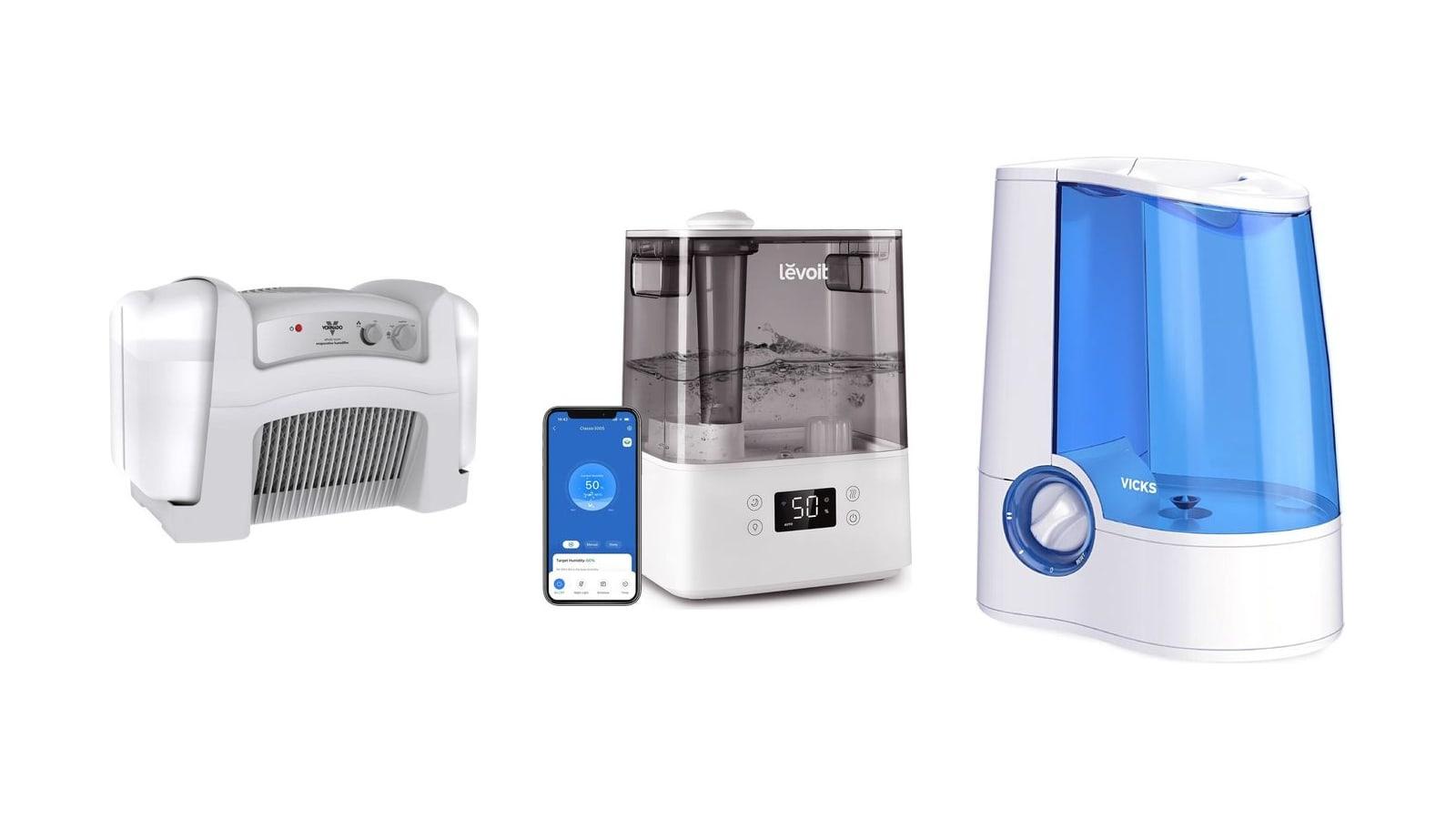
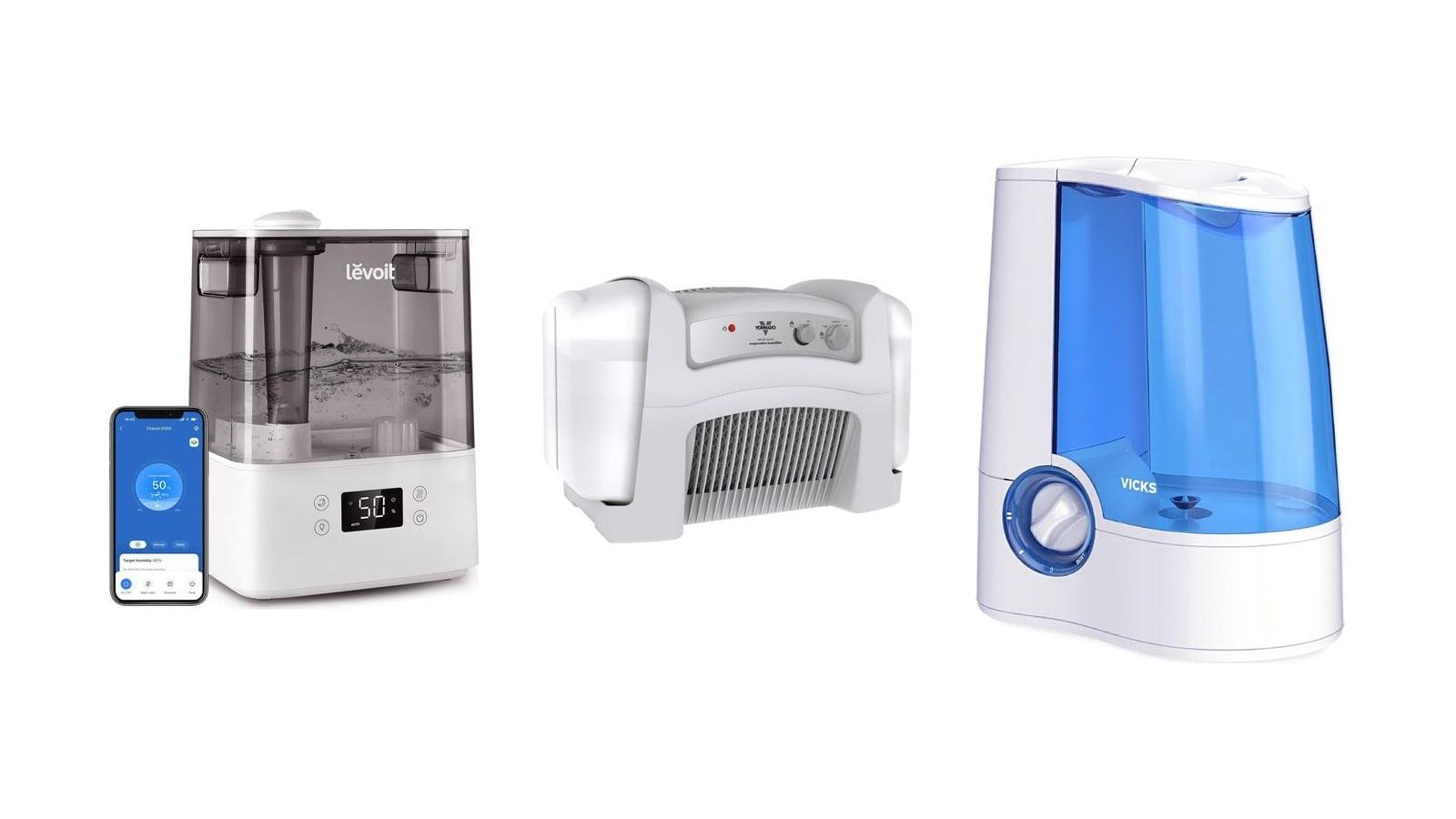
- Change the type of humidifier. If buying distilled water every week sounds tiresome, an evaporative model such as the Vornado Evap40 or a steam model such as the Vicks V745 runs on tap water without the dust. The best humidifiers for hard water list compares those options.
What does fixing it cost?
Distilled water is the easiest fix and the one with the steadiest bill, since you're buying roughly as many gallons as the unit puts out. A cartridge costs less per month, but only if it keeps working; once it's spent, the dust comes back without warning. Switching to an evaporative unit moves the mineral problem into wicks, which run about $60 a season for the Vornado Evap40 and more in hard-water areas. A steam unit has no filter to buy but uses far more electricity and needs a weekly vinegar descale, as Vicks recommends for the V745.
For a small bedroom unit used a few months a year, distilled water is usually the cheapest route. For a large room needing several gallons a day, an evaporative model is easier than hauling jugs.
How do you clean up what's already there?
The dust wipes off hard surfaces with a damp microfiber cloth; a dry duster mostly pushes it around. A splash of white vinegar in the water helps with stubborn film on glass and dark furniture, since the minerals dissolve in mild acid. Inside the humidifier, the same minerals build up as scale on the tank and the vibrating plate, so descale on the schedule in your manual. The EPA's general advice is to empty and refill portable units daily and clean them every third day.
Then deal with the source. Cleaning surfaces every week while still filling the tank from a hard-water tap just resets the clock. The spec tables in our humidifier catalog show the water each maker recommends, which is the quickest way to tell whether a unit will leave dust in your home.
Frequently asked questions
Will a pitcher filter stop humidifier white dust?
Usually not. Pitcher filters rely on carbon and ion exchange, and Virginia Tech's Andrea Dietrich advises against using ion-exchange or softened water in ultrasonic units because those systems swap calcium and magnesium for sodium or potassium, which still dries to a residue. Distilled or reverse-osmosis water is what removes the minerals.
Is white dust the same as the white crust inside the tank?
They come from the same minerals. The crust is scale that settles out in the tank and on the vibrating plate; the dust is what got thrown into the air. Descaling with white vinegar removes the crust but does nothing about the dust, because the next tank of tap water brings a fresh supply.
Do evaporative or steam humidifiers ever leave white dust?
Not in any meaningful amount. The EPA says steam and evaporative units aren't expected to release substantial amounts of minerals, because the water leaves as vapor and the minerals stay in the wick or the boiling chamber. If dust appears with one of those running, look for another source, such as an ultrasonic unit elsewhere in the house.
Does boiled tap water stop white dust?
No. Boiling kills microbes but leaves the dissolved minerals behind, and as water boils off it can even concentrate them slightly. Only distillation, reverse osmosis or a working demineralization cartridge takes the minerals out.
Why did the dust start after I moved house?
Your new water is probably harder. The USGS classes water above 120 mg/L of hardness as hard and above 180 mg/L as very hard, and supplies vary a lot from town to town. Your utility's annual water quality report lists the hardness figure.