Choosing an air purifier comes down to one question first — is it powerful enough for your room? — and then a short list of features that either match your situation or don't. Get the sizing right and insist on a True HEPA filter, and you've made 80% of the decision well. The rest is knowing when you actually need activated carbon, what the filters will cost you over time, how much noise you'll tolerate, and which "smart" features you'll really use. This guide walks through each in plain English so you can pick with confidence instead of guessing from a spec sheet.
Key takeaways
- Size by CADR to your room first. Aim for a smoke CADR of at least two-thirds of your room's square footage — this single number matters more than any feature.
- Insist on True HEPA, not "HEPA-type." True HEPA is a tested 99.97%-at-0.3-micron standard; "HEPA-type" is unregulated marketing.
- Add carbon only if you have odors or gases. HEPA handles particles; carbon handles smell, smoke, and VOCs.
- Count the filter cost of ownership, not just the sticker price — replacements range from about $30 to $200 a year.
- Avoid ozone and ionizer-only units. Ozone is a lung irritant; a filter should do the real work.
How do you size an air purifier to your room?
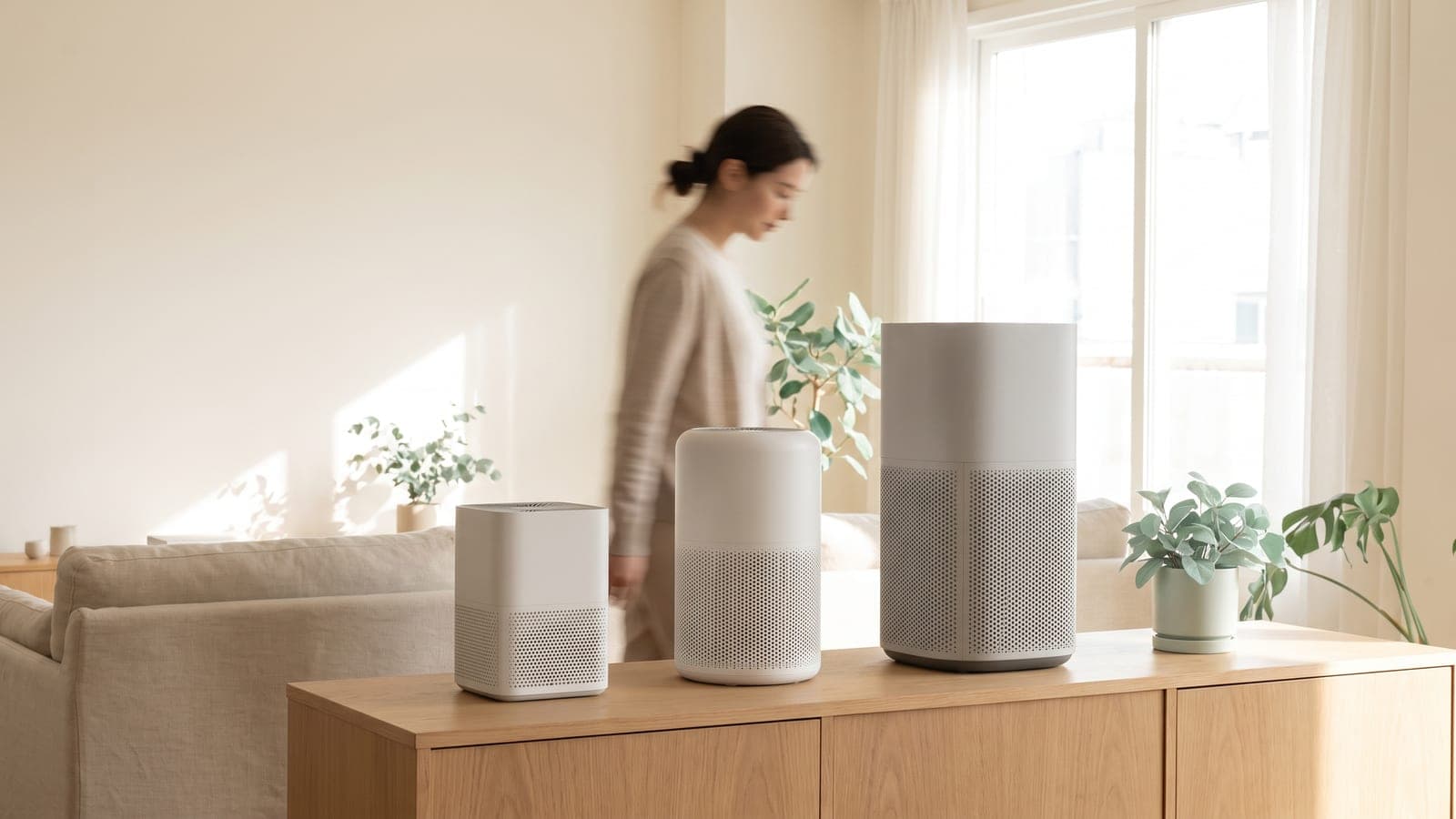
This is the decision that matters most, and it's the one buyers most often get wrong. The relevant number is CADR — clean-air delivery rate, in cubic feet per minute — which tells you how much filtered air the unit actually produces. As a working rule, look for a smoke CADR of at least two-thirds of your room's square footage, and more if you want faster or quieter cleaning.
Coverage claims on the box can be optimistic because they often assume a low number of air changes per hour, so treat the CADR as the honest figure. Measure your room, then run it through the room-size to CADR calculator to get a concrete target. A unit sized with headroom cleans the room on a low, quiet speed; an undersized one runs flat out and still falls behind.
What's the difference between True HEPA and "HEPA-type"?
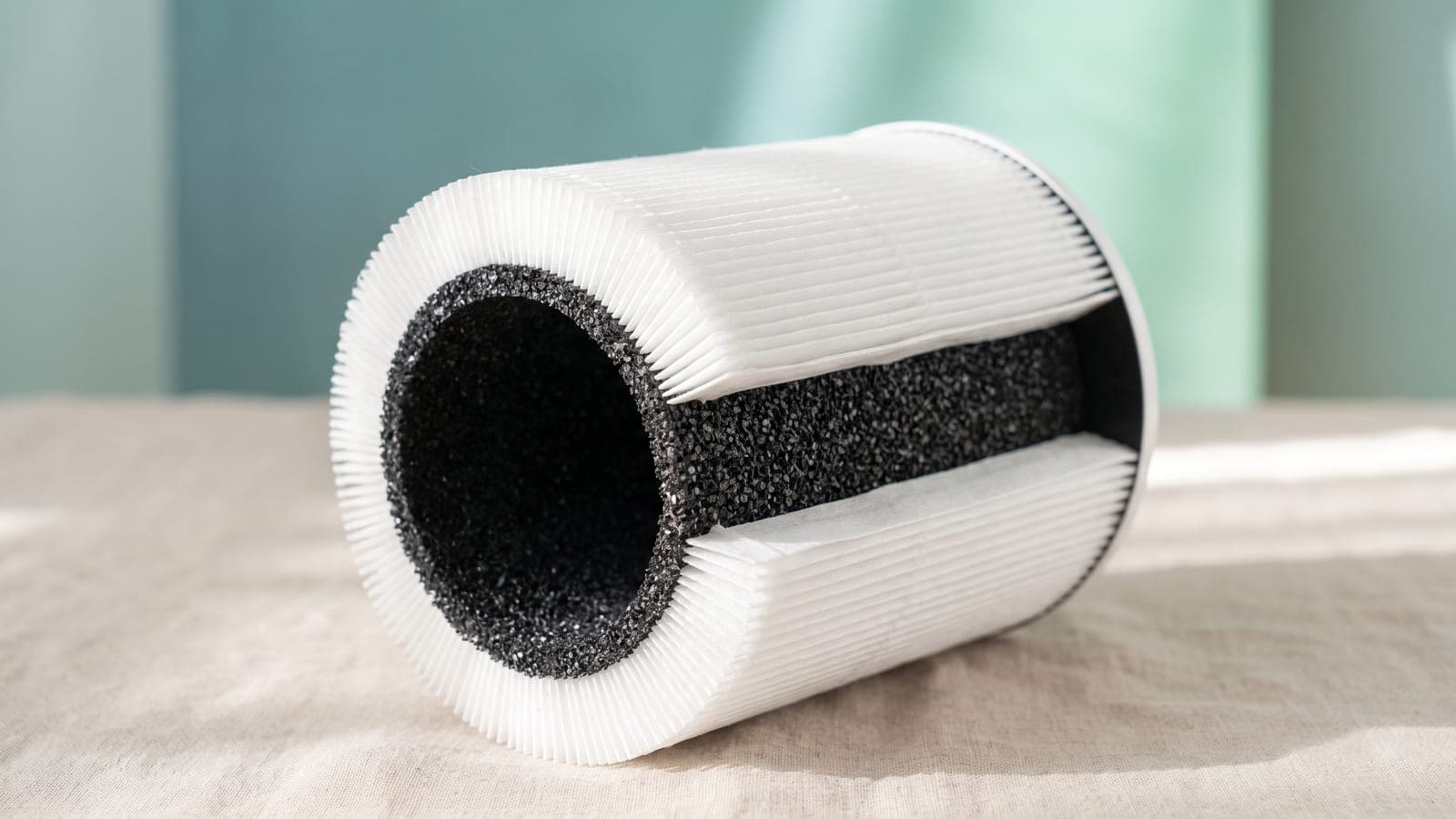
Everything. True HEPA is a tested standard: it captures at least 99.97% of particles at 0.3 microns, the hardest size to catch. That covers dust, pollen, dander, mold spores, and smoke particles — the fine stuff you actually care about. Grades like H13 sit within this True HEPA band.
"HEPA-type," "HEPA-like," or "99% HEPA" are marketing phrases with no guaranteed rating behind them, and they can mean a filter that lets far more through. If a product page won't clearly state True HEPA or an H-grade, that vagueness is your answer — move on. This is the easiest corner for a cheap purifier to cut, and the one most worth refusing to accept.
When do you actually need an activated-carbon filter?
Carbon and HEPA do completely different jobs. HEPA traps particles; activated carbon adsorbs gases and odors — cooking smells, smoke, pet odor, and the VOCs that off-gas from paint, furniture, and cleaning products. If your concern is dust, pollen, dander, or allergies, HEPA alone is enough and you can ignore carbon.
But if smell or smoke is part of your problem, look closely at the carbon stage, because there's a huge range. Budget units often include only a thin carbon sheet that saturates fast; machines built for odor, like the heavy dual-carbon stages in premium models, hold far more and last longer. Don't pay for serious carbon you don't need — but if you do need it, a token layer won't cut it.
How do you weigh filter cost of ownership?
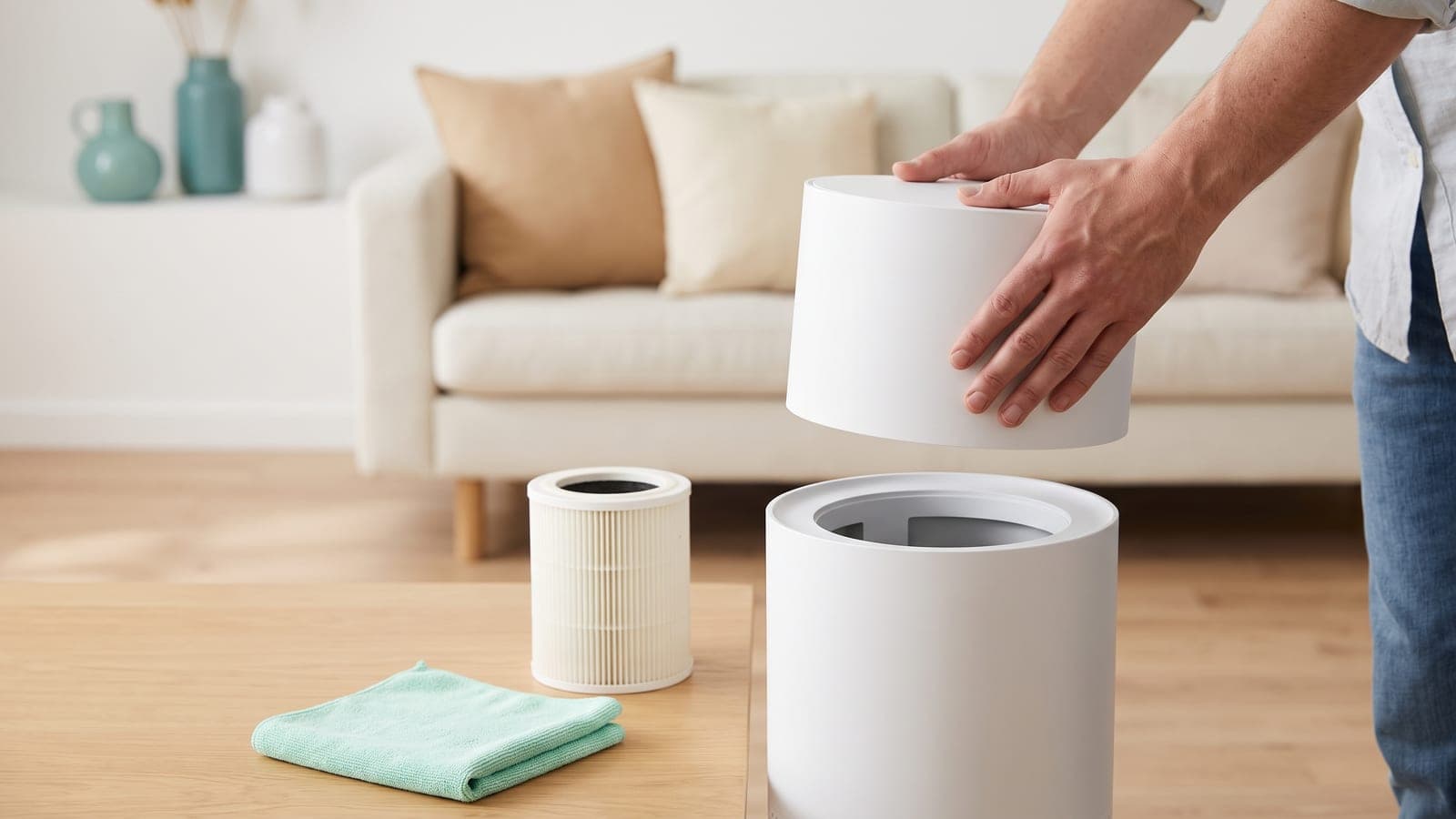
The sticker price is only the down payment. Every HEPA and carbon filter is a consumable, and the yearly replacement cost varies more than the purchase price does — from around $30 a year for a small unit to $180–200 for a large machine with heavy carbon. Over three or four years, that ongoing cost can rival or exceed what you paid for the purifier itself.
| Your situation | What to look for |
|---|---|
| Big or open-plan room | High CADR (≥⅔ of sq ft), rated coverage with headroom |
| Allergies, dust, pollen | True HEPA / H13, good pre-filter, low-speed quiet |
| Odors, smoke, cooking, VOCs | Genuine activated-carbon stage (not a thin sheet) |
| Pets | HEPA + carbon + washable pre-filter for hair |
| Tight budget | Low filter cost/yr, right-sized small unit over an oversized cheap one |
| Bedroom / light sleeper | True sleep mode, low-speed rating in the low 20s dB |
| Ongoing cost matters | Cheaper annual filters; check price of genuine replacements |
Before you commit, price the genuine replacement filters for any model you're considering — it's the number that quietly shapes what the purifier really costs you.
How much noise is too much?
Every purifier is quiet on low and loud on high, so the figure that matters is the low-speed decibel rating and whether there's a real sleep mode. Low-to-mid 20s of decibels is genuinely quiet — softer than a whisper. The headline range often quotes the top speed, which you'll rarely use in a right-sized room.
This is another reason to buy with CADR headroom: a unit powerful enough for the space can clean it on a quiet low speed instead of roaring on high to keep up. For a bedroom, prioritize a dedicated sleep mode that also dims the display lights, so the machine fades into the background overnight.
Which smart features are actually worth it?
Auto mode with a decent air-quality sensor is the genuinely useful one: the purifier reads the room and ramps itself up or down, so you're not managing it by hand. That's worth having on any unit you'll leave running. A Wi-Fi app is a nice-to-have — handy for scheduling and remote control, but not essential, and plenty of excellent purifiers skip it entirely.
Be skeptical of features that don't change the air you breathe. And treat ionizers with care: many good HEPA units include one you can switch off, which is fine, but you should avoid ozone generators and ionizer-only devices — ozone is a lung irritant, and the filter should be doing the real work. If a purifier's main selling point is ionizing rather than filtering, skip it.
Putting it together
Start with the room, not the product. Measure it, get your CADR target, and shortlist only True HEPA models that clear it — then layer on carbon if you have odors, check the yearly filter cost, and confirm the low-speed noise and sleep mode suit where it'll live. If you'd rather be handed a match than build the shortlist yourself, the air purifier finder narrows it in a couple of minutes from your room and priorities. And if allergies are what's driving the purchase, our best air purifiers for allergies roundup applies all of this to specific, sensible picks.
Frequently asked questions
What is the most important thing when choosing an air purifier?
Matching the purifier's clean-air delivery rate (CADR) to your room size. A unit that's too small for the space will run flat out and still fall behind, while a right-sized one cleans the room quietly and thoroughly. Everything else — filter type, carbon, noise, smart features — matters, but sizing is the decision that makes or breaks the result, so start there.
Is True HEPA better than HEPA-type?
Yes, and the difference is real. True HEPA is a tested standard that captures at least 99.97% of particles at 0.3 microns, while 'HEPA-type' or 'HEPA-like' is unregulated marketing that can mean a much looser filter. If a listing won't clearly say True HEPA or H13, treat that as a red flag and choose a model that states it plainly.
Do I need an air purifier with an activated-carbon filter?
Only if you're dealing with odors, smoke, cooking smells, or off-gassing (VOCs). HEPA captures particles but does nothing for gases and smells — carbon is what adsorbs those. If your concern is dust, dander, pollen, or allergies, HEPA alone is enough. If smell is part of the problem, look for a genuine carbon stage, not a token sprinkle.
Should I avoid ionizer and ozone air purifiers?
Be cautious. Many good HEPA purifiers include an optional ionizer you can switch off, which is fine. What you want to avoid is a device that relies on ozone generation to 'clean' the air, because ozone is a lung irritant. If a purifier's main mechanism is ionizing or ozone rather than a filter, skip it and choose a True HEPA unit.
How much should I spend on an air purifier?
Enough to properly cover your room, plus the ongoing filter cost. A good small-room unit starts around $100, mid-size models run $160–300, and large-room or heavy-carbon machines climb from there. The sticker price is only half the story — factor in replacement filters, which can range from about $30 to $200 a year, before deciding what's actually affordable for you.