Do air purifiers help with dust mites? Partly — and it's worth being precise about how. A HEPA air purifier captures the airborne dust-mite allergen (the microscopic feces and shed body fragments that get stirred into the air) that you actually breathe, so it helps with the part that triggers symptoms. But it doesn't kill mites or remove them from where they live — bedding, mattresses, and carpet — so it works best paired with washing bedding hot, using allergen-proof covers, and vacuuming. It's not a medical device; if you have allergy symptoms, talk to a doctor about a full plan.
Key takeaways
- Purifiers capture airborne allergen, not the mites. HEPA removes the fecal particles and body fragments that go airborne.
- Mites live in fabric. Bedding, pillows, mattresses, and carpet are their home — a purifier can't reach them there.
- Pair it with the basics: hot-wash bedding, allergen-proof covers, and HEPA vacuuming do the heavy lifting.
- The bedroom is the key room — most mites, and where you breathe closest to them for hours.
- Not a medical device. Use a purifier as part of an allergy plan, alongside a doctor's advice.
Do air purifiers actually help with dust mites?
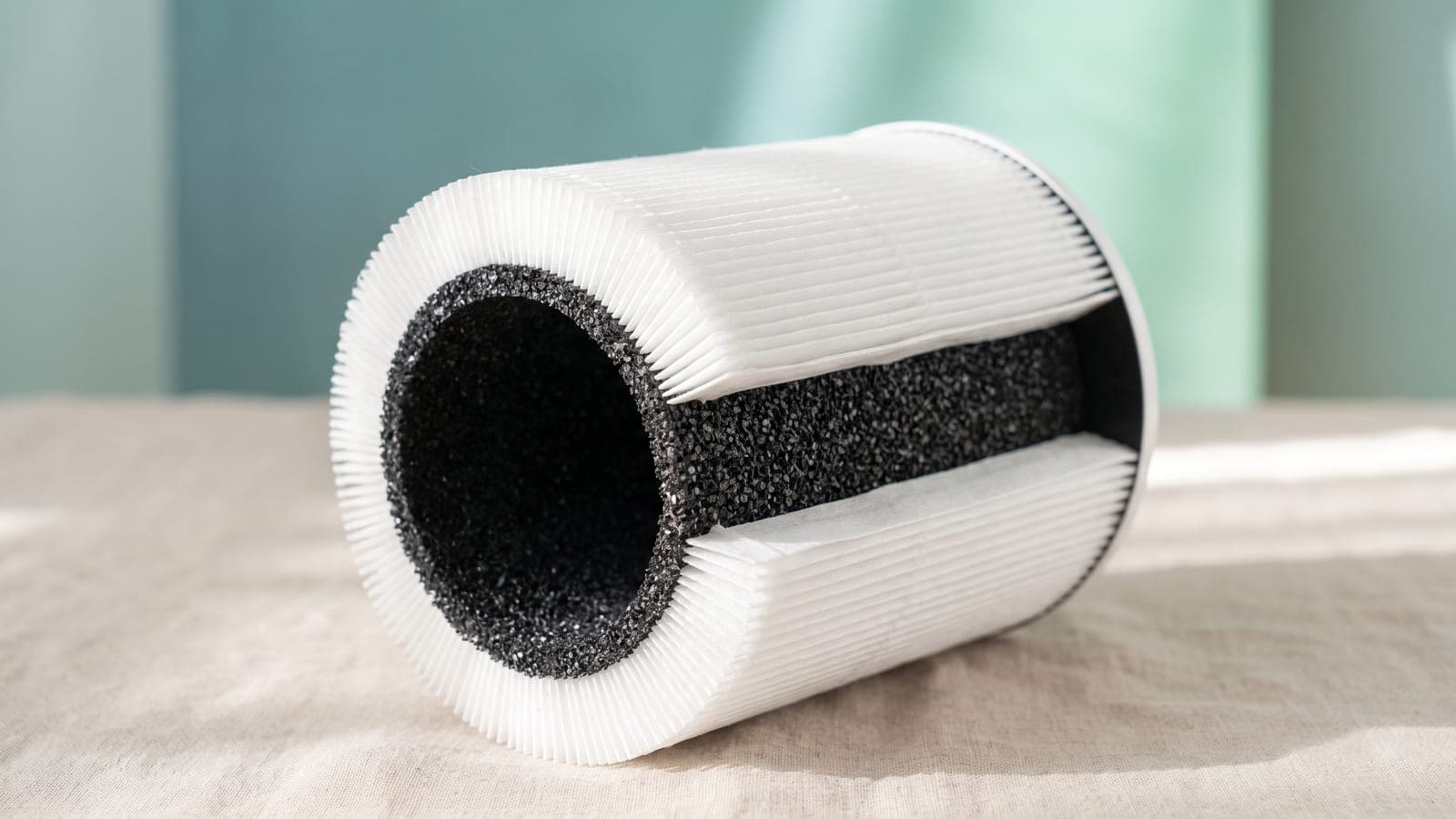
Yes, but only for a specific slice of the problem. The confusion comes from what "dust mites" means in practice. The mites themselves are tiny creatures that live embedded in fabric — they aren't floating around for a filter to catch. What does go airborne is dust-mite allergen: the microscopic fecal pellets and shed body fragments that become suspended in the air when you make the bed, plump a pillow, sit on the couch, or walk across carpet. That airborne allergen is what triggers sneezing, congestion, and itchy eyes.
A HEPA purifier captures that airborne allergen as it passes through the filter, lowering the amount circulating in the room's air. So the honest answer is: a purifier meaningfully helps with the airborne fraction you breathe, but it does nothing to the mite colony living in your mattress. It treats a real symptom, not the source — which is exactly why it belongs alongside the other steps, not instead of them.
Where do dust mites actually live?
Not in the air — in the soft, humid places you use every day. Dust mites feed on the skin flakes people and pets constantly shed, and they thrive in warmth and humidity, so their favorite habitats are:
- Bedding, pillows, and mattresses — the biggest reservoir, warmed and humidified by you every night.
- Upholstered furniture — sofas and armchairs collect skin flakes and hold moisture.
- Carpet and rugs — deep pile traps flakes, dust, and allergen.
- Curtains and other heavy fabrics.
Because they're embedded in fabric rather than airborne, a filter that cleans the air can't touch them where they live. This is the core reason "just buy an air purifier" isn't a complete dust-mite solution — the purifier is downstream of the problem, catching allergen after it's already been stirred into the air, while the colony in the mattress keeps producing more.
What can an air purifier remove, and what can't it?
Drawing the line clearly makes the whole strategy click into place:
| What it does | What it can't do |
|---|---|
| Captures airborne dust-mite allergen (feces, body fragments) | Kill or remove mites living in bedding and carpet |
| Lowers the allergen you breathe in the room's air | Reach allergen embedded deep in a mattress or sofa |
| Helps steadily when run continuously in the bedroom | Fix the humidity that lets mites thrive |
| Also captures other airborne particles (pollen, dander, dust) | Replace washing bedding, covers, or vacuuming |
Read across the two columns and the role becomes obvious: the purifier is your airborne-allergen catcher, and everything in the right column is a job for the source-control steps below. Expecting the purifier to do the right-column work is where people conclude "it didn't help" — when really it was only ever equipped for the left column.
Why do you still need to wash bedding and use covers?
Because that's where you actually reduce the allergen at the source. Since mites live and breed in bedding, treating the bedding is the highest-impact move against them:
- Wash bedding weekly in hot water — about 130°F (54°C) or hotter — to kill mites and flush out allergen. Warm or cold washing doesn't kill them.
- Encase mattresses and pillows in allergen-proof covers (tightly woven or laminated). These trap the existing colony inside and cut off its food supply of skin flakes, and they stop allergen from puffing out every time you move.
- Vacuum carpets and upholstery with a HEPA vacuum regularly to remove settled allergen before it goes airborne.
- Keep indoor humidity around 30–50%. Mites need moisture from the air to survive; a drier room is a hostile one for them.
These steps shrink the mite population and the allergen reservoir directly — something no purifier can do. The purifier then handles what escapes into the air between washes and vacuumings.
Where should you put the purifier for dust mites?
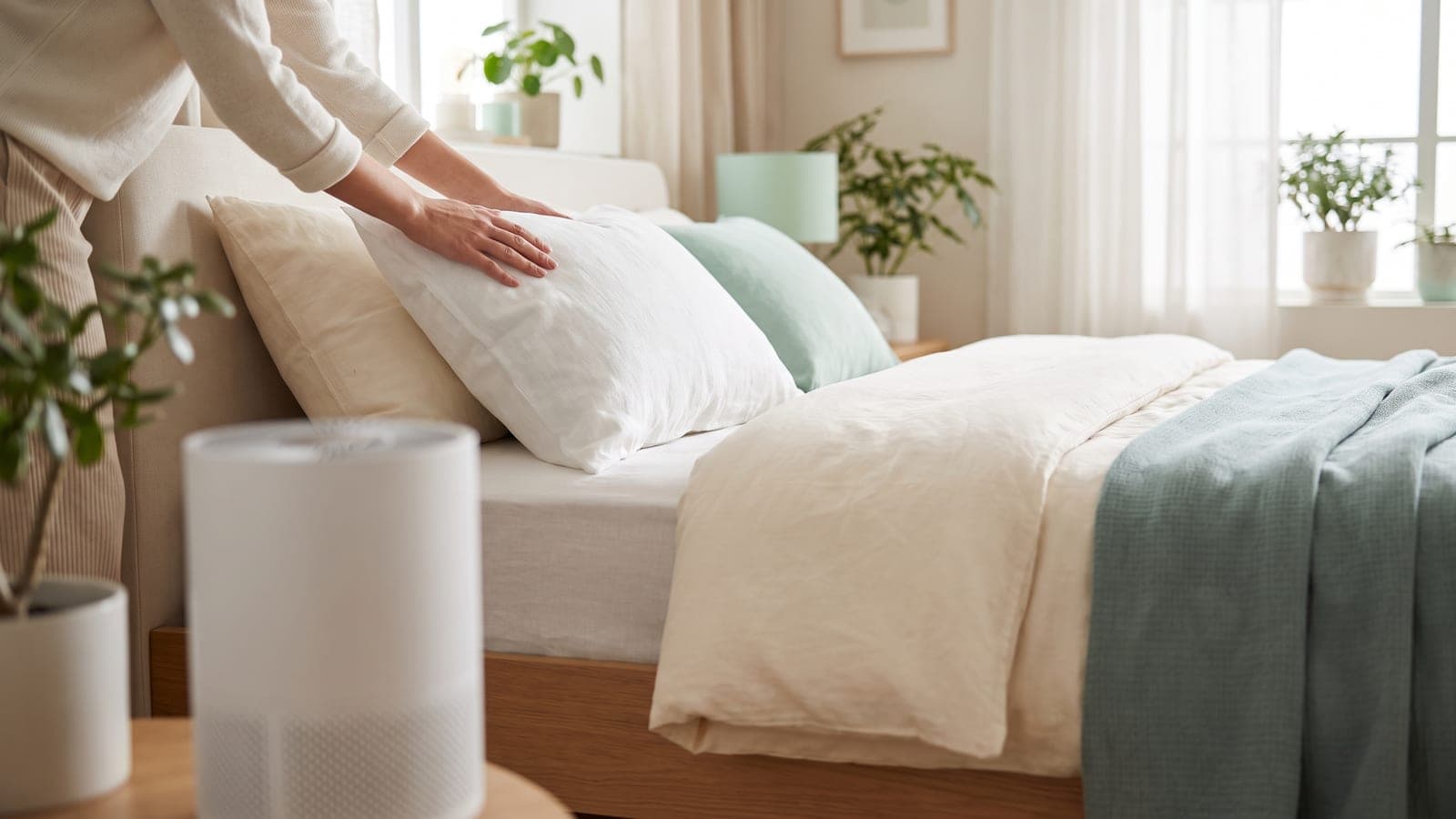
The bedroom, without much debate. It's dust-mite headquarters — the highest concentration of mites and allergen in the home — and it's where you spend six to eight hours a night breathing at close range to the very bedding that harbors them. A HEPA purifier running there captures the airborne allergen stirred up as you move in your sleep and during the hours your exposure is highest.
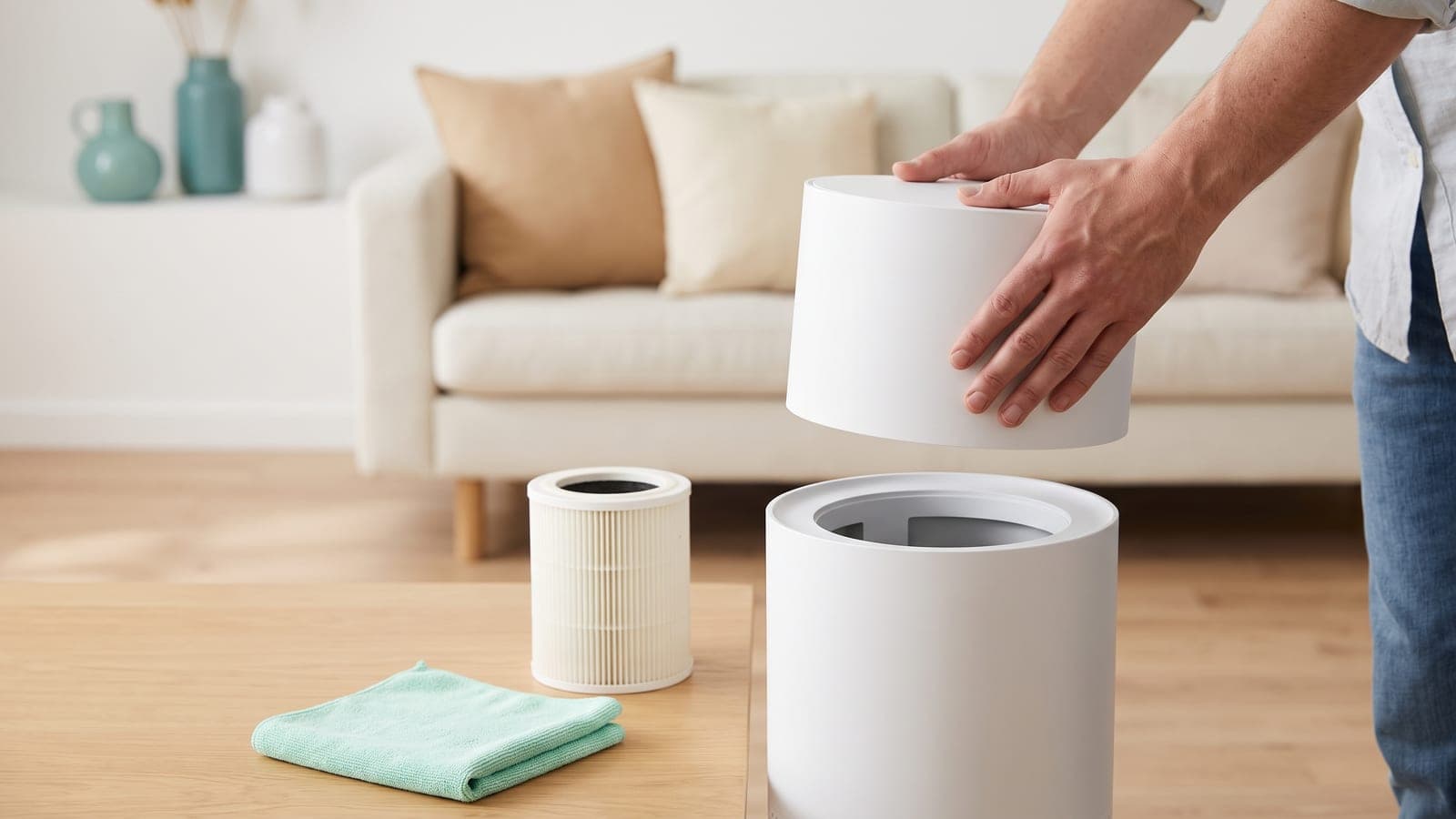
Run it continuously on auto or a low, quiet setting so it maintains a low allergen level overnight rather than starting from behind each evening, and size it to the room so it can clean the air several times an hour. Our best air purifiers for bedrooms roundup covers quiet, well-sized options, and since dust-mite allergen overlaps with general allergies and household dust, the best air purifiers for allergies and best air purifiers for dust guides are worth a look too.
What's the realistic bottom line?
A HEPA air purifier helps with dust mites by capturing the airborne allergen you breathe, which is a genuine benefit for symptoms — but it doesn't kill mites or remove them from the bedding and carpet where they actually live. Treat it as one layer: pair a well-sized bedroom purifier with hot-washed bedding, allergen-proof covers, HEPA vacuuming, and controlled humidity, and the combination does far more than any single step.
One honest note to close on: an air purifier is not a medical device, and dust-mite allergy can range from a minor nuisance to a serious asthma trigger. If your symptoms are persistent or significant, use these measures as part of a plan you build with a doctor, who can advise on testing, medication, and whether your reaction needs more than environmental control. Start in the bedroom — that's where both the mites and the payoff are concentrated.
Frequently asked questions
Do air purifiers help with dust mites?
Partly. An air purifier doesn't kill dust mites or remove them from bedding and carpet, where they actually live, but a HEPA purifier does capture the airborne fraction of dust-mite allergen — the tiny fecal particles and body fragments that get stirred into the air. So it helps with the part you breathe, but it works best paired with washing bedding hot, using allergen-proof covers, and vacuuming. It's not a medical device — talk to a doctor about allergy symptoms.
Can an air purifier remove dust mites from the air?
It can't remove the mites themselves — they're not really airborne; they cling to bedding, mattresses, and carpet. What a HEPA purifier removes is dust-mite allergen: the microscopic feces and shed body fragments that become airborne when you move around, make the bed, or walk on carpet. Capturing that airborne allergen is real and useful, but it addresses the symptoms in the air, not the colony in your mattress.
Where do dust mites actually live?
In soft, humid places you use daily — bedding, pillows, mattresses, upholstered furniture, and carpet. They feed on shed skin flakes and thrive in warm, humid conditions, which is why bedrooms are their headquarters. Because they live embedded in fabric rather than floating in the air, an air purifier alone can't reach them; controlling them means treating the bedding and lowering humidity, with the purifier handling the allergen that goes airborne.
What's the best way to control dust mites besides an air purifier?
Wash bedding weekly in hot water (about 130°F/54°C or hotter) to kill mites, encase mattresses and pillows in allergen-proof covers, vacuum carpets and upholstery with a HEPA vacuum, and keep indoor humidity around 30–50% since mites need moisture. Do those and add a HEPA purifier in the bedroom for the airborne allergen — the combination works far better than any single step alone.
Which room should I put an air purifier in for dust mite allergy?
The bedroom. It's where dust mites are most concentrated and where you spend hours breathing at close range to bedding, so a HEPA purifier there captures the most airborne allergen during the hours it matters most. Run it continuously on auto or low. Pair it with hot-washed bedding and allergen-proof covers, and keep the room's humidity in check to discourage the mites at the source.