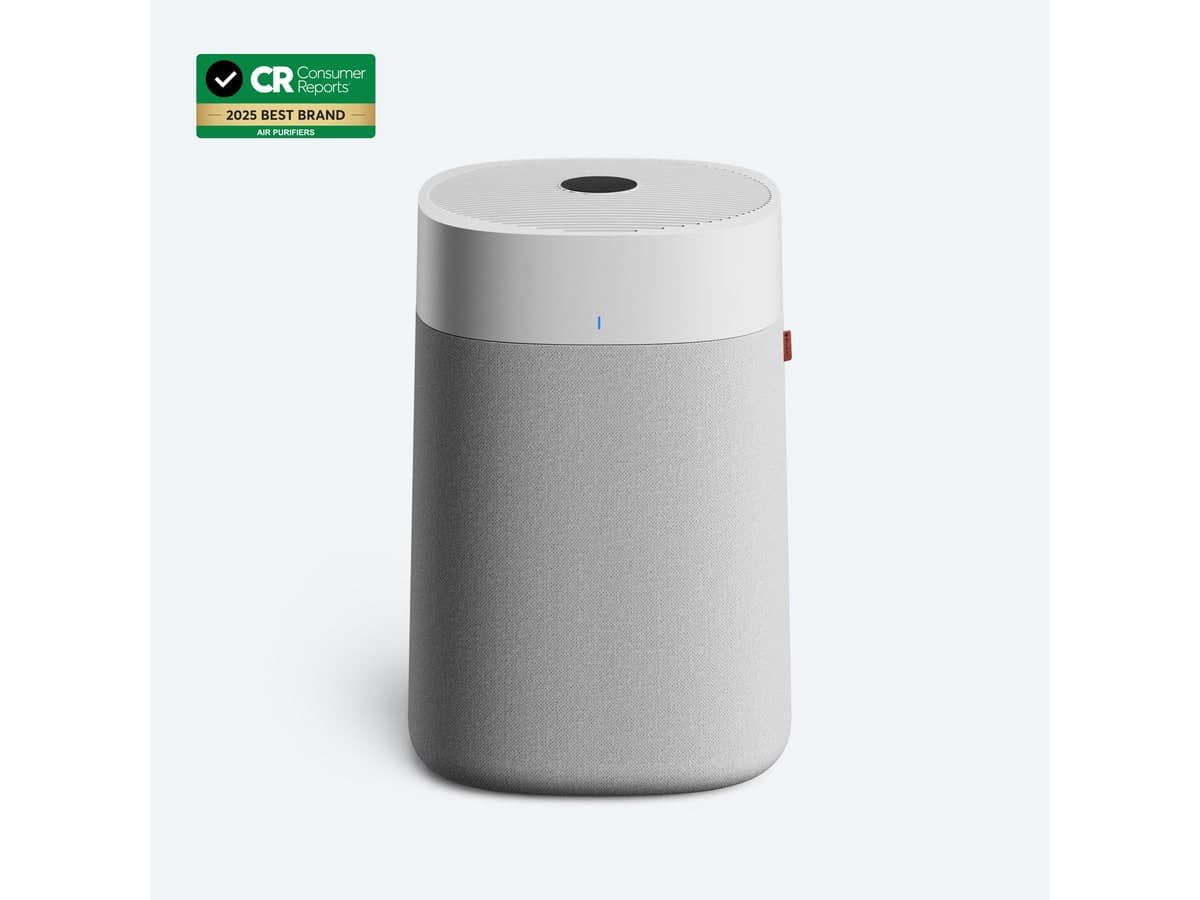
Quick verdict
Buy it for an open living area of roughly 400 to 700 sq ft if you want quiet, low-wattage airflow and an auto mode that works without fuss. If you'd rather avoid any ionizer, the Levoit Core 600S covers about 606 sq ft with purely mechanical filtration and cheaper filters.
Ideal for
- Open living and dining areas up to ~674 sq ft
- 211+ owners who want auto mode and an app
- Bedrooms where you want 9+ air changes at a quiet speed
- Buyers who care about electricity use (46 W max)
Not ideal for
- Anyone who wants an ionizer they can switch off (consider the Levoit Core 600S)
- Heavy odor or VOC problems on the standard filter
The full picture
The 211i Max replaces the one-button Blue Pure 211+ with about 24% more smoke CADR (435 vs 350 CFM), PM1/PM2.5/PM10 sensors driving an auto mode, Wi-Fi app control and a lower 46 W maximum draw. Sized at the 4.8 ACH standard it covers about 674 sq ft, which suits an open living and dining area. Running costs center on a $69.99 F2MAX filter rated for up to nine months, with SmokeBlock, AllergenBlock and EcoLast versions available. The trade-off is Blueair's HEPASilent electrostatic stage, which is always on.
Blueair Blue Pure 211i Max at a glance
- CADR — smoke (CFM)
- 435
- CADR — dust (CFM)
- 452
- CADR — pollen (CFM)
- 450
- Coverage (sq ft)
- 674
- Coverage detail
- 4.8 ACH (674 sq ft); 3,235 sq ft at 1 ACH (Blueair marketing figure)
- Filtration
- Washable fabric pre-filter + HEPASilent particle filter (electrostatic + mechanical) + activated-carbon layer
- HEPA filter
- HEPASilent (electrostatic + mechanical)
- Filter life (months)
- 9
- Filter cost
- ~$93–$140/yr ($69.99 filter every 6–9 months)
- Noise — low (dBA)
- 23
- Noise — high (dBA)
- 53
- Power draw (W)
- 46
- Auto mode
- Yes
- Air quality sensor
- Yes
- Smart app / Wi-Fi
- Yes
- Room size
- Large
- Weight (lb)
- 16.2
- Dimensions
- 22.7 x 14.4 x 14.4 in (H x W x D)
- Notable feature
- PM1/PM2.5/PM10 sensing and four filter options (Particle + Carbon, SmokeBlock, AllergenBlock, EcoLast)
Source: Specs from Blueair's US 211i Max product page and spec sheet (CADR updated to new DOE standards); independent noise/CADR from RTINGS as reported; filter pricing from Blueair's US store (checked 2026-10-01). Research-based; not hands-on tested.
This is a research-based review — our analysis draws on manufacturer specifications, manuals, warranty terms, and verified owner feedback rather than our own hands-on testing, and we note where a detail couldn't be confirmed. How we review
The in-depth review
The Blueair Blue Pure 211i Max is one of the strongest big-room purifiers under $400 on paper: a 435 CFM smoke CADR, which works out to about 674 sq ft at the site's 4.8 air-changes-per-hour standard, from a machine Blueair rates at only 46 watts. Buy it for an open living area if you want quiet, efficient airflow plus auto mode and an app. The catch is Blueair's HEPASilent electrostatic stage, which can't be turned off, and a $69.99 filter that Blueair says lasts up to nine months.
How much room does it really cover?
The site's sizing rule gives 435 × 1.55 = 674 sq ft, and for once the manufacturer agrees: Blueair lists a 674 sq ft recommended room size at 4.8 air changes per hour. The 3,235 sq ft figure on the box is the one-air-change-per-hour number, roughly a fifth of the cleaning pace you want for allergies or smoke.
In real terms, 674 sq ft is an open 20×30 living and dining area with 8-foot ceilings. In a 15×20 living room it has more than double the airflow it needs, so it can sit on a quieter speed most of the day. At 10-foot ceilings the same airflow covers about 540 sq ft. The room size calculator handles your exact dimensions.
If an older listing or box shows 410 CFM and about 635 sq ft, that's not a different model. Blueair notes on its product pages that CADR and room-size figures were updated to meet new DOE standards and that packaging may lag behind. Either way, the 211i Max sits in the same class as the Levoit Core 600S (410 CFM, 606 sq ft), and RTINGS' reported top-speed PM1 CADR of roughly 419 CFM backs up the rating.
What changed from the Blue Pure 211+, and should 211+ owners care?
The Blueair Blue Pure 211+ was the one-button classic: three fan speeds, no sensor, no app. Blueair's support site now lists it as discontinued and names the 211i Max as its replacement. Here is what changed:
| Blue Pure 211+ | Blue Pure 211i Max | |
|---|---|---|
| Smoke CADR | 350 CFM | 435 CFM |
| Coverage at 4.8 ACH | ~540 sq ft | ~674 sq ft |
| Max power | 61 W | 46 W |
| Auto mode / sensor | No | Yes (PM1, PM2.5, PM10) |
| Wi-Fi app, schedules, Alexa/Google | No | Yes |
| Main filter | 211+ Particle + Carbon | F2MAX (not interchangeable) |
So the new model moves about 24% more air on 25% less power at top speed, and it adjusts itself instead of running at whatever speed you last chose.
Should a 211+ owner replace a working unit? Usually not. If your room is under about 540 sq ft and you're happy setting the speed by hand, the old machine still does the job, and its filter is still sold. Upgrade if the 211+ has died, you've moved to a bigger open-plan space, or you want auto mode for pollen or smoke season. Just don't stock up on 211+ filters before switching, because they won't fit.
Filters and the 3-year bill
The 211i Max takes one main filter, and Blueair sells four versions of it, all specific to this model:
| Filter | Blueair price | What it's for |
|---|---|---|
| Particle + Carbon (F2MAX) | $69.99 | Standard filter; Blueair pitches the carbon for "light household odors" |
| SmokeBlock | $84.99 | 2x the activated carbon of the standard filter, for smoke and smog |
| AllergenBlock | $89.99 | Adds a coating Blueair says neutralizes 90%+ of pollen, dust and dander allergen properties |
| EcoLast | $99.99 | Wool-based, USDA-certified 100% biobased media; Blueair claims double the filter life |
Blueair rates the first three at up to nine months. Its Blue Pure Max FAQ gives a more honest six to nine months. EcoLast ships on an 18-month subscription cycle and was showing as sold out on Blueair's store when this was checked. The washable fabric pre-filter sleeve costs $12.99 if you want a different color or a spare.
Three-year math with the standard filter, at the $349.99 list price:
- Filters: the included filter covers the first stretch. At nine-month changes you buy 3 more ($210); at six-month changes you buy 5 ($350).
- Electricity ceiling: 46 W running flat out 24/7 is about 403 kWh a year, or roughly $69 a year at $0.17/kWh ($206 over three years). Auto and lower speeds draw a fraction of that, but Blueair doesn't publish per-speed wattage, so treat this as the worst case.
- Total: about $560 plus electricity with nine-month filter changes, rising to roughly $905 with six-month changes and the fan pinned at maximum. On a sale price (it has been listed around $230 to $260), knock $90 to $120 off.
That's more per year in filters than a Levoit Core 600S, though the low power draw closes some of the gap. Try your own numbers in the filter cost calculator.
Stick with Particle + Carbon unless you have a specific problem. SmokeBlock makes sense in wildfire country or with a smoker in the house. AllergenBlock's extra $20 buys an allergen-neutralizing coating, not more airflow.
Noise, light and bedroom use
Blueair quotes 23 dB on low and 53 dB on high. RTINGS measured higher, at roughly 34 to 59 dBA, which is normal: decibel figures shift with distance and test method. What matters more is what the 211i Max can do while staying quiet. RTINGS reports about 224 CFM at speed 2 while staying under its 45 dBA threshold.
Put that in a 12×15 bedroom with an 8-foot ceiling (1,440 cubic feet) and 224 CFM is about 9 air changes an hour, nearly double the 4.8 target, at a noise level most people sleep through. That's the real case for buying a big purifier for a small room: you get the cleaning without the fan noise.
Night mode drops to the lowest fan speed and fully dims the lights. A child lock disables the speed button while the unit keeps running.
Smart features: what's useful and what isn't
The useful parts are auto mode, driven by sensors that track PM1, PM2.5 and PM10, and Blueair's RealTrack filter estimate, which counts fan speed, hours and pollution levels instead of just running a timer. The app adds schedules, indoor and outdoor air-quality history, and Alexa or Google Assistant control. The display can toggle between PM1, PM2.5 and PM10 readings, but Blueair confirms this only changes what's shown, not what gets filtered.
"Welcome Home," which switches it on as your phone approaches, is harmless but does little a schedule can't. There's no Apple Home or Matter support, a gap AppleInsider called out in its review.
A common complaint in owner reviews is Wi-Fi setup taking more than one attempt on some routers, and a smaller group reports the red filter light staying on after a filter change. Blueair's fix is to hold the fan-speed button for about 15 seconds until every LED lights, then let go. If that fails, see the red light troubleshooting guide.
The catch: an ionizer you can't switch off
HEPASilent gives particles an electrostatic charge so a less dense filter can catch them, which is how the 211i Max moves so much air on so little power. The ionizing stage is always on, though. RTINGS and HouseFresh both note it produces small amounts of ozone, with no button or app setting to disable it. Coway, Winix and Alen all offer that switch.
The levels involved are very low. HouseFresh reports Blueair's newer Signature model at an AHAM-certified 3 parts per billion, under the 5 ppb ozone-free threshold. Still, anyone who reacts to ionizers, or simply wants purely mechanical filtration, should buy something else. Background in are ionizer purifiers safe.
Is it the right one for you?
Buy the Blueair Blue Pure 211i Max if you're cleaning an open living area of roughly 400 to 700 sq ft, care about electricity use and noise, and want auto mode without a complicated interface. Registering it within 60 days stretches the warranty from one year to three, which is generous for this price.
Pick the Levoit Core 600S instead if you want similar big-room coverage with no ionizer and cheaper filters. Look at the Blueair Blue Signature Large if the purifier will sit in plain view: it has about the same airflow (455 CFM smoke) in a table-height body with pelleted carbon, for about $100 more. For a bedroom or office under about 440 sq ft, the Blueair Blue Pure 311i Max is cheaper and big enough. And if you're shopping big rooms across brands, the Coway Airmega 450 is the other name to compare.
Performance breakdown
Research-based editorial judgments from specs, warranty terms, and verified owner feedback — not lab measurements. How we score
Pros and cons
What works
- 435 CFM smoke CADR covers about 674 sq ft at 4.8 ACH
- Only 46 W at top speed, 25% less than the 211+ it replaces
- Auto mode driven by PM1/PM2.5/PM10 sensors, plus app schedules and Alexa/Google control
- Warranty extends to 3 years with registration
- Four filter types, including a 2x-carbon SmokeBlock for smoke season
What doesn't
- HEPASilent ionizing stage can't be switched off
- $69.99 filter rated up to 9 months (6–9 in practice) costs more per year than Levoit's Core 600S filter
- Filters don't fit the older 211+ or 211+ Auto
- No Apple Home or Matter support
More on the Blueair Blue Pure 211i Max
- Air Purifier Not Improving Air Quality? Here's WhyTroubleshooting
- Blueair 211+ vs 211i Max: Should You Upgrade?Compare
- Blueair 211i Max Replacement Filter: Which One and What It CostsGuides
- Blueair vs Coway: Which Air Purifier?Compare
- Levoit vs Blueair: Which Air Purifier?Compare
- Winix vs Blueair: Which Air Purifier?Compare
Best alternatives to Blueair Blue Pure 211i Max
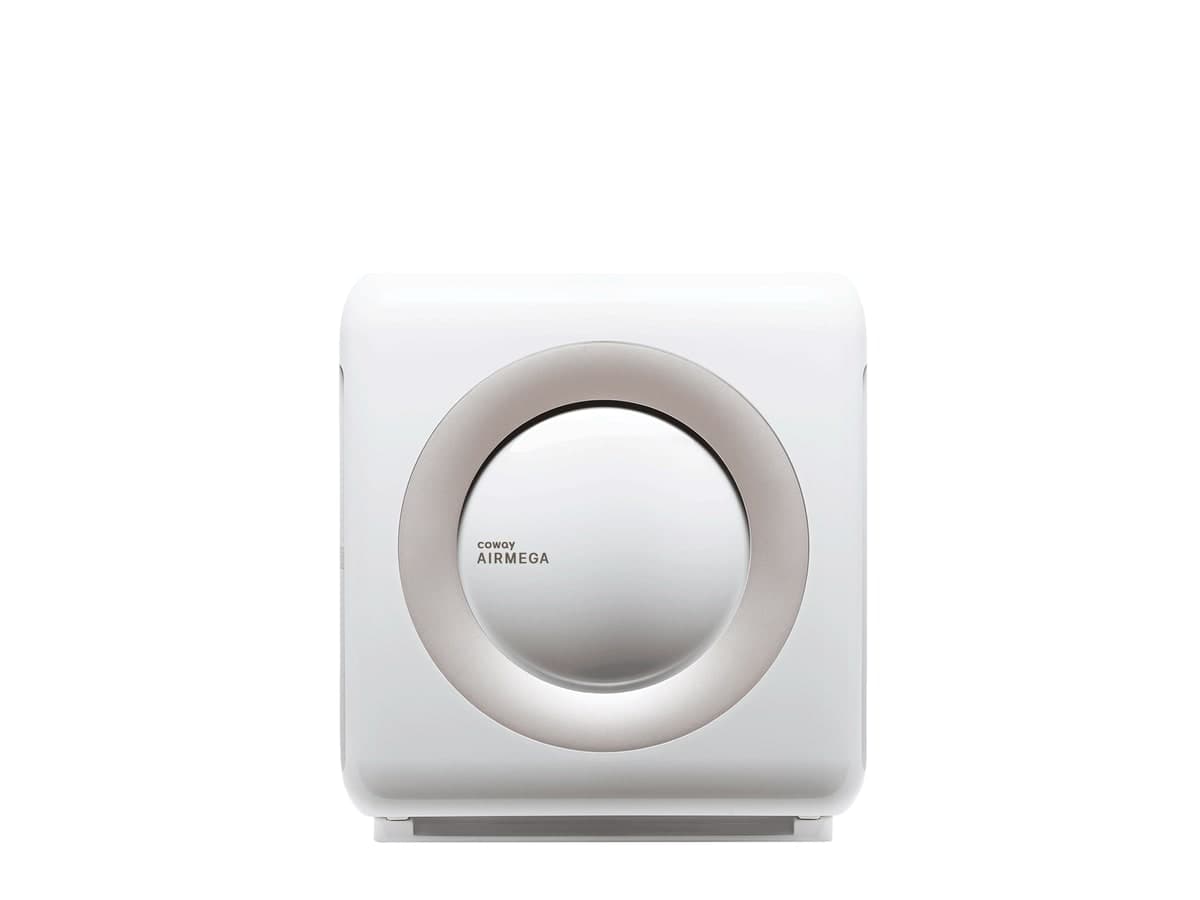
Coway
Coway Airmega AP-1512HH Mighty
Best overall
The value benchmark: strong CADR for a mid-size room, a genuine True HEPA + carbon stack, quiet auto mode, and cheap filters.
- 233 CFM CADR
- 361 sq ft
- $220–$250
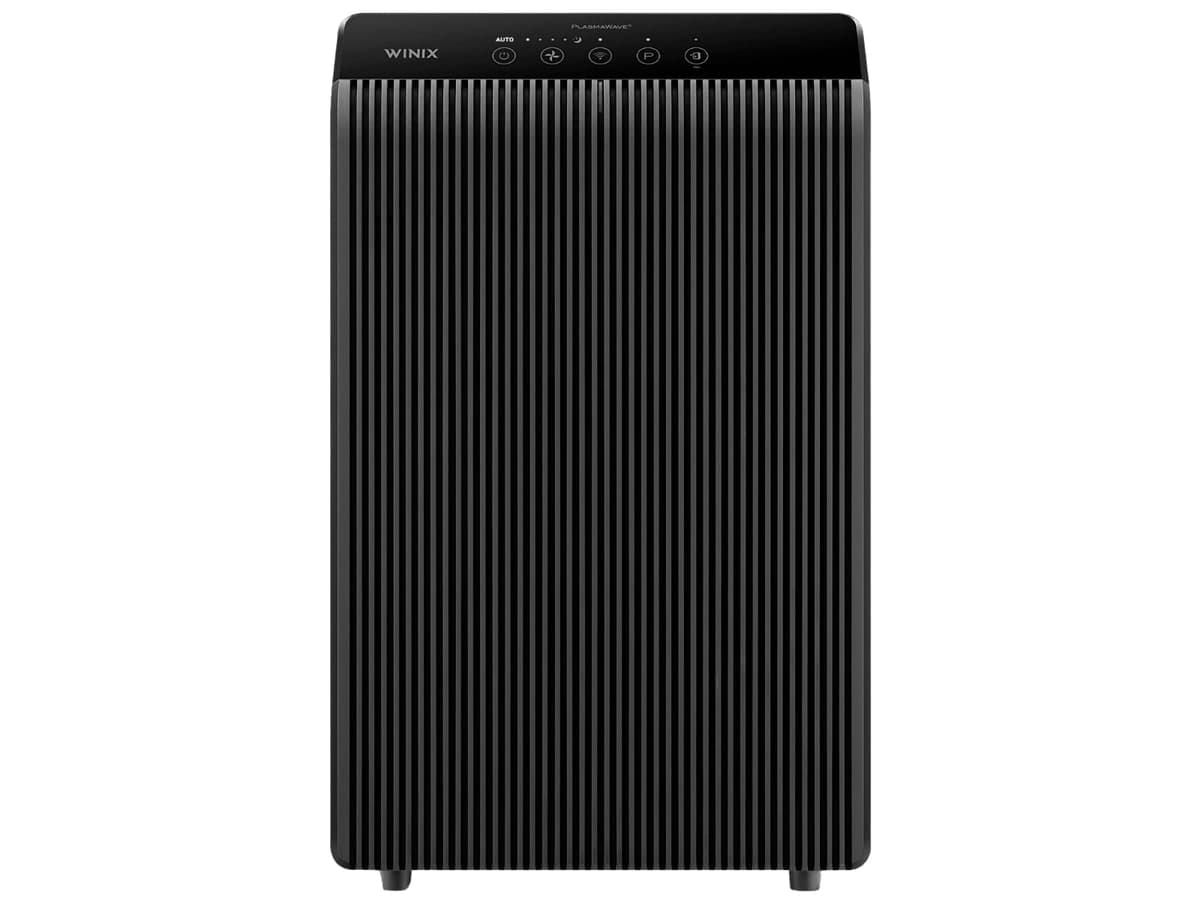
Winix
Winix 5510
Best smart mid-range
A smart, app-connected Winix with True HEPA, carbon, and strong coverage — the step up from the 5500-2 for people who want auto scheduling.
- 253 CFM CADR
- 392 sq ft
- $180–$200
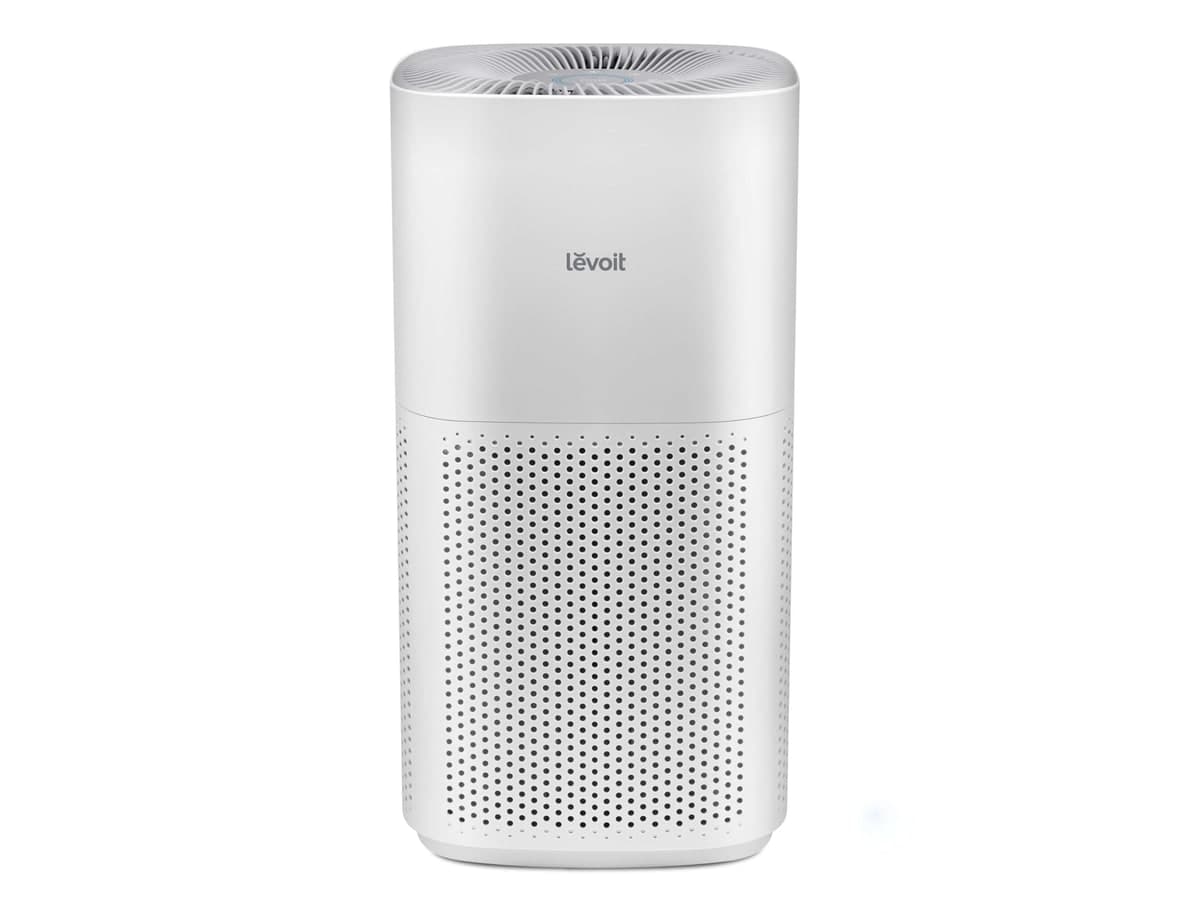
Levoit
Levoit Core 600S
Best value for large rooms
Large-room CADR of 391 CFM with full smart features, at a price well below the premium large-room set.
- 391 CFM CADR
- 606 sq ft
- $280–$320
Winix
5530
Winix
Winix 5530
Best Winix for app control in white
The white, 2026 version of Winix's 5510: same 253 CFM AHAM rating, same Filter Q, same 65 W rating and Wi-Fi app. Sized for ~390 sq ft.
- 253 CFM CADR
- 392 sq ft
- $180–$220
Frequently asked questions
What's the difference between the Blueair 211i Max and the 211+?
The 211i Max raises smoke CADR from 350 to 435 CFM (about 674 sq ft vs 540 sq ft at 4.8 ACH), adds PM1/PM2.5/PM10 sensors with auto mode, Wi-Fi app control and voice-assistant support, and lowers maximum power from 61 W to 46 W. The 211+ is now listed as discontinued by Blueair. Their filters are not interchangeable.
Should I replace my Blue Pure 211+ with the 211i Max?
Not if it still works and your room is under about 540 sq ft. Its filters are still sold. Upgrade if the 211+ has failed, you've moved to a larger open-plan space, or you want auto mode and an app.
What filter does the Blueair 211i Max use?
It takes the F2MAX Particle + Carbon filter ($69.99 at Blueair, rated for up to nine months). Blueair also sells SmokeBlock ($84.99, twice the carbon), AllergenBlock ($89.99, adds an allergen-neutralizing coating) and EcoLast ($99.99, wool-based with a claimed double life) versions. All fit only the 211i Max.
Does the Blueair 211i Max have an ionizer?
Yes, in effect. Blueair's HEPASilent system electrostatically charges particles before the filter, and it can't be turned off. Independent reviewers note it produces small amounts of ozone. If you want purely mechanical filtration, look at the Levoit Core 600S.
Why do some listings say the 211i Max has a 410 CADR?
Blueair updated its CADR and room-size figures to new DOE standards and notes that packaging may still show older numbers. The current spec sheet lists 435 smoke, 452 dust and 450 pollen CFM, while older material shows 410 CFM and about 635 sq ft. It's the same purifier.
How do I reset the filter light on the Blueair 211i Max?
After fitting a new filter, hold the fan-speed button for about 15 seconds until all the LEDs on the interface light up, then release, according to Blueair. If the app is connected, it will also show the reset filter life.