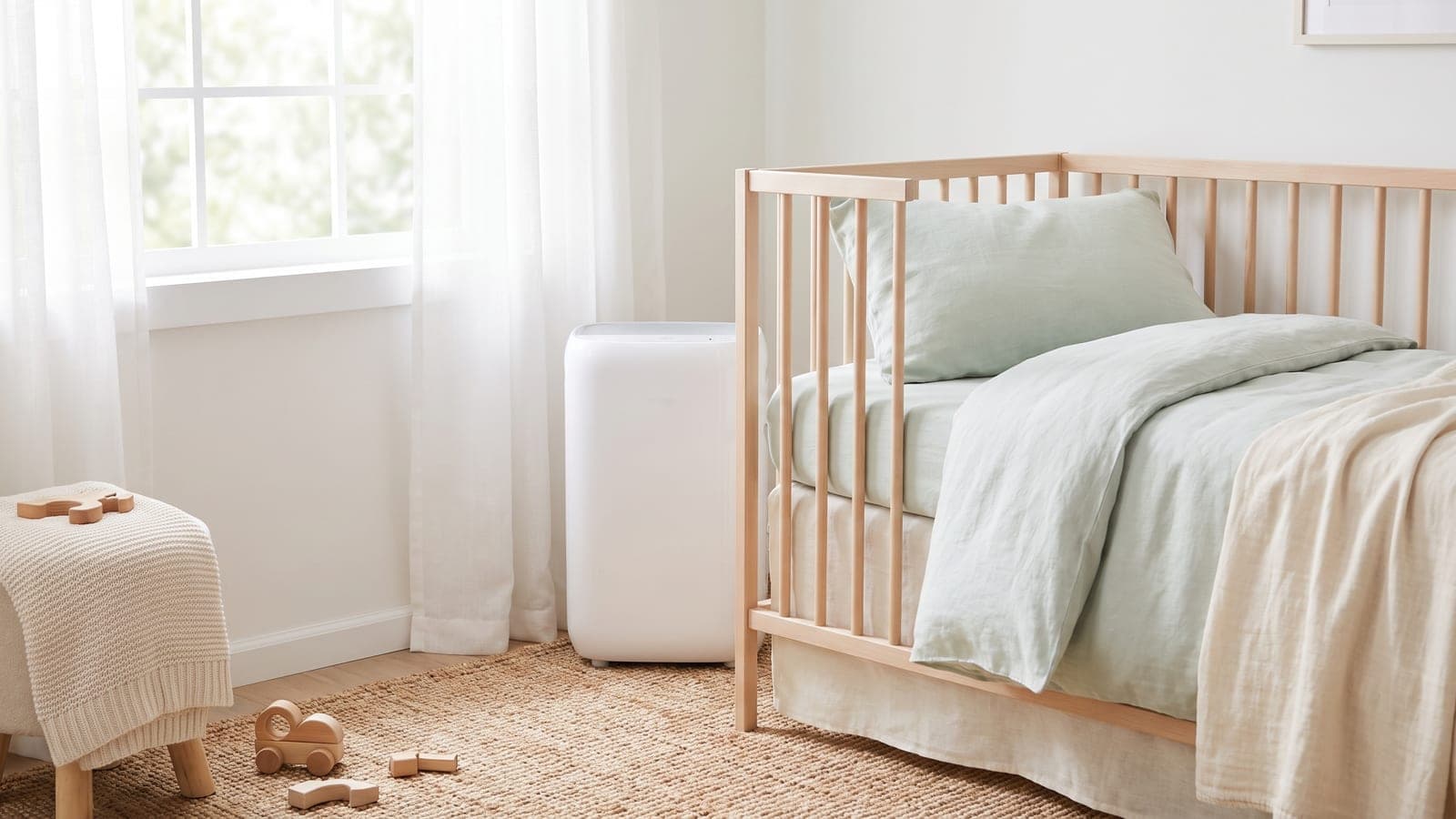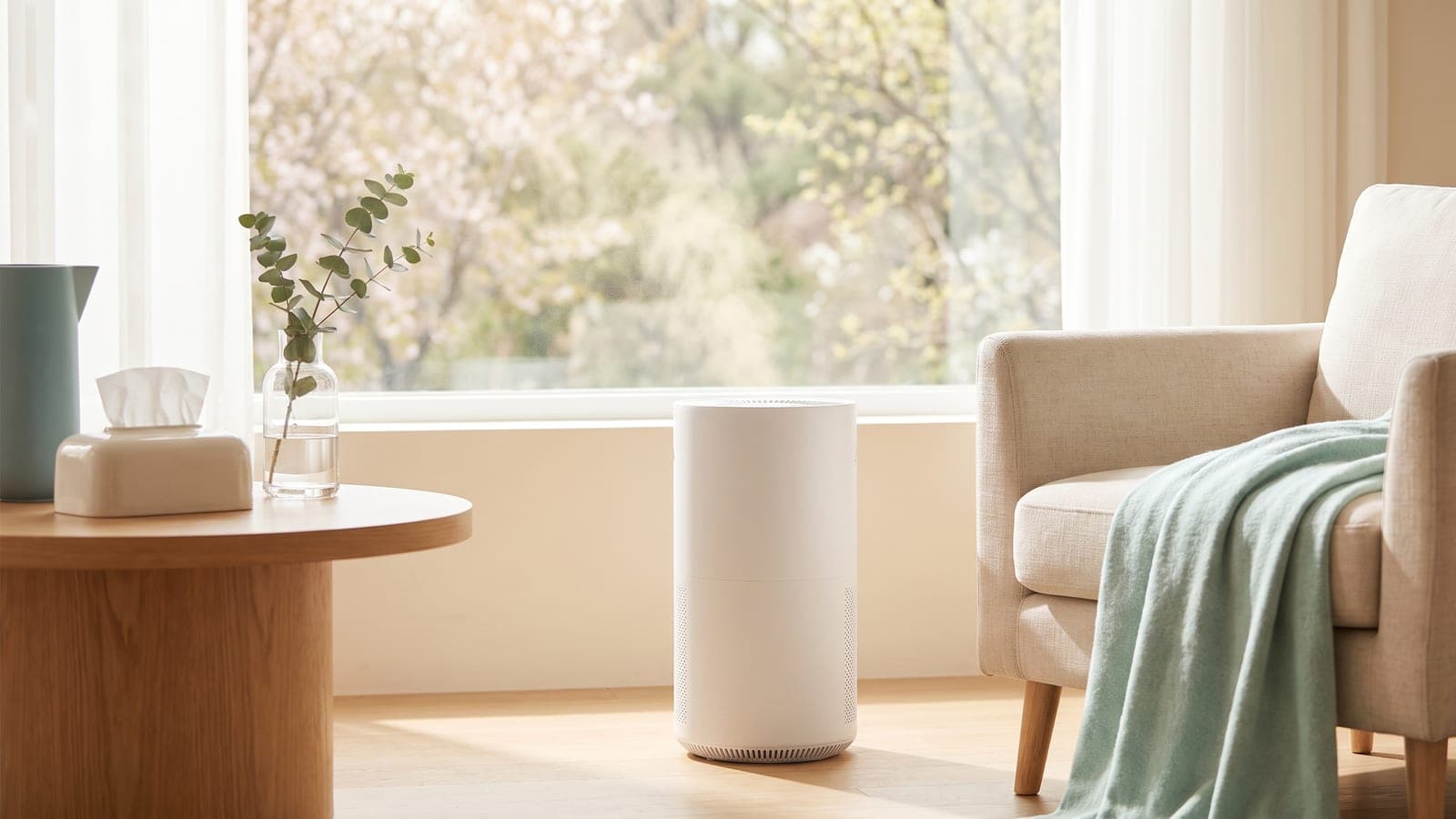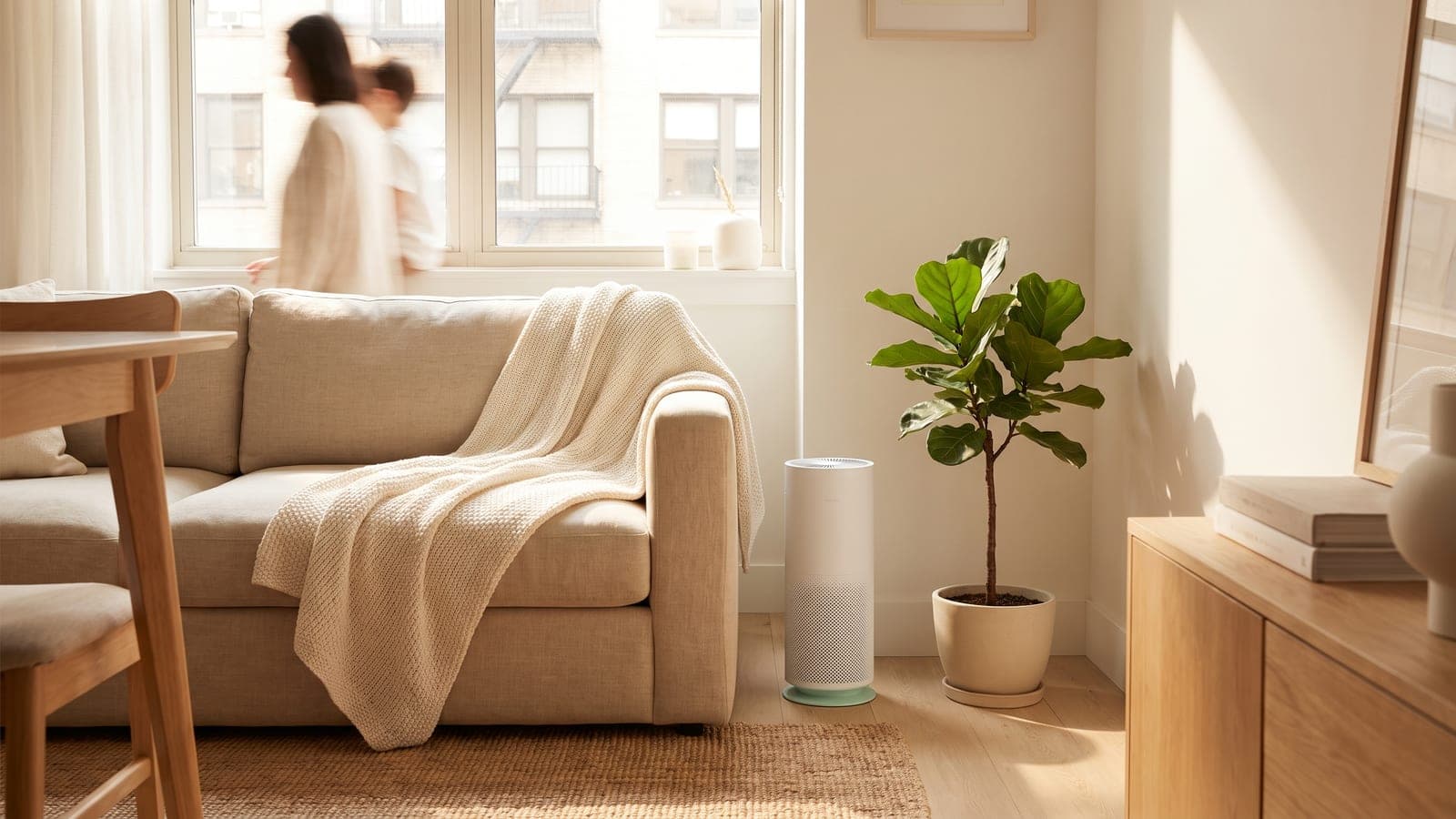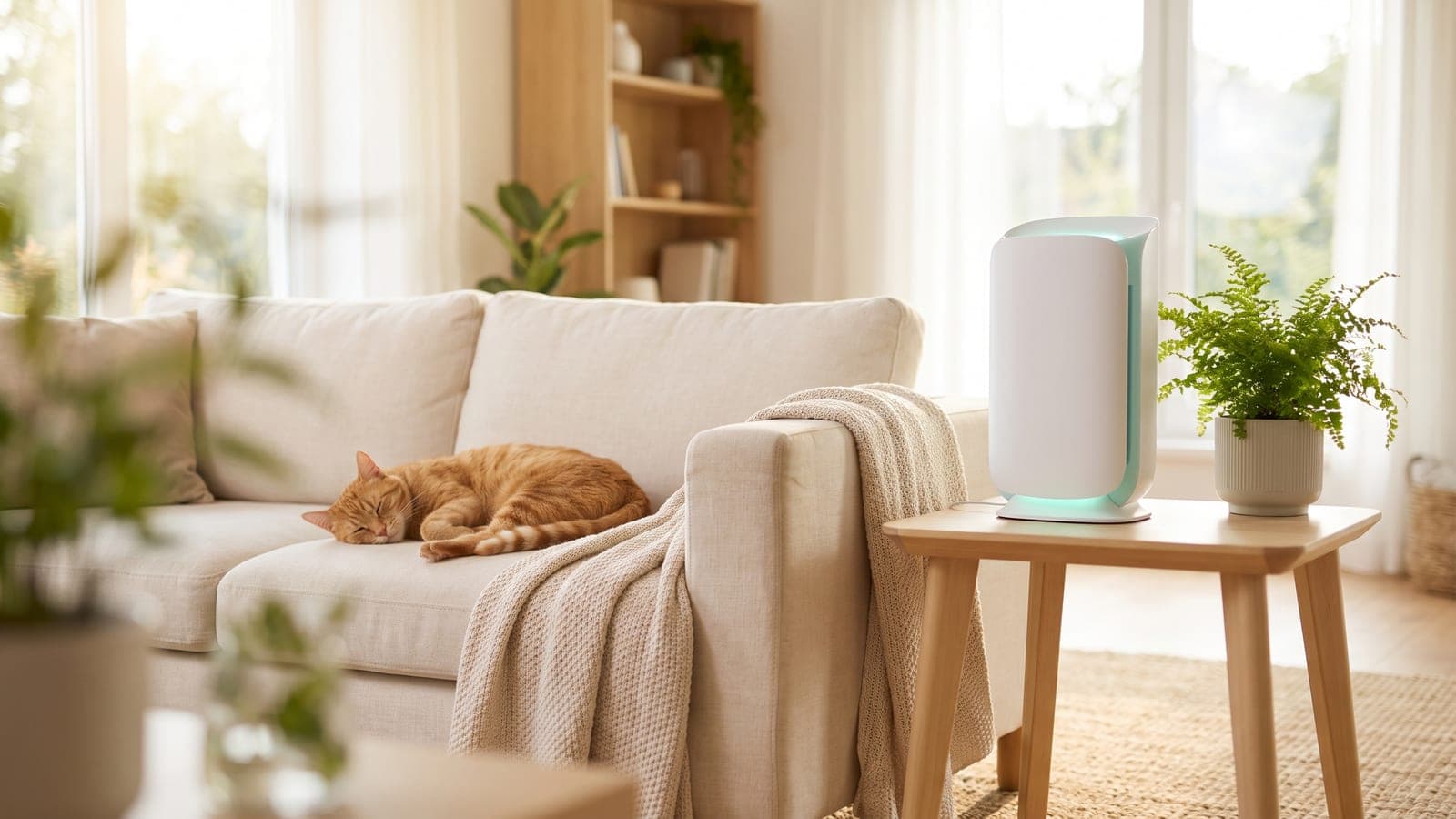
For most cat homes the Coway Airmega Mighty2 is the best buy: its laser sensor picks up the very fine particles that carry cat allergen, its filter holds more carbon than the original Mighty's for litter-box odor, and it runs quietly enough to share a bedroom with you and the cat. Cats create a particular set of air problems. The Fel d 1 allergen travels on tiny, sticky particles that stay airborne for hours, the litter box adds an odor that ordinary carbon finds hard to hold, and long-haired breeds add a steady drift of fur. The picks below are chosen for those jobs. If you also have a dog, our best air purifiers for pets guide covers mixed households. This is buying advice, not medical guidance; anyone with asthma or persistent symptoms should see a doctor.
Quick answer
| Model | CADR (smoke) | Coverage | Filters/yr | Best for |
|---|---|---|---|---|
| Coway Airmega Mighty2 | 240 CFM | 372 sq ft | ~$70 | Cats overall, Fel d 1 |
| Levoit Vital 200S-P | 250 CFM | 388 sq ft | ~$50–$100 | Long-haired cats |
| Levoit Core 400S-P | 231 CFM | 358 sq ft | ~$85 | Litter-box corner |
| Levoit Core 300S | 141 CFM | 219 sq ft | ~$45–$60 | Small bedroom budget |
| AirDoctor AD5500i | 556 CFM | ~862 sq ft | ~$355 | Multi-cat litter odor |
Coverage here equals smoke CADR × 1.55, which corresponds to about 4.8 air changes per hour with an 8 ft ceiling.
Key takeaways
- Fel d 1 lingers, so run the purifier around the clock. The allergen-carrying particles are small enough to stay suspended, which rewards steady filtration over short blasts.
- Litter-box odor needs real carbon plus a scoop. No filter outlasts a box that isn't cleaned; carbon handles the residue.
- Long hair calls for a cleanable pre-filter. It keeps a Persian's or Maine Coon's fur off the main filter so that filter lasts.
Best overall for cats: Coway Airmega Mighty2
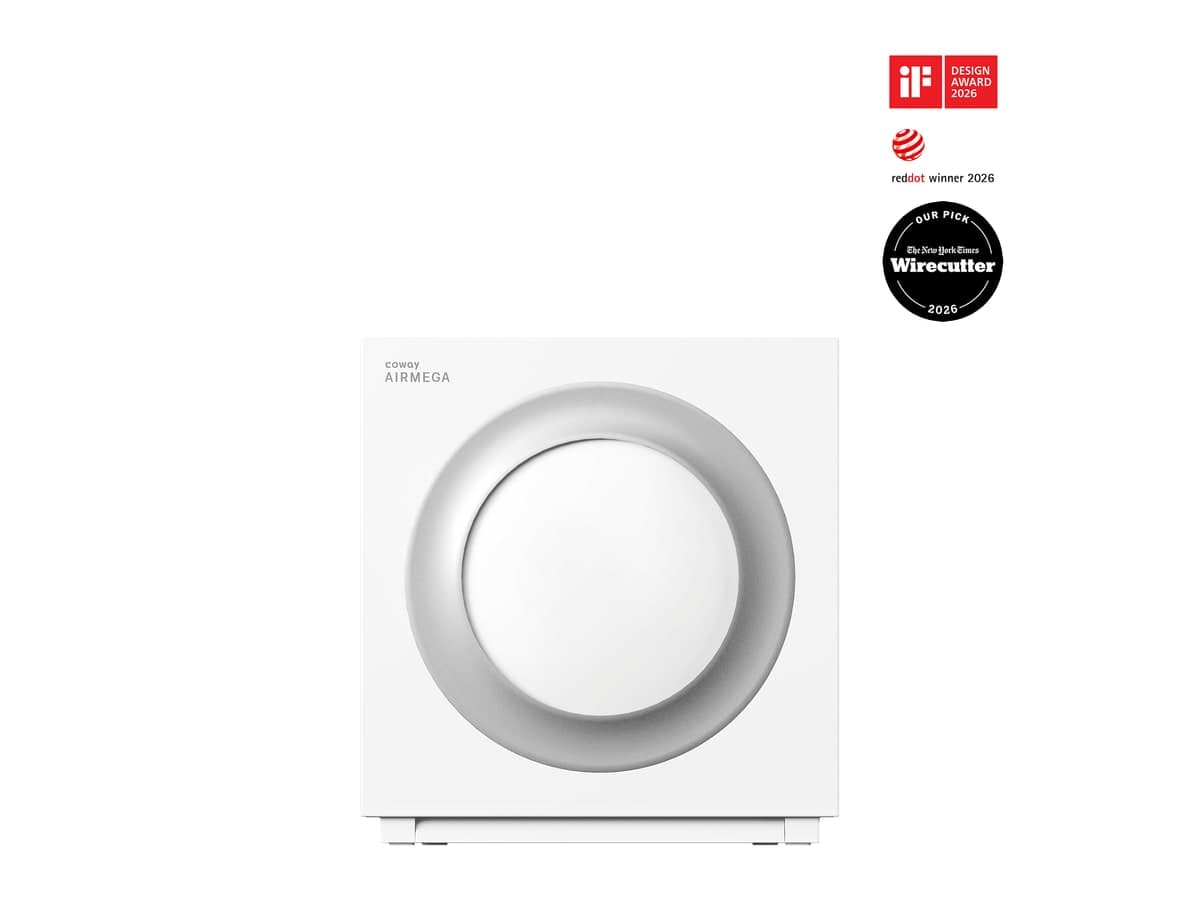
Mid-range · 240 CFM CADR · 372 sq ft
Paid links: we may earn a commission at no cost to you. Disclosure
The Coway Airmega Mighty2 earns first place on this page for its sensor and its carbon. Its MegaScan laser sensor reads PM1 as well as PM2.5 and PM10, so auto mode reacts to fine particles a basic dust sensor would miss, which suits an allergen that travels on small, light particles. Coway says its single Max2 cartridge holds about 45% more carbon than the original Mighty's filter, which matters for a litter box in the next room.
With 240 CFM it covers about 372 sq ft. In a 12 × 15 ft bedroom with 8 ft ceilings, top speed works out to about 10 air changes an hour, so it can loaf on a low speed overnight and still keep the cat-allergen load down. Coway rates its Sleep mode at 19 dB, and a light sensor switches Smart mode into Sleep after about three minutes of darkness. There is no ionizer to worry about around a pet.
Its drawbacks are cost and convenience. The $69.99 filter doesn't fit the older AP-1512HH, there is no app, and the 15.2 lb body has no wheels. If you already own the older model, our Mighty vs Mighty2 comparison explains why keeping it is reasonable. It usually sells for $230 to $270.
Best for long-haired cats: Levoit Vital 200S-P
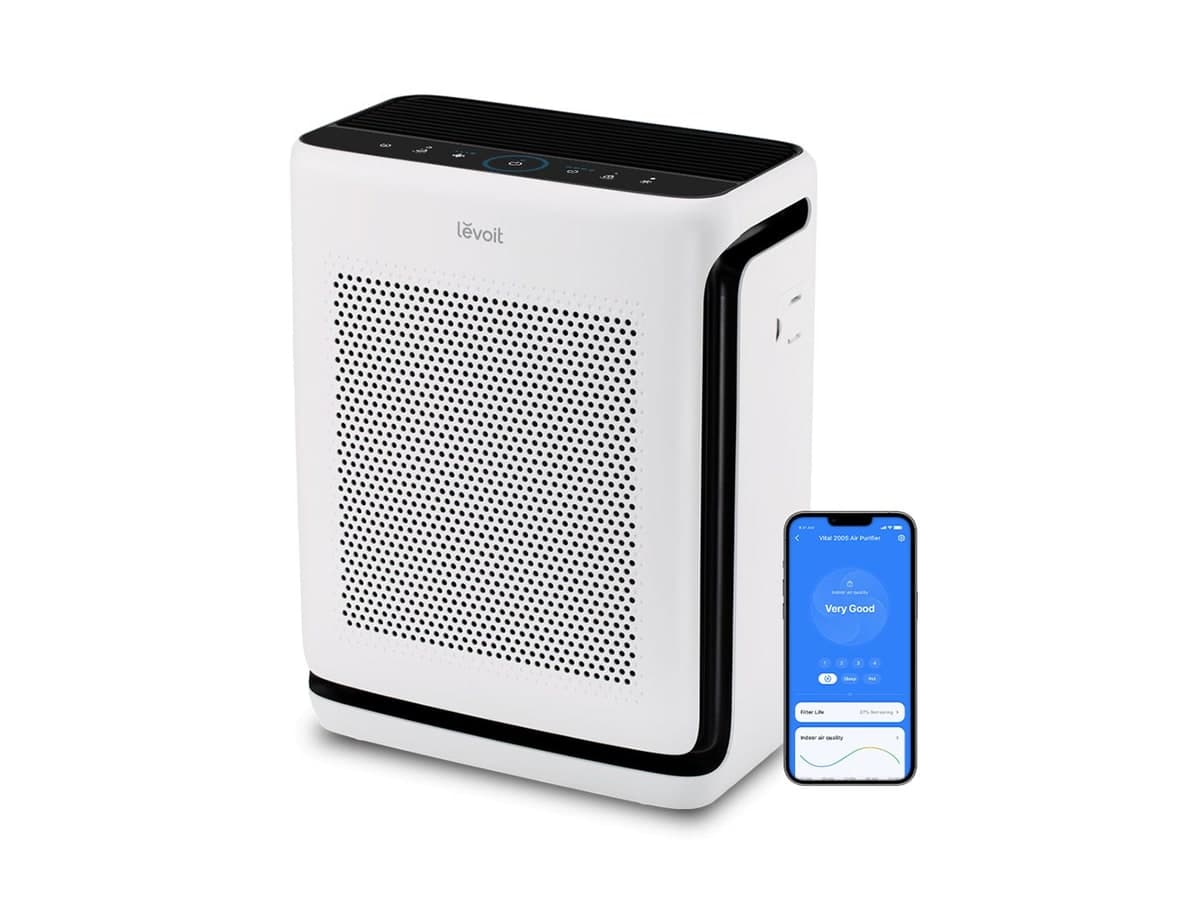
Mid-range · 250 CFM CADR · 388 sq ft
Paid links: we may earn a commission at no cost to you. Disclosure
A Ragdoll or Maine Coon leaves fur on everything, including the purifier intake. The Levoit Vital 200S-P handles that best because its pre-filter is a separate washable piece: rinse off the fluff, let it dry, put it back, and the main filter is spared. That main filter is $49.99, and Levoit also makes a yellow Pet Allergy version for about $60.
It is rated at 250 CFM, about 388 sq ft, a little more than the Coway. Pet Mode repeats 15 minutes on speed 3 and an hour on speed 2. Enable Light Detection in the app if the cat sleeps in your bedroom, so the fan holds the lower speed and the display goes dark at night.
Where it trails the Coway for cats is odor. HEPA and carbon share one bonded block, so it carries less carbon for a litter box and replaces both when the smell comes through. With long-haired cats, budget for a new filter every six months or so.
Best for a litter-box corner: Levoit Core 400S-P
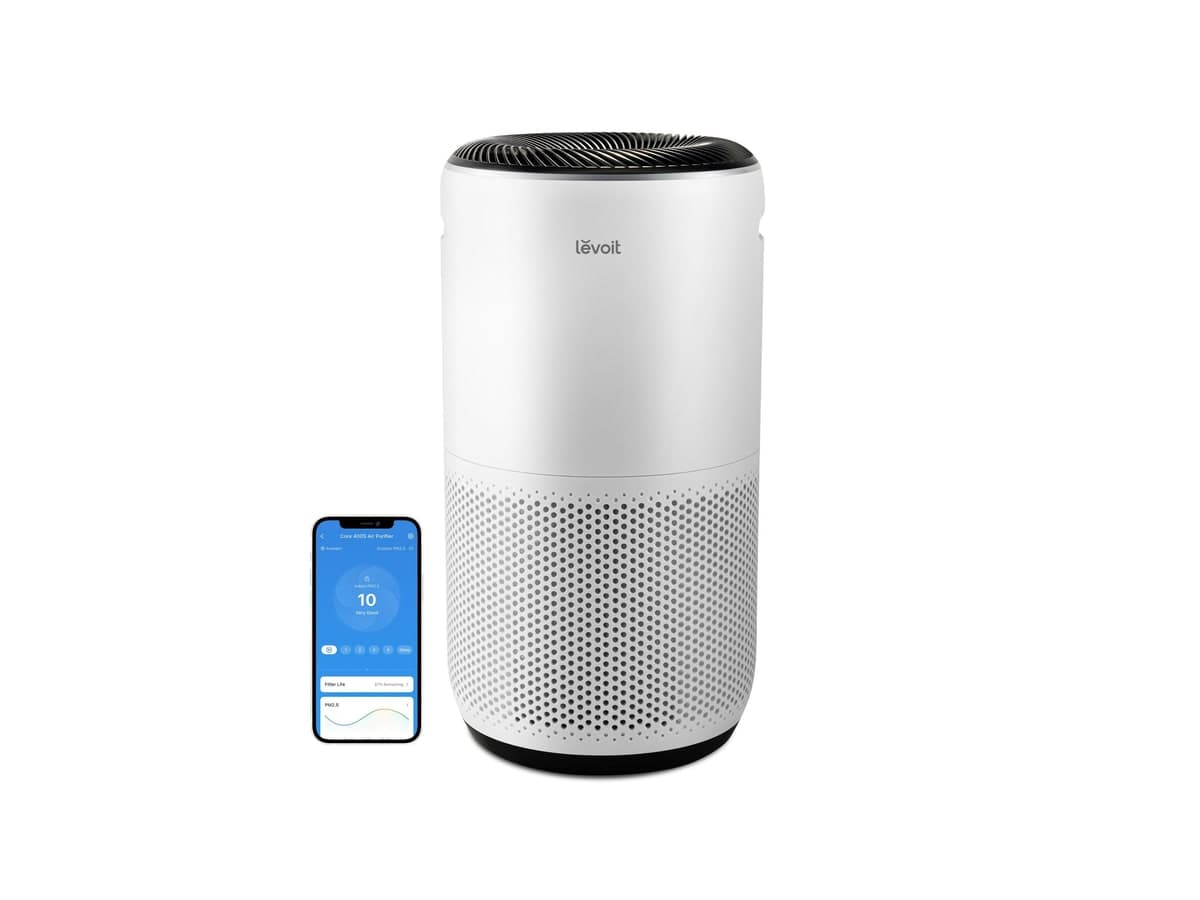
Mid-range · 231 CFM CADR · 358 sq ft
Paid links: we may earn a commission at no cost to you. Disclosure
Litter boxes tend to live in awkward places: a laundry nook, a bathroom corner, the end of a hallway. The Levoit Core 400S-P suits those spots because it pulls air from all 360 degrees on a 10.8-inch round base, so it doesn't need a clear face pointed into the room. At 231 CFM it covers about 358 sq ft, more than a laundry room or bathroom needs, and Levoit rates it as low as 22 dB.
It has no ionizer (the similarly named PlasmaPro 400S does), and its laser PM2.5 sensor and VeSync app let you set it higher during the day and lower at night. Levoit sells a Pet Allergy version of its filter for $59.99.
Two real downsides for cat owners: the pre-filter is bonded to the filter cylinder and can only be vacuumed, not washed, and Levoit's 6- to 8-month replacement interval puts filters near $85 a year. Keep it a few feet from the box so it doesn't stir up litter dust. The guide to where to place an air purifier goes into clearance.
Best budget pick for a cat's bedroom: Levoit Core 300S
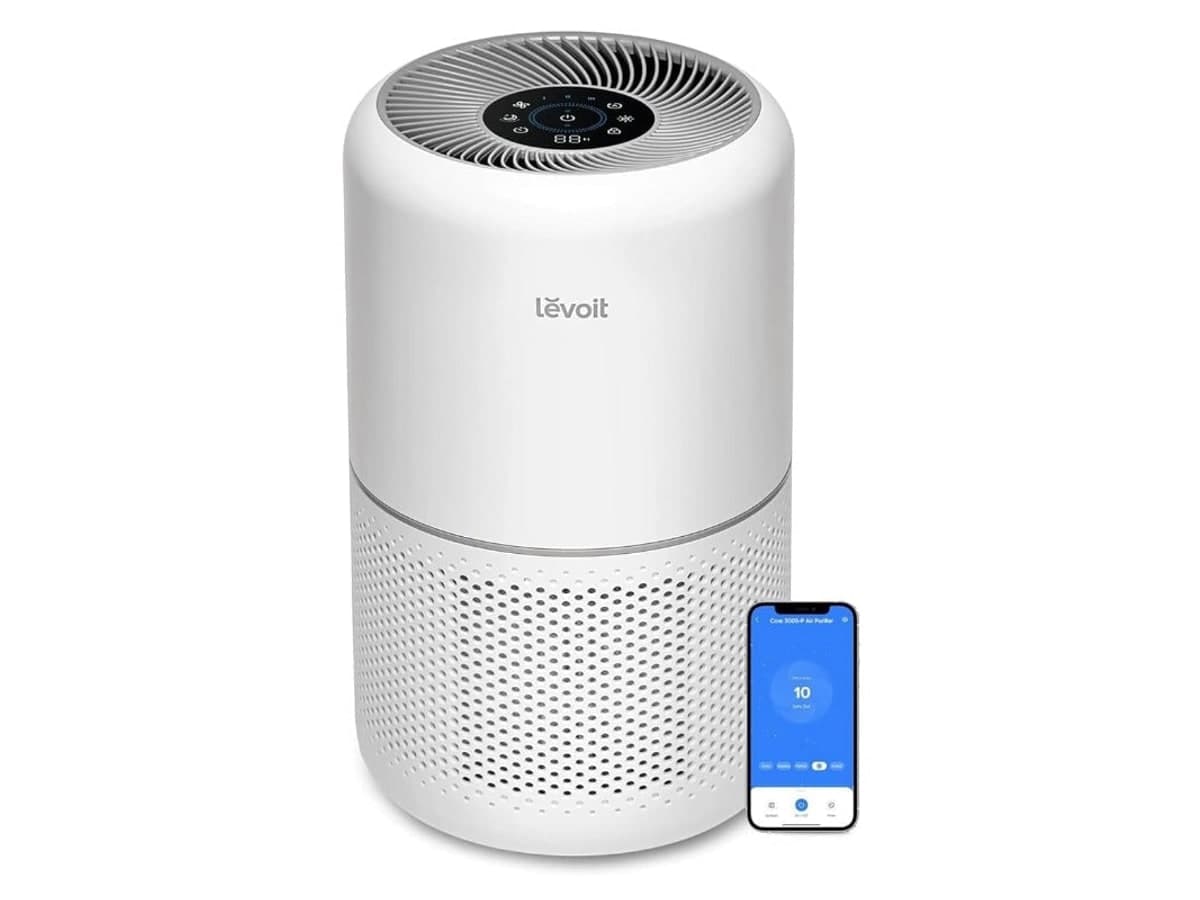
When the cat sleeps on your bed and the budget is around $100, the Levoit Core 300S is the sensible start. It uses an H13 HEPA filter, which is the part that matters for Fel d 1, and its sleep setting is rated at 24 dB. At 141 CFM it suits rooms up to about 219 sq ft, so an 11 × 12 ft bedroom gets about eight air changes an hour at full speed.
Its carbon layer is thin, so keep the litter box elsewhere; this unit is for allergen, not smell. Filters cost $25 to $35 and Levoit suggests changing them every six to eight months. Cat-allergic owners will find more options on our best air purifiers for allergies list.
Best for multi-cat litter odor: AirDoctor AD5500i
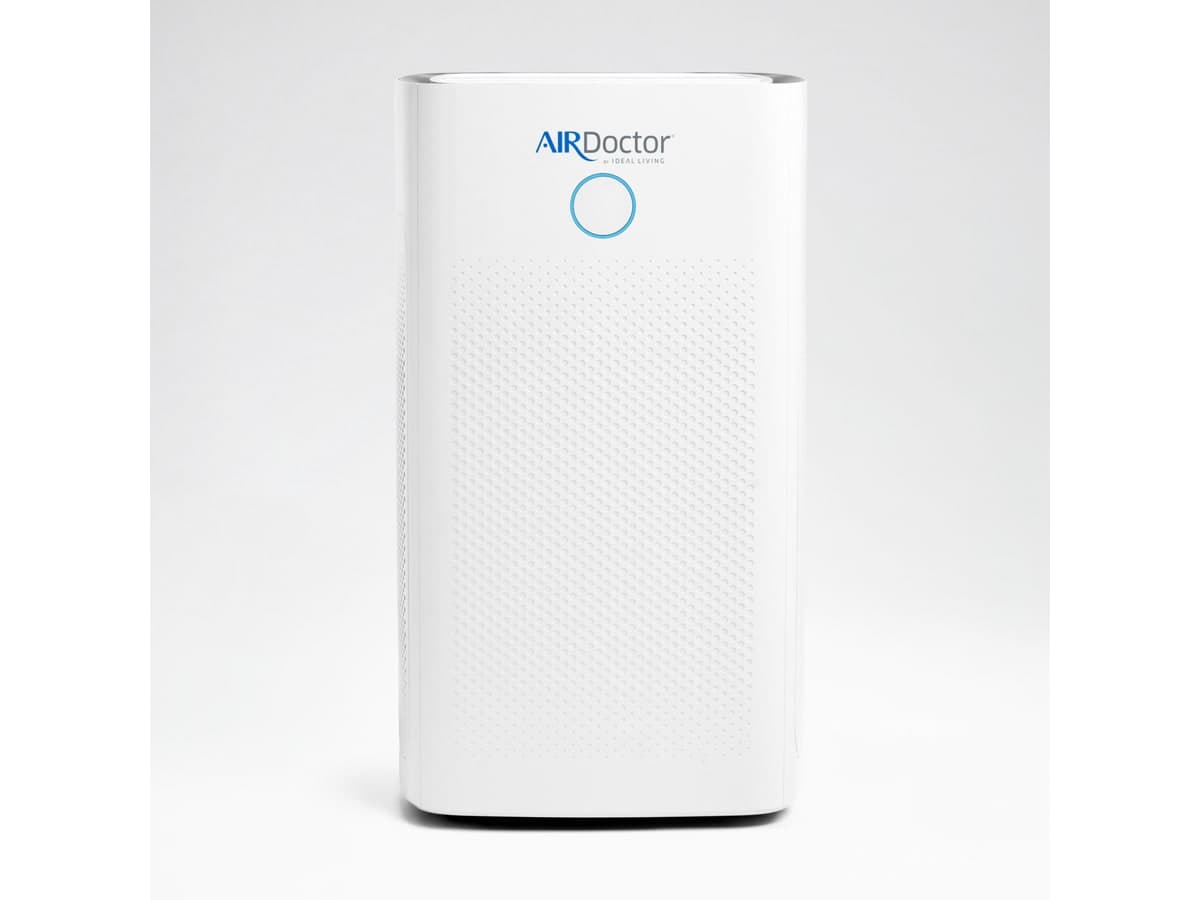
Premium · 556 CFM CADR · 862 sq ft
Paid links: we may earn a commission at no cost to you. Disclosure
Three cats sharing two or three boxes can overwhelm any thin carbon layer within weeks. The AirDoctor AD5500i is built for that load, with a dual carbon and VOC stage behind an UltraHEPA filter and 556 CFM of airflow, enough for about 862 sq ft of open-plan space.
It lists at about $999 (often discounted), filters add about $355 each year, and it pulls 110 W at full tilt. That is a lot to spend to manage litter, so try the Coway Airmega Mighty2 near the boxes first. If the house still smells of cats with clean boxes and a mid-size unit running, the AirDoctor is the step up.
How to choose a purifier for your cat
Begin with your main reason for buying. If someone in the house reacts to the cat, pick for particle filtration and run time: a sealed HEPA filter, enough CADR for the room the cat sleeps in, and a quiet low speed you will actually leave on. If the litter box is the problem, put the carbon close to the box and keep the box clean. If the issue is fur, buy a unit with a pre-filter that comes out easily.
Cats bring one placement quirk most dogs don't: they climb. Set the unit on the floor, not a shelf, keep the top free so a cat can't block the outlet by sitting on it, and route the cord where it won't get chewed. For allergy households, wash the cat's favorite blankets weekly, because the Fel d 1 that settles there is the share no purifier can reach.
Frequently asked questions
Why are cat allergies worse than dog allergies for many people?
The main cat allergen, Fel d 1, is carried on very small, light particles that stay in the air for a long time and stick to walls, clothes and furniture. That is why a room can still trigger symptoms months after a cat has left. Continuous filtration helps with the airborne share; talk to a doctor or allergist about symptoms that persist.
Can an air purifier remove litter-box smell completely?
No. A purifier with a decent carbon stage takes the edge off, but the ammonia note from old urine is one of the harder smells for ordinary activated carbon to hold. Scooping daily and changing litter on schedule do more than any filter; the purifier handles what is left.
Should the purifier go right next to the litter box?
Close, not beside it. A few feet away, with clear space on the intake side, lets the unit pull odor from the area without blowing litter dust around or spooking the cat. A round, 360-degree model like the Levoit Core 400S-P is the easiest to fit into a litter-box corner.
Is it safe to run an air purifier around cats?
A purely mechanical HEPA and carbon purifier is fine to run around cats. The picks on this page have no ionizer, or none that has to be on. Keep cords tidy, because some cats chew them, and put the unit where it can't be knocked over.
Does an air purifier help with cat hair?
Only with what floats past the intake. Loose fur mostly drops to the floor, so the purifier's role is to keep hair off the main filter with a pre-filter you can clean. Long-haired breeds make a rinse-off pre-filter, like the one on the Levoit Vital 200S-P, worth paying for.