For most private offices and small meeting rooms, buy a 230–250 CFM unit with auto mode: the Coway Airmega AP-1512HH Mighty if you want it to run itself with no app, or the Winix 5530 if you want it on a work-hours schedule. The Levoit Core 300S is enough for one desk, the Levoit Core 400S-P suits a meeting room where the purifier can't sit against a wall, and an open floor needs the Levoit Core 600S. Office air carries toner dust, whatever people bring in on their coats, and stale air in rooms that never get a cross-breeze, so every pick here is ranked on clean-air output, low-speed noise and how little attention it needs.
Quick answer
| Model | CADR (smoke) | Coverage | Filters/yr | Best for |
|---|---|---|---|---|
| Levoit Core 300S | 141 CFM | 219 sq ft | ~$45–$60 | Desk or personal space |
| Coway Airmega AP-1512HH Mighty | 233 CFM | 361 sq ft | ~$60 | Private office, no app |
| Levoit Core 400S-P | 231 CFM | 358 sq ft | ~$85 | Meeting room, mid-room placement |
| Winix 5530 | 253 CFM | 392 sq ft | ~$80 | Work-hours scheduling |
| Levoit Core 600S | 391 CFM | 606 sq ft | ~$60 | Open-plan office |
Coverage is smoke CADR × 1.55, the area each unit can clean about 4.8 times an hour at an 8 ft ceiling.
Key takeaways
- Match the unit to the space it serves. One desk, a closed office and an open floor are three different purchases; a desk unit in an open floor does almost nothing.
- Headroom buys quiet. A purifier rated above the room's needs hits its target on a low speed, which is what keeps it out of your calls.
- Auto mode is the feature that pays off at work. Nobody remembers to turn a fan up when a meeting starts; a sensor does.
Best for a desk or personal space: Levoit Core 300S
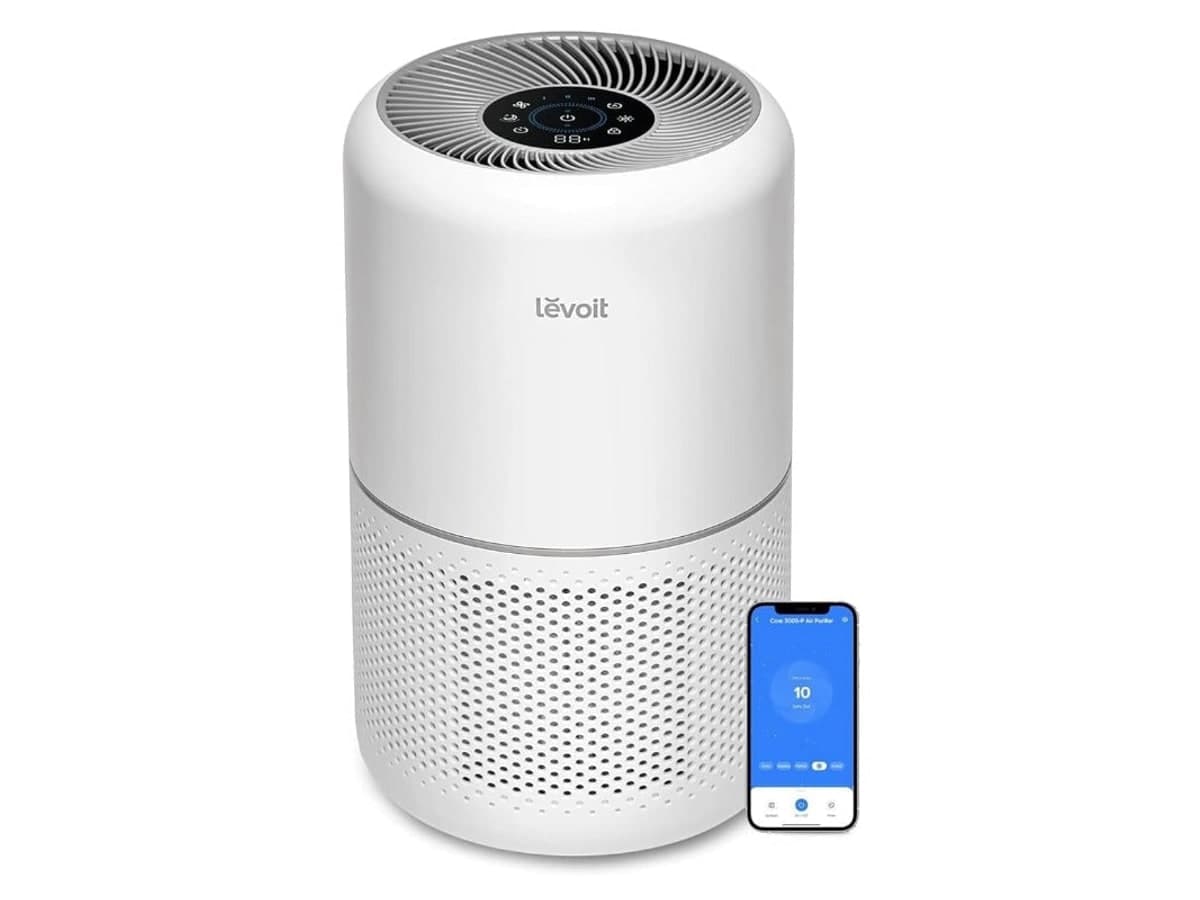
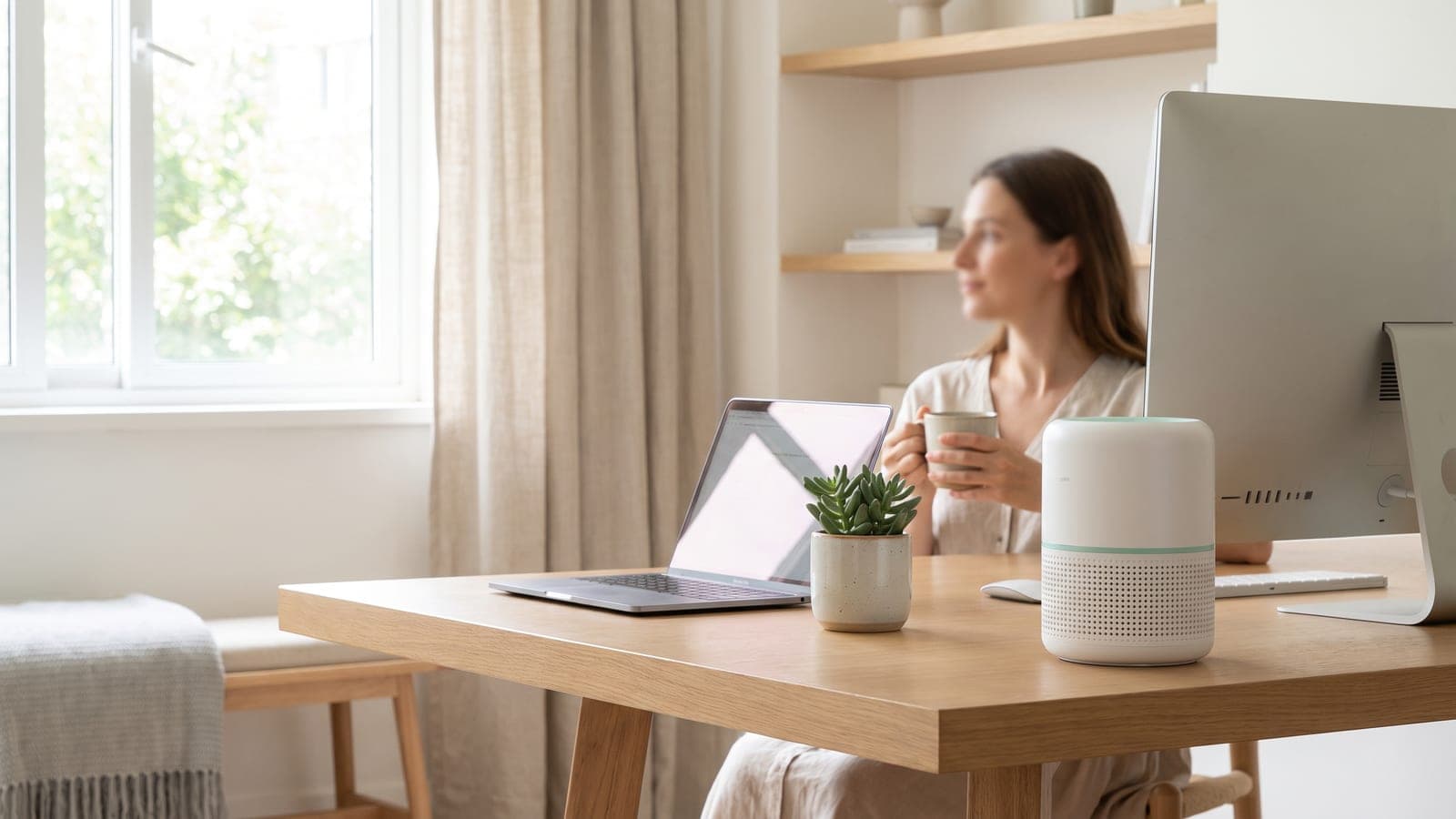
The Levoit Core 300S is the right size for one person's corner of a room: a desk, a cubicle or a small private office up to about 219 sq ft. It draws 24 W at most, has a sensor, auto mode and an app, and costs around $100, which makes it the one pick cheap enough to buy per desk. Placed within a few feet of your chair, it cleans the air you are actually breathing rather than the far side of the room. It won't make a dent in an open floor, so keep it personal.
Best for a private office: Coway Airmega AP-1512HH Mighty
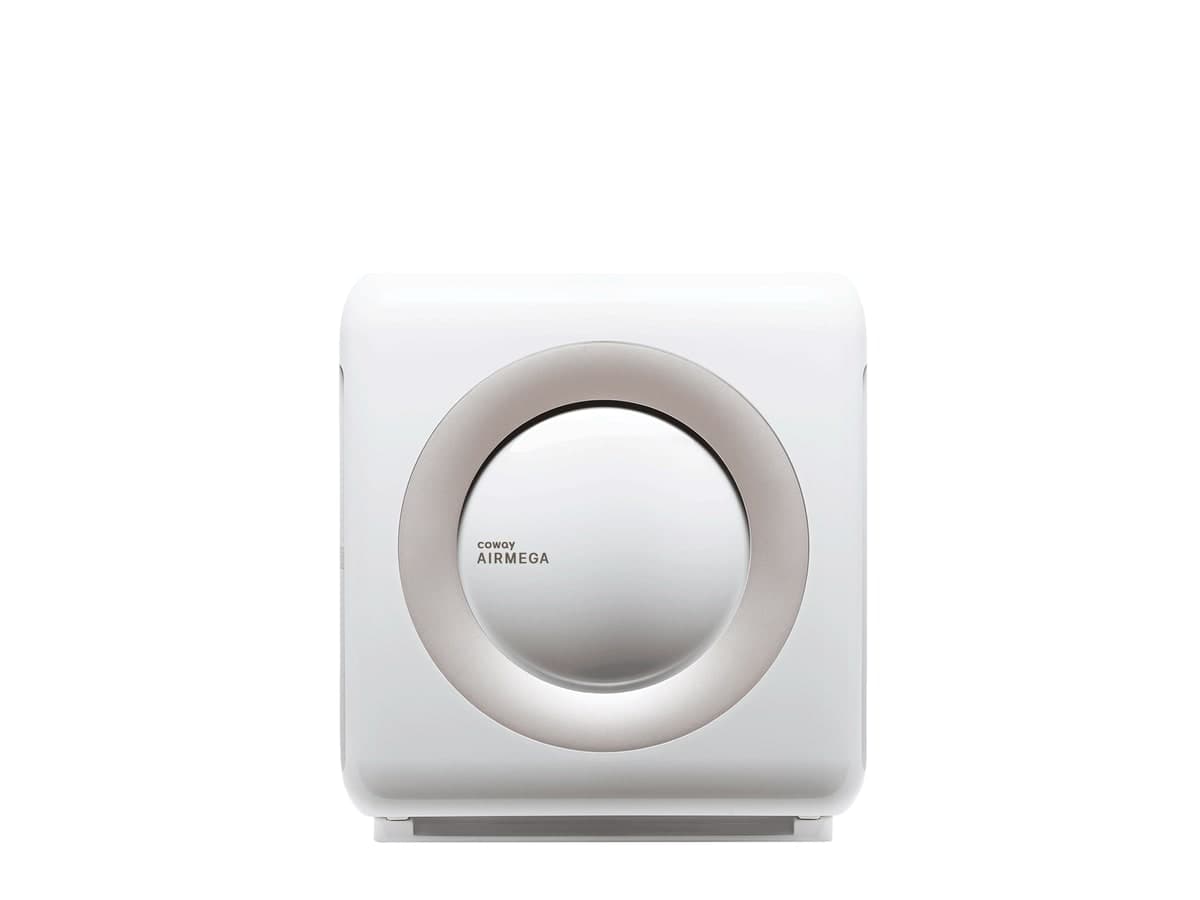
Mid-range · 233 CFM CADR · 361 sq ft
Paid links: we may earn a commission at no cost to you. Disclosure
For a closed office up to about 361 sq ft, the Coway Airmega AP-1512HH Mighty is the set-and-forget choice. Its sensor and auto mode have a long track record of ramping up when the air degrades and settling back without fuss, and its yearly filter set costs about $60. The optional ionizer should stay off; the HEPA and carbon do the cleaning. If you are buying new and don't mind paying about $30 more, the Coway Airmega Mighty2 is the quieter successor, with a 19 dB rated floor and no ionizer at all, though it also skips the app.
Best for a meeting room: Levoit Core 400S-P
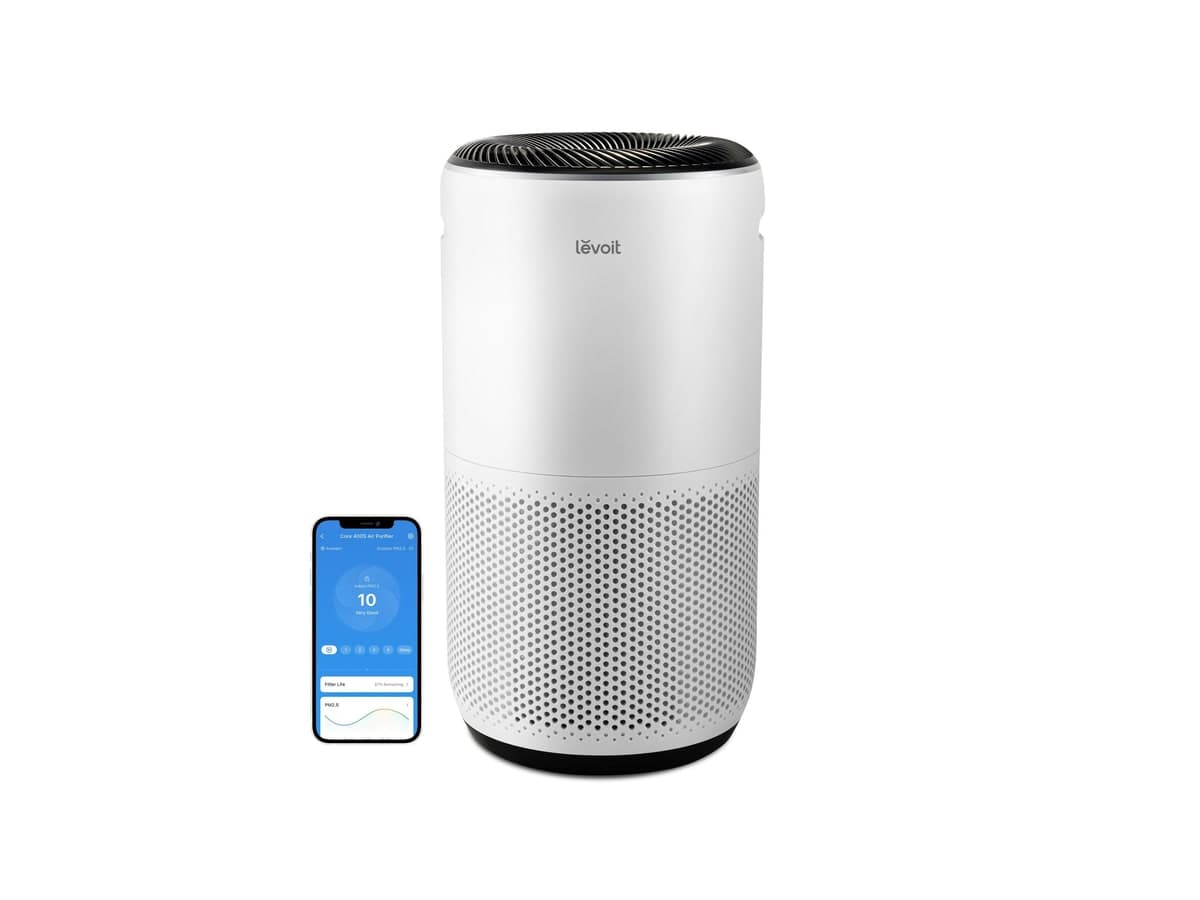
Mid-range · 231 CFM CADR · 358 sq ft
Paid links: we may earn a commission at no cost to you. Disclosure
Meeting rooms rarely have a free wall beside an outlet, and they fill with people in a few minutes, which suits the Levoit Core 400S-P. Its round 10.8 in body pulls air from every side, so it can stand in a corner or beside the table without starving its intake, and its laser PM2.5 sensor drives auto mode when the room fills. Its 231 CFM covers about 358 sq ft, a 15 × 24 ft room, and Levoit rates the low setting at 22 dB.
The VeSync app adds schedules, so it can run through business hours only. The trade-off is upkeep: Levoit suggests a new filter every 6–8 months at $49.99, about $85 a year, the highest on this list. If the unit can sit against a wall, the Winix below does the same job with more airflow.
Best for work-hours scheduling: Winix 5530
Winix
5530
Mid-range · 253 CFM CADR · 392 sq ft
Paid links: we may earn a commission at no cost to you. Disclosure
If you want the purifier to start before the first person arrives and stop when the lights go out, the Winix 5530 is the pick. It rates 253 CFM, enough for about 392 sq ft, and the Winix Smart app handles schedules and remote checks. A granular carbon bed sits in front of the HEPA, which does more for kitchenette smells and stale meeting-room air than the thin carbon wraps on most cylinder units. Filter Q lists at $79.99 a year; PlasmaWave can be switched off.
The Winix 5510 is the same machine in black, with the same filter and CADR. Buy whichever is cheaper on the day.
Best for an open-plan office: Levoit Core 600S
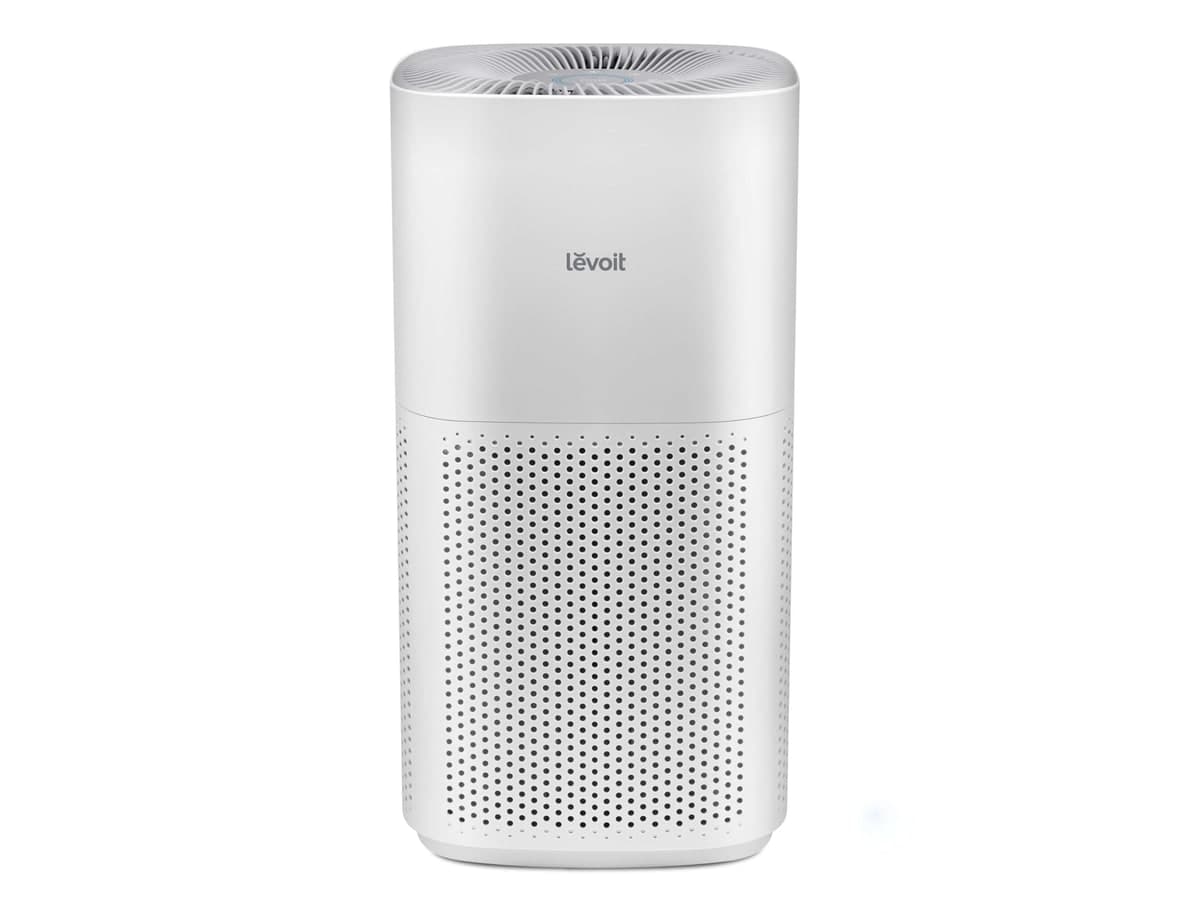
Mid-range · 391 CFM CADR · 606 sq ft
Paid links: we may earn a commission at no cost to you. Disclosure
A shared floor needs real output, and the Levoit Core 600S supplies 391 CFM for about 606 sq ft while drawing just 49 W at the top. It has the same sensor, auto mode and app as the smaller Levoits, so it can be scheduled and checked remotely. At around $300, one unit placed centrally beats three desk purifiers spread around the room. The Core 400S-P vs Core 600S comparison shows exactly where the larger unit starts to pay for itself.
How to choose the right one for you
Start with the square footage each purifier will serve and run it through the room-size to CADR calculator; the "covers up to" figure on the box is usually a one-air-change claim, and what CADR and CFM really mean explains the gap. Next, decide whether the room empties out at night: if it does, an app schedule saves filter life, and the running-cost calculator puts a figure on the power. For a floor bigger than about 600 sq ft, the best air purifiers for large rooms list carries higher-CADR machines.
Frequently asked questions
What size air purifier do I need for an office?
Divide the floor area by 1.55 to get the smoke CADR you need for about 4.8 air changes an hour. A 10 × 12 ft private office (120 sq ft) needs only about 77 CFM, so the Levoit Core 300S has room to spare. A 15 × 24 ft meeting room (360 sq ft) needs about 232 CFM, which is Levoit Core 400S-P or Winix 5530 territory. A 600 sq ft open area needs close to 390 CFM, the Levoit Core 600S's rating.
Why does a quiet air purifier matter in an office?
Because the noise sits under every call and every quiet hour of work. The fix is headroom: a unit rated well above the room's needs reaches its target on a low speed, while an undersized one runs on high all day. Compare low-speed figures, such as Levoit's 22 dB rating for the Core 400S-P or Winix's 23.5 dB Sleep rating for the 5530, and note that the top-speed ratings Levoit and Coway publish for these units all sit between 50 and 55 dB.
Should an office air purifier run on auto mode?
Yes. All five picks here have a particle sensor and an auto mode, so the fan rises when a meeting fills the room or someone empties a toner cartridge, then drops back once the reading clears. That keeps the unit quiet for most of the day without anyone touching it.
Do I need Wi-Fi and an app on an office air purifier?
It helps most in an office that sits empty at night and on weekends. Four of the five picks have an app with schedules, so the purifier can start before people arrive and shut down when they leave. The Coway Airmega AP-1512HH Mighty has no app, but its auto mode cleans just as well; it simply runs whenever it's switched on.
How much does it cost to run an air purifier in an office?
Very little in power. Running flat out for a 9-hour day, five days a week, the hungriest pick here (the 77 W Mighty) uses about 180 kWh a year, roughly $31 at $0.17/kWh, and auto mode keeps real use far below that. Filters are the larger line item at about $45 to $85 a year per unit. The running-cost calculator does this math for your own rate and hours.