Humidifier size calculator
Estimate for a home heated to 68°F, with the stated air-change rates. Enter the whole area the humidifier's air can reach: just the room if the door stays shut, the full open-plan space if not. Makers' output figures are at the top setting with a fresh wick, hence the headroom.
Most bedrooms need far less humidifier than the box suggests: about half a gallon to a gallon of water a day, not three. Enter your space above and the calculator works out how much moisture it loses to the cold outdoor air that leaks in, then tells you the daily output to shop for.
How the calculator works
Heating dry winter air doesn't remove any water from it, but it makes the air hold the same water as a much lower relative humidity. Outdoor air at 30°F and 75% humidity carries about 3.4 grams of water per cubic meter. Warm that same air to 68°F and it reads roughly 20% humidity indoors. To hold 40% at 68°F, the air needs about 6.9 grams per cubic meter.
Every time outside air replaces the air in your room, a humidifier has to make up that difference. The calculator multiplies four things:
- Volume: floor area times ceiling height.
- Air changes per hour: how often outdoor air replaces the indoor air. We use 0.35 for a newer, well-sealed home, 0.5 for an average one and 1.0 for an older or drafty one.
- The moisture gap: your target humidity at 68°F minus the moisture already in the incoming outdoor air, using the standard Magnus formula for water vapor.
- 24 hours.
The result is the water your space loses per day at your target. Then we add 50% headroom, because a maker's output rating is the top setting with a fresh wick, and a humidifier that has to run flat out all day will be loud and won't catch up after you open a door.
Worked examples
| Space | Climate | Home | Water lost per day | Shop for at least |
|---|---|---|---|---|
| 12 × 15 ft bedroom, door shut | Cold winters | Average | 0.45 gal | 0.7 gal/day |
| 12 × 15 ft bedroom, door shut | Cold winters | Drafty | 0.91 gal | 1.4 gal/day |
| 400 sq ft living room | Cold winters | Average | 1.0 gal | 1.6 gal/day |
| 400 sq ft living room | Very cold winters | Drafty | 3.15 gal | 4.8 gal/day |
| 1,000 sq ft open-plan floor | Cold winters | Average | 2.5 gal | 3.8 gal/day |
All of these use 8 ft ceilings and a 40% target. Two patterns stand out. A drafty room needs roughly double the output of the same room in a tight house, so how leaky your home is matters as much as its size. And a very cold climate raises the need by about half again over a merely cold one, because air at 10°F holds almost no water to begin with.
Door open or shut changes the answer
A humidifier in a bedroom with the door open isn't humidifying the bedroom, it's humidifying everything the air can reach. That's why a small unit can seem to do nothing in an open-plan home. Enter the area that's actually connected: just the room if you close the door at night, the whole open space if not. For a whole floor or a whole house, the output you need quickly passes what a portable unit can supply, and a humidifier on the furnace becomes the better tool.
Reading your result
- Under 1 gallon a day: a small bedroom unit is enough. Prioritize a quiet mode and a tank that lasts the night.
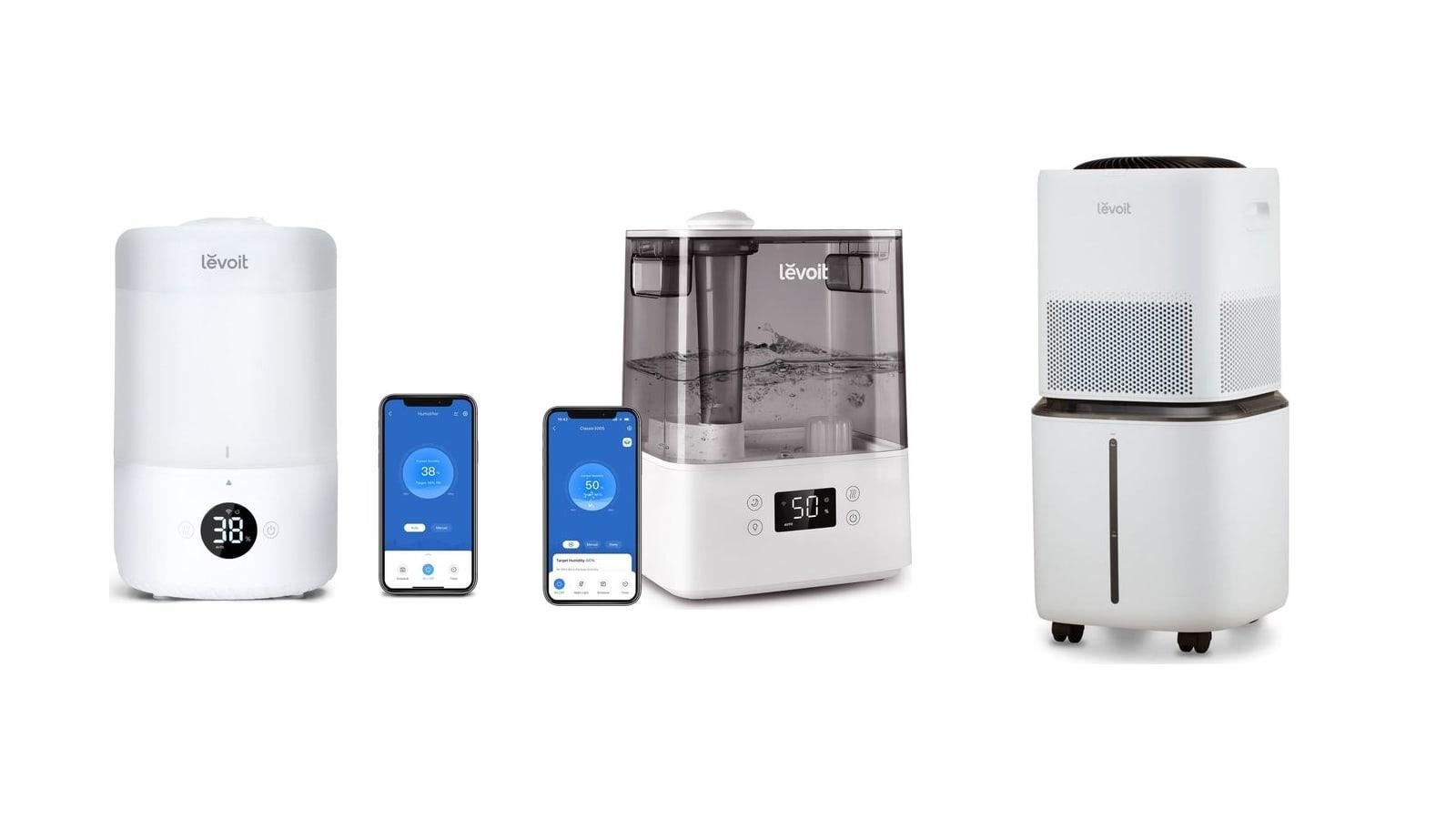
- 1 to 3 gallons: a mid-size model with a built-in humidistat, so it holds your target instead of guessing.
- Over 3 gallons: a large evaporative console, or two units in different rooms.
Whatever you buy, check it against a cheap hygrometer for the first week. If the windows fog on cold mornings, turn the target down; the EPA's advice is to keep indoor humidity below 60% to avoid mold, and ideally between 30 and 50%.
The humidifiers we cover list each model's rated output per day, so you can match this number directly.
Frequently asked questions
What size humidifier do I need for a bedroom?
For a typical 12 by 15 ft bedroom with the door closed in a cold-winter climate, the calculator puts the moisture loss at about half a gallon a day in an average home and about 0.9 gallons in a drafty one. A model rated around 1 to 1.5 gallons a day covers that with room to spare.
Why is the answer lower than the room size on the box?
Box figures assume a model running on its top setting, often in a large, leaky space, and makers don't say which. The calculator works out the water your space actually loses, then adds 50% so the humidifier can hold the target on a middle setting. If your door is usually open, enter the whole area the air can reach and the number goes up.
What humidity should I set it to in winter?
Around 40% is a good default, inside the 30 to 50% range the EPA recommends. In very cold weather, drop to about 35%: warm, moist air condenses on cold windows, and wet window frames are where mold starts.
Can a humidifier be too big?
Only if it has no humidistat. An oversized model with a built-in humidistat just cycles off more often. Without one, a large unit running flat out in a small closed room can push humidity past 60%, which fogs windows and feeds mold and dust mites.
Embed this calculator (free)
Run a home, health, or air-quality site? Drop this tool into any page — it stays free and links back here. Paste this HTML where you want it.
<iframe src="https://www.pureairscout.com/embed/humidifier-size-calculator-how-many-gallons-a-day-do-you-need" title="Humidifier Size Calculator: How Many Gallons a Day Do You Need?" width="100%" height="560" style="border:1px solid #e5e7eb;border-radius:12px;max-width:680px" loading="lazy"></iframe>